Why EV Battery Fires Can Re-Ignite After Firefighters Leave Scene
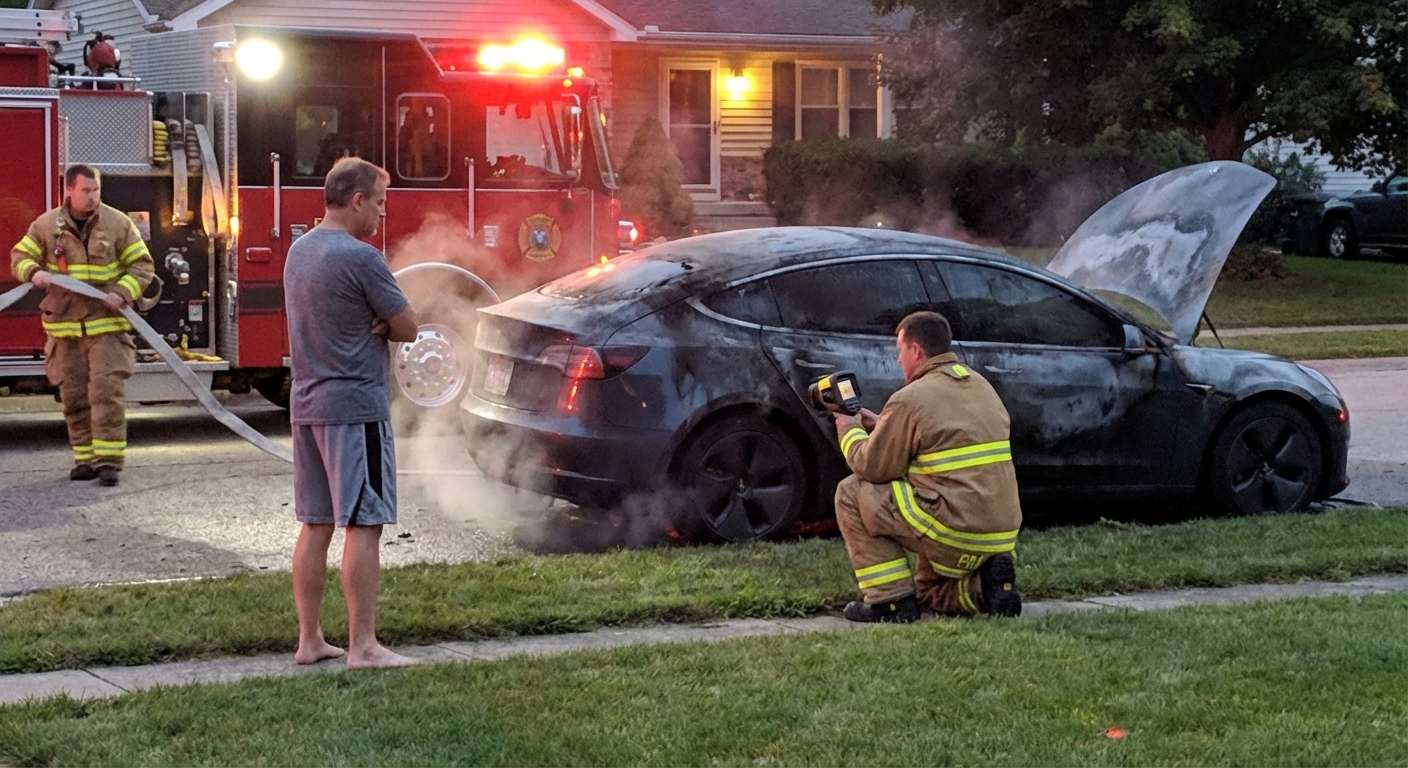
Picture a wrecked EV on the shoulder, smoke thinning, hoses winding down. The fire crew watches the last visible flame die. Everything looks handled. Looks safe. Except the battery pack bolted underneath that car is still over a thousand degrees inside its sealed steel casing, and thermal runaway is quietly chewing through cell after cell in the dark. The crew can’t see it. Their thermal cameras can’t always reach it. The fire they just “beat” is reloading.
Hidden Heat
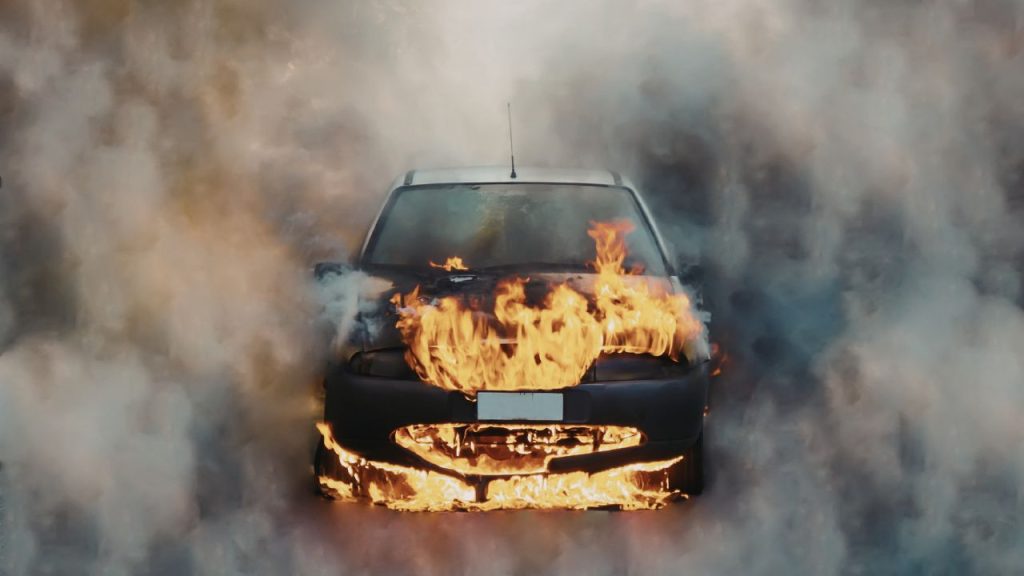
Most people assume a car fire works like a campfire: douse it, it dies. That assumption was built on a century of gasoline vehicles, where the fuel burns openly and water smothers the reaction. Lithium-ion battery packs don’t play by those rules. The cells generate their own heat through self-sustaining chemical reactions, and that heat propagates from one cell to the next inside a sealed enclosure. Water cools the outside. The inside keeps cooking. Every minute the pack stays sealed, the cascade spreads deeper.
The Armor Problem
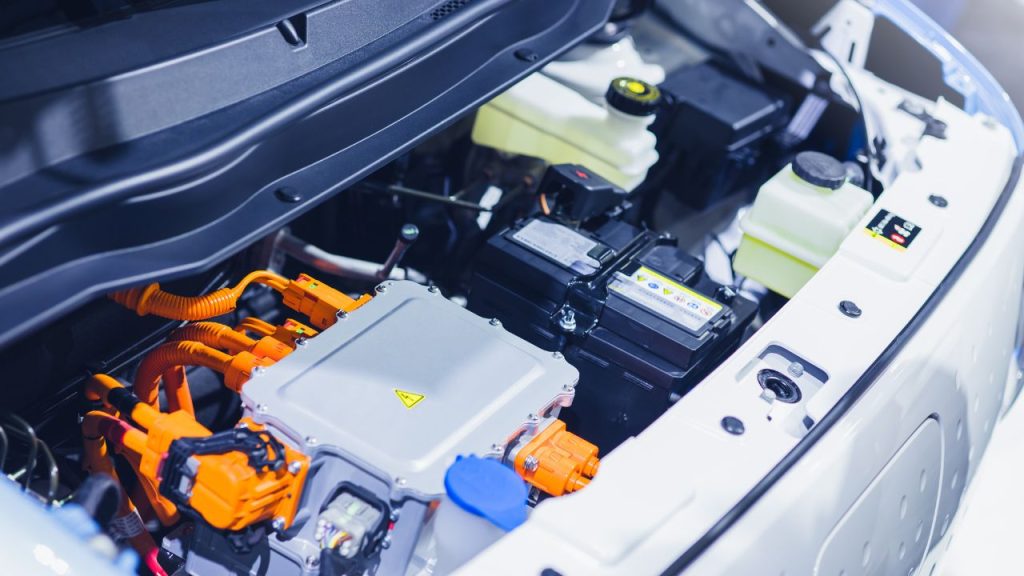
The cruel irony: the same armored casing that protects a battery pack in a crash also traps heat during a fire. Automakers engineer these enclosures to survive collisions, which means they’re built to keep things out. Water included. So firefighters face a structure designed to resist exactly what they need to deliver. Think of it like a house attic fire you can’t ventilate. You know the heat is spreading, you can see the smoke, but you can’t cut a hole to reach it.
When Out Isn’t Really Out
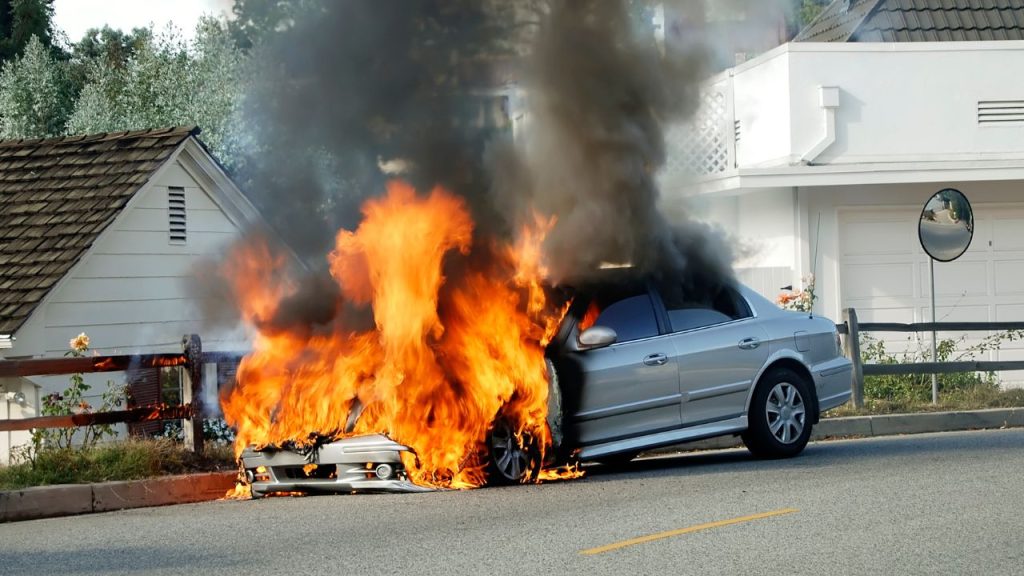
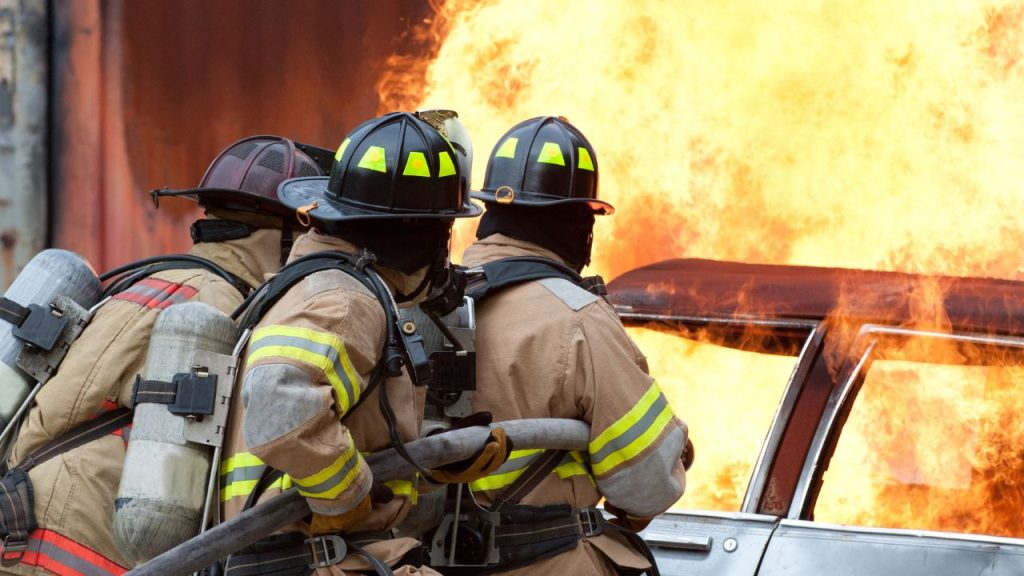
Here’s where the old playbook dies. A conventional car fire gets knocked down, the crew confirms no rekindling, and the scene clears. An EV battery fire can look extinguished while thermal runaway is still propagating inside the pack. Cells fail. Heat jumps to neighbors. Flammable gases build. Then flames erupt again from a car everyone thought was finished. One cell becomes two. Two become a module. A module becomes the whole pack. That word “extinguished” means nothing until the battery is cold.
The Cooling War
Water isn’t drowning the fire. It’s fighting a heat engine. The goal is thermal absorption: pull enough energy out of the pack that cell-to-cell propagation stalls. But when water hits the outside of a sealed casing, cooling efficiency drops sharply compared to direct cell contact. Renault built a system called “Fireman Access” that lets responders inject water straight into the battery. They offered the design free to every automaker on earth. That tells you how serious the access problem is.
Invisible Threats
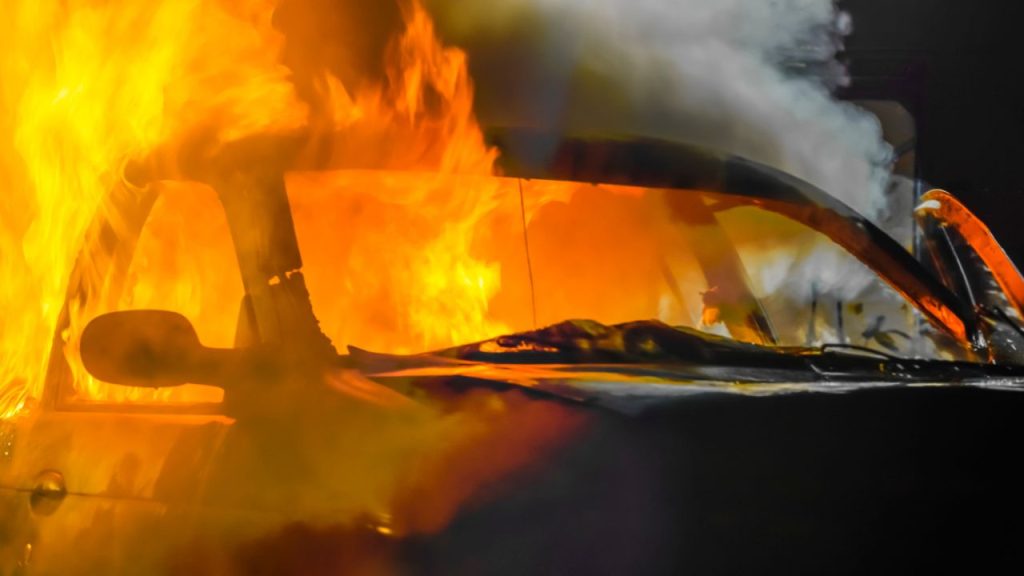
The heat isn’t the only hidden danger. Lithium-ion cells in thermal runaway can release toxic and flammable gases, expanding the hazard zone well beyond the vehicle itself. High-voltage systems remain energized until manually disabled, adding electrocution risk on top of chemical exposure. NHTSA guidance specifically flags both hazards for emergency responders. A conventional car fire threatens what you can see. An EV battery fire threatens what you can’t: gas you can’t smell fast enough and voltage you can’t spot without training.
Departments Stretched Thin
Every hour a crew babysits a cooling EV is an hour that apparatus isn’t available for the next call. EV incidents can demand extended cooling and monitoring operations that dwarf a typical vehicle fire’s timeline. For well-funded urban departments, that’s an inconvenience. For rural and low-resource departments with limited water supply and fewer trucks, a single EV battery fire could tie up their entire response capacity. More EVs on the road means more encounters, and the departments least equipped to handle them sit in the path of growth.
A Whole New Rulebook
This isn’t a quirk. It’s a new category. SAE International published standard J2990 specifically to guide first and second responders for electrified vehicles, a document that has no equivalent in a century of gasoline-car firefighting. The International Association of Fire Chiefs now curates entire repositories of EV emergency response guides. Automakers publish model-specific firefighting instructions. When an industry builds a parallel training infrastructure from scratch, the message is clear: the old rules don’t apply, and pretending they do gets people hurt.
The Design Race
The pressure is shifting upstream. If firefighters can’t reliably cool a sealed pack from the outside, the pack itself has to change. Renault’s free licensing of Fireman Access fired a starting gun: build batteries that responders can actually suppress, or watch municipal pushback grow with every prolonged roadside incident. More EV adoption means more thermal runaway encounters, which means more demand for design-level solutions. The departments absorbing the longest, most resource-draining calls will eventually demand that automakers engineer the problem away before it reaches the shoulder.
What You Know Now
Forget the meme about EVs needing “more water.” That framing misses the point entirely. The real variable is access and heat removal from a sealed, cell-dense pack during thermal runaway propagation. Pack architecture determines suppression time, not flame size. Once you see that, every EV fire story reads differently. Most people still think the problem is bigger flames. Now you know the problem is trapped heat inside armor, and until automakers redesign that armor with a door for the hose, firefighters are fighting physics with patience.
Sources:
“Safety Risks to Emergency Responders from Lithium-Ion Battery Fires in Electric Vehicles.” National Transportation Safety Board, 2020.
“Interim Guidance for Electric and Hybrid-Electric Vehicles Equipped with High-Voltage Batteries.” National Highway Traffic Safety Administration, 2012.
“Fireman Access, an Exclusive Innovation by Renault Group, Is Now Available with a Free Licence.” Renault Group, Feb 2025.
“Electric Vehicle Safety Information.” National Fire Protection Association, 2024.