Toyota Chairman Shows Up In MAGA Hat Weeks After Openly Denying $10B US Investment
Toyota moved from denying a $10 billion U.S. investment to confirming it within weeks, as tariffs, politics, and strategy collided in late 2025. In October 2025, an executive said the company had not “explicitly” promised that figure after President Donald Trump made it public. Two weeks later, Toyota confirmed plans to invest up to $10 billion over 5 years. Days after that, Chairman Akio Toyoda appeared in a “Make America Great Again” hat at a NASCAR event. The sequence raised questions about pressure, timing, and intent behind Toyota’s rapid shift.
The Tariff Shock That Changed Everything
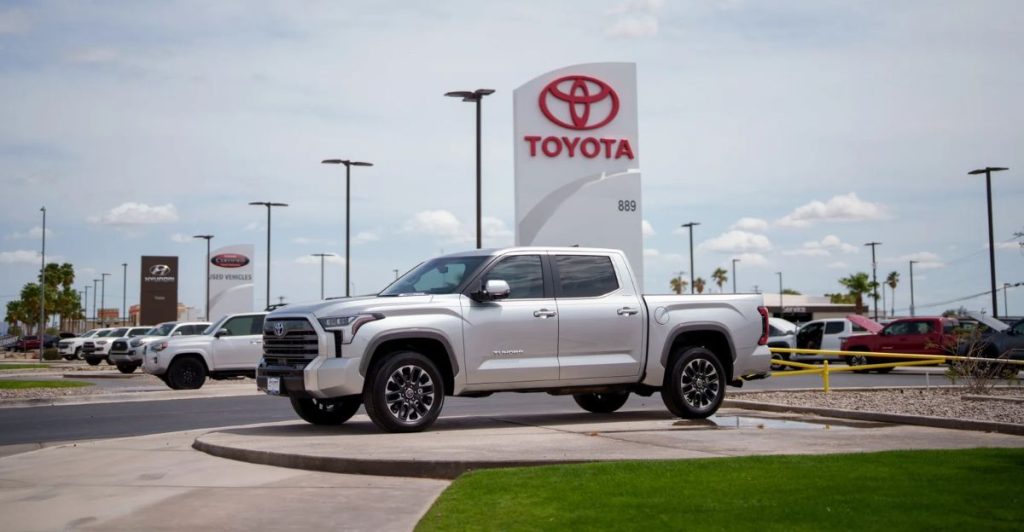
On August 7, 2025, Toyota warned that U.S. tariffs could slash earnings by about ¥1.4 trillion, or $9.5 billion. The company cut its operating income forecast for the year ending March 2026 from ¥3.8 trillion to ¥3.2 trillion. Analysts called it one of the largest tariff hits disclosed by any global manufacturer at the time. That financial reality forced Toyota to reassess production strategy and political positioning. A policy decision had turned into a direct threat to profitability, setting the stage for a high-stakes public narrative that would soon unfold across two continents.
Trump Introduced A $10 Billion Benchmark
In late October 2025, President Donald Trump said Toyota would invest roughly $10 billion in the United States, suggesting new plants across the country. The statement immediately created a public expectation. State officials, unions, and investors began treating the number as a commitment rather than a possibility. Yet Toyota had not presented the figure in its own announcements. The gap between political messaging and corporate language created tension, and it forced Toyota to respond quickly as attention grew around what had actually been promised behind closed doors.
Toyota Responded With A Careful Denial
On October 28, 2025, a senior Toyota executive stated the company had not “explicitly” promised a new $10 billion U.S. investment. The wording signaled caution rather than rejection. Toyota remained committed to U.S. expansion, but it resisted being tied to a specific figure announced externally. The response allowed the company to preserve flexibility while avoiding direct confrontation with Washington. That balance was fragile. Public expectations had already shifted, and the timeline between denial and confirmation would prove far shorter than most observers expected at the time.
A NASCAR Event Changed The Optics Overnight
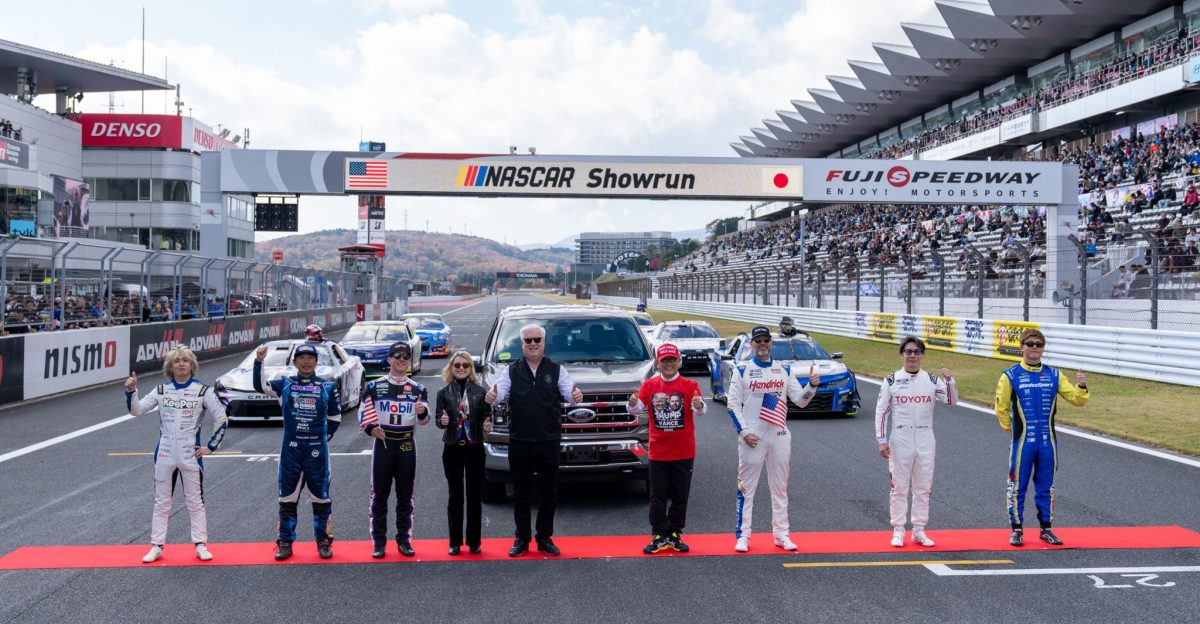
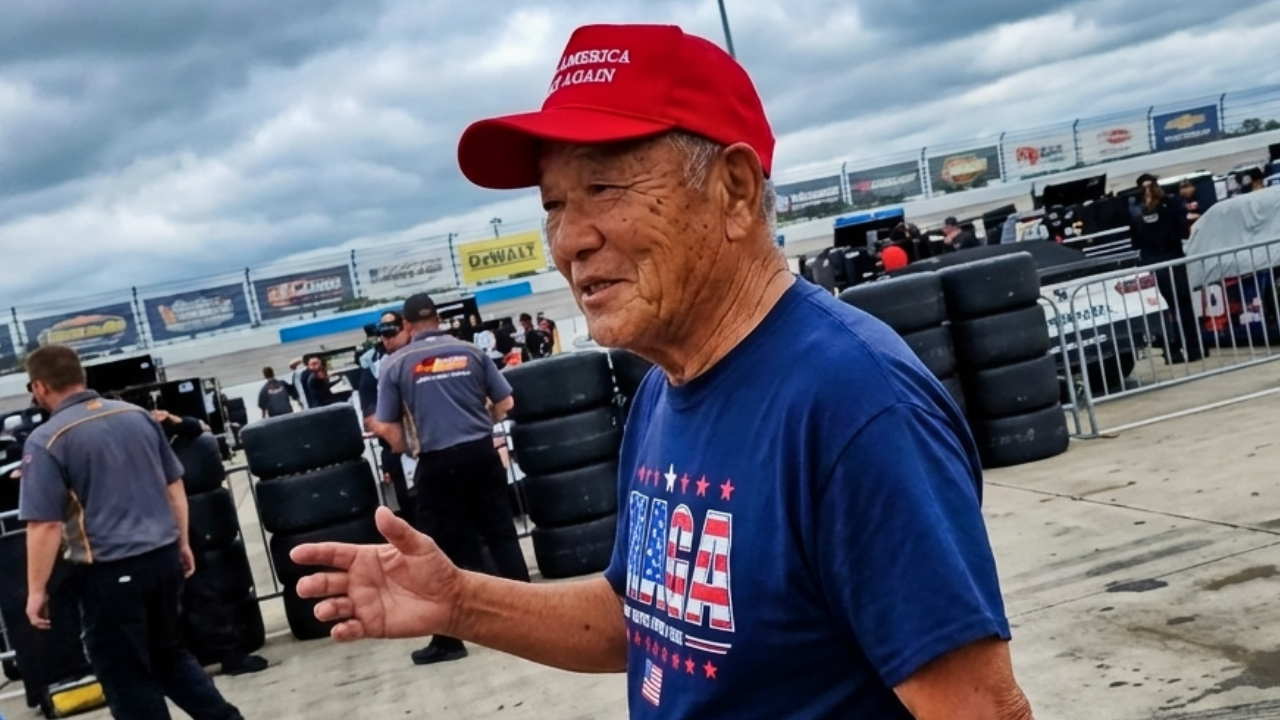
On November 16, 2025, Akio Toyoda hosted a NASCAR-style event at Fuji Speedway in Japan that drew global attention. Surrounded by American flags, stock cars, and U.S. ambassador George Glass, Toyoda drove a Ford F-150 while wearing a red “Make America Great Again” hat and a “Trump-Vance 2024” T-shirt. Images from the event spread rapidly across media platforms. The appearance created a striking contrast with Toyota’s recent denial of the $10 billion figure, adding a new layer of symbolism to an already politically charged business story.
Confirmation Came Just Days Earlier
On November 12, 2025, Toyota formally confirmed it would invest up to $10 billion more in U.S. operations over the next 5 years. The announcement was tied to its battery strategy and broader manufacturing expansion. It brought Toyota’s total U.S. investment close to $60 billion. The timing mattered. The confirmation arrived just days before the Fuji Speedway event, linking corporate action with public imagery. What had been uncertain weeks earlier was now official, and the scale of the commitment began to take clearer shape through real projects.
North Carolina Became The Investment Anchor
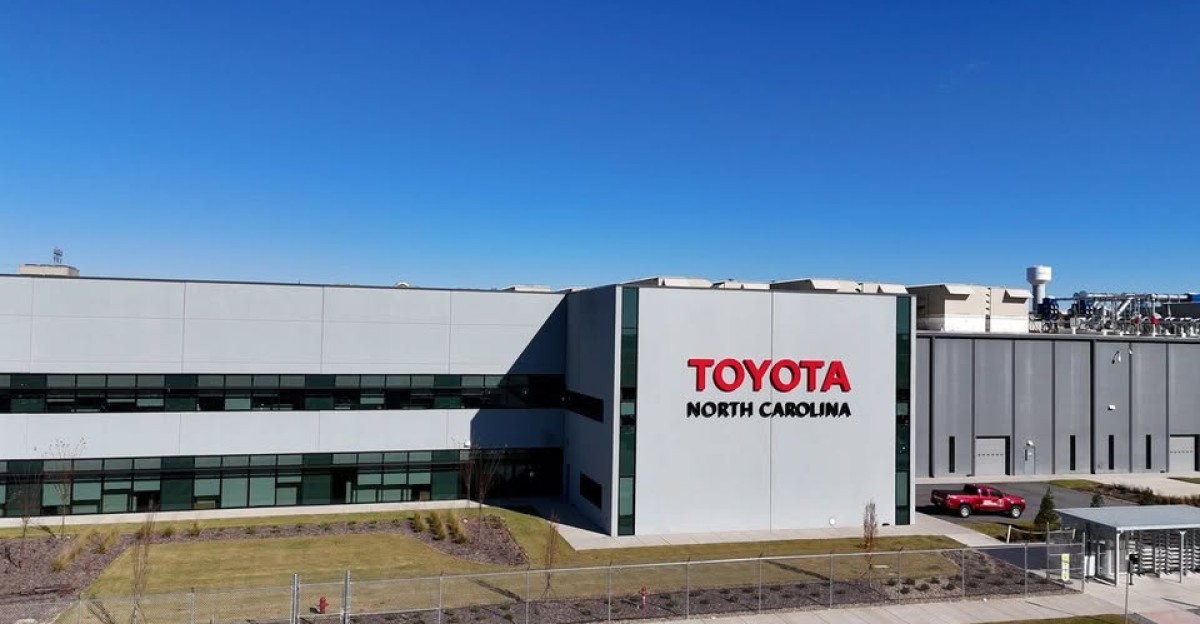
Toyota’s battery plant in Liberty, North Carolina, became the centerpiece of the expansion. The nearly $14 billion facility was set to begin shipments in 2025 and support about 5,000 jobs. It marked Toyota’s first dedicated in-house battery plant outside Japan and its 11th U.S. manufacturing site. The scale of the project demonstrated that the $10 billion plan was grounded in long-term infrastructure rather than short-term announcements. With production tied to hybrids, plug-in hybrids, and electric vehicles, the site positioned Toyota for the next phase of automotive demand.
Kentucky And Indiana Followed With New Spending
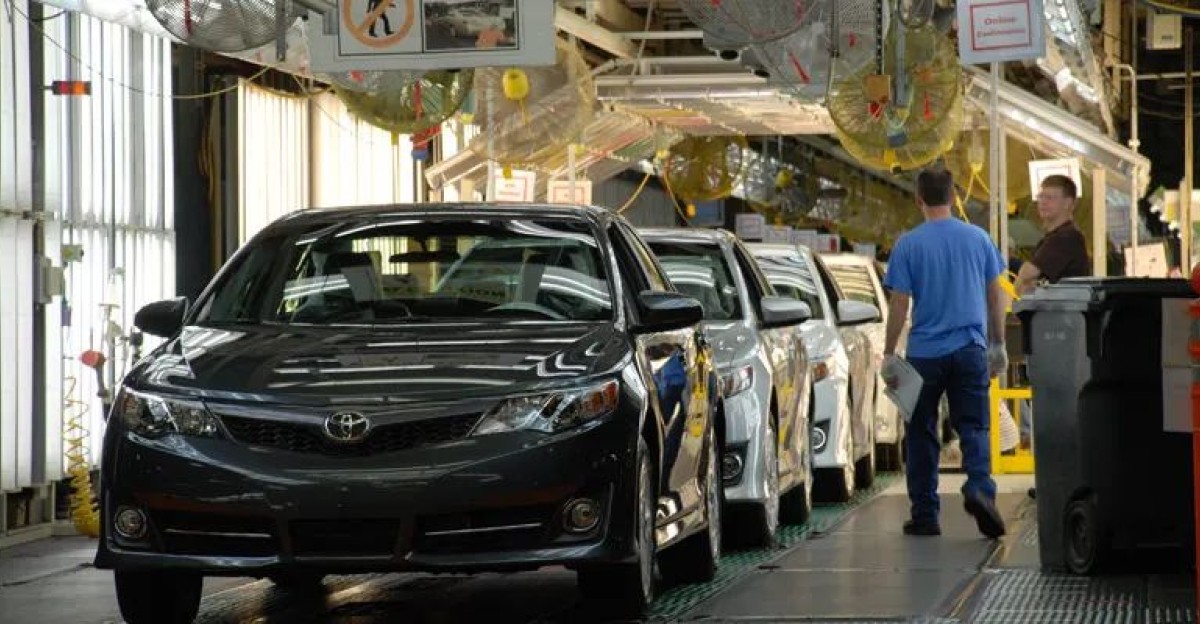
On March 23, 2026, Toyota announced nearly $1 billion in additional investment across Kentucky and Indiana. The Georgetown plant received $800 million to expand Camry, RAV4, and future electric SUV production. Princeton, Indiana, received $200 million to increase Grand Highlander output. These upgrades were framed as part of the broader $10 billion plan. By attaching specific dollar amounts to specific factories, Toyota translated a headline figure into measurable industrial activity, giving local economies and policymakers clear evidence of where the investment was being deployed next.
The Strategy Behind “Build Where We Sell”
Toyota leaders described their approach with a clear principle: “building where we sell and buying where we build.” The strategy focuses on localizing production to reduce exposure to tariffs and supply disruptions. With more than 10 U.S. plants and about $60 billion already invested, Toyota had the foundation to scale quickly. Expanding battery production and vehicle assembly within the United States reduces reliance on imports and aligns with shifting trade policies. That approach also reshapes supply chains, creating ripple effects across suppliers, logistics networks, and regional manufacturing hubs.
Workers And Markets Face The Real Impact
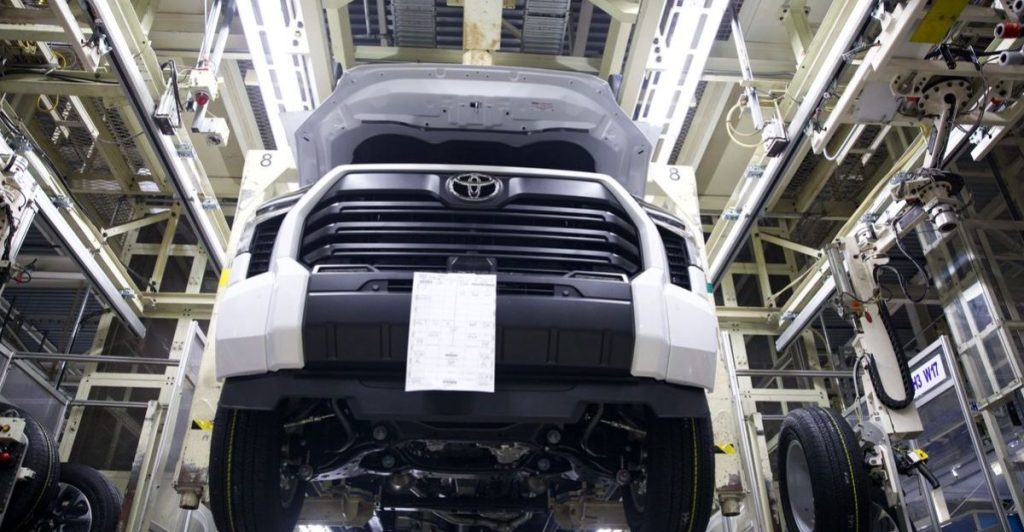
Toyota’s expansion carries mixed consequences. In the United States, about 50,000 employees and more than 280,000 supported jobs could benefit from stable production and supplier demand. Consumers may see steadier pricing and improved vehicle availability as tariffs become less disruptive. At the same time, shifting production toward U.S. plants can reduce output in Japan and other regions tied to exports. By March 2026, the direction was clear. Toyota was restructuring its North American operations to match political realities, economic pressures, and long-term market demand.
Sources:
Toyota warns of $9.5 billion tariff hit, slashes annual profit forecast. Reuters, August, 07 2025
Toyota Braces for $9.5 Billion Hit From US Tariff Turmoil. Bloomberg, August, 07 2025
Toyota says it did not explicitly promise Trump new $10 billion investment. Reuters, October, 28 2025
Toyota opens U.S. battery plant, confirms $10 billion in new investment. CNBC, November, 12 2025
Toyota Powers On New North Carolina Automotive Battery Plant. Toyota Motor Corp., February, 04 2025
Toyota Announces $1 Billion Investment in Kentucky and Indiana Plants. Toyota Motor Corp., March, 23 2026