Tesla’s $30K Cybercab Hits Production With No Steering Wheel Despite 14 Crashes During Tests
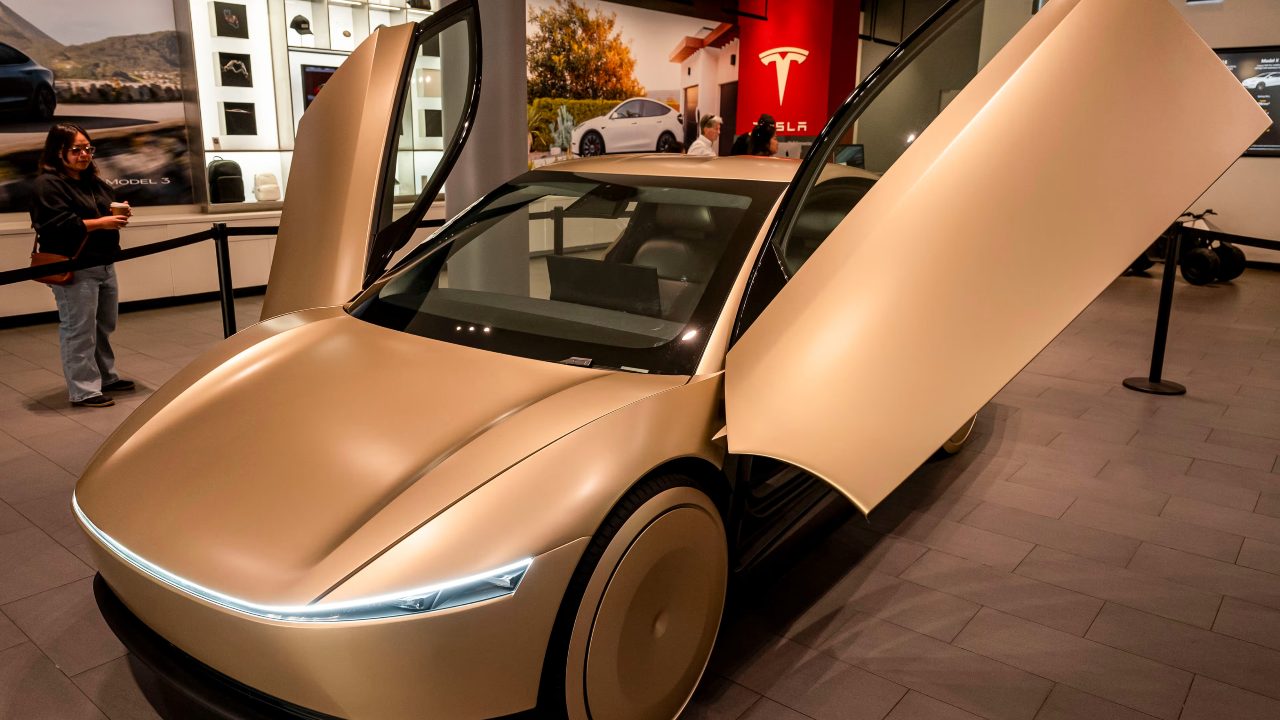
Tesla’s first Cybercab came off the assembly line at its Texas factory in February 2026. It has two seats, eight cameras, and a screen up front — but no steering wheel, no pedals, and no side mirrors. It barely looks like a traditional car. The company that made its name by giving drivers more control built something that removes drivers entirely. Full-scale production begins in April 2026, and Musk said it will cost less than $30,000.
Proving Ground
Before a single Cybercab hit the assembly line, Tesla ran its autonomous system through a real-world validation fleet in Austin. About 45 self-driving cars were running in Austin with human safety monitors in the passenger seat, covering around 700,000 paid miles by November 2025. They were part of a bigger fleet of roughly 500 vehicles spread across Austin and the Bay Area. The monitors were there because the software wasn’t yet ready to operate on its own. Tesla used that fleet as its testing ground — the data it needed to justify its next steps. Musk acknowledged that production would start slowly before ramping up quickly.
The Assumption
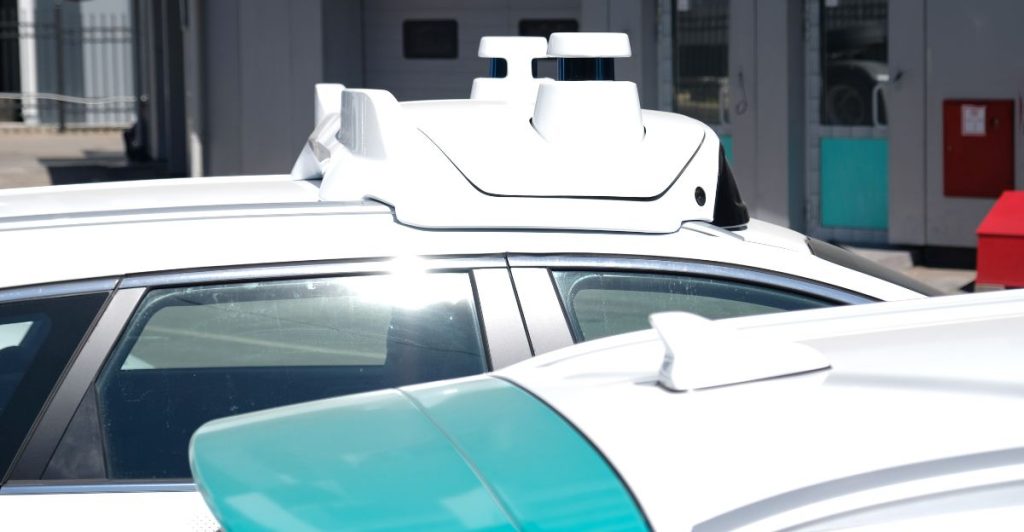
For the past ten years, the self-driving car industry has pushed one big idea: computers drive better than people. No distractions, faster reactions, no road rage. Waymo backed that up using cameras, lidar, and radar, and hit 450,000 paid rides a week in six cities. Tesla went a different direction — just eight cameras and AI, no lidar. The gamble was that software trained on billions of miles of driving data could beat dedicated sensors. The Austin fleet was supposed to prove that gamble right.
The Data
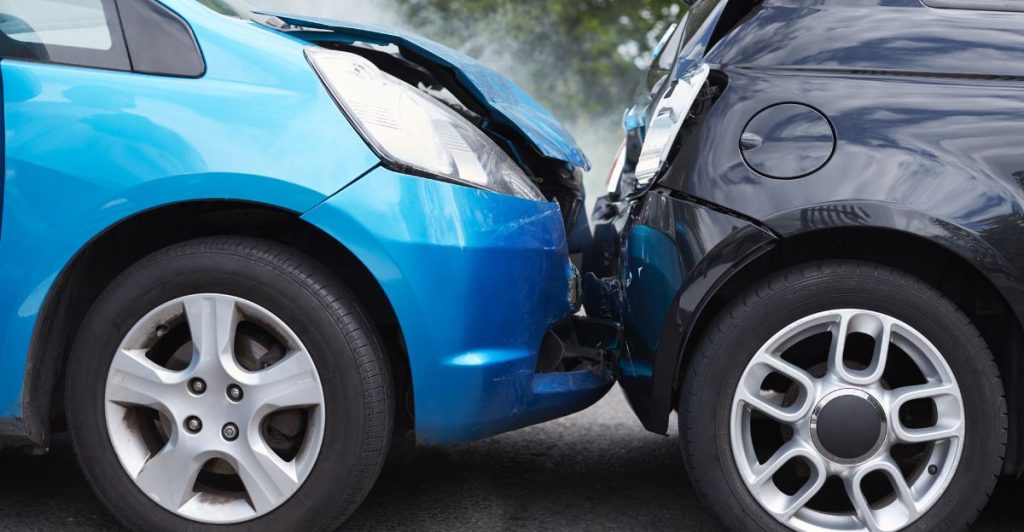
From June 2025 to January 2026, Tesla’s Austin fleet was involved in 14 crashes that were reported to NHTSA. Every car had a human safety monitor inside. Over roughly 800,000 miles driven, that works out to about 1 crash per 57,000 miles. By Tesla’s own Vehicle Safety Report, an average human driver experiences a minor collision about once every 229,000 miles — making Tesla’s system roughly four times worse. Musk’s response to the gap was a six-word philosophy: “This car either drives itself or it does not drive.” Then he greenlit a vehicle with zero human fallback.
No Brakes
Ignore the marketing — the numbers are straightforward. A system that crashes about 4 times more often than human drivers is now being installed in a car where no one can take over. There’s no steering wheel to grab in an emergency and no pedals to slam. If the software misses a stop sign or blows through a red light, the passenger can’t do anything but sit there. Tesla’s $2 billion investment in Musk’s xAI company is supposed to close that gap through algorithmic improvement. Every software update is applied to the entire fleet simultaneously.
The Economics
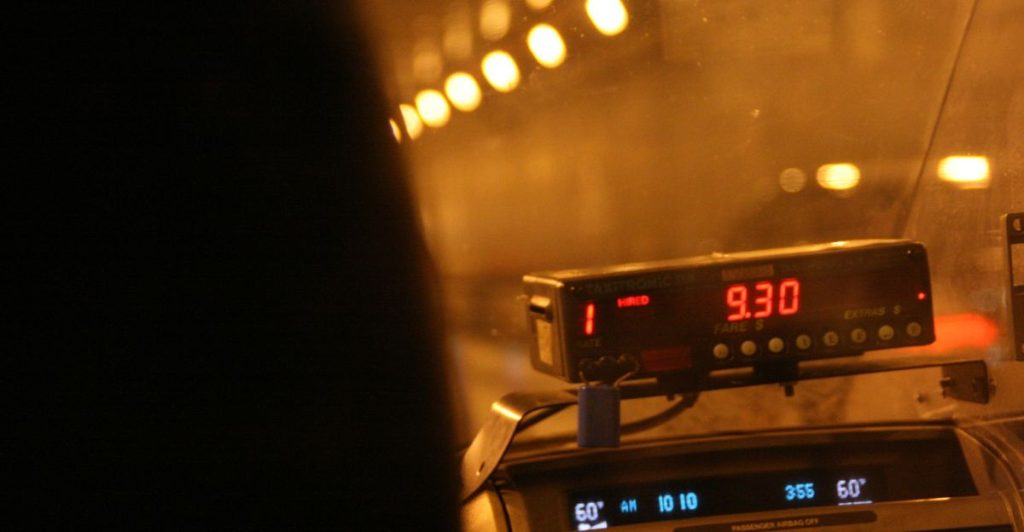
The Cybercab targets $0.20 per mile at scale. Waymo runs roughly $0.40. A regular taxi charges over $2 per mile. For Tesla’s pricing to work, each Cybercab would need to be on the road 50 to 60 hours a week with almost no downtime. During Tesla’s Q4 2025 earnings call, the company said 90% of rides carry only one or two people, which is exactly why the Cybercab has only two seats. Any deviation in utilization, insurance costs, or maintenance pushes the real price above that $30,000 target. The margin is razor-thin by design.
Seven Cities
Tesla plans to expand its robotaxi service to Dallas, Houston, Phoenix, Miami, Orlando, Tampa, and Las Vegas in the first half of 2026. Seven new cities. Seven new crash datasets. That expansion will help answer something the Austin data can’t on its own: whether the crash rate, about four times worse than human drivers’, is just an Austin problem or a broader issue with the system itself. In June 2025, the U.S. Department of Transportation made it easier for carmakers to apply for permission to sell vehicles without steering wheels. In other words, regulators cleared the way before the safety concerns were fully resolved.
The Pattern
Tesla promised robotaxis in 2020, then pushed it to 2021, then 2022, 2023, 2024, and 2025. Every missed deadline came with an even bigger promise. The Cybercab is different because an actual vehicle is now being built on a production line. But current rules only allow Tesla to sell 2,500 steering-wheel-free vehicles per year. Tesla wants to sell millions. Getting there would require new regulations that don’t exist yet. The FCC approved wireless charging. NHTSA made it easier to get exemptions in June 2025. Then the first Cybercab rolled off the line in February 2026. Calling all of that a coincidence takes a leap of faith.
Liability Vacuum
When a Cybercab crashes, blame falls on one of two ways. There’s no driver to point the finger at, and no steering wheel to grab. Either Tesla’s software caused the crash, or it didn’t. A jury already hit Tesla with a $329 million verdict for misleading people about Autopilot. Now the company has built a car that removes the very thing that complicated past lawsuits: the human driver. No one has figured out who covers insurance — the Cybercab owner, Tesla, or whether crash victims go after the company directly. The legal rules are being figured out after these cars are already on the road, not before.
The Real Race
Waymo showed that robotaxis can run safely at scale. Tesla is showing they can be built cheaply at scale. Those are two very different things — and the Cybercab is a bet that being cheap will win out before safety catches up. At full speed, Tesla could produce one Cybercab every 10 seconds, or about 315,000 a year. These cars are heading into cities with no clear rules on who’s liable in a crash, no plan for displaced drivers, and no long-term safety data. Anyone paying close attention knows the Cybercab isn’t really a car launch. It’s a move to exploit regulatory gaps — just with a windshield attached.
Sources:
Electrek, “Tesla ‘Robotaxi’ adds 5 more crashes in Austin in a month,” February 17, 2026
Teslarati, “First Tesla Cybercab rolls off Giga Texas production line,” February 17, 2026
Reuters, “Tesla invests $2 billion in Musk’s xAI and reiterates Cybercab plans,” January 28, 2026
CNBC, “Tesla held partially liable for 2019 fatal autopilot crash,” August 1, 2025
NHTSA, “U.S. Transportation Secretary Sean P. Duffy Streamlines Exemption Process,” June 12, 2025
Teslarati, “Tesla confirms Robotaxi expansion plans with new cities and aggressive timeline,” January 28, 2026