Tesla Builds 50,363 Cars Nobody Bought—JPMorgan Sees 60% Collapse
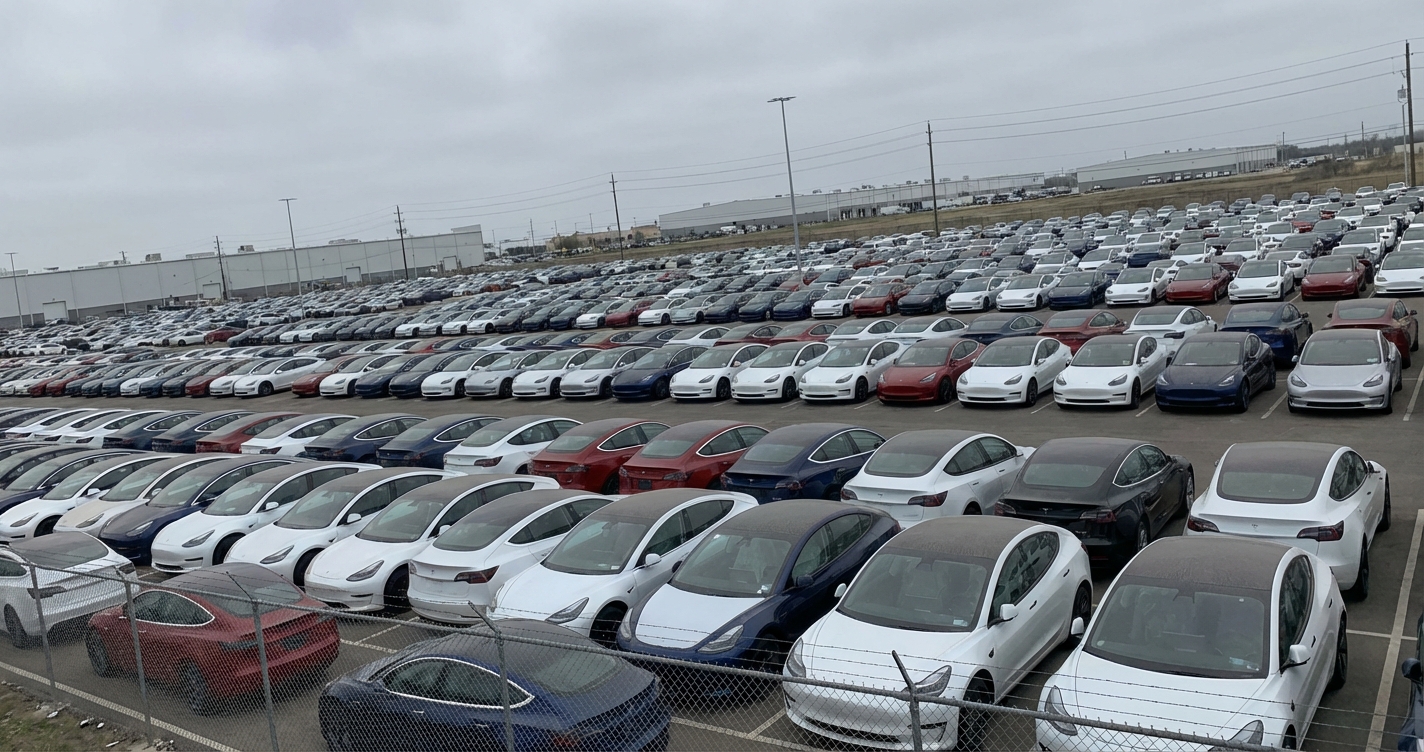
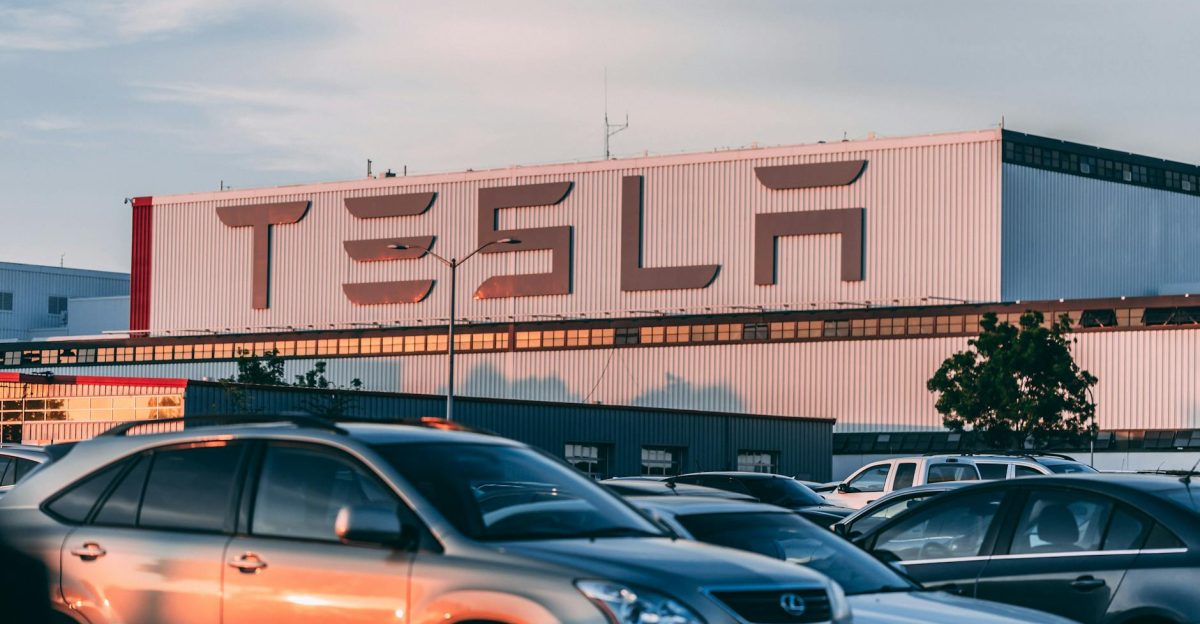
Somewhere across Tesla’s global network, 50,363 electric vehicles sit unsold. Factory floors humming, assembly lines pushing metal, parking lots filling with cars that have no buyers waiting. Q1 2026 production hit 408,386 units. Deliveries landed at 358,023. That gap represents the largest quarterly inventory surplus in Tesla’s 23-year history. And it arrived alongside a rare occurrence: a second consecutive quarterly delivery miss. Wall Street expected 365,000 units. Tesla couldn’t even clear that bar.
Tesla’s Q1 2023 deliveries stood at 422,875. Three years later, Q1 2026 deliveries fell to 358,023—a 15% decline. Yet the factories kept running near peak output, pushing 408,386 vehicles off the line in Q1 2026 alone. The federal EV tax credit of up to $7,500 expired September 30, 2025, yanking a major purchase incentive. Tesla China insurance registrations—a measure of domestic retail demand—fell sharply in January 2026 to just 18,485 units, roughly a three-year low, even as wholesale shipments rose 9% year-over-year to 69,129 units. The factories kept building anyway, as if demand were a detail someone forgot to check.
BYD Ate Tesla’s Lunch Worldwide
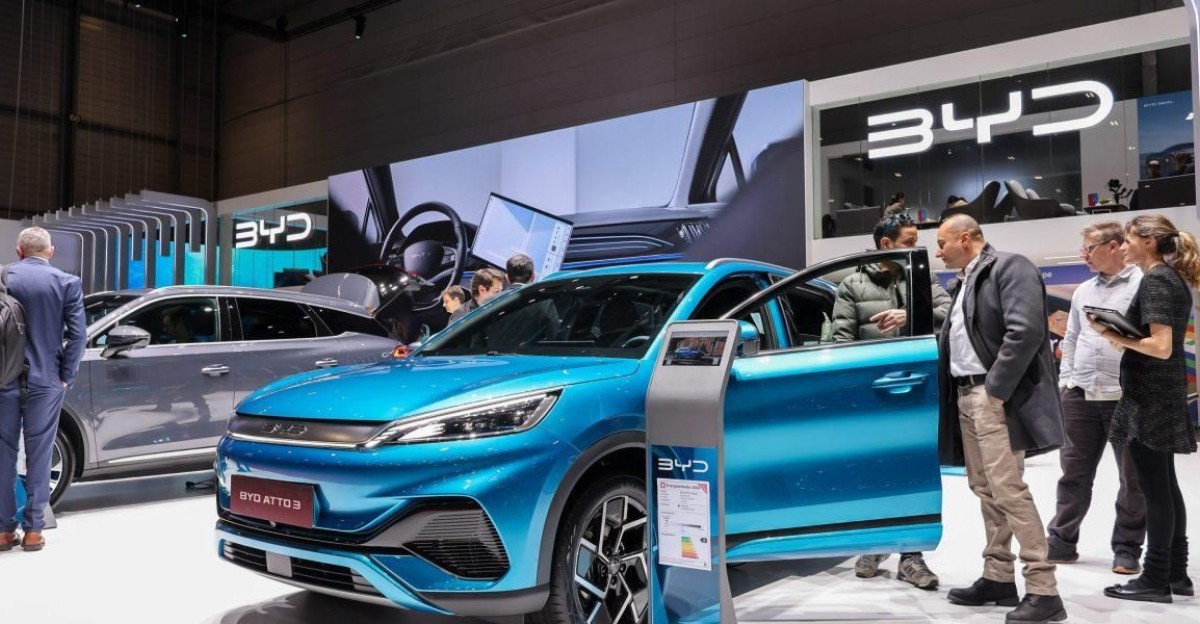
BYD sold 2.26 million EVs in 2025 versus Tesla’s 1.64 million, marking the first year a Chinese automaker outsold Tesla globally. In Europe, BYD outsold Tesla for a second consecutive month in February 2026, with BYD registrations climbing 162% year-over-year while Tesla’s EU registrations grew about 29%.
Tesla’s European sales declined significantly across 2025. BYD dramatically expanded its European volume in the same period. The supply-constrained narrative that Tesla bulls clung to for years just ran headfirst into a competitor growing far faster on the same continent.
The Number That Broke the Narrative
In June 2022, JPMorgan’s model projected Tesla would deliver roughly 1.36 million vehicles per quarter by 2026. The actual number: 358,023. A roughly 74% miss. The stock rose 50% over that same period.
JPMorgan analyst Ryan Brinkman called it directly: “Record surge in unsold vehicles adds to free cash flow woes.” He slapped an Underweight rating on Tesla with a $145 price target, implying roughly 60% downside from recent trading levels near $350. The market rewarded a company that missed by a million units. That disconnect is the entire story.
The Machine That Builds Without Buyers
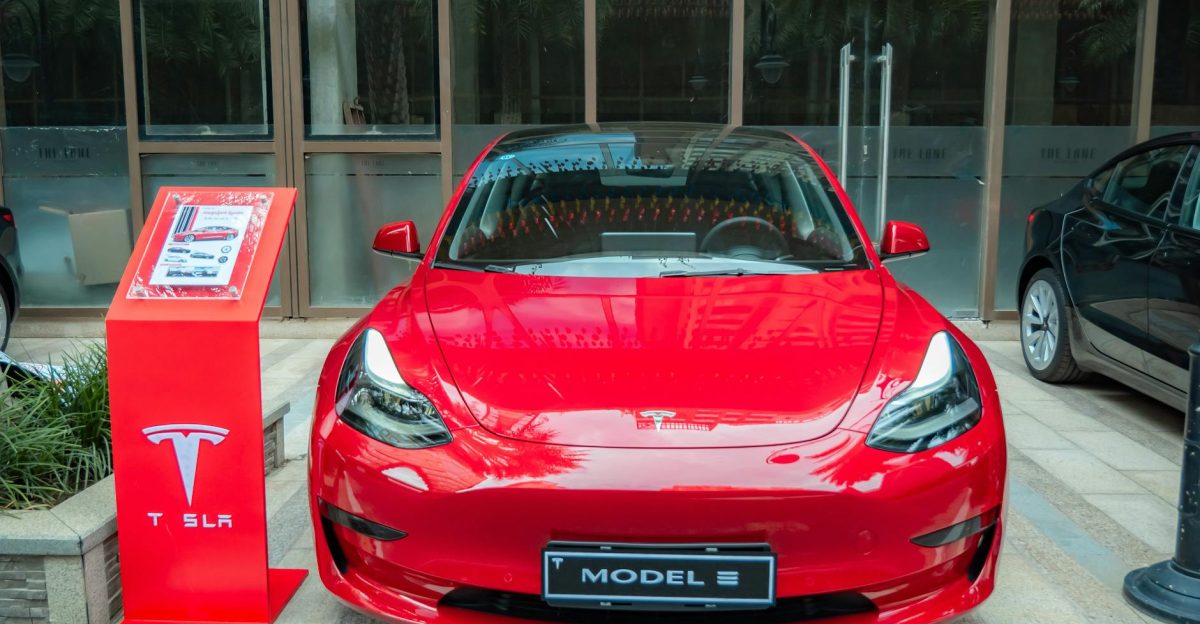
Tesla’s production system has decoupled from demand. Factories run at capacity regardless of orders. Model 3 and Model Y lines produced 394,611 vehicles but delivered only 341,893, creating a 52,718-unit surplus in that segment alone. In the most recently reported quarter, Q1 2025, operating margin had already collapsed to 2.1% from 5.5% the prior year. Revenue dropped 9% to $19.3 billion.
Adjusted earnings per share fell 40% to $0.27. Q1 2026 financials, due April 22, are expected to show further deterioration. At JPMorgan’s $145 price target, the company would generate roughly $1.30 in profit for every $100 of stock value. That ratio belongs to a struggling manufacturer, not a $1.3 trillion titan.
The Cash Furnace Ignites
Goldman Sachs analyst Mark Delaney said it plainly: “We now expect negative overall FCF this year for Tesla.” Planned capital expenditures for 2026 exceed $20 billion, up from $8.5 billion in 2025. That 135% capex increase lands while cash flow turns negative.
JPMorgan’s forecast shows free cash flow swinging from a $35.7 billion projection in June 2022 to negative $5 billion in 2026. A $40.7 billion reversal. The regulatory credit business that generated roughly $2 billion in 2025 is fading under current policy changes.
Killing the Flagships to Build Robots
Tesla is sunsetting Model S and Model X production, with orders winding down in early 2026 and lines shutting by mid-year. Those lines are being repurposed for Optimus humanoid robot manufacturing. High-volume Optimus production targets 2027.
That creates an extended revenue void where proven car sales disappear and robot revenue doesn’t yet exist. An estimated 35,000 to 40,000 annual units of established demand, gone. Cybercab production is slated to begin in 2026, but with NHTSA running multiple open investigations into Tesla’s driver-assistance software covering millions of vehicles, the regulatory runway looks short.
The Binary Bet Wall Street Priced In
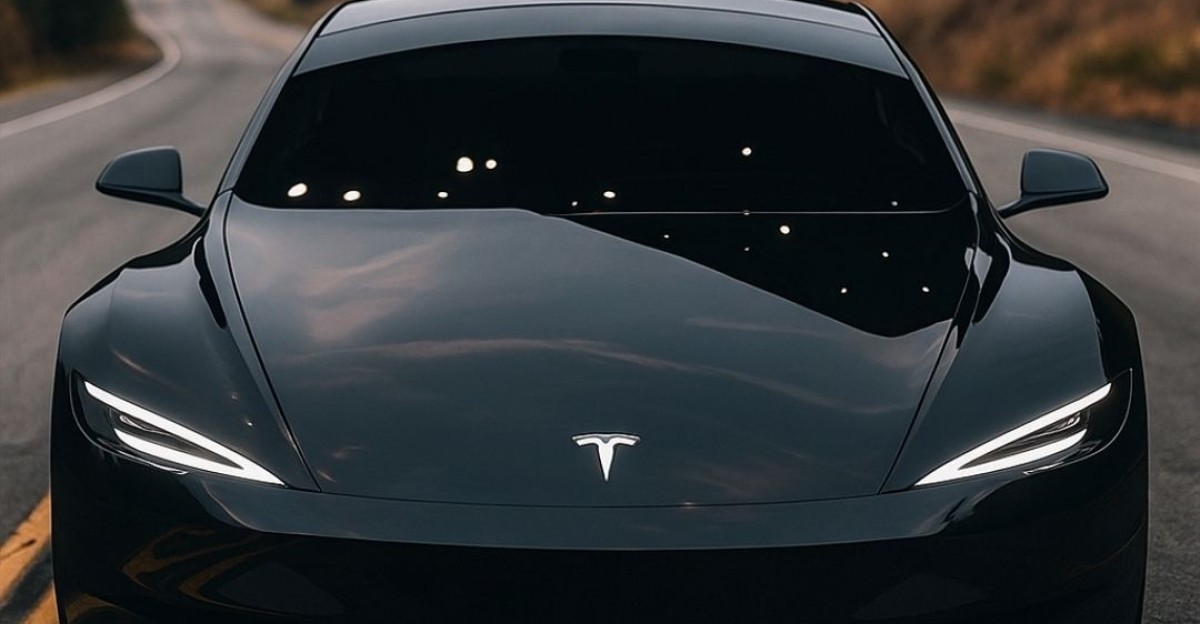
Tesla’s $1.3 trillion market cap exceeds the combined value of Toyota, BYD, GM, Ford, Hyundai, Kia, Mercedes, Stellantis, and more than a dozen other global automakers. That valuation requires Tesla to earn $40 billion or more annually by decade’s end, based on zero commercialized robotaxi or Optimus revenue today.
Brinkman framed it: expectations “collapsed for all financial and performance metrics across all time periods through the end of the decade,” yet the stock climbed 50% and analyst targets rose 32%. The market priced in a miracle. The cars priced in reality.
The Dominoes Still Falling
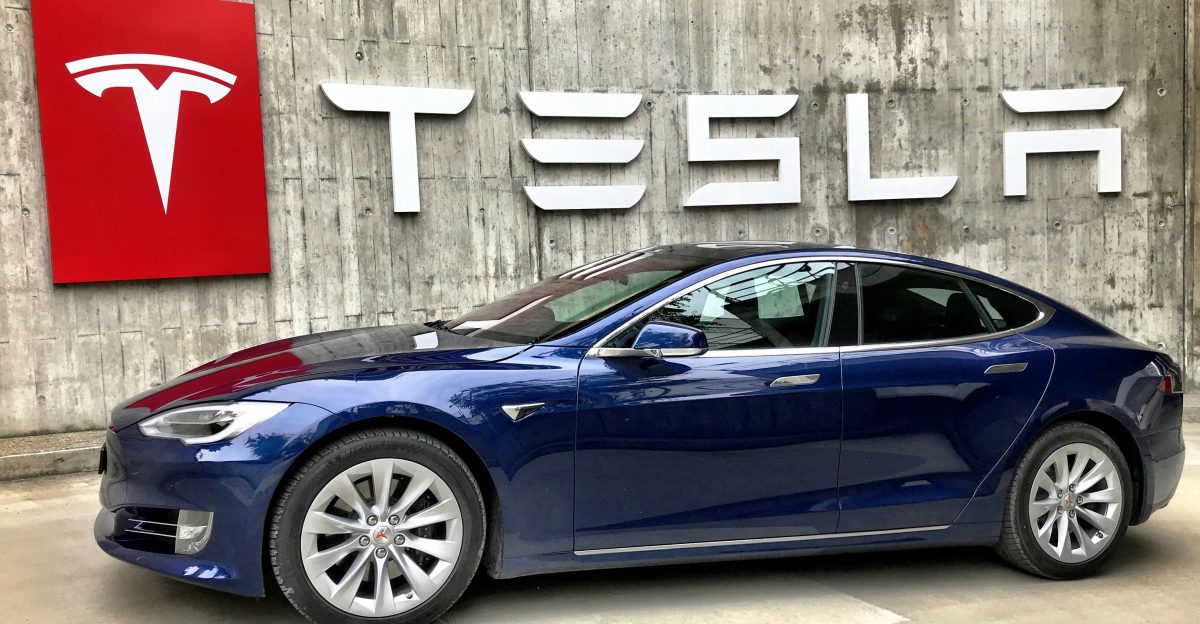
If inventory fails to clear by summer 2026, aggressive price cuts will crush margins further and trigger industry-wide EV discounting from Ford, GM, and Stellantis. Used Tesla values are already accelerating downward. New 25% tariffs on imported auto components add an estimated $5,000 to $6,250 in per-vehicle cost pressure.
Elon Musk’s more than $290 million in political spending has fueled consumer backlash measurable in depressed sales. Multiple Wall Street banks cut price targets in April 2026. That synchronized move signals structural concern, not a bad quarter.
Fifty Thousand Cars and No Safety Net
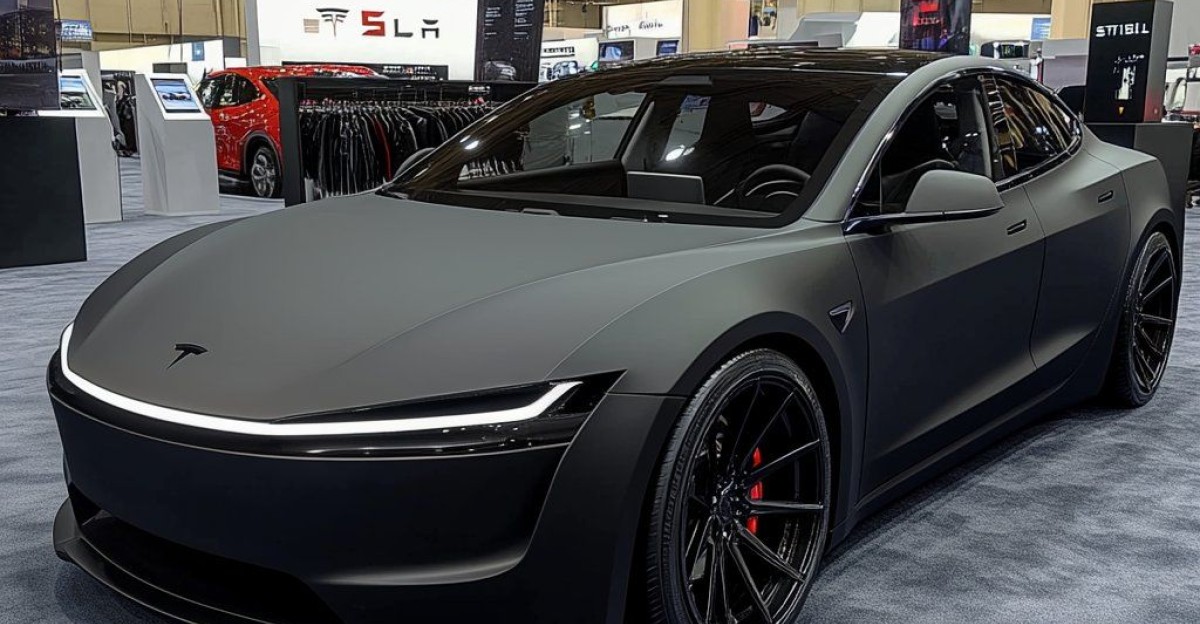
Tesla’s stock trades at well over 100 times forward earnings for a company whose core car business is shrinking, whose margins sit at pandemic-era lows, and whose next revenue-generating product won’t ship at scale for over a year. The 50,363 unsold vehicles aren’t a blip.
They’re the moment the market’s assumption of unstoppable demand collided with a parking lot full of cars nobody ordered. If Cybercab stumbles or Optimus delays again, there is no backstop. Just a $1.3 trillion valuation searching for a business model to justify it.
Sources:
Tesla Inc., “First Quarter 2026 Production, Deliveries & Deployments,” press release, April 2, 2026.
Fortune, “A J.P. Morgan Analyst Sees 60% Downside to Tesla Stock—and He May Be Too Optimistic,” April 7, 2026.
CnEVPost, “BYD Registrations Jump 162% in Europe, Beating Tesla Again,” March 24, 2026.
Tesla Inc., “Q4 2025 Update,” quarterly earnings report, Jan. 29, 2026.
CNN, “Elon Musk Spent More Than $290 Million on the 2024 Election, Final FEC Filings Show,” Feb. 1, 2025.
Carbon Credits, “Tesla Reports First-Ever Annual Revenue Drop in 2025, Carbon Credit Sales Also Dip 28%,” Jan. 28, 2026.