Stellantis Took $529M To Build Jeeps In Canada Then Moved Jobs To Illinois—4,475 Canadian Jobs Erased
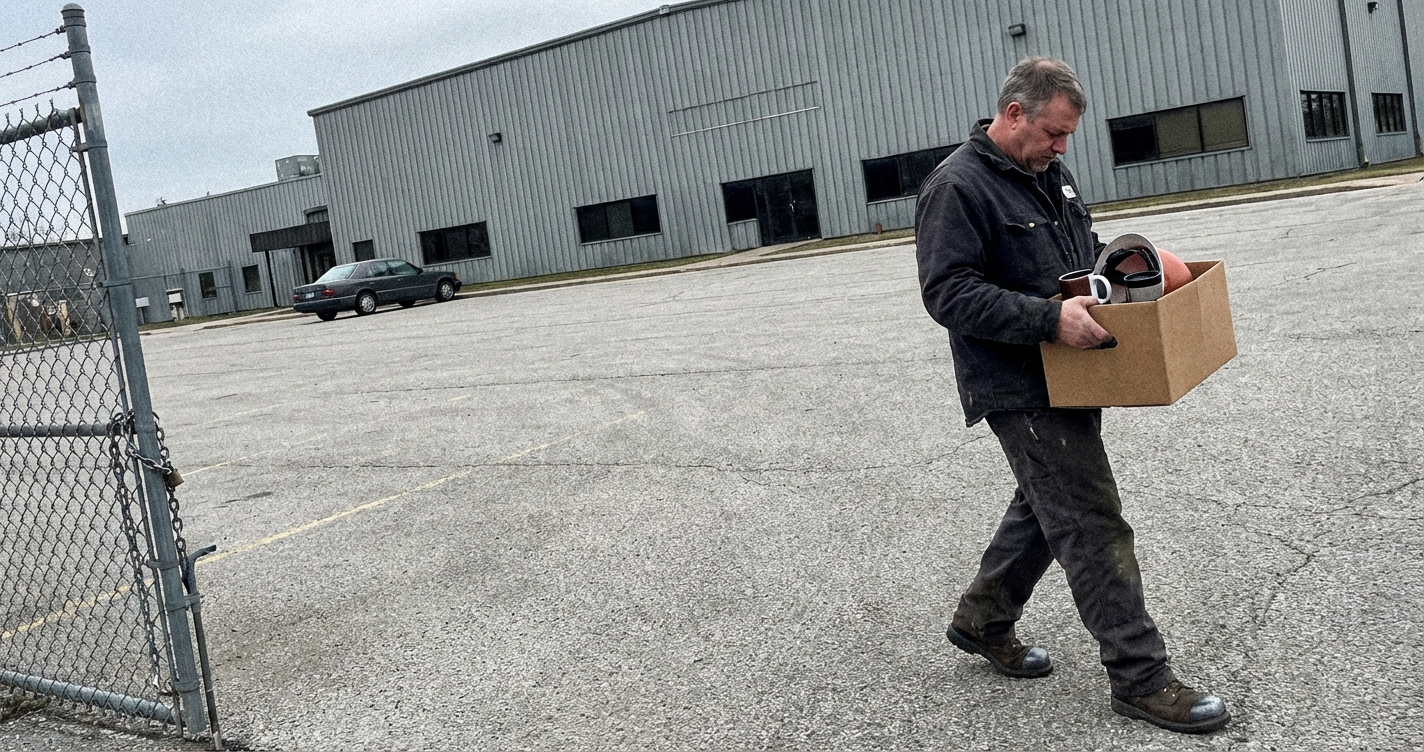
The Brampton Assembly Plant sits empty. Has for two years now. About 3,000 unionized workers collect partial salary and benefits and wait for a phone call that keeps not coming. The facility that built Dodge Chargers and Challengers for nearly two decades went dark in 2024, supposedly for retooling.
Stellantis had secured up to $529 million in federal subsidies to transform the plant into a next-generation Jeep Compass factory. That was the promise. What happened next turned up to $529 million in taxpayer trust into one of the most expensive broken handshakes in Canadian auto history.
The Deal That Built a Ghost Town
In 2022, Stellantis signed a binding commitment: maintain an average of 4,475 full-time Canadian employees during the project work phases and keep production going at Brampton through December 2035, subject to defined exceptions. Canada’s Strategic Innovation Fund backed the deal with up to $529 million.
The retooling was supposed to secure Ontario’s place in the electric vehicle future. Brampton city council believed it so deeply they rezoned the plant site primarily for vehicle manufacturing in early 2026. But by then, the Jeep Compass program had already left the country. Stellantis cited U.S. tariff and policy dynamics and shifted the Compass program to Belvidere, Illinois.
The Tariff Door Nobody Guarded
While Brampton sat idle, Prime Minister Carney’s government cut effective tariffs on Chinese EVs from about 100% back down to 6.1% on January 16, 2026, under a new quota-based deal. The agreement allowed up to 49,000 Chinese electric vehicles into Canada annually, with a pathway to 70,000 a year within roughly five years.
The stated goal: attract Chinese joint-venture investment with “trusted partners.” Nobody in Ottawa apparently asked what would happen when those partners actually showed up. The U.S. kept its Chinese EV barrier at roughly a 100% additional levy. Canada dropped to 6.1%. That gap created an economic trapdoor, and Stellantis found it within weeks.
Seventy-Seven Days of Contradiction

On April 2, 2026, Stellantis proposed assembling Chinese Leapmotor electric vehicles at Brampton using knock-down kits shipped from China. Industry Minister Mélanie Joly rejected it within hours, saying Canada would not accept “cars in a box” under those terms.
Seventy-seven days earlier, her own government had signed the tariff cut and import quota that made the proposal economically rational. Joly invited Chinese investment in January. Joly blocked Chinese investment in April. The conditions she demanded after the rejection — deeper local content, supply-chain commitments, and more traditional manufacturing — weren’t spelled out in detail in the original tariff deal. She retrofitted the locks after leaving the front door wide open.
The Hidden Math of Knock-Down Kits
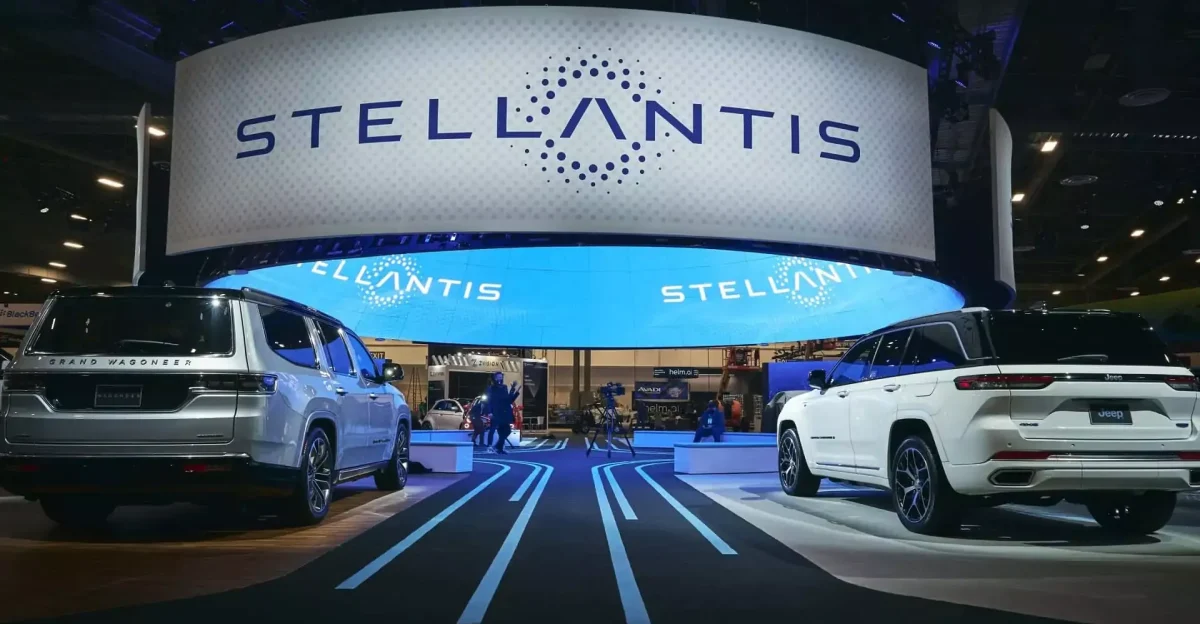
Knock-down kit assembly means importing pre-manufactured parts from China and bolting them together locally. Unifor National President Lana Payne called it exactly what it was: “This is not a proposal for assembly and manufacturing. It’s knock-down kits and it’s a huge problem.”
The original Brampton commitment promised an average of 4,475 full-time Canadian jobs tied to the project, across Stellantis’s Canadian operations. A knock-down kit facility of the type Stellantis and other automakers have used elsewhere typically employs a small fraction of a full-scale assembly plant workforce, often only a few hundred workers. That’s pennies on the dollar. Stellantis already uses similar kit-based models in multiple emerging markets. The system works by importing most parts at low or previously reduced tariffs, assembling cheaply, and calling it “manufacturing.”
The Numbers Behind the Betrayal
Stellantis holds a 20% stake in Leapmotor, acquired in 2023 for roughly €1.5 billion. Leapmotor delivered around 596,555 vehicles globally in 2025, a roughly 103% year-over-year surge in new energy vehicle sales. Meanwhile, Stellantis committed about $13 billion over four years to U.S. manufacturing, a record-sized U.S. investment package for the company in this cycle.
Belvidere alone is set to receive roughly $600 million in new investment for Compass and Cherokee production. Canada got a dispute resolution process and an empty building. The company poured billions into Illinois while roughly 3,000 Brampton workers waited on indefinite furlough for a callback that kept not arriving.
Two Hundred Thousand Dominoes

Joly herself named the real casualty: “One of the big parts of our auto industry is actually linked to the fact that we have a big auto parts sector. 200,000 workers.” Knock-down kits bypass Canadian parts suppliers almost entirely. Every bolt, panel, and wire harness arrives from China.
If this model normalizes, other Chinese automakers follow. BYD, NIO, whoever’s next. The 200,000-person supply chain contracts. Ontario Premier Doug Ford called the proposal “unacceptable.” U.S. senators have pushed to bar Chinese-linked vehicles assembled anywhere in North America from accessing U.S. incentives or, in some proposals, the U.S. market outright, including vehicles built in Canada.
The Subsidy Trap Is the New Rule

This wasn’t an accident. It was a system working as designed. Tariff architecture made knock-down kits more profitable than full manufacturing. Subsidy enforcement proved weak: Stellantis accepted an up-to-$529 million commitment, shifted production plans, and now faces a slow dispute resolution process with uncertain recovery odds for taxpayers.
Trade agreements let companies shift production between countries as long as basic rules of origin are met, often without direct penalty for shuttering one plant in favor of another. Once you see that pattern, the Leapmotor proposal stops looking like mere corporate greed and starts looking like the inevitable result of policy built without guardrails. The precedent is set: subsidies cannot force manufacturing if enforcement has no teeth.
The Stalemate Nobody Wins

Compass production at Belvidere is slated to move through pilot phases in 2026 and 2027, with sellable units starting in December 2027. Brampton has no firmly assigned long-term program. Stellantis’s CEO said in February 2026 that the company would “continue making cars in Canada for another 100 years.”
Weeks later, the Leapmotor kit proposal surfaced. Federal and provincial governments are now in open conflict: Ottawa cut tariffs to attract Chinese investment, Ontario rejected the first major Chinese-backed investor who walked through the door. The escalation path leads nowhere good for the roughly 3,000 workers still drawing partial salary for doing nothing but waiting.
The Framework Most People Miss
Everyone calling this “corporate greed” or a “Chinese invasion” is seeing the surface. The deeper structure is a three-layer incentive failure: tariffs that reward labor minimization, subsidies with weak enforcement, and trade rules that let production chase the cheapest jurisdiction.
Industry observers say Stellantis is likely to either proceed with some version of a Leapmotor partnership at Brampton under tighter conditions or, if that fails, seek another partner or buyer for the plant — potentially including a foreign manufacturer. Those are the scenarios now shaping negotiations. The 4,475‑job commitment Stellantis made in 2022 exists on paper. At Brampton, it exists nowhere else. And the workers who were promised a future are still waiting for someone to build one.
Sources:
CBC News. “Confidential contract between feds, Stellantis reveals Brampton auto plant job guarantees.” March 23, 2026.
Global News. “Champagne defends Stellantis contracts as MPs press on job guarantees at Brampton plant.” December 9, 2025.
MotorIllustrated. “Stellantis Announces $13 Billion U.S. Investment, Shifts Jeep Compass Production to Illinois.” October 14, 2025.
Mopar Insiders. “Next-Gen Jeep Compass to Start Production at Belvidere in 2027.” November 23, 2025.
The Pointer. “From ban to bargain: Mark Carney welcomes Chinese EVs under new world order.” January 30, 2026.
Automotive Logistics. “New Canada–China trade deal sees Canada cut tariff on Chinese EVs to 6.1% under quota.” January 15, 2026.