
Mexico Truck Production Crashes 50% As U.S. Fleets Never Placed The Orders
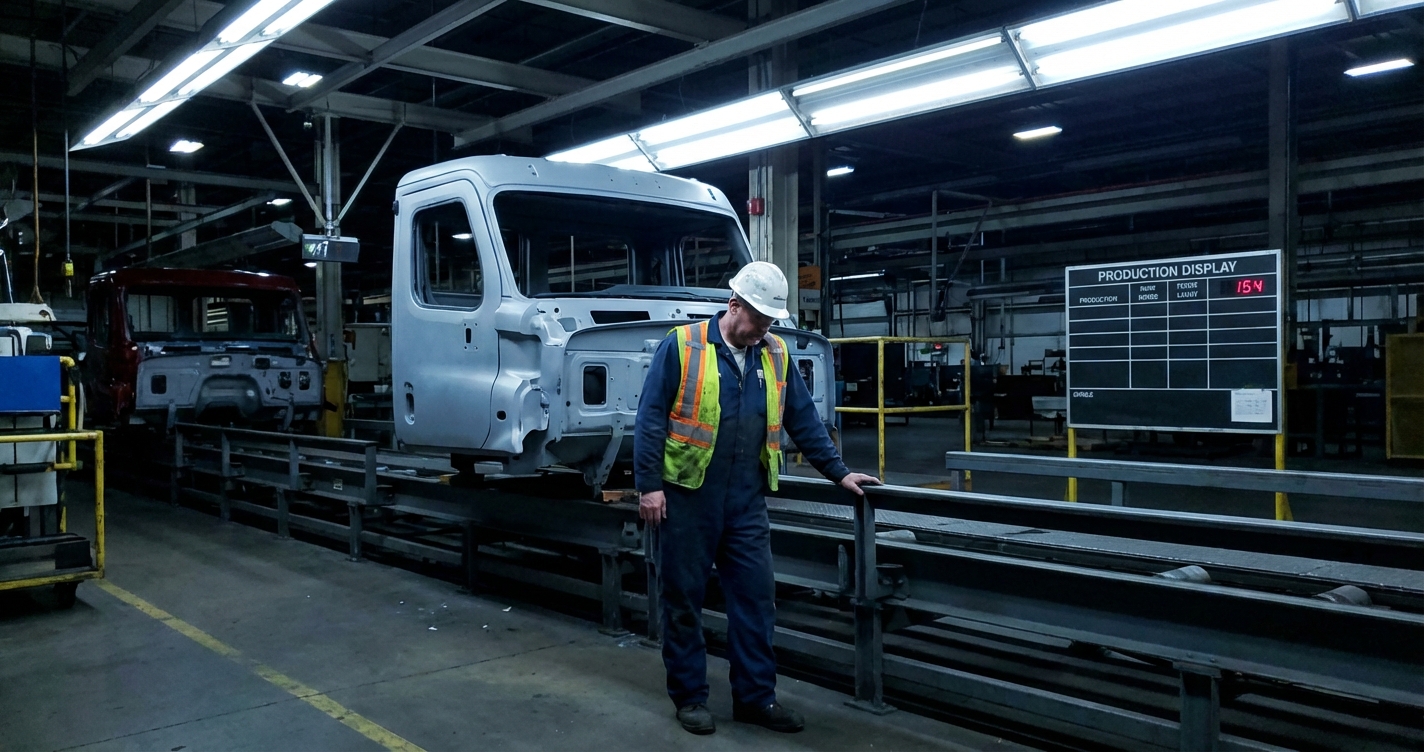
Somewhere south of the border, assembly lines that should have been running full tilt in February barely moved. Heavy-truck plants across Mexico posted output so low it looked like a typo, with production of heavy vehicles down about half from a year earlier according to official statistics. No explosion. No strike. No hurricane. What followed was a convergence of trade policy shocks, prolonged domestic market weakness, and softer North American demand. ANPACT, working with INEGI, published the monthly numbers, and the print landed like a brick through the nearshoring narrative’s front window.
The Number That Changed the Story

Mexico’s heavy-vehicle production fell nearly 50% year over year in February, with about 6,974 heavy vehicles built, a roughly 49% decline versus the same month a year earlier. About half-speed for an entire month. That kind of collapse usually comes with a headline disaster: a fire, a parts shortage, a labor stoppage. None of those happened on the factory floor. Instead, three structural forces hit at once: a 25% U.S. tariff, prolonged domestic weakness, and aggressive used-truck imports. First, a 25% U.S. tariff on medium- and heavy-duty trucks imported from Mexico — imposed under Section 232 of the national security law starting November 1, 2025 — directly suppressed export demand, with about 95% of Mexico’s heavy-truck exports historically destined for the U.S.
Tariff, Domestic Slump, Used Trucks
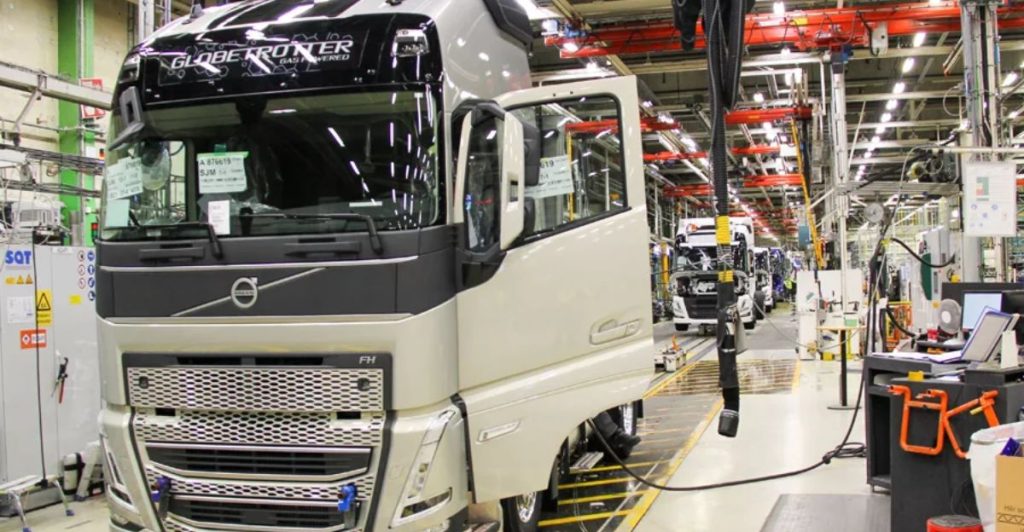
Second, Mexico’s domestic trucking market recorded its 14th consecutive month of year-over-year decline in February, driven by weak fixed gross investment in machinery and equipment. Third, used U.S. truck imports into Mexico ran at roughly 64 units for every 100 new trucks sold domestically. For years, the story sounded bulletproof: nearshoring meant stability. Move production closer, shorten supply chains, reduce risk. Investors bought it. Politicians repeated it. Mexico’s truck sector became a poster child for cross-border resilience. But ANPACT’s and INEGI’s February print cracked that narrative open. Mexico factory output can be constrained simultaneously by U.S. trade policy, domestic investment cycles, and imported used-vehicle competition, not just by anything happening inside Mexican factories.
The Nearshoring Myth Cracks
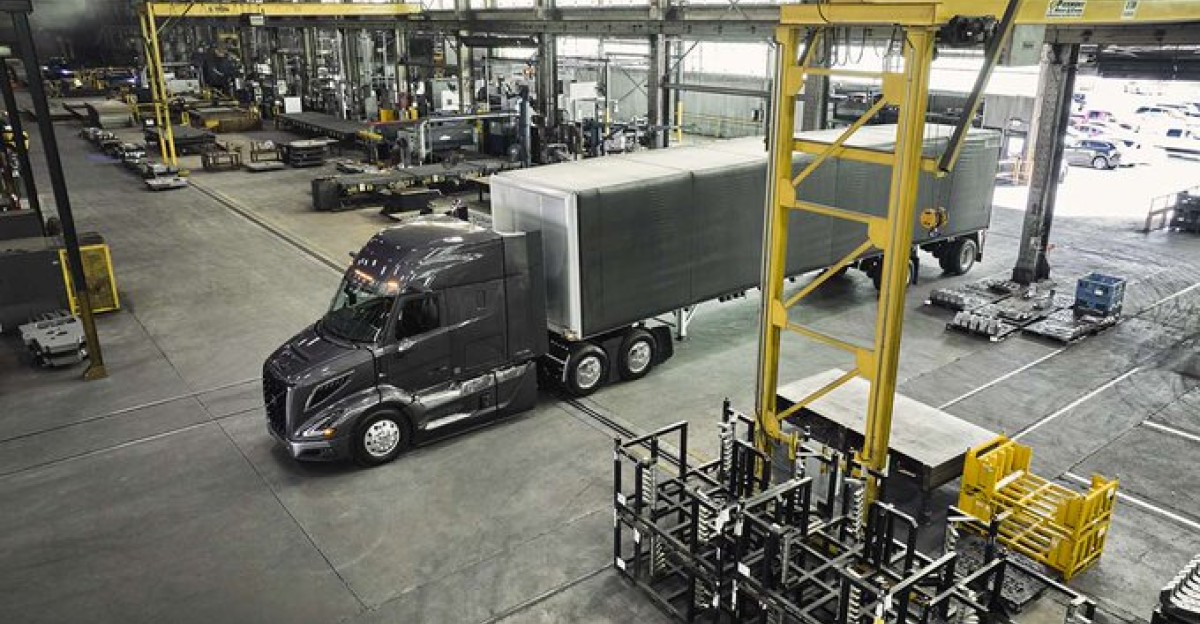
The assumption that proximity equals insulation from demand shocks was comfortable, but it was never true. The 25% U.S. tariff, U.S. truck-buying cycles, and Mexico’s own domestic contraction together are throttling Mexico’s factories. That is the February print’s real revelation. North American truck manufacturing operates as one integrated system. OEM scheduling, fleet order cycles, and cross-border supply chains form a single machine. Mexico’s output is a downstream dial, not an independent engine. When the U.S. imposed the 25% tariff and U.S. fleets reduced purchasing through much of 2025, Mexico’s build rate dropped — nearly 50% year over year in February.
How the Demand signals travels
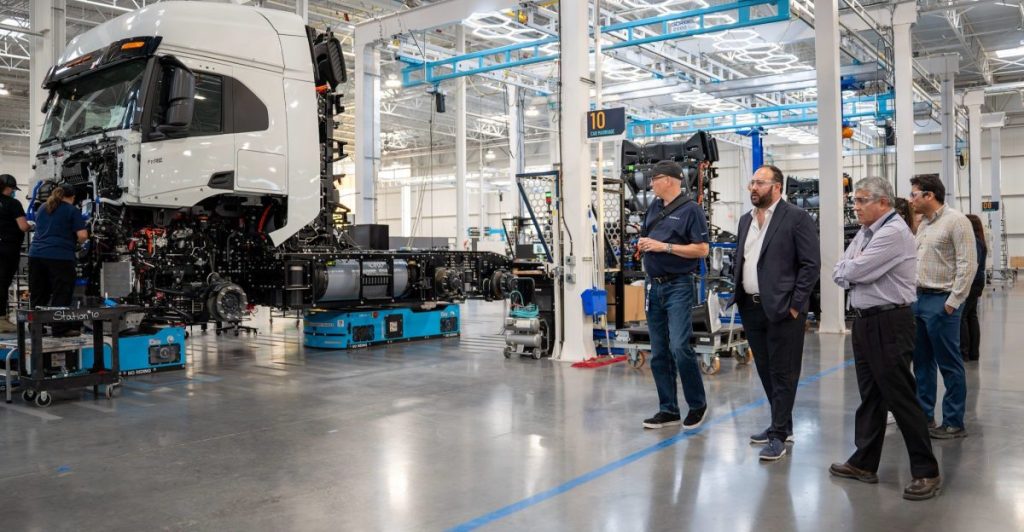
Think of it like a restaurant cutting staff when both reservations vanish and the landlord raises rent. The kitchen doesn’t have a problem. The dining room does — and so does the lease. Mexico’s plants had capacity, workers, and parts. What they lacked was demand flowing through the integrated OEM scheduling pipeline, plus export economics that made sense under a 25% tariff wall. ACT Research and FTR track North American Class 8 cycles; their data show how quickly those demand shifts translate into production cuts.
Lagged Orders, Faster Volatility

While U.S. fleet orders rebounded sharply in February 2026 — reaching near-record highs on some order measures — Mexico’s production reflects the lagged effect of 2025’s prolonged U.S. order weakness, not the current month’s order board. Nearshoring didn’t eliminate volatility. It gave volatility a faster highway — and tariffs added more lanes. The result is a disconnect between a recovering U.S. order environment and a Mexican production base still adjusting to last year’s slump and the ongoing 25% tariff shock on exports.
Proof in the Data

Nearly 50% year over year. That is not a soft patch or seasonal noise. That is output effectively cut in half against the same month a year earlier, reflected in ANPACT’s and INEGI’s monthly industry statistics. Exports fell 32% year over year to 7,849 units, consistent with a market disrupted by both the 25% tariff and weaker fleet demand throughout 2025. U.S. Census Bureau trade data provides an external audit trail for cross-border equipment flows, meaning downstream export numbers will either confirm or deepen the alarm as they update.
Ripples Through the Supply Chain

OEMs and suppliers now face a forced reassessment of build schedules and staffing after the February print. If sustained, parts suppliers and logistics providers see volume drops tied directly to lower builds. Cross-border freight linked to vehicle supply chains softens when exports of heavy vehicles fall more than 30% year over year, as they did in February. Smaller suppliers with thin margins absorb the hit first. Carriers dependent on industrial freight feel it next. One statistic in Mexico City triggers cash-flow stress across a web of businesses.
A New Gauge for the Cycle

Monthly ANPACT and INEGI prints just became a watchlist indicator for North American equipment cycle turns. That is the precedent February set. This wasn’t an anomaly to be dismissed. It was a demonstration that Mexico’s heavy-truck and heavy-vehicle sector functions as a real-time readout of U.S. demand health, trade policy direction, and Mexico’s domestic investment climate simultaneously. Once you see Mexico output as a dial controlled by American fleet purchasing, tariff regimes, and capital expenditure trends, every future ANPACT release becomes a diagnostic tool.
When Weak Orders Become Dominoes

The old stability story is dead. The replacement: demand cycles and trade policy still rule, and integration transmits shocks faster. The escalation path writes itself: weak orders combined with a live tariff on exports lead to extended downtime, delayed capital expenditure, and slower rehiring when demand eventually returns. February is early-year planning season. A collapse now can reset full-year production schedules across multiple OEMs. The squeeze compounds if builds stay depressed, as equipment availability can later tighten, and fleets may face higher prices. The same fleets that paused or reduced orders could face a truck shortage months later, paying premium prices for the capacity they starved today — while OEMs reckon with having cut production capacity under a tariff regime that may or may not be permanent.
What Smart Money Watches Now
OEMs may eventually shift production timing, adjust incentives, or remix their export strategies if demand returns and tariff policy clarifies. That counter-move is already being gamed out in boardrooms from Monterrey to Detroit, against a backdrop of persistent policy uncertainty. But the February print changed what smart money watches. Forget the nearshoring press releases. Track the ANPACT and INEGI monthly bulletins. Track U.S. Census import flows. Track Class 8 and heavy-vehicle order boards. Track Section 232 tariff developments. The people who understand this story now see something most investors and policymakers still miss: Mexico’s truck output doesn’t just tell you about Mexico. It tells you about America — and about what happens when trade policy turns an integrated supply chain into a pressure vessel.
Sources:
“Mexico truck production plunges nearly 50% in February.” FreightWaves, 11 Mar 2026.
“Heavy goods production and exports slow down in February.” T21 / ANPACT Monthly Conference, 9 Mar 2026.
“Preliminary North America Class 8 Net Orders, February 2026.” ACT Research, 2 Mar 2026.
“Mexico Ranks 5th in 2024 Auto Output, Surpassing Germany.” Mexico Business News / OICA, 10 Apr 2025.