Mercedes Wins First 3 Races of 2026—Rivals File FIA Complaints Over Engine Trick
There’s a particular kind of silence that falls over a paddock when the timing screens say something nobody was ready to hear. Albert Park, March 8, qualifying done, and George Russell’s name sat at the top by three-tenths over his own teammate, nearly eight-tenths ahead of the first non-Mercedes car. Engineers from Ferrari and McLaren stood in their garages staring at a gap they’d spent a whole winter trying to narrow. Toto Wolff, across the paddock, stared at nothing in particular, because he already knew.
While every other team had spent the winter building a car to meet the new rules, Mercedes had spent it quietly finding where the new rules had a crack, and then built its entire engine programme around that crack. Three race wins. Ten days of racing. One team. And a rulebook already rewritten once, with all the urgency of people who’ve just realised they’ve been outmanoeuvred.
The Trick Nobody Else Thought to Build
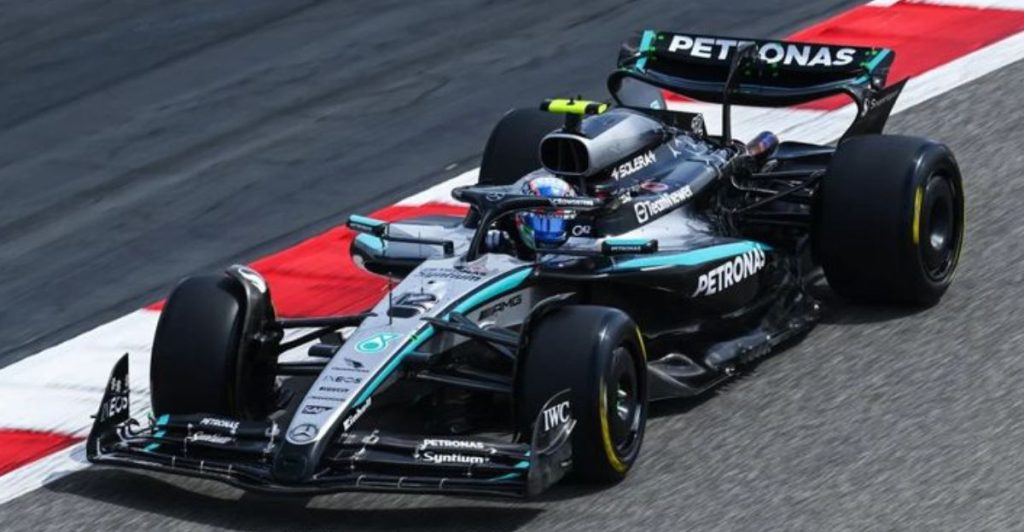
When F1 introduced its 2026 technical regulations, the compression ratio ceiling dropped from 18:1 to 16:1 — an olive branch to new manufacturers so Audi and Honda could enter without being immediately suffocated. Every team received the same document. Every team read it. Mercedes read the silence between the lines. The rules specified the 16:1 limit would be measured at ambient temperature, engine cold, stationary in the garage, and nobody had written a word about what happens when that engine fires, climbs to operating heat, and the metal inside it breathes and swells back toward the old ceiling.
Mercedes built a power unit that passes the cold check at exactly 16:1, then runs hot on track in a way no static test in the garage would ever detect. Ferrari, Honda, and Audi lodged formal complaints with the FIA. Emergency meetings were called before the season had begun.
Toto Wolff, Unmoved
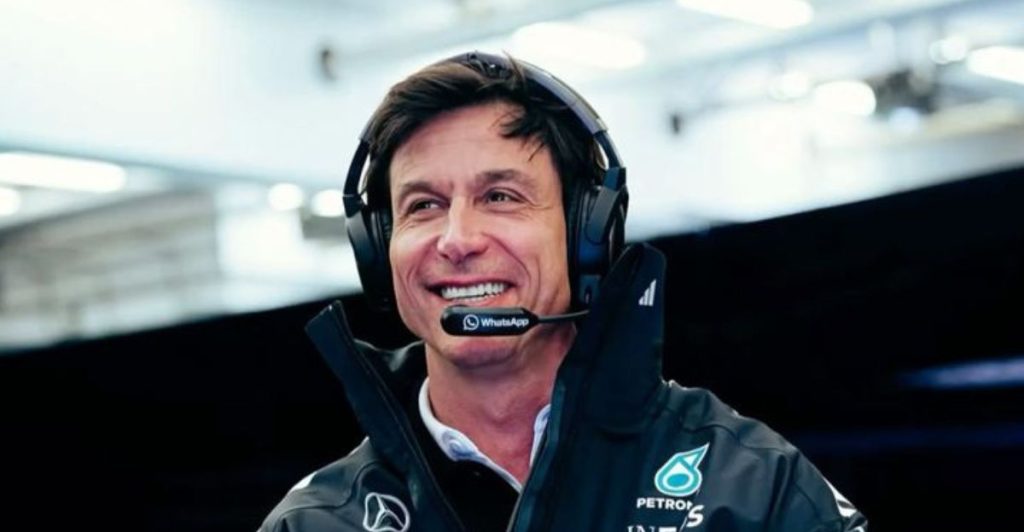
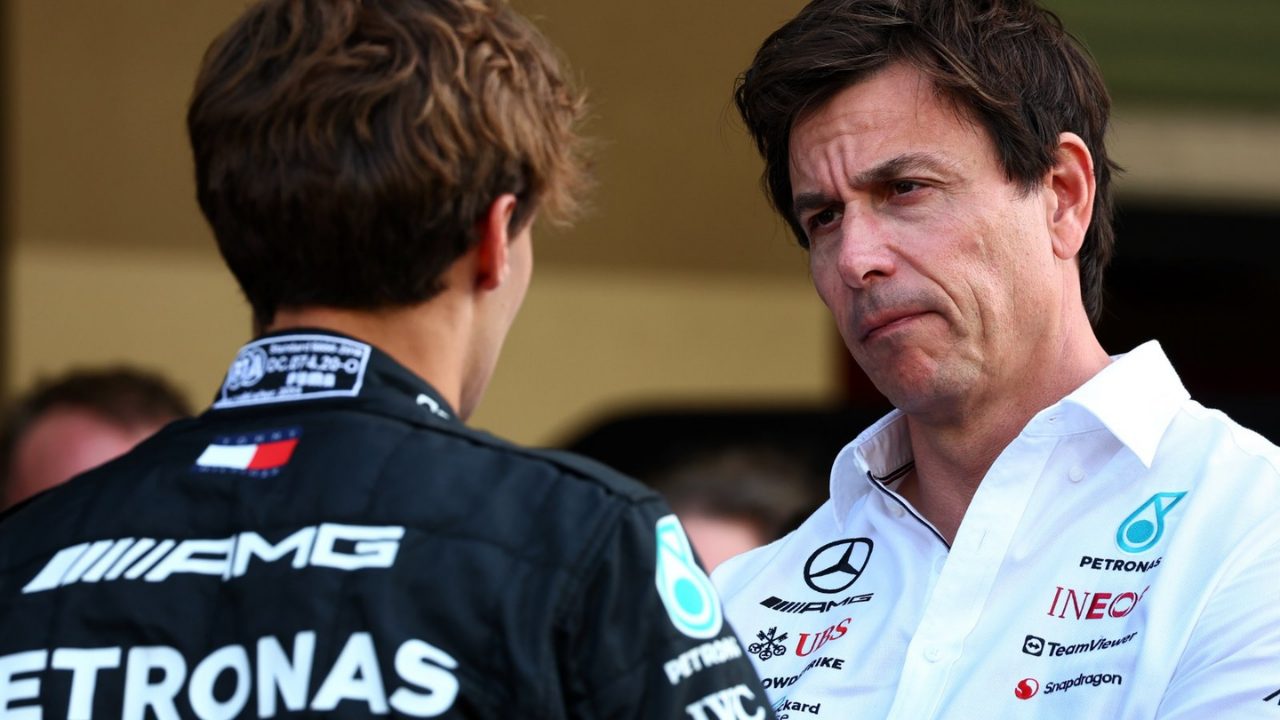
At the Mercedes season launch in February, Toto Wolff surveyed the pile of grievances with the air of a man who found the whole thing faintly tedious. “I just don’t understand that some teams concentrate more on the others and keep arguing a case that is very clear and transparent,” he said, then added, “Just get your [censored]together. Doing secret meetings and sending secret letters, and keep trying to invent ways of testing that just don’t exist.”
A week later at the Bahrain pre-season test, with the controversy still burning, he called the whole episode “a storm in a teacup” and said the advantage amounted to two or three horsepower. Verstappen, hearing that figure, told reporters to “definitely put a zero behind it and more.” Then he added, “Just wait and see in Melbourne how hard they will go on the straight.” Melbourne obliged
Albert Park Was a Crime Scene
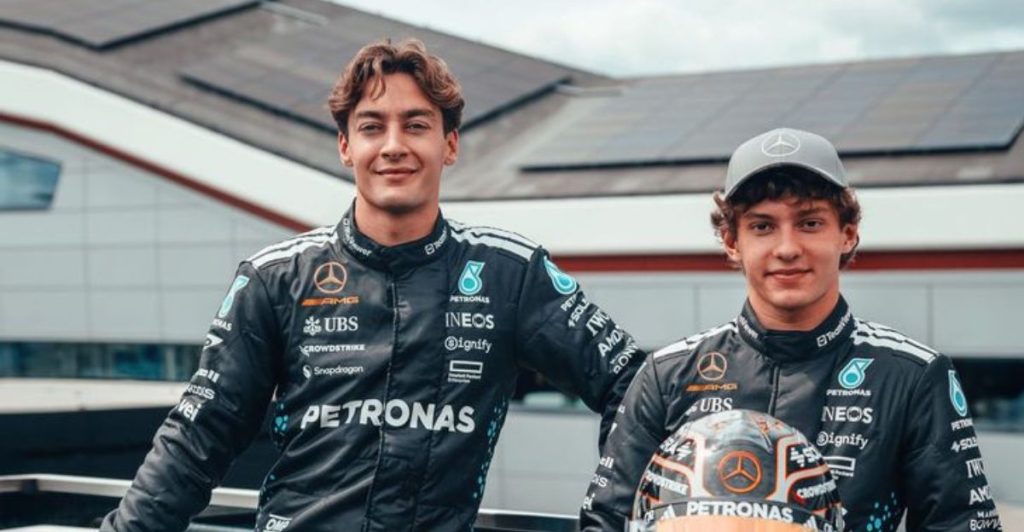
Russell qualified three-tenths clear of Antonelli and nearly eight-tenths ahead of Hadjar’s Red Bull, the first non-Mercedes car on the grid. Verstappen crashed in Q1 and started from the pit lane. Race day offered Ferrari a window through sheer aggression: Leclerc jumped to the lead off the line and held it through the opening laps, the red cars running in clean air while the silver ones were trapped behind. Then Hadjar’s car gave up on the back straight on lap 11, dragging out a virtual safety car, and Mercedes responded with the kind of pit call that looked, in hindsight, like it had been rehearsed for weeks.
Russell and Antonelli both brought in and sent back out on fresh hard tyres in a single move, while Ferrari left Leclerc and Hamilton out, gambling on a later opportunity. A second VSC on lap 18 slammed the pit lane shut at precisely the wrong moment, erasing any chance of a Ferrari recovery. Track position surrendered, strategy moot. Russell won, Antonelli second, Leclerc third, Hamilton fourth — his Ferrari debut, one rung below the team he’d spent twelve years building his legend with. Frédéric Vasseur told reporters afterward that his cars were approximately half a second per lap slower than Mercedes, and he said it without flinching, the way a man talks about a forecast he can’t change.
The McLaren Collapse Deserves Its Own Paragraph
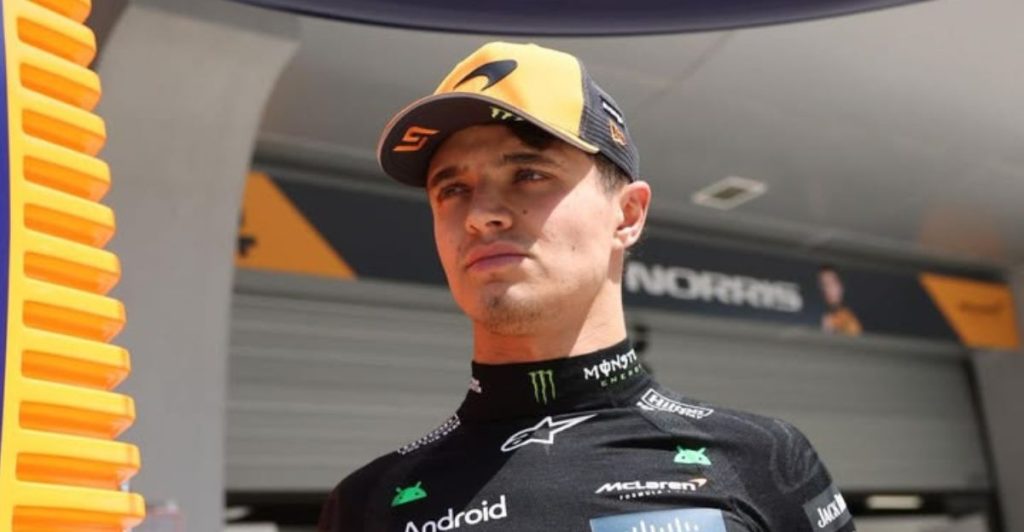
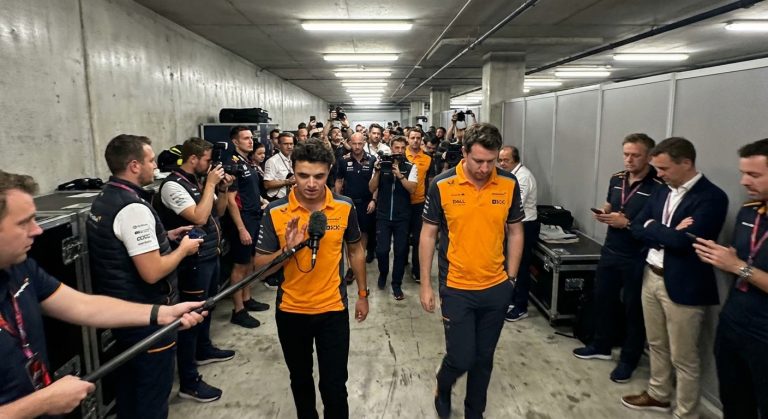
Two weekends later in Shanghai, the reigning constructors’ champions didn’t reach the grid. Norris never left the garage… an electrical problem on the power unit, discovered twenty minutes before he was due to head out. While his mechanics worked on it, Piastri completed his reconnaissance laps, took his grid slot, and was wheeled back to the garage minutes before the formation lap, with a separate electrical failure on the same component.
“My first non-start in F1,” Norris said, and the quiet of that sentence said everything about where McLaren finds themselves. It was Piastri’s second consecutive blank weekend; he’d crashed on his reconnaissance lap in Melbourne before that race began, meaning the reigning champions had completed zero competitive laps across two full race weekends. While their pit boxes stood empty, a nineteen-year-old won the Grand Prix.
China: Three Wins, One Weekend
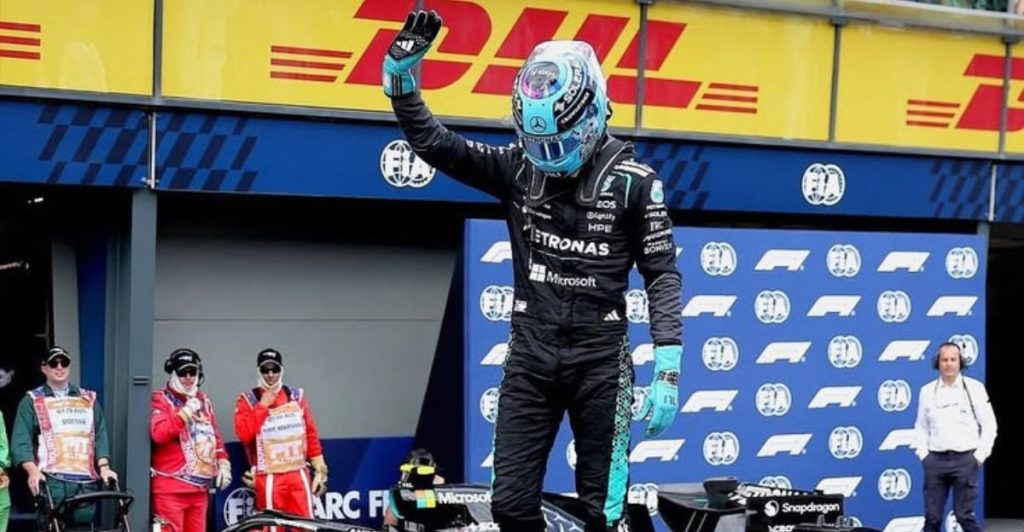
Russell had already taken Saturday’s Sprint before Sunday arrived, though nothing about it was comfortable. Hamilton launched from fourth to lead at Turn 9 on the first lap, diving around the outside of Russell with the confidence of a man with nothing to lose and a new team to impress. The pair swapped the lead five times across the opening laps before Russell made his decisive move at the Turn 14 hairpin, pulling clear as Hamilton’s front-left tyre began to grumble. Leclerc second, Hamilton third.
Sunday: Antonelli on pole at 19 years, 6 months, and 17 days old — the youngest pole-sitter in Formula 1 history, erasing Vettel’s record by nearly 20 months. Hamilton led again into Turn 1 off a clean launch. Antonelli had it back by lap two, managed the pace without a tremor of uncertainty, and crossed the line in tears, the second-youngest race winner in the sport’s history behind only Verstappen. Russell second, Hamilton third for his first Ferrari podium, Leclerc fourth.
The FIA Blinked But the Timing Was Everything
On February 27, the FIA revised the compression ratio regulations: from June 1, ratios must pass inspection both cold and at 130 degrees Celsius under operating conditions. Manufacturers voted unanimously. Mercedes had already been handed a free pass through the entire opening stretch of the season, but the rule change lands between Canadian and Monaco, meaning at least six races before enforcement tightens.
Wolff said the new test “doesn’t change anything for us,” and that sentence settled differently in different garages. To rivals who had spent months fighting for it, the implication was worse than the loophole itself: if sealing the crack changes nothing, what else is in that car?
Fewer Races, Less Time to Chase
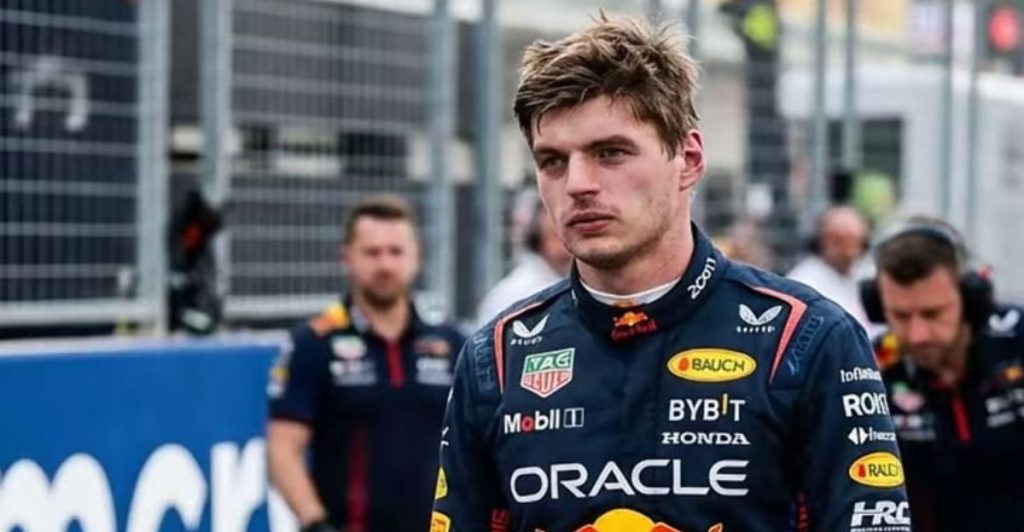
Bahrain and Saudi Arabia were officially cancelled in March, the Middle East conflict claiming two rounds and cutting the calendar from 24 races to 22. Those lost weekends matter more than they appear to. Mercedes holds a 31-point constructors’ lead over Ferrari — a gap that sounds manageable until you factor in a half-second per lap pace deficit and a shortened calendar with no room for patience.
The FIA fix doesn’t arrive until June. Verstappen, who retired from China on lap 45 with an ERS coolant failure and described the experience as “a lot worse than what we were hoping for,” will have fewer weekends to drag Red Bull back before the standings harden into something permanent. Every cancelled race is one fewer chance to close on a team not remotely interested in being caught.
Japan Is Next. Nothing Has Changed
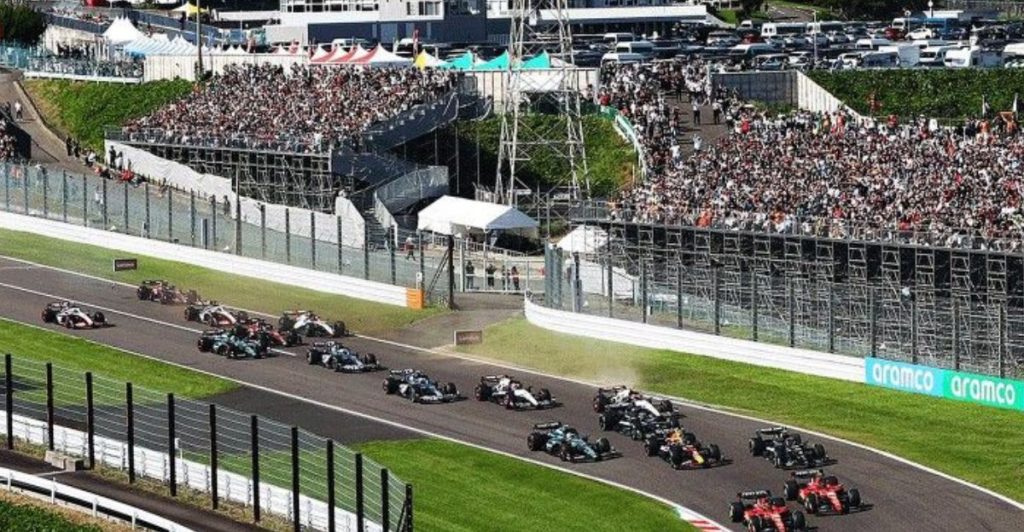
Suzuka weekend. Russell leads Antonelli by four points, both pulling clear of the field. Ferrari remains the closest credible shadow, present, fighting, but consistently half a step behind when Sundays turn serious. Red Bull has a car that its four-time world champion has publicly described as a difficult place to be.
McLaren hasn’t managed to get both drivers to the starting grid yet this season. And Mercedes will unpack the same power unit that has won every race it has entered — Australia, the China Sprint, the Chinese Grand Prix — aim it at Suzuka’s long punishing straights, and wait to see if anyone has finally found an answer.
Dynasty, Reloaded
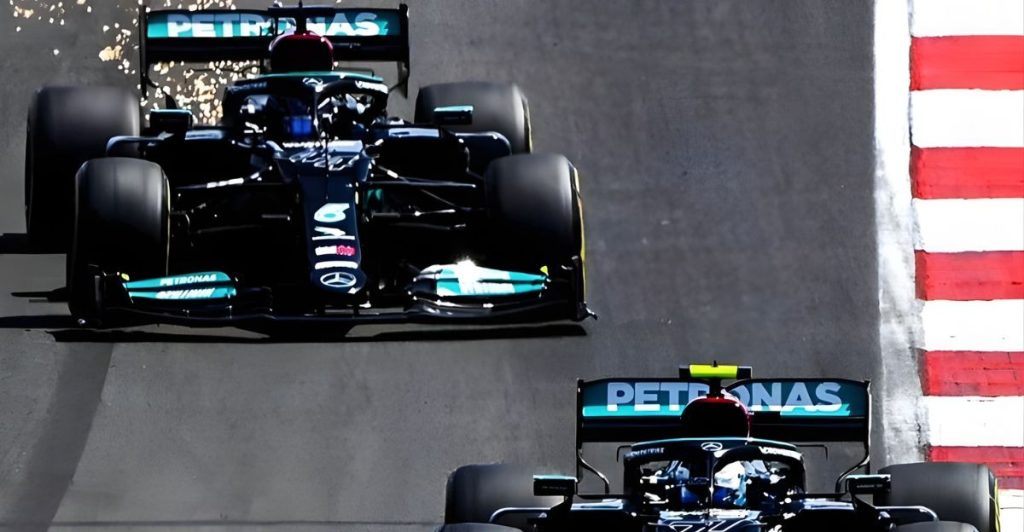
The 2026 season was sold as a reckoning, new cars, new engines, a clean slate for everyone who spent eight years watching Mercedes pull away into the distance. What it has become, through three wins and ten days of racing, is a lesson in preparation. Mercedes read the rules at a depth no rival matched, built something nobody else had dared to build, kept the FIA informed throughout, and arrived in Melbourne while their opponents were still composing letters.
The loophole closes in June, and maybe the advantage narrows with it — Wolff says it won’t. Either way, the pattern is already visible: one team did their homework harder than the rest, and three race wins into a new era, the grid is still searching for the right question to ask. That’s not a controversy anymore. That’s a dynasty with fresh ammunition.
Sources:
George Russell wins action-packed Australian GP from Antonelli as Mercedes secure 1-2 — Formula1.com
Russell wins thrilling China Sprint from Ferrari’s Leclerc and Hamilton — Formula1.com
Antonelli beats Russell for maiden F1 victory in China as Hamilton takes third — Formula1.com
Toto Wolff tells rival F1 teams on engine row: Get your s*** together — ESPN
Toto Wolff: F1 compression ratio drama “a storm in a teacup” — Motorsport.com
F1 confirms cancellation of Bahrain and Saudi Arabian Grands Prix due to war in Middle East — Sky Sports