Industry Called Tesla’s Semi Megacharger ‘Impossible’—DHL Just Hauled 75,000 Lbs on One Charge
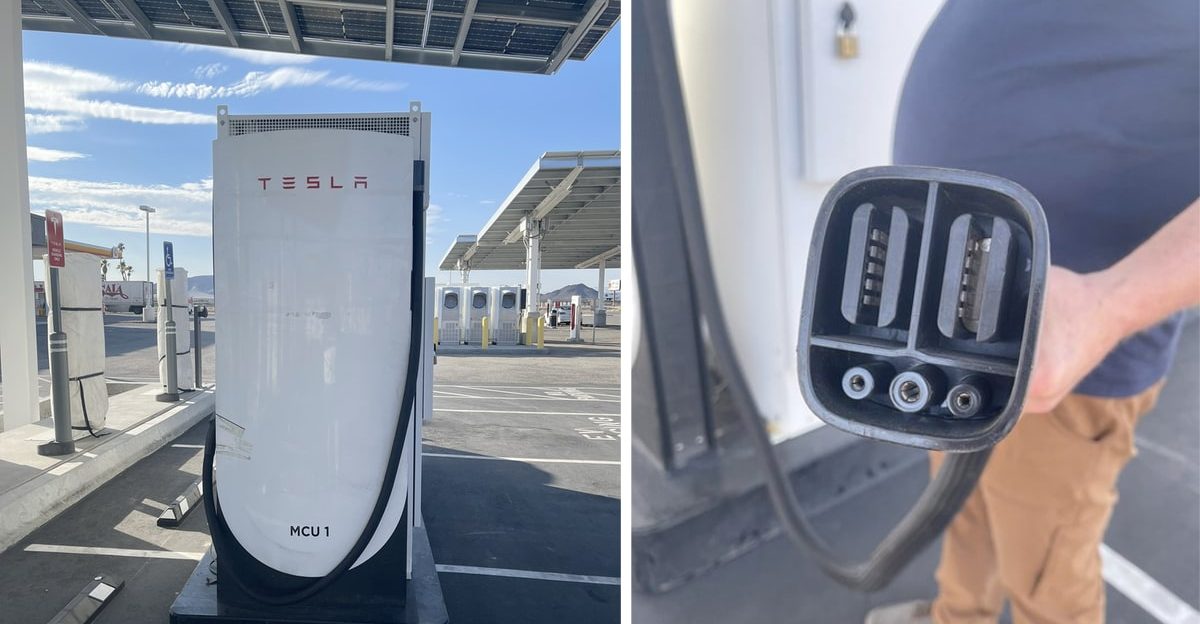
A white Tesla Semi backed into a charging bay at a BP Pulse depot in Ontario, California, on March 8, 2026. No fanfare, and no ribbon cutting, just a Class 8 electric truck plugging into a megawatt-scale charger at the junction of I-10 and I-15, one of the world’s busiest freight corridors. Two pull-through bays delivering 750 kilowatts each, flanked by four CCS bays for rival manufacturers’ trucks. The first public Megacharger for the Semi sat inside a competitor’s facility.
Eight Years
Tesla unveiled the Semi in November 2017 and promised efficiency below 2 kWh per mile for a fully loaded truck. The industry did the math on battery weight, thermal management, and drivetrain losses, and the consensus was blunt: physically impossible. For nearly a decade, diesel truck manufacturers benefited from that skepticism. Every year Tesla missed its delivery window, the doubt compounded. Volvo, Daimler, Freightliner, and Paccar sold diesel rigs while fleet operators waited for proof that never arrived. Then DHL got behind the wheel.
The Haul
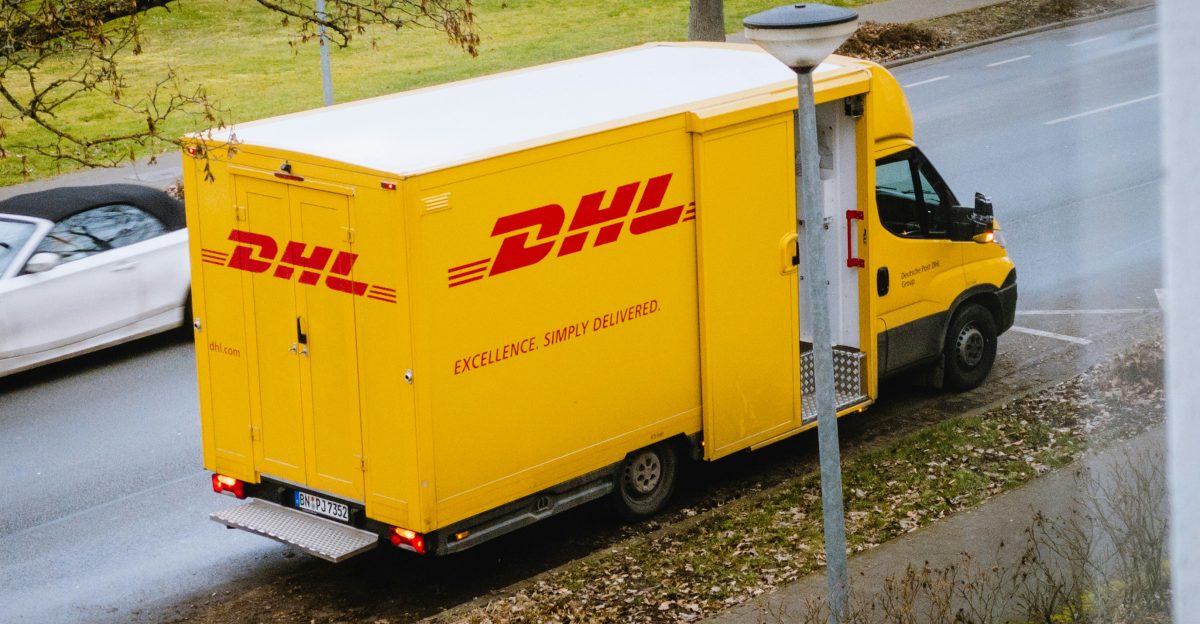
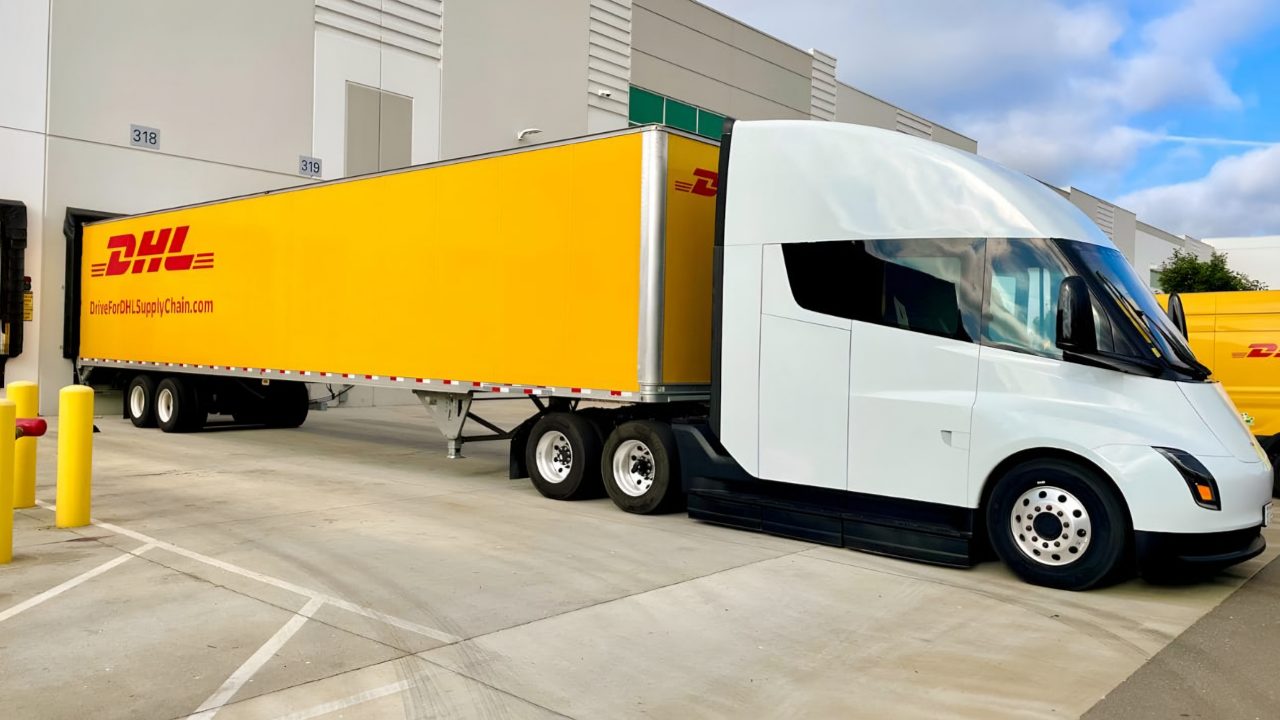
DHL loaded a Tesla Semi to 75,000 pounds and drove it 390 miles through Central California on a single charge. Real freight. Real roads. Real weight. The truck consumed 1.72 kWh per mile, beating Tesla’s original promise by 14%. Jim Monkmeyer, president of transportation at DHL Supply Chain North America, said the pilot “exceeded expectations, proving its ability to efficiently haul a typical DHL freight over long distances on a single charge.” A logistics executive, not a marketer, confirmed the number the industry spent eight years calling fiction.
The Lock-In
That Ontario station changed the math for every fleet operator in America. The excuse evaporated. Trucks work. Charging exists. Now the question flipped from “is it possible?” to “do I move first or watch my competitor lock in subsidies?” California’s HVIP program reserved nearly 1,000 vouchers for the Tesla Semi, roughly $165 million in incentives. The next-largest manufacturer allocation was $68 million. First-come, first-served. Tesla grabbed 2.4 times the subsidy pool before shipping 1% of planned annual production.
The Network
Ontario was station three. Tesla already operated Megachargers at Giga Nevada in Sparks and in Carson near the Port of Long Beach, both serving internal fleet operations. The planned network spans 66 sites across 15 states, with 46 targeted by early 2027 and 37 in 2026 alone. Texas leads with 19 planned locations. California follows with 17. A January 2026 partnership with Pilot Travel Centers, a Berkshire Hathaway subsidiary, adds 4 to 8 stalls per location along I-5, I-10, and other major corridors starting in the summer of 2026.
The Factory
Semi production started in March 2026 at Giga Nevada, targeting 50,000 units annually at full capacity. That would make it the largest single-vehicle electric heavy-duty truck factory in the world. Two trim levels: Standard Range at 325 miles for $250,000, Long Range at 500 miles for $290,000. Both hit 1.7 kWh per mile. Both run three independent motors producing 800 kW. The new battery pack delivers 7% better energy efficiency than previous versions. Roughly 200 Semis have already reached customers during pilot phases.
The Ripple
PepsiCo runs Semis in pilot programs. Ralph’s supermarket deployed them in Southern California, expanding Kroger’s electric truck program to the West Coast. Uber Freight launched a Dedicated EV Fleet Accelerator with Tesla. Amazon, eBay, and Etsy backed a Dallas-Houston pilot targeting 40 Semis covering 7 million miles annually, cutting an estimated 60,000 metric tonnes of CO₂. Retail grocers adopted the truck before most logistics companies had the confidence in their infrastructure. Daimler, Volvo, and Kempower now face compression-mode development, scrambling to match charging infrastructure within months.
The Real Race
The Ontario Megacharger sitting inside a BP Pulse hub reveals something most coverage missed. Tesla abandoned its proprietary infrastructure playbook. MCS connector bays for Tesla sit beside CCS bays for Daimler and Volvo trucks at the same facility. Pilot partnership slots, not Tesla-built stations, will form the network’s backbone. Tesla won by standardizing, not by locking competitors out. That strategic pivot means rivals cannot differentiate on charging later. By the time competing MCS networks reach scale, Tesla’s customer relationships and subsidy capture will have already set the terms.
The Bottleneck
Three stations are operational. Thirty-seven needed by year’s end. That is a 1,134% buildout increase in nine months, and the constraint is not manufacturing. Utility grid interconnection and permitting now determine how fast electric trucking scales. Construction timelines run slower than factory ramp rates. If Pilot sites miss their summer 2026 target, the delay cascades across dozens of planned locations. Fleet operators face the squeeze: order a $290,000 truck now and hope the chargers materialize, or wait and lose access to a shrinking incentive pool.
The Payback
At roughly $0.22 per mile in energy cost savings over diesel, a fleet running 120,000 miles annually recoups the Semi’s approximately $110,000 price premium in about four years, based on confirmed pilot data. Shippers like Amazon and Walmart already prefer zero-emission carriers, offering premium rates and guaranteed loads. The status upgrade is not just a bumper sticker. Early adopters capture higher-margin freight while competitors explain to customers why their trucks still burn diesel. By 2027, California’s incentive pool will hit depletion. Whoever owns the subsidy-receiving customer base by then owns the decade.
Sources:
“DHL Supply Chain Accelerates Sustainability With First Tesla Semi Delivery.” DHL Supply Chain, 4 Dec. 2025.
“Tesla Opens Its First Megacharger Station to Semi Customers in California.” Electrek, 8 Mar. 2026.
“California Reserved $165 Million for Tesla to Electrify Its Trucking Industry.” Los Angeles Times, 9 Feb. 2026.
“Amazon, eBay and Etsy Help Put Tesla Trucks on the Road.” Trellis, 20 Jan. 2026.