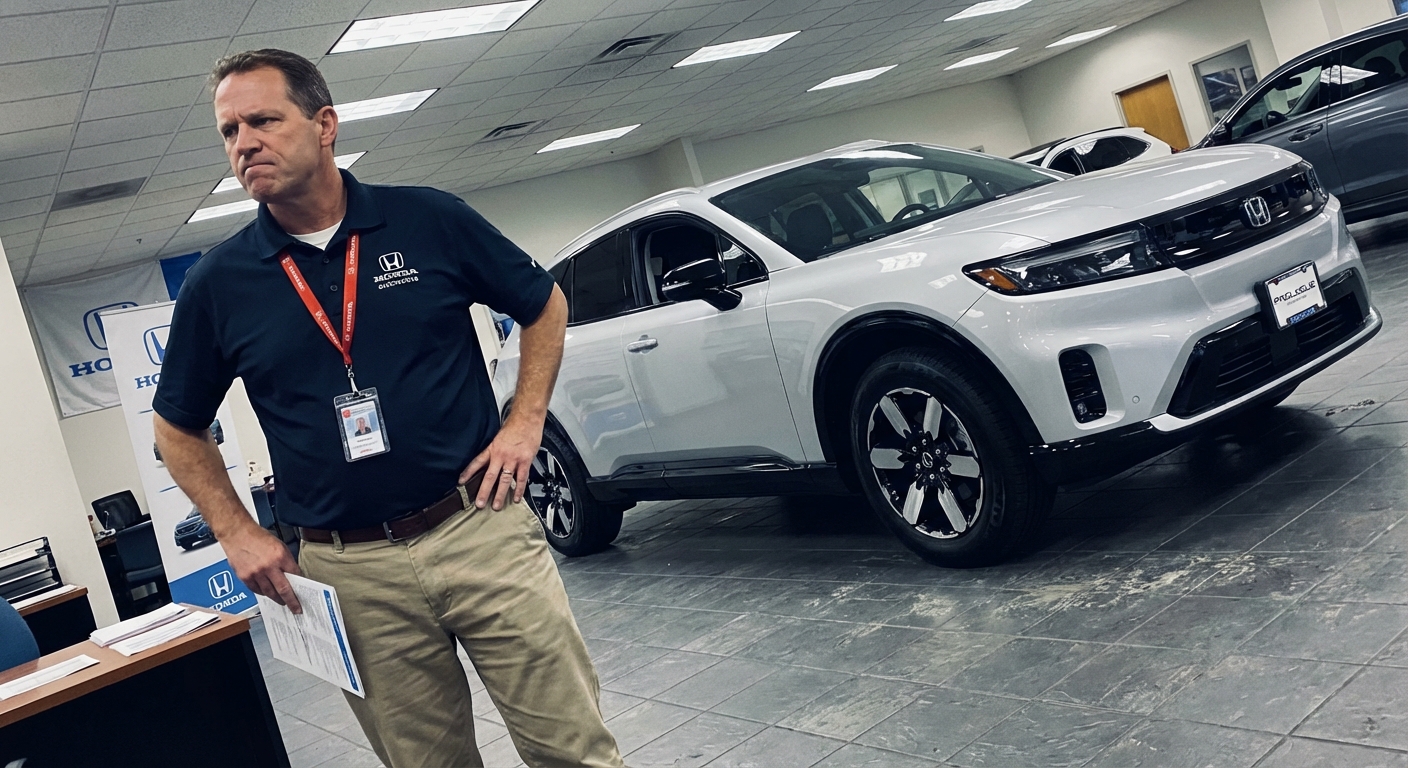
Honda Order All US Dealers To Pull Its First Electric SUV Off The Lot By End Of Year
Roughly two years ago, Honda reportedly rolled the Prologue into US showrooms as its first all-electric SUV. The company’s debut all-electric SUV, EPA-certified, is positioned as the future of the brand. Now, a report claims that the future has an expiration date measured in months, not decades. The Prologue reportedly faces a year-end cancellation, which would effectively pull it from the American shopping mix before most buyers ever test-drove one. Honda has not officially confirmed the exit, but a spokesperson stated the Prologue “remains in our lineup.” However, the reported timeline has already reshaped how the market reads the model. A flagship arrival turning into a quiet exit.
Built to Last
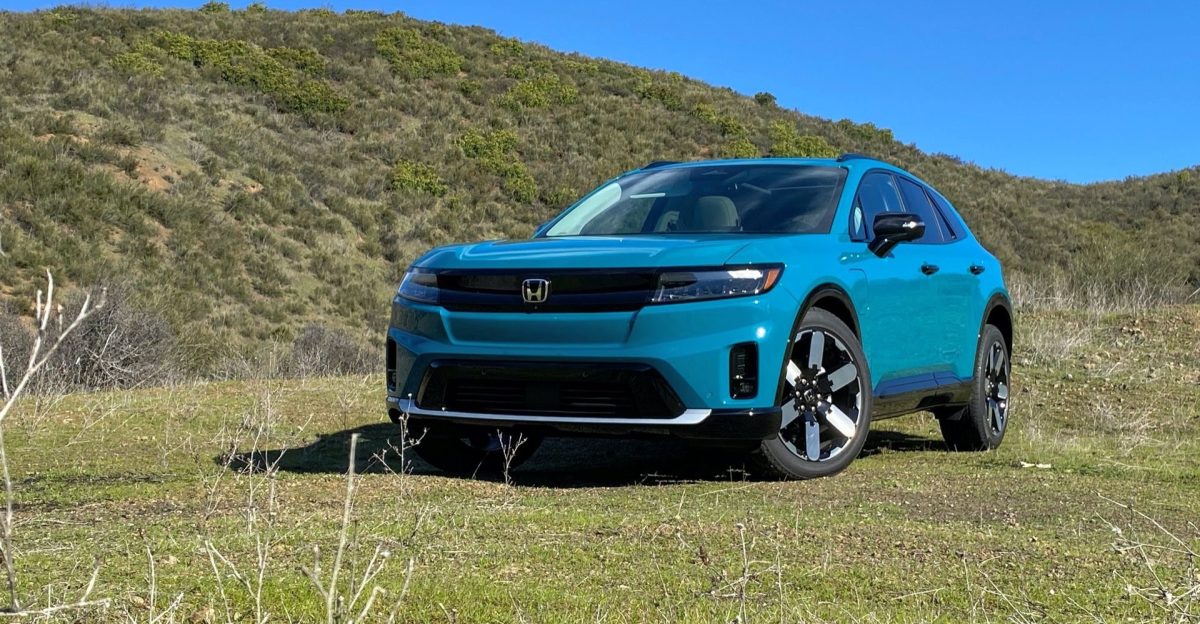
Honda didn’t build the Prologue alone. General Motors co-developed the platform, a partnership designed to split costs and share risk across both companies’ EV ambitions. That collaboration was supposed to be the insurance policy: two massive automakers pooling resources so neither one shouldered the full weight of going electric. The Prologue carried official EPA fuel economy and range listings, real specs for a real production vehicle sitting on real dealer lots. Everything about it signaled permanence. But sales collapsed, down 63% year-over-year by February 2026, and dealers were already offering $8,000 incentives just to move inventory. But co-signed loans work both ways.
Cracks Forming
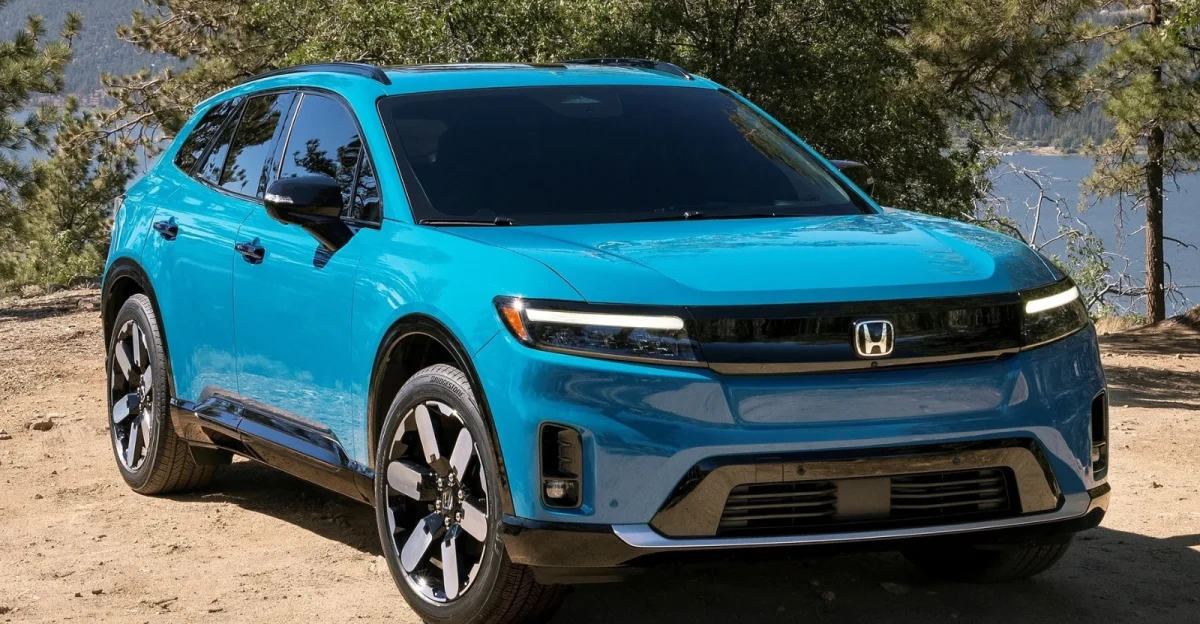
Most people assumed that once a major automaker launched an EV, it was locked in for years. That assumption made sense in the old world of longer model cycles. But the federal $7,500 EV tax credit disappeared, tariff exposure threatened Honda with a projected $15.8 billion operating loss, and demand softened across the industry. Reuters has documented an industry-wide recalibration of EV timelines, driven by demand softness and profitability pressures that have forced automakers to rethink commitments they made publicly and loudly. The Prologue isn’t the only EV feeling that squeeze. Honda simultaneously cancelled three other planned US EVs — the 0 Series SUV, 0 Series Saloon, and Acura RSX — as part of the same restructuring, underscoring how broad the recalibration has become. Cox Automotive tracks the demand and incentive conditions reshaping the entire market underneath these vehicles.
The Exit
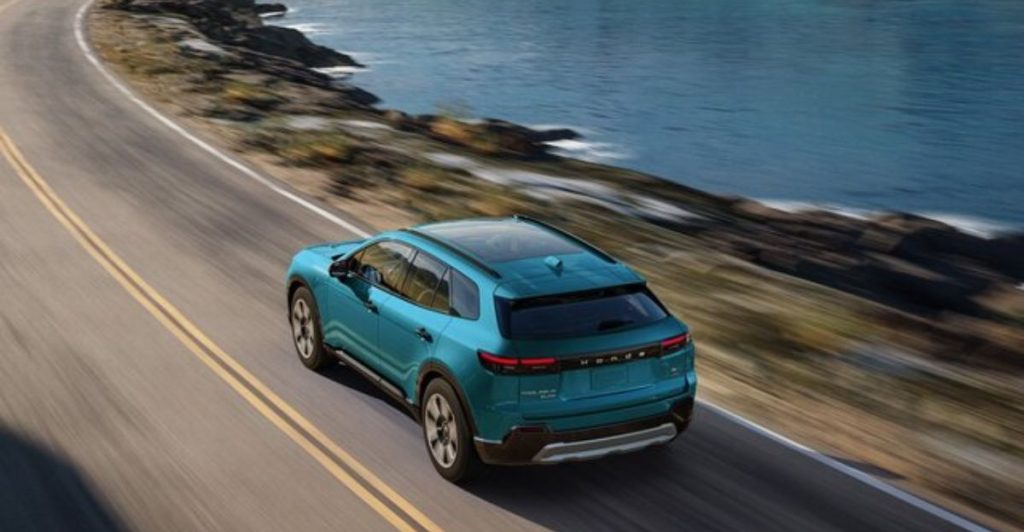
The reported year-end cutoff reframes everything. Honda’s first all-electric SUV, the vehicle that was supposed to anchor its US electrification strategy, reportedly faces cancellation after roughly two years on the market. Automakers almost never sunset a nameplate that fast. The platform-sharing meant to de-risk EVs can also transmit risk across brands. Partner economics shift. Demand softens. Incentive math changes. The model disappears. That’s the hidden math behind EV “product decisions,” and the Prologue may be its clearest example yet.
System Failure
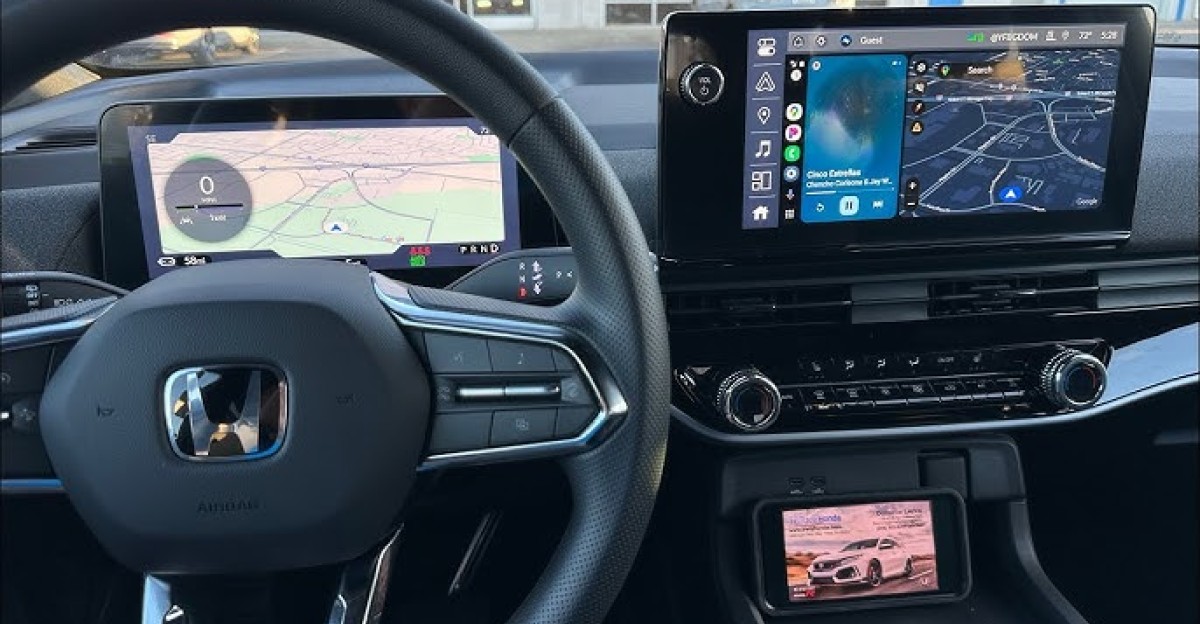
Forget the car for a second. EV programs are systems: partners, battery supply chains, software stacks, government incentives, and consumer confidence all wired together. When one variable moves, the whole network feels it. Market demand and incentive conditions can force rapid product-plan changes that would have been unthinkable in the gas-engine era. The Prologue sits at the intersection of GM’s platform capacity and Honda’s retail ambitions. That’s not a car. That’s a balance sheet with wheels, and balance sheets get reorganized.
Orphan Math
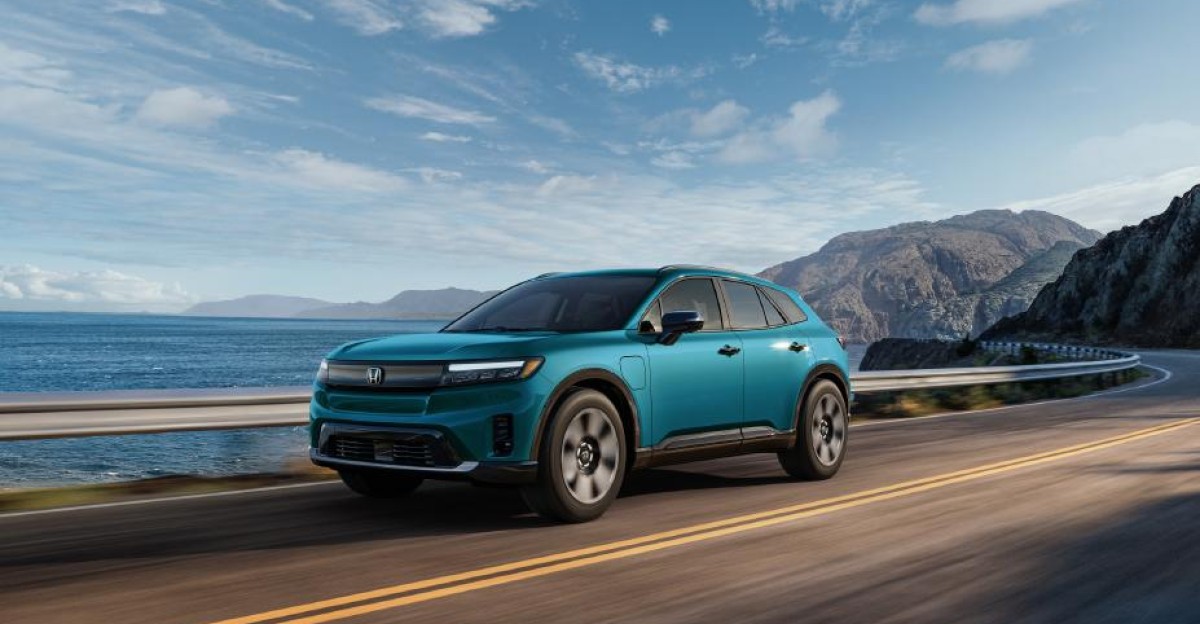
Here’s what a rapid sunset actually costs. Cox Automotive and Kelley Blue Book track how dealer incentives and residual values get pressured when shoppers fear discontinuation. A cancelled model doesn’t just vanish from the lineup. Dealers face inventory whiplash, stuck marketing a vehicle with a public expiration date. For buyers who already own one watch, resale confidence erodes. The Prologue still works. The warranty still holds. But confidence drops the moment a nameplate gets a death sentence, and confidence is what holds resale value together.
Ripple Effect
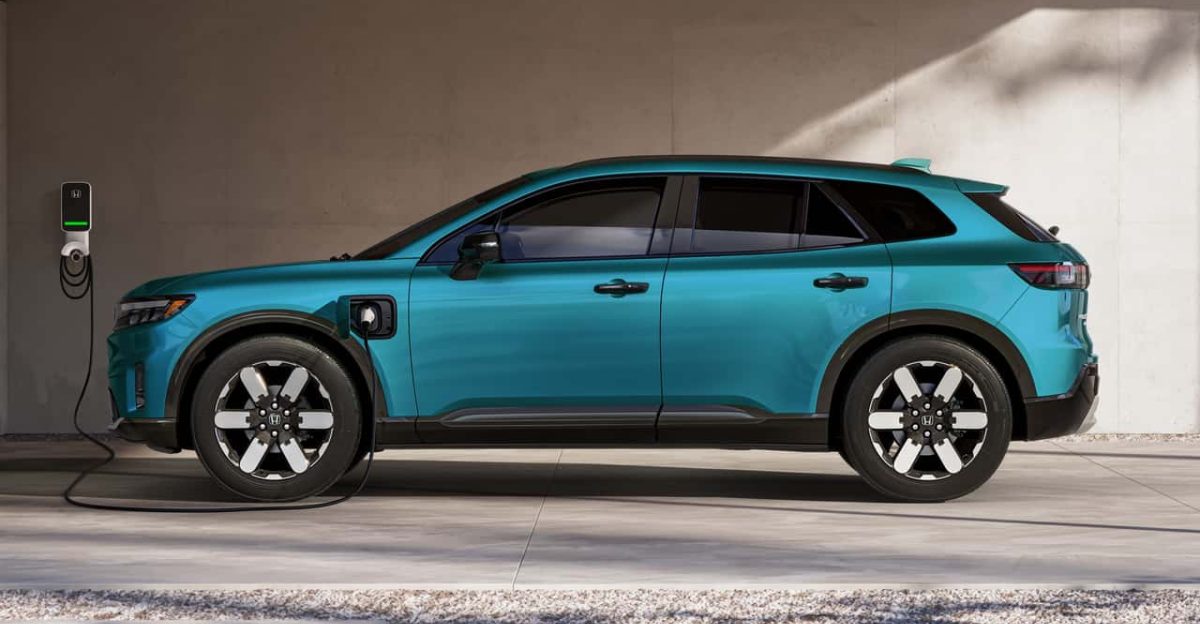
Honda’s EV credibility takes a hit if its first US electric SUV lives a shorter life than most car loans. But the damage extends beyond one brand. More automakers may prune low-margin EVs and refocus on hybrids or next-generation platforms, accelerating an industry pattern that was already forming. Early adopters and dealers holding Prologue inventory absorb the most immediate pain. The broader signal is worse: if Honda can’t sustain a flagship EV backed by GM’s platform, smaller players have even less room to gamble.
New Rules
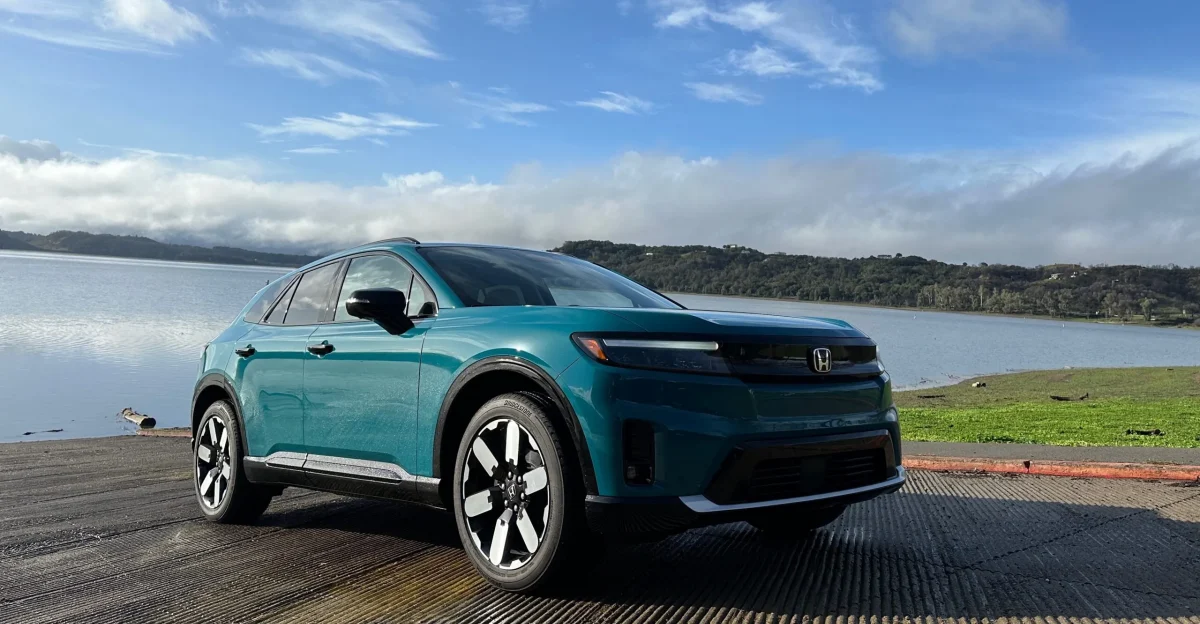
This isn’t an exception. Shorter EV product cycles could become normalized if demand and incentive conditions keep swinging. The old assumption that a launched model stays safe for years belongs to a different industry. EV model decisions are increasingly balance-sheet and supply-chain decisions, not engineering ones. Once you see that pattern, every automaker’s electrification roadmap looks less like a promise and more like a pencil sketch. The Prologue may be the first high-profile casualty of that reality. It won’t be the last.
Countdown Clock
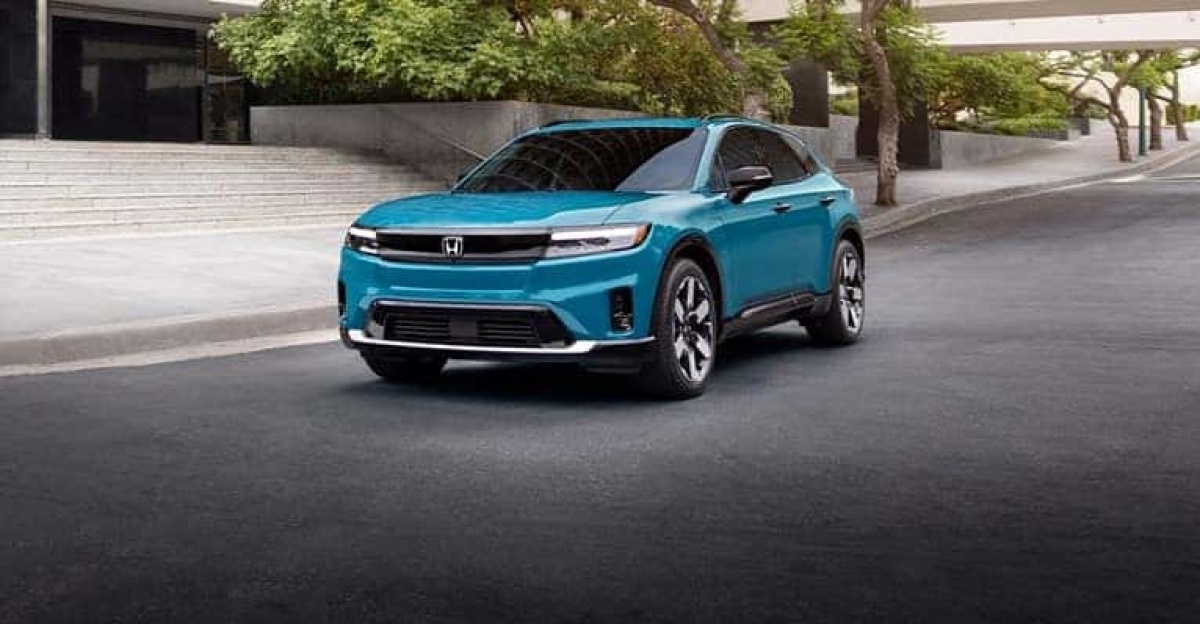
Honda will likely face pressure to confirm or deny the report and clarify support plans for existing owners. The escalation path from here is predictable: cancellation leads to discounting, discounting erodes brand trust, and eroded trust slows the next EV launch before it starts. That feedback loop is what makes a two-year exit so dangerous. Every Prologue sitting on a lot right now carries a question mark that gets heavier with each week Honda stays silent on the timeline.
The Counter
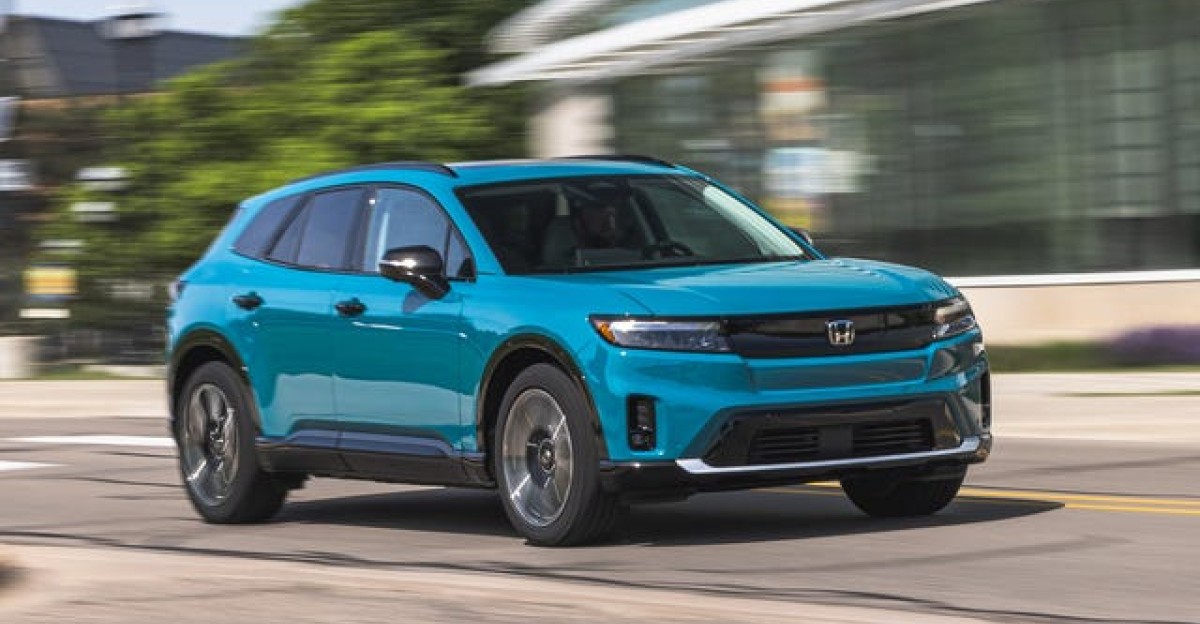
Honda could reposition with a successor EV roadmap and stronger buyer guarantees, turning the Prologue’s short life into a pivot story rather than a retreat story. That’s the counter-move available to any automaker facing this math. But most people still think EV lineups are fixed commitments backed by billions in announced investment. They’re not. They’re provisional bets that shift when partners, demand, and incentives shift. Knowing that puts you ahead of every shopper still reading press releases like promises.
Sources:
“Honda Prologue Production Reportedly to End in 2026, Leaving Honda’s US EV Strategy in Shambles.” Road & Track, 12 Mar. 2026.”Honda Cancels All Three EVs That It Planned to Build in the U.S.” Car and Driver, 11 Mar.
2026.
“The Honda Prologue EV Will Live On, at Least for Now.” Electrek, 13 Mar. 2026.