Harley-Davidson Posts $29M Motorcycle Loss in 2025 — Layoffs Hit Global Operations
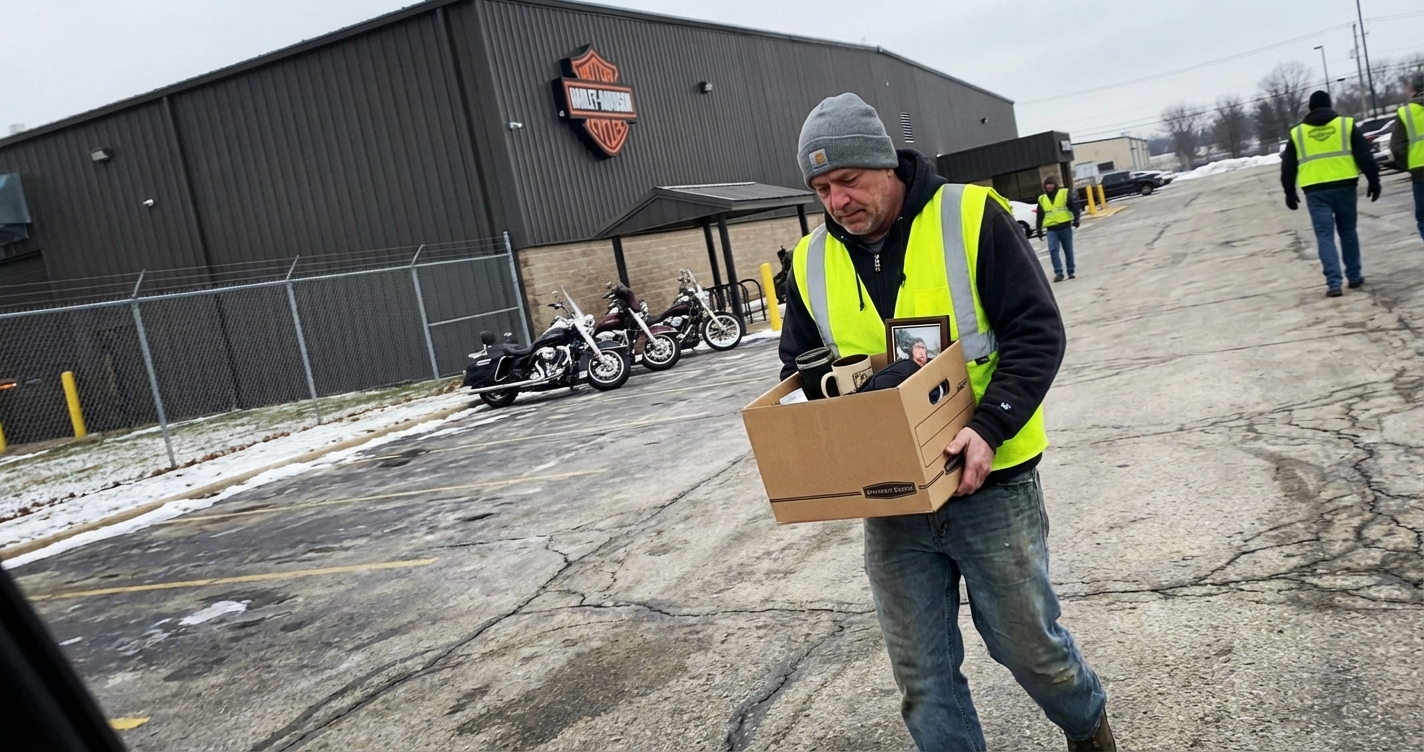
On March 23, 2026, Harley-Davidson told its employees that job cuts were coming, but did not say how many people would be affected or which facilities would take the hit. All anyone got was a press statement. After that, silence from Milwaukee. The move is part of an effort to cut $150 million in annual costs. This is a jarring shift for a company built on the freedom of the open road and a spirit of rebellion.
People are being let go, and those who remain are told to show up at the office five days a week starting in March, with a plan to shift to four days in September. The atmosphere is tense. Workers are coming to the office uncertain if their jobs will be there tomorrow. This is the unsettling reality at a 123-year-old American icon. The financials explain why.
The Profit Collapse Behind the Cuts
For 2025, Harley-Davidson’s net profit dropped to $339 million. This was a 26% fall from $455 million the year before. It marked the company’s weakest annual profit since the chaos of the 2020 pandemic. Global motorcycle sales took another hit, down 12% to just 132,535 bikes. Sales have now dropped about 32% since 2021. When Artie Starrs took over as CEO in October 2025, he inherited a company losing ground in every major market.
The pain was sharpest in Europe. Germany’s sales dropped nearly 59%. France saw a 49% drop. Overseas, “Made in America” now meant higher prices because of retaliatory tariffs.
Built for a Market That Vanished
Observers often point to product as Harley’s main problem: build something cooler, attract younger riders, improve the lineup. The real issue is scale. At its peak, Harley’s factories produced 300,000 motorcycles a year. In 2025, the number was just 124,477.
The company is running at less than half its capacity, a level unprecedented in recent history. Even CEO Artie Starrs admits it: the company’s overhead, factories, and workforce are all sized for a much larger customer base that no longer exists.
The Number That Breaks the Story Open
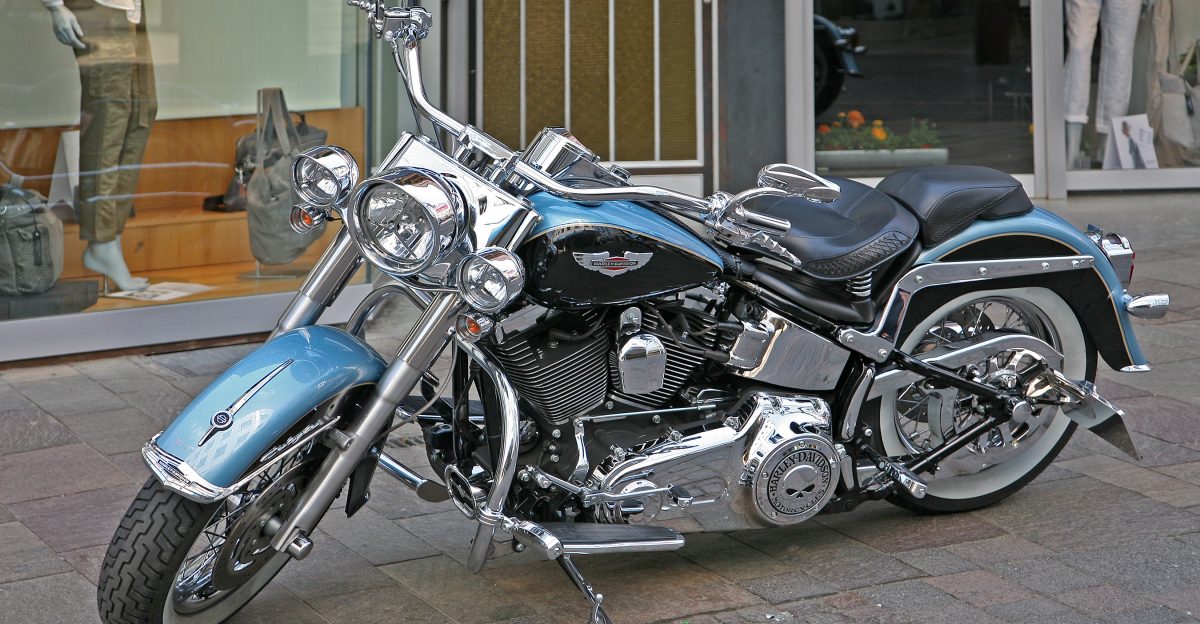
In 2025, Harley’s motorcycle division lost $29 million. Harley-Davidson Financial Services generated $490 million in operating income. The previous year, HDFS made $248 million, so the finance arm nearly doubled its profit while the part that builds bikes went underwater.
The manufacturing side is losing money, and the finance side is thriving. The $29 million loss came after $278 million in operating income just a year before, a $307 million swing. The core business went fully negative.
A Finance Company Wearing Leather
Today, Harley’s motorcycle business acts as a feeder for its finance arm. HDFS has a 56.4% operating margin. The core motorcycle division is running at a loss. Selling bikes is no longer the profit engine; the loans are. Even the finance side took a hit: in the last quarter of 2025, it posted an $82 million operating loss due to liability management and debt retirement.
Stripped of brand image and tradition, Harley-Davidson now looks more like a specialized lender than a classic motorcycle company. Tariffs added $67 million in costs last year, with projections as high as $105 million in 2026. That pressure falls on a motorcycle division already struggling. New products cannot solve the math when the customer base has vanished.
Dealers Bleeding on the Floor
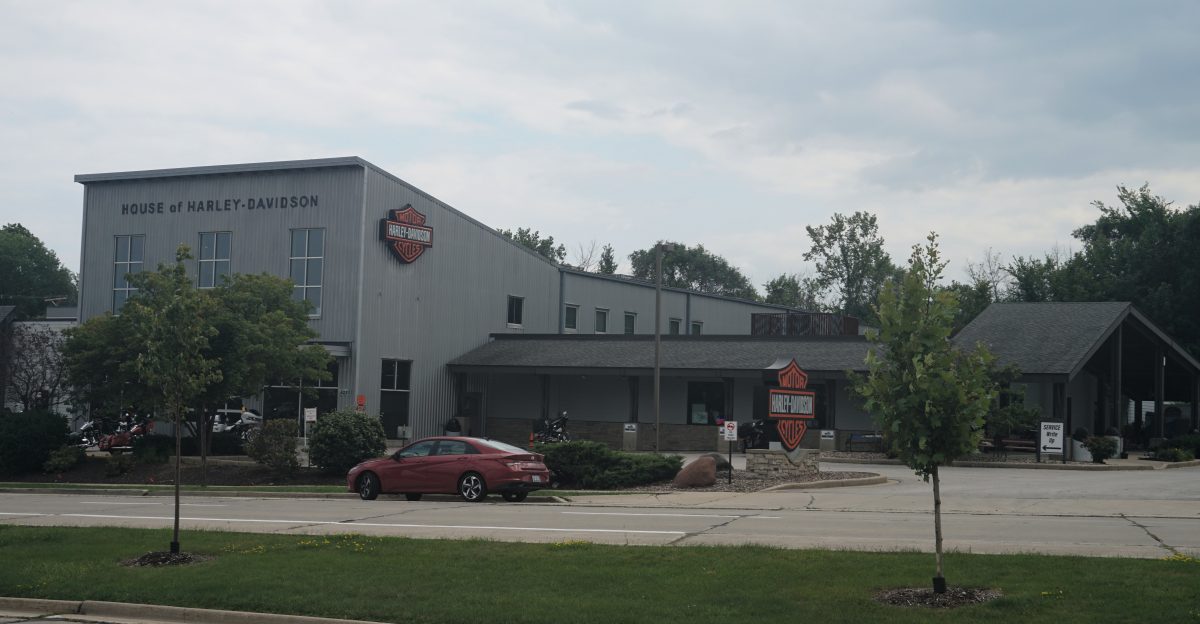
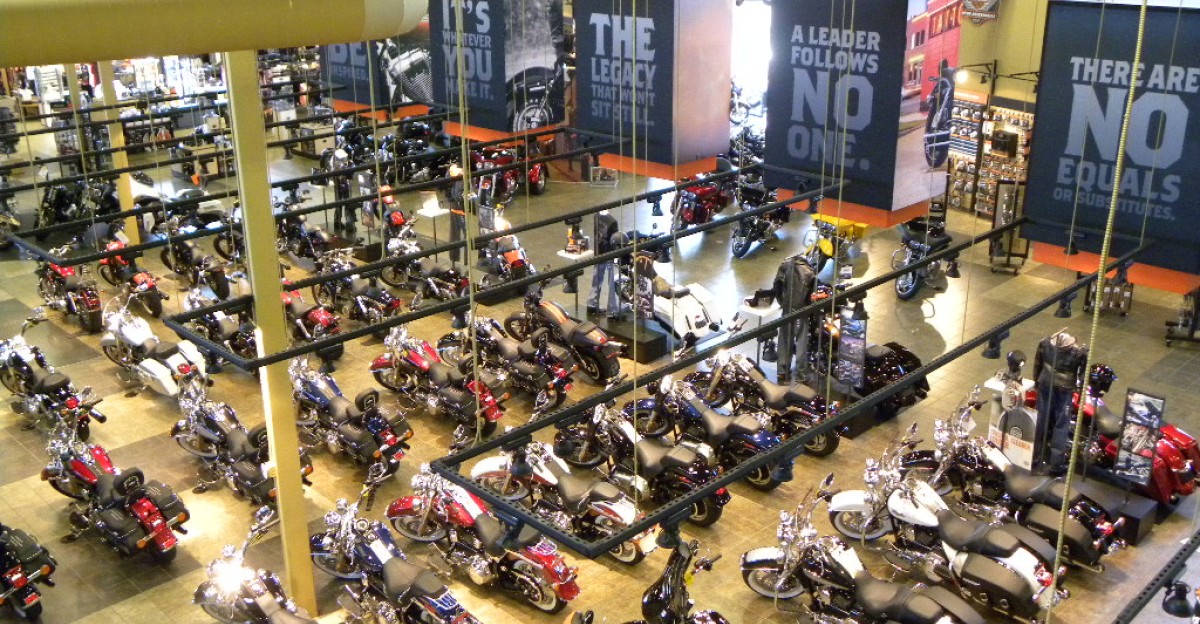
Dealers see the impact firsthand. As George Gatau, chairperson of the National Powersports Dealers Association Harley-Davidson Dealer Council, put it: “Dealers aren’t making money. They’re losing money every single month, burning cash on floor plan interest.” The reality is grim. Dealers are now sitting on bikes for an average of 140 days, up from the historical 99 days.
With floor plan interest rates running 8 to 12 percent a year, every unsold motorcycle costs about $2,000 in carrying costs. Since 2014, the dealer network has shrunk from 1,400 locations to about 650. More than 200 additional closures are forecast for 2026.
The Ripple Hitting Your Garage
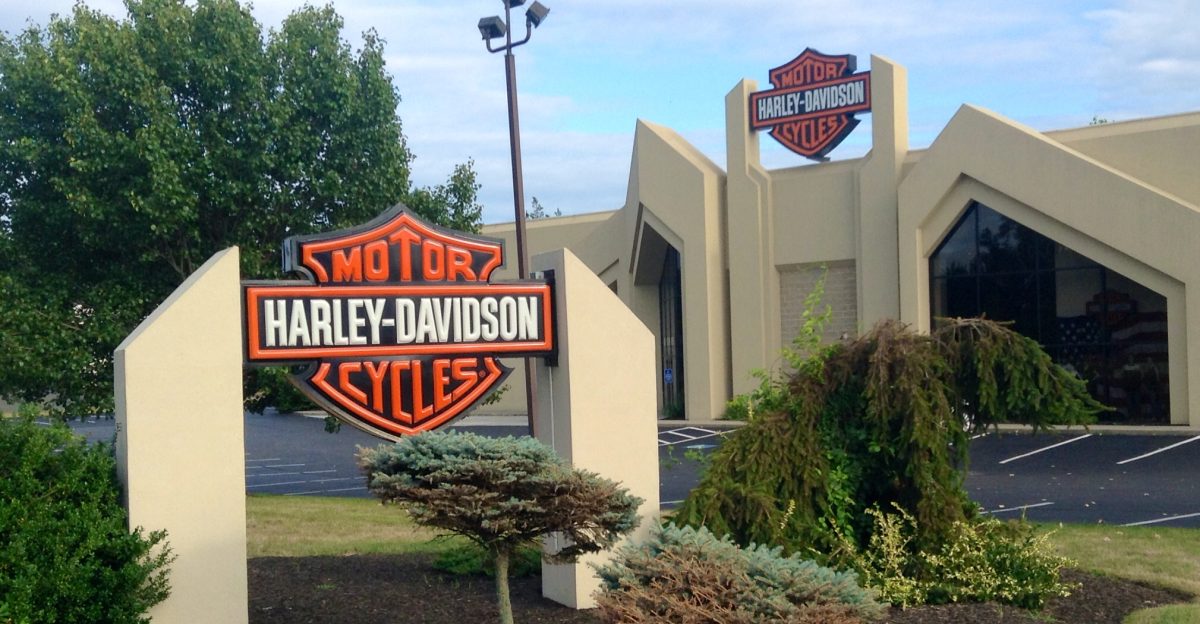
Every time a dealership closes, riders have a harder time getting their bikes serviced, especially in rural areas or small towns where the nearest authorized shop could be 50 to 100 miles away. Competitors are moving in. Brands like Honda, Indian Motorcycle, BMW, and Triumph are positioned to win customers as Harley’s presence shrinks.
Chinese companies such as CFMOTO and QJMotor are entering the premium market with lower-priced options. Used Harley sales are rising as more buyers choose three- to five-year-old bikes instead of new ones. Each dealer closure accelerates this trend.
Not an Exception, A New Rule
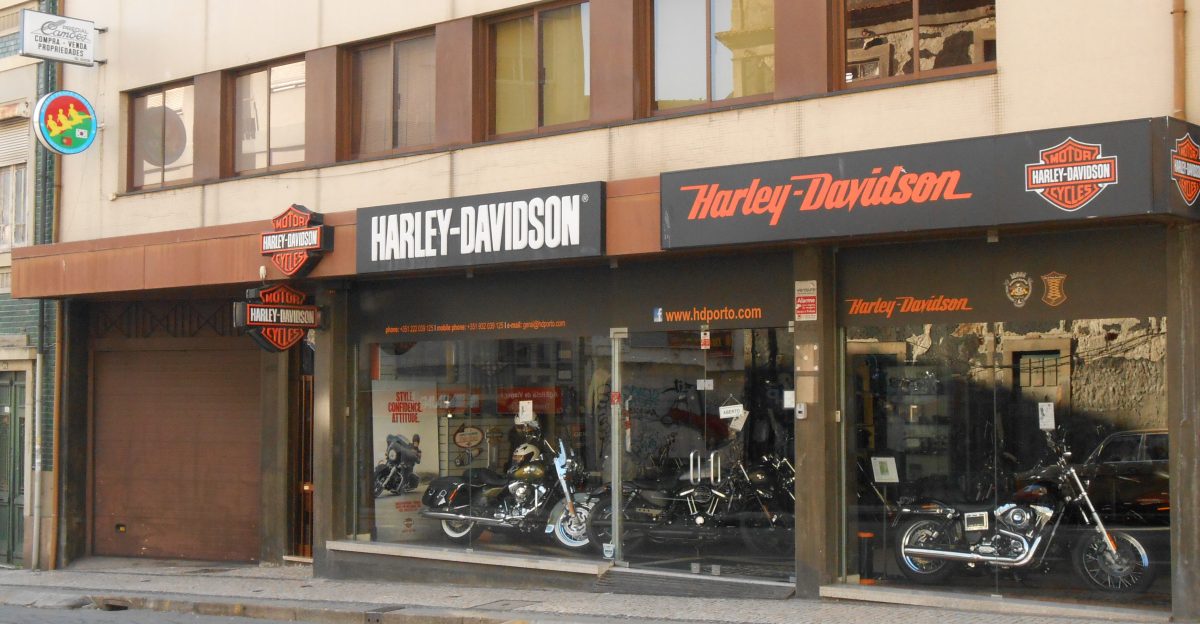
The global motorcycle market grew to 62.1 million units in 2024. Harley sold just 132,535. The company is losing market share even as the industry expands, and its typical buyer is now approaching 50, up from the low 40s in the early 2000s.
Harley is developing a cheaper Sprint model to attract younger and first-time riders, but it has not launched yet. Other manufacturers facing tariff troubles, such as Ford and GM, are watching Harley’s deep cutbacks closely. These layoffs are not a fix. They signal retreat.
The CEO Who Walked Into a Fire
When Artie Starrs took the helm in October 2025, he spoke about what an “incredible privilege” it was to lead Harley-Davidson, and praised the company’s “community, passion, and rebellious spirit.” Starrs came from Topgolf, where he made a name by driving revenue up from $1.1 billion to $1.8 billion.
Growth was his calling card. But within months, he was announcing layoffs, calling everyone back to the office, and reporting a $260 million operating loss for the motorcycle segment in the fourth quarter alone, the worst in recent memory. A new business plan is set for May 2026. If tariffs stick around, Harley’s European sales may never truly bounce back.
What Harley Owners Know Now
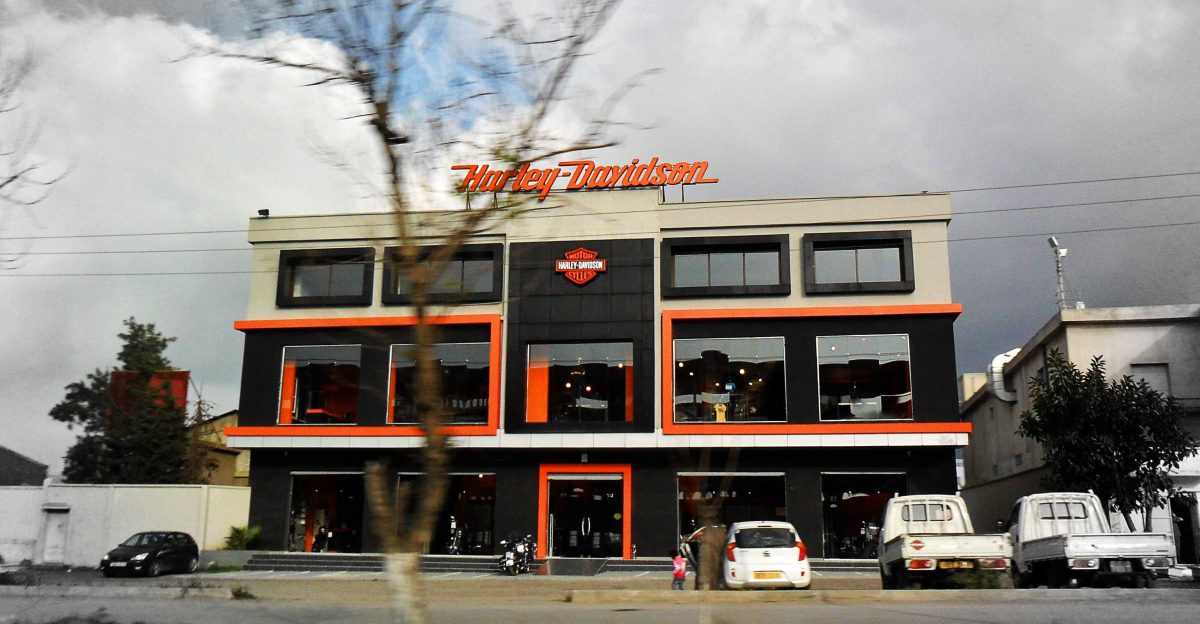
Today, Harley-Davidson has about 5,900 employees. Its factories were built to pump out more than twice as many bikes as they do now. The dealer network? It’s lost over half its locations in just ten years. The only part of the business making real money is the division that finances loans, not the one that builds the motorcycles.
If bike demand keeps hovering below 130,000 units, factory closures will be the next domino to fall after layoffs. And if the dealer network slips below 400 locations, Harley will lose its precious advantage of being everywhere its riders are. Somewhere along the way, between the finance spreadsheets and the sales floor, Harley-Davidson stopped being the motorcycle company it once was.
Sources:
PR Newswire — Harley-Davidson Delivers Fourth Quarter and Full Year Financial Results and 2026 Outlook — February 9, 2026
Storyboard18 — Harley-Davidson Cuts Jobs After 26% Profit Drop Amid Demand Slowdown — March 25, 2026
PR Newswire — Harley-Davidson Appoints Artie Starrs as President and Chief Executive Officer — August 4, 2025
The Motorcycle Vault (YouTube) — 650 Harley Dealers LEFT, 200+ Will CLOSE in 2026 — February 5, 2026
Yahoo Finance — Harley-Davidson Is Having Workers Come Back Into the Office — December 30, 2025