GM, Toyota, Ford Hemorrhaged $25 Billion In Tariffs—Why Won’t They Sue?
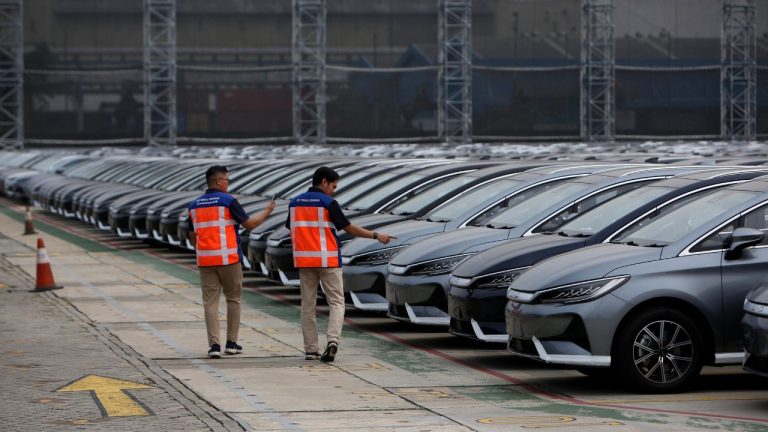
The Supreme Court handed importers a massive win on February 20, 2026, striking down IEEPA tariffs with a decisive 6-3 vote. Within hours, roughly 2,000 companies flooded courts with refund claims. BYD, FedEx, Costco, Hasbro, and even Bausch + Lomb—they all sued. But GM, Toyota, and Ford, the three automakers hit hardest by tariff losses, stayed silent. They watched a Chinese EV manufacturer lead the charge while they did absolutely nothing. The question isn’t just legal—it’s strategic, and the silence is deafening.
Stacking Losses
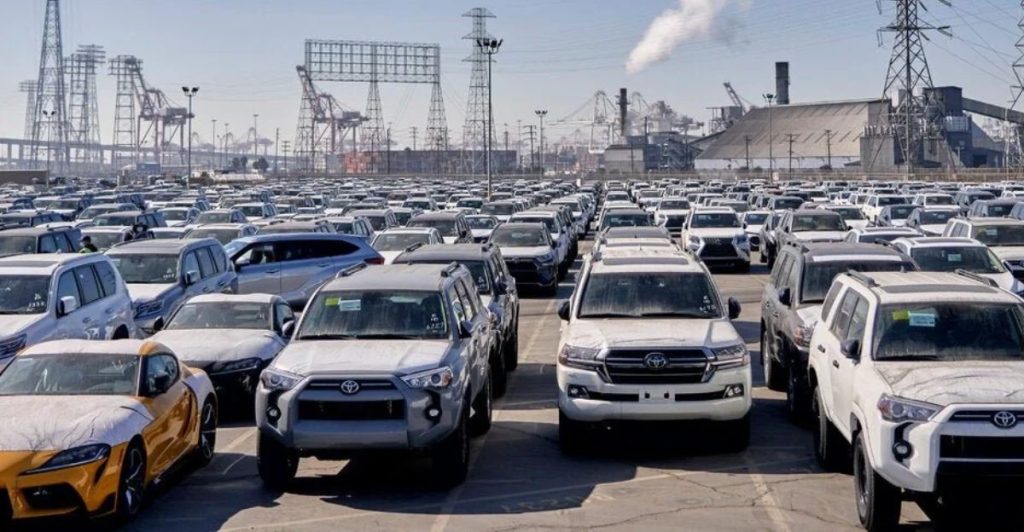
Before the Supreme Court even ruled, the damage was catastrophic. Toyota projected a staggering $9.5 billion tariff hit for fiscal 2026—the largest single-company loss in automotive history. GM absorbed $3.1 billion in 2025. Ford took an $800 million hit in just one quarter and estimated $3 billion in gross tariff costs for the year, though mitigation efforts clawed back about $1 billion. Kia’s operating profit crashed 28%, falling from $9.3 billion to $6.4 billion. Cox Automotive put the entire industry’s tariff bill at roughly $25 billion. These aren’t rounding errors—they’re crippling losses.
Domestic Punishment
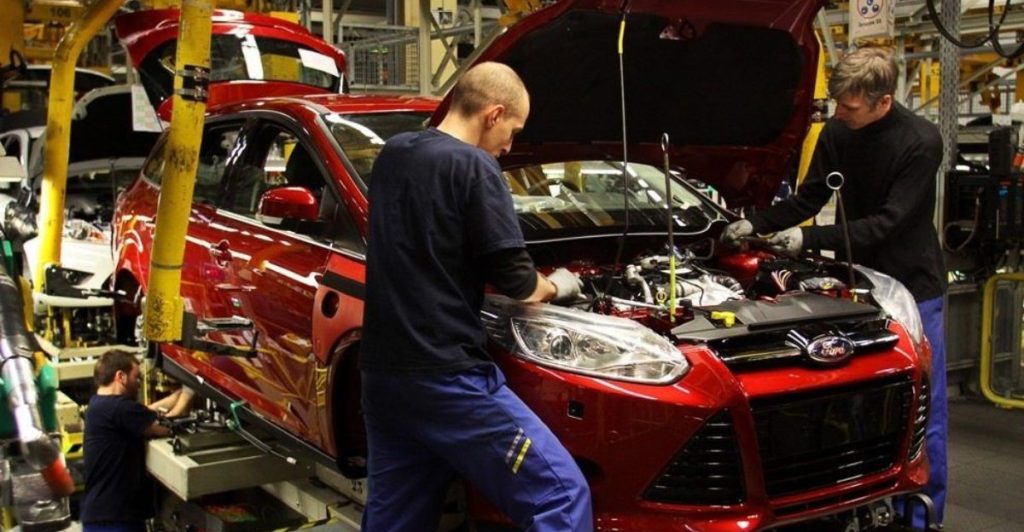
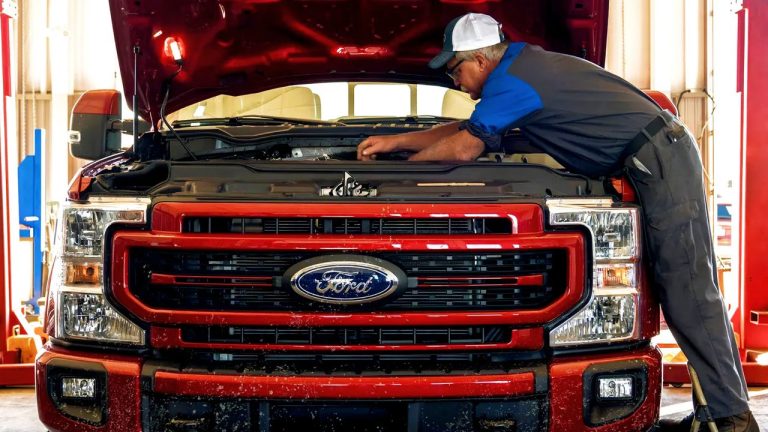
Here’s the irony: tariffs were supposed to protect American-made vehicles. Ford builds most of its U.S.-sold cars right here on American soil, yet it still paid hundreds of millions in tariffs on imported parts in a single quarter. Analysts estimate that 25% tariffs on auto parts added thousands of dollars to the cost of every vehicle assembled domestically. The protectionist pitch backfired spectacularly—companies that built in America got punished for doing so. That’s not protection. That’s a tax on domestic manufacturing dressed up as patriotism.
The Boomerang

Tariffs were marketed as a shield for Detroit against foreign competition. Instead, they created a chaotic web of overlapping regimes: Section 232, Section 301, Section 122. Some components faced compounding rates exceeding 60%. Sonic Automotive president Jeff Dyke didn’t mince words in February 2026: “The tariffs are excessively high for some of these brands, and they will pass these costs onto consumers. It’s already occurring.” The protection racket reversed course fast, and guess whose feet were on the hook? You are. The costs are already landing on driveways across America.
The Hollow Victory

The Supreme Court struck down IEEPA tariffs on February 20. The Trump administration reimposed them the same day under Section 122, a different statute granting 150-day temporary authority. It’s legal whack-a-mole: knock down one tariff, and another pops up instantly under a different law. Multiple overlapping statutes create a tariff floor that survives any single court challenge. The auto industry burned $25 billion fighting a system designed to regenerate faster than courts can strike it down. The victory wasn’t hollow—it was a mirage.
Your Price Tag
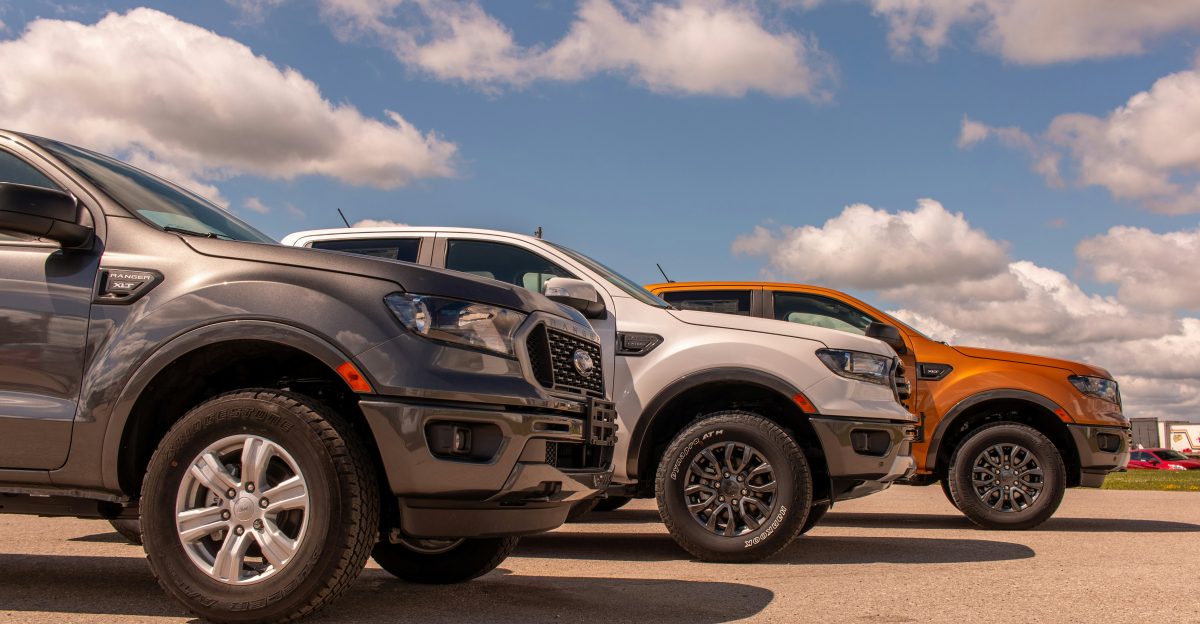
J.P. Morgan projects a $41 billion tariff bill for the auto sector in year one, split between manufacturers and buyers. That translates to $2,580 added to every new vehicle initially, rising to $3,258 by year three. GM managed to offset about 40% of its tariff hit through pricing tweaks and cost cuts. Ford clawed back roughly $1 billion of its $3 billion gross exposure. But the rest? That lands directly on your sticker price. Monthly payments are rising, and the manufacturers absorbing costs today won’t keep doing so forever.
North American Fallout
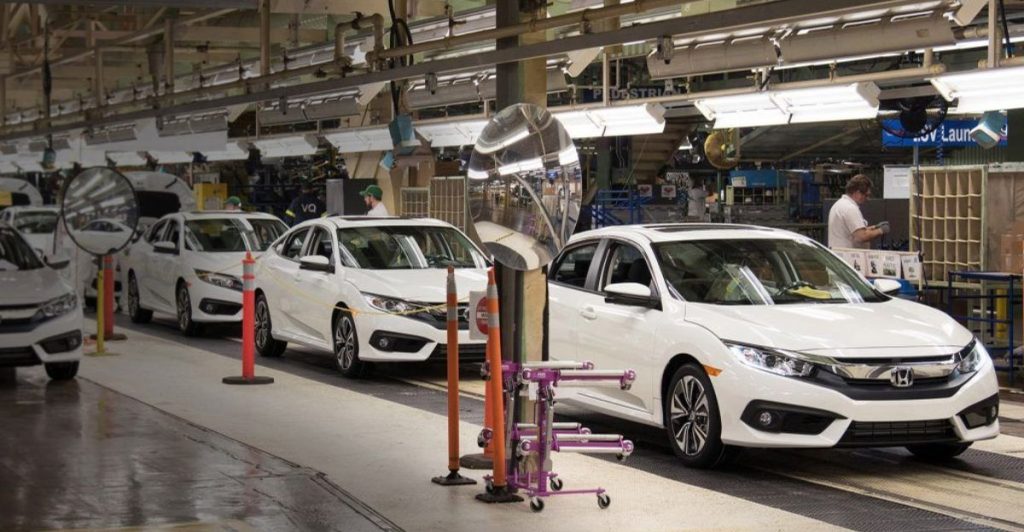
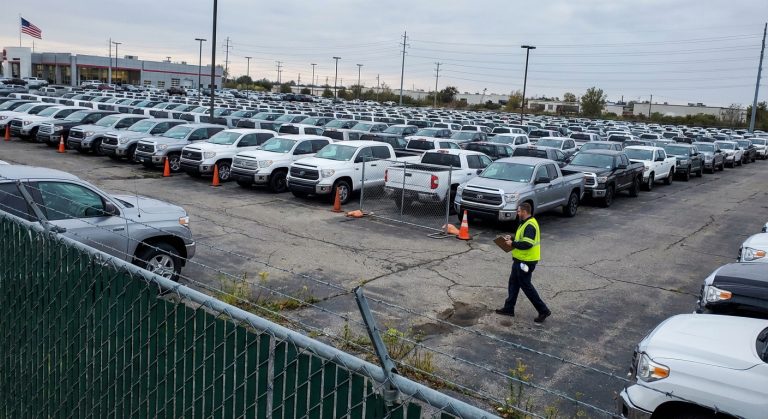
Canadian auto sales hit a six-year high in 2025, but TD Economics projects a 4.3% drop in 2026. The effective tariff on Canadian-built vehicles runs higher than expected, despite decades of largely duty-free trade. Production is under serious pressure—shift reductions, idled plants, and output struggles are mounting. And here’s the kicker: the production migrating away from Canada has nowhere to go. U.S. plants are already running near max capacity. The tariff architecture is squeezing North American auto trade into a corner with no easy exit.
The Real Game
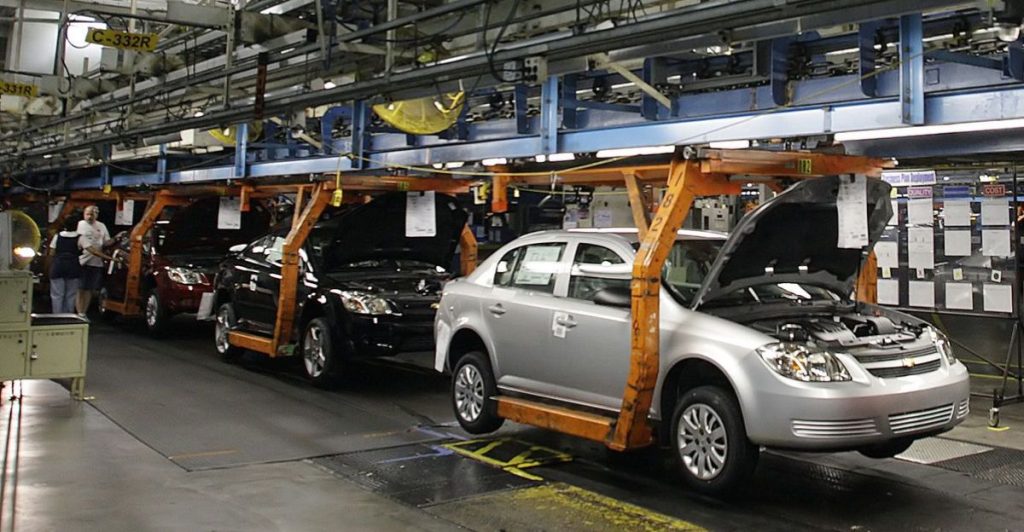
U.S. plants are operating near capacity. They can’t physically expand fast enough to absorb what Canada and Mexico are losing. That reframes everything: tariffs meant to boost domestic manufacturing hit an industry with limited room to grow here. So why won’t automakers sue? The real negotiation is the CUSMA review, where tariff rates get locked in for years. Filing a lawsuit against the administration you need at the bargaining table is a gamble nobody with billions on the line will take. Silence isn’t weakness—it’s strategy.
Refund Mirage
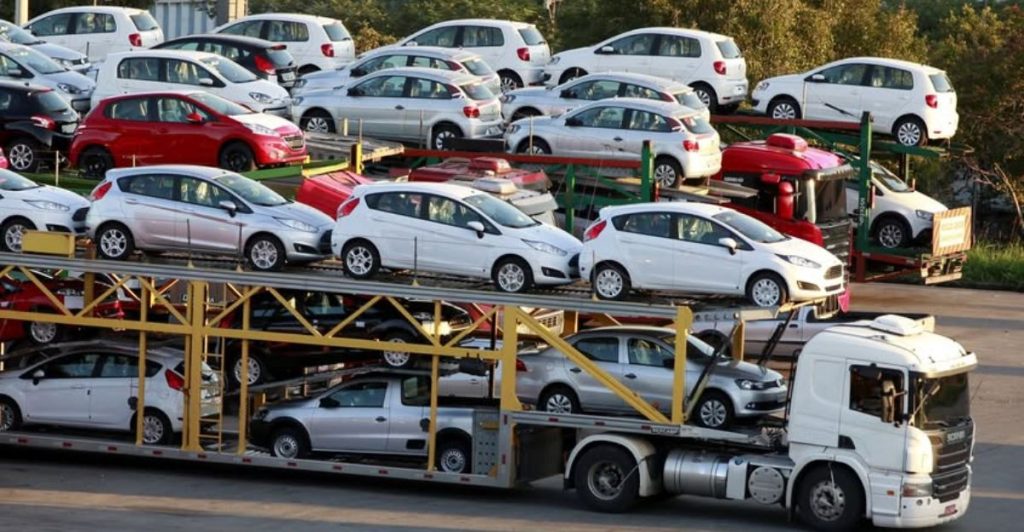
Roughly 2,000 importers are chasing tariff refunds through the Court of International Trade. S&P Global reported over $142 billion collected under IEEPA in 2025. But here’s the problem: Customs typically liquidates entries within a year, and once that happens, the refund window narrows dramatically. Litigation timelines stretch into 2027 and 2028. For smaller importers and suppliers with razor-thin margins, waiting two years for money already spent creates a working-capital nightmare. A court ruling doesn’t fix cash flow crises in real time.
Buying Window
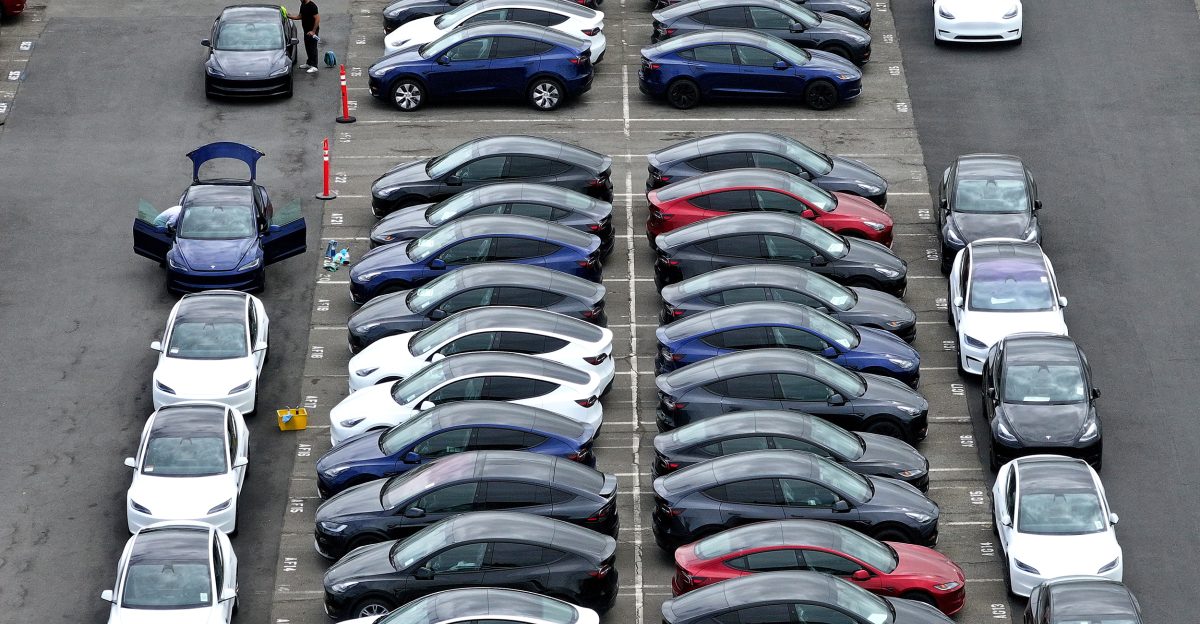
Spring 2026 might be your last chance before mid-year price hikes reshape the market. J.P. Morgan projects sales averaging 15.5 million vehicles annually over the next three years—roughly 3% below 2024 levels. Tariff refunds are years away, if they arrive at all. Prices are climbing on a predictable calendar, and the automakers absorbing costs today are quietly negotiating relief behind closed doors. The sticker price you see this spring is likely the cheapest version of what’s coming next. If you’re buying, the clock is ticking.
Sources:
Reuters , “Toyota warns of $9.5 billion tariff hit, slashes annual profit forecast” , August 7, 2025
J.P. Morgan Global Research , “Auto Tariffs: Who Will Pay?” , September 22, 2025
Reason , “Ford paid $800 million in tariff costs, despite building most cars in America” , August 4, 2025
Claims Journal / Reuters , “Tariff-refund seekers flock to a little-known US court with big-case backlog” , March 3, 2026
Covington & Burling , “IEEPA Tariffs Terminated, Replacement Section 122 Tariffs Take Effect” , February 2026
TD Economics / Retail Insider , “Canada auto sales hit 6-year high in 2025, but tariffs to drive decline in 2026” , February 19, 2026