
Global EV Sales Crater 11% As Automakers Ditch Electric Strategy For Secret Hybrid Backup Plan
Global electric vehicle sales plunged to approximately 1.1 million units in February 2026, marking an 11% decline both month-on-month and year-on-year, according to Benchmark Mineral Intelligence. This downturn ends a prolonged period of growth and raises concerns about the pace of the global transition to electric mobility. “Europe continues to act as the engine of growth, while North America remains in retreat and China adjusts to structural policy changes at home,” said Charles Lester, BMI data manager, highlighting the stark regional divergence already emerging in the early months of the year.
Europe Defies Trend with 21% Growth

Europe’s electric vehicle market surged 21% year-to-date in early 2026, driven by strong gains in Germany (+26%), France (+30%), and Italy where sales nearly doubled thanks to generous EU-backed incentives. The region’s resilience contrasts sharply with declines elsewhere, underscoring the effectiveness of sustained subsidy programs. Lester noted that “active subsidy schemes” in France and Germany had pushed sales up, creating the “stark regional contrasts” seen in the data. This growth positions Europe as the primary driver of global EV expansion despite headwinds in other major markets.
China’s Domestic Market Slumps 26% Year-to-Date

China’s domestic electric vehicle sales fell 26% year-to-date through February 2026, after the government reintroduced a purchase tax on EVs and adjusted its trade-in program. February alone saw a 32% drop compared with the same month last year, the steepest decline since the early COVID-19 pandemic. Lester explained that “China’s domestic market is adjusting to the reintroduction of a purchase tax and changes to its trade-in scheme, resulting in a sharp year-on-year decline at the start of the year.” The policy shift has temporarily curtailed home demand while manufacturers look abroad for growth.
North America Faces Steep Slowdown

North America’s electric vehicle sales rose 8% month-over-month in February but remained down 36% year-to-date, with the United States leading the retreat. Ford’s battery-electric vehicle sales plunged 70% so far this year, while Honda’s dropped 81% and Kia’s fell 52%, reflecting broader weakness in the region. Electrek observed that North America is heading in the opposite direction, as the Trump administration works to deliberately harm its own EV market by canceling subsidies and withdrawing policy support. The downturn is already rippling through the supply chain, affecting battery producers and related industries.
Ford’s EV Sales Drop 70% Signals Trouble

Ford’s electric vehicle sales have been among the hardest hit in North America, dropping roughly 70% year-to-date through February 2026. The decline mirrors the company’s broader struggle to maintain EV demand amid fading incentives and intensifying competition. Industry analysts note that the sharp fall contributes to excess battery-production capacity, prompting automakers to seek alternative uses for their cells. Ford’s situation exemplifies how policy shifts and consumer hesitation can quickly reverse earlier growth trajectories in the EV sector.
Big Three Quietly Pivot to Hybrid Backup Plans

Ford, GM, and Stellantis have collectively booked over $52 billion in charges tied to their EV rollbacks, as all three shift toward hybrid and extended-range vehicles. Ford scrapped the all-electric F-150 Lightning following a $19.5 billion writedown, GM is reintroducing plug-in hybrids timed for the 2027 model year ahead of tighter EPA emissions standards, and Stellantis acknowledged it “over-estimated the pace of the energy transition” after taking a $26 billion charge. The pivot is not a technology reversal. It is a response to regulatory compliance clocks, expired IRA tax credits, and charging friction that quietly determine which powertrains pencil out each model year.
Chinese Exports Surge Over 500,000 Units

While China’s domestic EV market weakened, its exports more than doubled in the first two months of 2026, surpassing half a million units. Chinese automakers shipped over 500,000 electric vehicles abroad, offsetting sluggish home sales and showcasing the competitiveness of their products in global markets. This export boom helps keep production lines running and provides a crucial revenue stream amid policy-driven downturns at home. The trend highlights how manufacturers can pivot to international demand when local conditions shift.
Automakers Pivot to Energy Storage
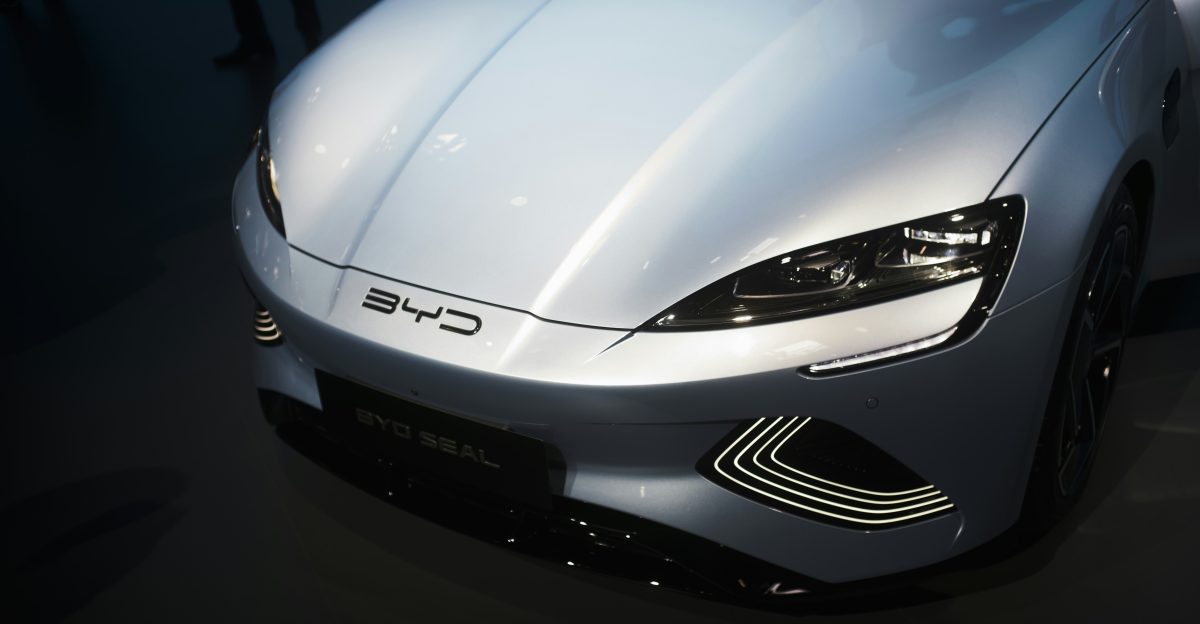
Facing softened EV demand, automakers and battery suppliers are increasingly turning to energy-storage systems to utilize excess battery capacity. Volkswagen activated its first large-scale battery storage facility in Salzgitter, Germany, with a 20 MW output and 40 MWh capacity to store renewable electricity and support grid stability. Tesla, BYD, GM, Ford, Renault, Mercedes, and Hyundai are also selling or developing storage solutions, transforming a potential surplus into a new growth avenue. This strategic shift reflects the industry’s adaptability in response to fluctuating vehicle-sales trends.
Benchmark Mineral Intelligence Highlights Regional Split
Charles Lester of Benchmark Mineral Intelligence summarized the market’s division, stating, “Europe continues to act as the engine of growth, while North America remains in retreat and China adjusts to structural policy changes at home, even as exports accelerate.” His comments capture the contrasting forces shaping the early-2026 EV landscape: policy-driven expansion in Europe, demand-side challenges in North America, and a transitional phase in China that is simultaneously stimulating overseas shipments. Such expert insight helps explain why global averages mask divergent regional realities.
Policy Shifts Drive Market Divergence

Policy differences are a key driver of the current regional split: Europe’s continued subsidies and incentives are boosting sales, whereas the United States’ rollback of EV-friendly measures under the Trump administration is suppressing demand. In China, the reintroduction of a purchase tax and tweaks to trade-in incentives have temporarily depressed home sales but have not dampened manufacturers’ export enthusiasm. Electrek noted that Europe’s EV market is accelerating thanks to the return of subsidies and policy support, while North America is heading in the opposite direction. These policy dynamics are reshaping the global EV map in real time.
Outlook: Storage and Exports May Buffer Downturn
Looking ahead, the rise of energy-storage applications and strong Chinese export volumes could help offset the slowdown in domestic EV sales across several markets. Analysts suggest that if policy environments stabilize, particularly in North America and China, demand for electric vehicles may regain momentum later in 2026. For now, the industry’s pivot toward storage and international sales demonstrates a resilient response to shifting consumer and regulatory landscapes, potentially setting the stage for a more balanced recovery.
Sources:
“Global EV Sales Fall Again in February.” Reuters, March 13, 2026.
“Global EV Sales Hit 1.1 Million — Europe Surges While the US Slides.” Electrek, March 12, 2026.
“Global EV Sales Fall 11% in February on China Slowdown.” Benchmark Mineral Intelligence via Inspirepreneur Magazine, March 12, 2026.
“Big Three Automakers Take $52.1 Billion Hit From EV Pivot.” Yahoo Finance, February 2026.
“Stellantis Announces $26 Billion Hit From Business Overhaul.” CNBC, February 6, 2026.
“Ford Takes $19.5 Billion Hit as It Rolls Back EV Plans.” The New York Times, December 15, 2025.
“Volkswagen Pushes Into Energy Storage on Slow EV Battery Demand.” Bloomberg, March 9, 2026.