
Gas Hits $4 In Just 33 Days After Iran Blockades 20% Of World’s Oil—Largest Disruption In History
On February 27, Americans paid $2.98 for a gallon of gas. By March 31, that number crossed $4.02. In thirty-three days, the price increased by a dollar and four cents. That is the fastest sustained pump spike since the 2022 Ukraine crisis, and it happened while every major energy forecaster on the planet was predicting lower prices for 2026. The IMF called the Strait of Hormuz closure “the largest disruption to the global oil market in its history.” It was bigger than the 1973 embargo and the Iranian Revolution. And the ripple effects are just starting to reach shore.
One Waterway, Four Crippled Nations
Iran never touched a single oil field. The Revolutionary Guard blockaded a 21-mile waterway, and that alone disabled exports from Saudi Arabia, the UAE, Iraq, and Kuwait simultaneously. Production losses hit 10 to 11 million barrels per day by March 12, roughly one-tenth of global consumption, erased by geography instead of bombs. The 1973 OPEC embargo removed about 6% of global supply. This blockade removed close to 20%. Three to five times larger, according to the Dallas Federal Reserve. Supply-and-demand models built over decades became irrelevant overnight.
Your Grocery Run Just Got More Expensive
Utah drivers absorbed a 52.4% gas price increase in a single month. Twelve states crossed $4 per gallon. Nineteen others sat at $3.75 or above. California hit $5.88, flirting with $6. At $4 nationally, Americans spend roughly $357.6 million per day on gasoline, an annualized wealth transfer of approximately $33 billion from household budgets to the energy sector compared to pre-conflict prices. Rural commuters and small business owners, who face fuel costs with no ability to pass them forward, felt it first and worst.
Airlines and Truckers Scramble

Crude oil spiked over 40% since the conflict started, with Brent reaching as high as $118.35 per barrel on March 31. Airlines began announcing fuel surcharges. Trucking and logistics firms demanded pass-through pricing from customers. The travel industry started advising Americans to book summer flights immediately before fares repriced. Energy-intensive manufacturing sectors like petrochemicals and fertilizer faced margin compression and potential idling. The assumption that this only hits consumers at the pump died fast. Entire supply chains repriced in weeks, and the lag between crude spikes and retail hasn’t fully landed yet.
The Fertilizer Connection Nobody Expected
Here is where the cascade crosses into territory most people haven’t considered. Petrochemical feedstocks flow through the same chokepoint. Fertilizer production depends on those feedstocks. American agriculture depends on that fertilizer. One maritime blockade in the Persian Gulf now threatens crop input costs in Iowa. Goldman Sachs raised its 2026 Brent forecast from $77 to $85 per barrel in a single week, calling the Hormuz closure the largest supply shock in crude market history. The myth that this only affects your gas tank is already dead.
The Map Controls the Price
Every one of these ripples traces back to the same structural failure. Global energy markets run on two frameworks: supply-and-demand fundamentals and geopolitical tail risk. January’s forecasters optimized for the first and ignored the second. Iran proved that chokepoint leverage beats production capacity. Twenty percent of the world’s oil passes through one strait. One blockade. Four producers are offline. Crude surplus still exists globally, yet prices spiked 40%. The surplus became irrelevant. That realization reaches your kitchen table, your commute, your heating bill, and your grocery receipt. Same mechanism. Every line item.
“A Few More Weeks”
Energy Secretary Chris Wright told NBC that Americans would “feel it for a few more weeks” and expressed confidence in sub-$3 gas by summer. That same week, his own agency published its revised forecast: $3.34 per gallon average for 2026, with prices never dropping below $3 through the end of 2027. A cabinet secretary contradicted his own analysts in real time. The EIA’s numbers say at least eight more months of elevated prices. Wright’s mouth said weeks. Somebody is wrong, and the people paying $4 a gallon already know who.
The Rules Changed Permanently

The OECD upgraded its U.S. inflation forecast to 4.2% for 2026, up from 2.8% before the conflict. Recession probability rose sharply, with forecasters like EY Parthenon at 40% and Goldman Sachs at 30%. Wood Mackenzie warned of stagflation risk with Brent potentially reaching $150 per barrel. The energy security paradigm shifted from “OPEC controls prices through production” to “any actor controlling a chokepoint controls prices through geography.” Iran removed 10 million barrels daily without destroying one facility. Future adversaries noticed. Every long-dated oil forward now carries a permanent Hormuz risk premium.
Winners, Losers, and the $33 Billion Transfer
Refinery margins surged despite abundant crude because product markets were divorced from surplus conditions. Someone profits from every one of these consequences, and it is not the family filling up a minivan. Low-income households face fuel poverty. Emerging economies with thin reserves face a petrodollar drain. India, Japan, and Korea absorb simultaneous inflation and currency pressure. Meanwhile, Trump authorized 172 million barrels from the Strategic Petroleum Reserve. Sounds massive. It covers roughly 16 days of U.S. refinery demand against a disruption removing 10 million barrels daily, with no end date.
The Cascade Has No Off Switch
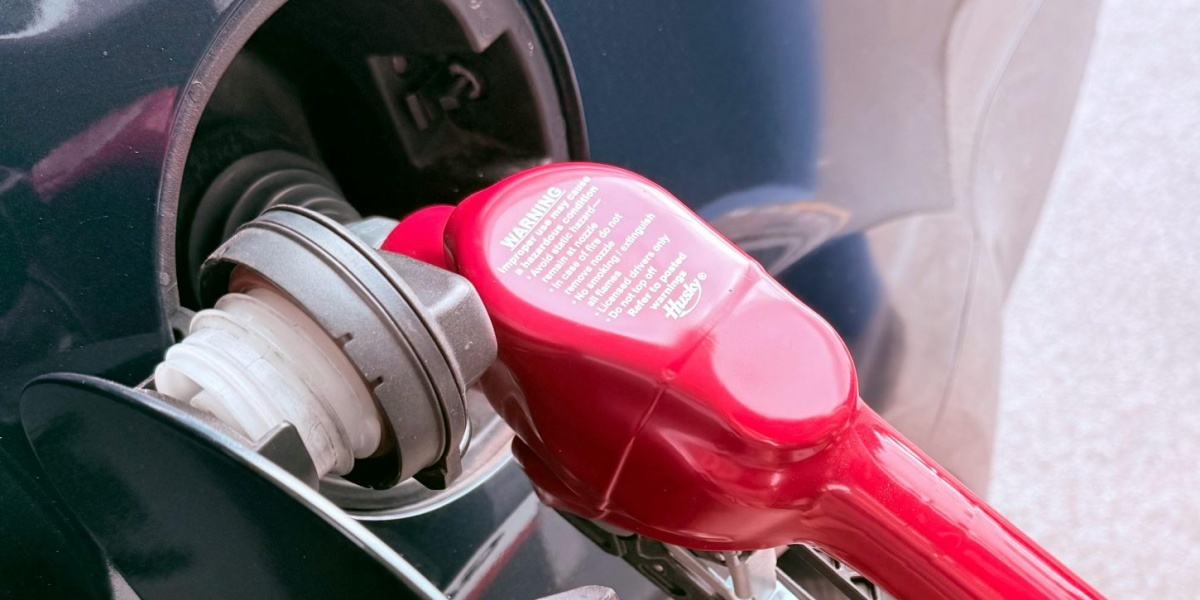
Reports emerged that Trump considered ending military operations without resolving the Strait closure. If Hormuz stays blocked past April, oil could push toward $130 to $150 per barrel, sending gas nationwide to $5. The EIA projects no relief below $3 until 2028. In January, University of Houston economist Ed Hirs warned, “The cure for low oil prices is low oil prices.” He was right. Oversupply invited complacency. Complacency met a 21-mile chokepoint. And now every energy forecast written before February 28 belongs in the recycling bin.
Sources:
“National Gas Average Jumps One Dollar in One Month.” AAA Gas Prices, 26 Mar. 2026.
“How the War in the Middle East Is Affecting Energy, Trade, and Finance.” International Monetary Fund, 30 Mar. 2026.
“Americans Are Now Paying $4 a Gallon for Gas. See the Map.” Business Insider, 31 Mar. 2026.
“Goldman Sachs Reset Oil Price Forecast for the Rest of 2026.” TheStreet, 22 Mar. 2026.