Ferrari Suspects FIA Fight Over Mercedes ‘Hiding Something’—2026 Engine Rules Showdown
Somewhere behind the sustainability press releases and the green-fuel talking points, two of the most powerful teams in Formula 1 are locked in a fight that has nothing to do with lap times. The 2026 power-unit regulations promise a new era: 100% sustainable fuel, a roughly 50/50 split between combustion and electric power. Noble goals. But Ferrari looked across the negotiating table at Mercedes and saw something that didn’t add up. The arguments sounded principled. The motives felt tactical.
The Weight of a Regulation Cycle
The FIA and Formula 1 formally announced the 2026 power-unit regulations as a major reset built around electrification, road relevance, and cost control. Every manufacturer would design around the same architecture constraints. That’s the pitch. The reality is that once those rules freeze, teams live with the consequences for years. A wrong bet on how to split combustion and electric output doesn’t just cost one race. It costs an entire regulatory cycle. Ferrari understood the stakes before the ink dried.
More Than an Engineering Debate
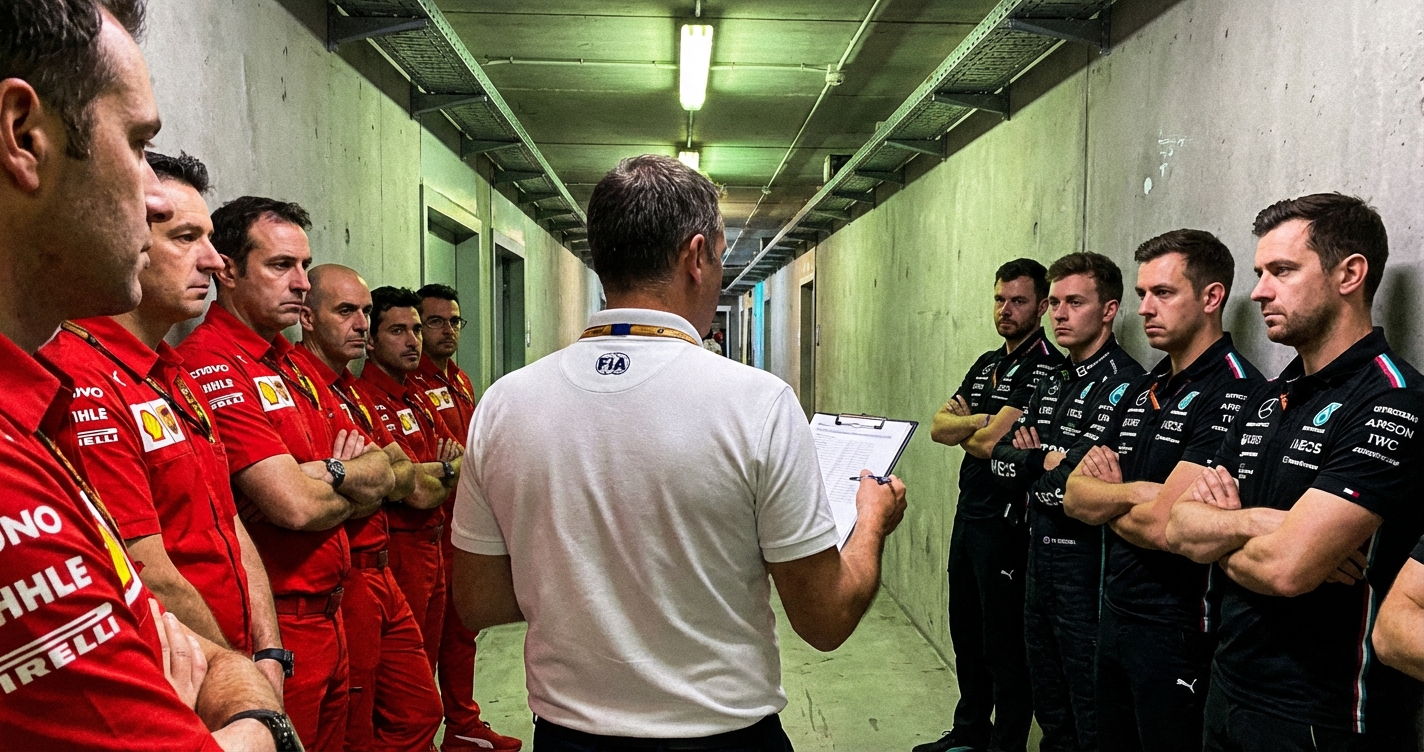
Most fans assumed the 2026 debate was engineers arguing physics. Ferrari’s read was different. Ferrari suspects Mercedes’ approach to the regulations—particularly around how compression ratios are measured—may be strategically motivated, concealing a technical advantage behind principled engineering positions. That reframes the whole conversation. If technical positions double as competitive weapons, then every manufacturer lobbying the FIA isn’t just shaping policy. They’re shaping the battlefield. The governance process that looks neutral starts looking like a land grab.
What Ferrari Thinks Mercedes Won’t Say
Ferrari suspects Mercedes is “hiding something.” A political interpretation: Mercedes’ arguments in the 2026 engine debate may mask private performance calculations rather than principled engineering positions. The FIA approves and publishes these technical regulations. Lobbying that authority is decisive. One manufacturer’s preferred direction wins. Others get locked into a weaker concept. For years. That’s the architecture advantage war underneath the technical debates, and Ferrari is calling it out loud.
The Gap Between Rules and Reality
The hidden system is elegantly simple: F1 rulemaking is a multi-actor negotiation where technical rules get shaped by competitive incentives, not just engineering merit. The FIA sets objectives like the 50/50 power split and 100% sustainable fuel. Manufacturers then fight over implementation details. That gap between objective and implementation is where advantage hides. Think of it like zoning laws: the city says “build housing,” but the developer who writes the fine print decides what gets built and who profits from the construction.
One Ratio That Changes Everything
The 2026 concept targets roughly half the propulsion power from electrical systems. That single ratio dictates fundamental car and power-unit integration choices, not just engine output. Teams that invested heavily in combustion expertise face a different calculus than teams already advanced in electric deployment. A rule designed to control costs can still trigger expensive development races in the areas it leaves open. The 100% sustainable fuel mandate adds another variable. Every team reads the same regulation and sees a different competitive map.
When Distrust Becomes a Development Tool
Political distrust itself becomes a performance factor. Misdirection, lobbying, alliance-building: these are now development tools alongside wind tunnels and dynos. Customer teams face significant exposure. If one manufacturer’s preferred direction wins, others may be locked into a weaker concept for years. Development spending is already shifting toward electrical systems and fuel technology. The immediate future looks like intensified lobbying over implementation details even after the freeze has taken effect.
The Precedent Nobody Can Ignore
This dispute sets a precedent that extends beyond 2026. Political framing is becoming normalized in technical rule debates. That’s the shift most people miss. Ferrari’s accusation isn’t an isolated grievance. It’s a signal that manufacturers now treat regulation cycles as competitive terrain, not neutral governance. Once you see sustainability arguments functioning as leverage in an architecture war, you cannot unsee it in any future rule change. The 2026 reset isn’t an exception. It’s the template for how power gets distributed in Formula 1 going forward.
Nobody Is Blinking
The path forward runs through accusations, counter-briefings, and governance brinkmanship. Ferrari has named the game publicly. Key aspects of the dispute remain unresolved, even after the FIA’s late-February rule clarifications. The FIA sits in the middle, holding approval authority over regulations that will define half a decade of competition. Whoever hasn’t been affected yet will be: the 2026 rules are intended to attract/retain power unit manufacturers by aligning with broader automotive trends. The homologation deadline passed on March 1, and nobody blinked.
The Championship Won Before a Wheel Turned
The FIA has already responded with technical directives and rule clarifications—including revised compression-ratio measurement requirements effective June 1, 2026—designed to reduce ambiguity in the framework. Whether those changes fully neutralize the advantage Ferrari suspects Mercedes gained remains the open question nobody in the paddock can answer yet. Most fans will watch the 2026 cars and see a new era of sustainable racing. The people who read this far will see something else entirely: a regulation cycle where the real championship was won in a conference room, months before anyone turned a wheel.
Sources:
“What Ferrari thinks Mercedes is hiding in political F1 engine game.” The Race, 18 Mar 2026.
“Why Ferrari believes F1 engine rules tweak won’t stop Mercedes.” Motorsport.com, 18 Mar 2026.
“Formula 1: FIA to revise engine rule at centre of row.” BBC Sport, 28 Feb 2026.
“F1 2026’s new engine rules explained.” The Race, 21 Jan 2026.