
Diesel Spike Squeezes Truckers and Farmers as Costs Rise Across the Supply Chain
Most Americans rarely buy diesel, yet last week its cost spiked in a way unseen in U.S. history. On-highway diesel jumped 96.2 cents in a single week to $4.859 per gallon, a 25% surge far above gasoline’s 16% rise, according to DOE data on March 10. Truckers, farmers, and supply chains face a sudden shock to operating costs. Diesel’s surge may seem disconnected from daily life, but its ripple effects reach every shipment and field. How did this fuel, often overlooked, become a crisis overnight?
Global Conflict Sends Prices Skyrocketing

The diesel spike traces back 7,000 miles. Oil prices surpassed $110 per barrel after U.S. strikes on Iran partially closed the Strait of Hormuz, which handles about 15 million barrels of crude per day, the EIA reported March 10. “Fuel markets are now rapidly recalibrating to the risk of prolonged disruption to global supply flows,” said GasBuddy’s Patrick De Haan on March 9. Diesel’s rise outpaced gasoline, highlighting its vulnerability. But heating oil shortages and renewable diesel supply gaps suggest the Middle East is only part of the story. Could domestic supply issues worsen the pinch?
Distillate Stocks Were Already Weak
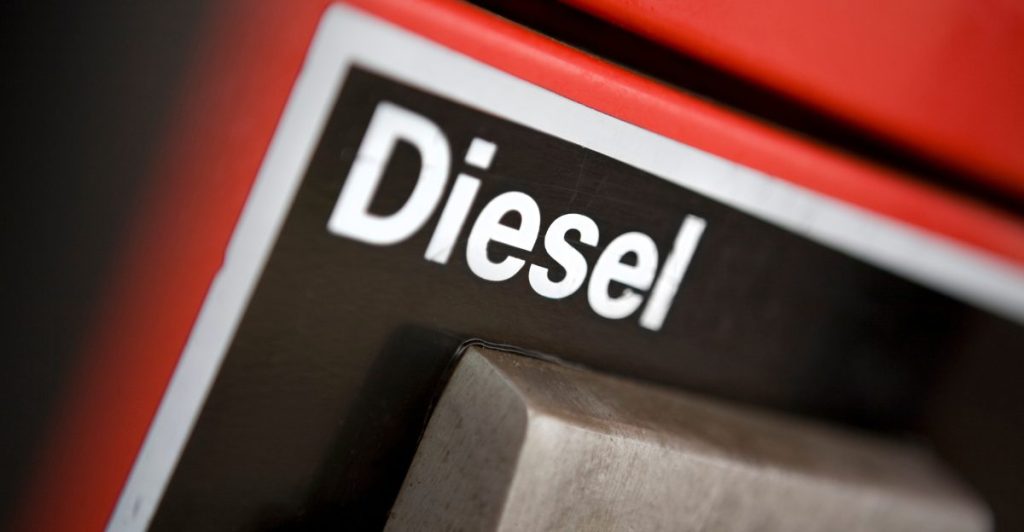
Diesel entered this crisis with limited reserves. Freezing winter weather drained Northeast heating oil stocks, essentially the same product, CNN noted March 8. U.S. distillate inventories had already fallen 17%, about 22 million barrels, by mid-2025, versus a typical 10% seasonal draw over the prior four years, EIA reported March 11. Renewable diesel and biodiesel supply dropped 35% year over year, forcing petroleum distillate to fill the gap. With reserves low, even a small shock reverberates quickly. Diesel’s fragile supply set the stage for an unusually sharp and immediate price jump.
Government Forecasts Show Higher Costs Ahead

EIA’s March 10 forecast now expects diesel to average $4.12 per gallon in 2026, up 20.1% from last month’s projection, TruckNews reported March 9. Quarterly estimates show a peak of $4.54 in Q2, falling to $3.92 by Q4, with 2027 projected at $3.78. “We assume closure of the Strait of Hormuz will reduce Middle East oil production further in coming weeks,” the agency said. Average end-of-month distillate stocks could hit the lowest level since 2000. Truckers’ operating costs were already high, making this price jump especially challenging. How will the industry survive this surge?
Trucking Margins Were Already Thin
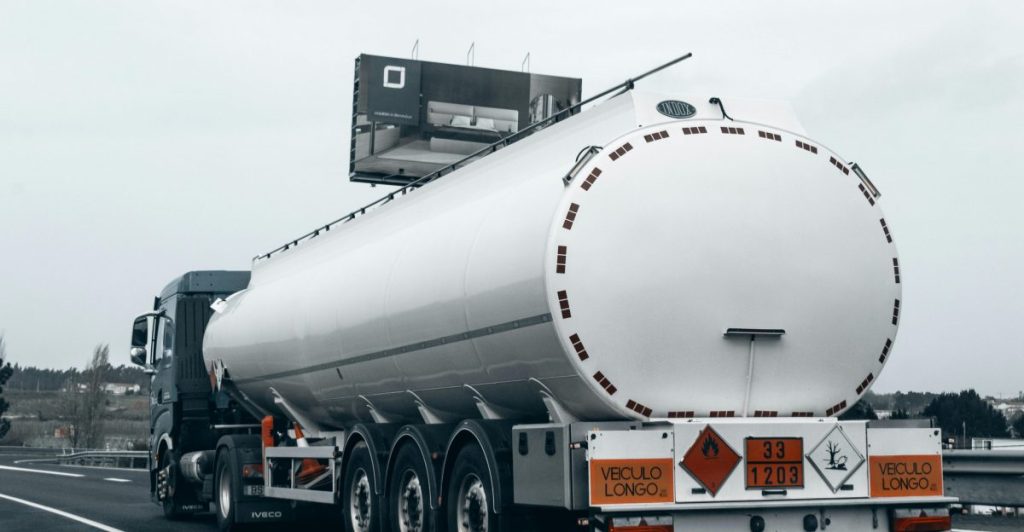
The diesel surge hit an industry already stretched. ATRI’s July 2025 report showed operating a truck cost $2.260 per mile in 2024, with non-fuel costs at $1.779 per mile — the highest recorded. Truckload carriers averaged a -2.3% operating margin. More than 90% of U.S. carriers run 10 or fewer trucks, ATA data showed in August 2025, leaving little room to absorb sudden spikes. Small operators face extreme pressure. Some raise rates; others risk shutting down. What strategies are carriers using to protect themselves from a crisis that came almost overnight?
“Diesel Spiked Faster Than Anything I’ve Seen”

For Kareem Miller, who runs Chicago-based Strong Pact Trucking with 3 diesel-powered trucks, the numbers hit fast. “I’ve seen diesel prices fluctuate, but never spike that quick. It was bad,” Miller told CNN last week, as reported on March 8. Miller said he may have to raise his rates soon to offset costs, but larger carriers are not waiting. UPS and FedEx, America’s two largest parcel carriers, have both raised fuel surcharges in recent weeks in response to the diesel jump, with surcharges now reaching the mid-20% range of transportation charges, according to Supply Chain Dive’s March 12 report. The squeeze is no longer limited to fuel bills alone.
Fuel Surcharges Keep Rising

Both UPS and FedEx have restructured their fuel surcharge tables multiple times over the past 2 years as diesel markets tightened. Carriers have steadily raised surcharges as diesel costs climbed, according to FreightWise’s March 5 tracking report. In recent quarters, UPS reported hundreds of millions of dollars in additional fuel surcharge revenue tied to pricing adjustments and “revenue quality actions,” per Supply Chain Dive’s March 12 analysis. “Fuel surcharge changes are anticipated to continue upholding carrier yields, despite easing diesel costs and ongoing volume pressures,” a January carrier presentation noted, as cited in the same report. Container shipping companies have also begun imposing their own fuel surcharges. But it is American farmland where the timing could not be worse.
Farmers Brace for Diesel Shock

Spring planting is weeks away, and diesel powers nearly every tractor, combine, irrigation pump, and delivery truck. Kansas farmer Curt Hoobler told CNN affiliate KWCH March 8, “Now’s when we need it the most.” Fertilizer costs, partly sourced from the Middle East, are also rising. Hoobler said, “It’s going to make it a lot tougher for a farmer to make it through this year.” Corn, wheat, and soybean prices are climbing, but not as fast as fuel. Diesel’s ripple from the pump to the field raises serious concerns. How will this season affect crop production?
Grocery Prices Could Follow Diesel

Diesel fuels both food production and distribution. Nearly every grocery item traveled on a diesel truck, CNN reported March 8. Truckload spot rates rose roughly 23% year over year to $2.80 per mile, with tender rejections at 14%, the highest sustained levels since 2022, ATRI analysts noted February 2026. Strong international distillate demand, including European imports replacing Russian products, will keep U.S. inventories tight through the year, EIA reported March 11. GasBuddy warns diesel may rise 35–75 cents more per gallon. For American households, the question is no longer if costs will rise, but when.
Diesel’s Path Forward Remains Uncertain

EIA expects diesel to ease from a Q2 peak of $4.54 per gallon to $3.92 by Q4, reaching $3.78 next year, TruckNews reported March 10. Relief depends on reopening the Strait of Hormuz and gradual return of Middle Eastern production. Distillate stocks are forecast at their thinnest since 2000, and non-fuel trucking costs remain record-high. Any disruption, hurricanes, refinery closures, or prolonged conflict, could trigger another spike. For truckers, farmers, shippers, and consumers, diesel is no longer the unnoticed fuel. Its costs are now a critical pressure point for the entire U.S. economy.
Sources:
US diesel average hits $4.859 a gallon, with further price spikes possible. TruckNews, March 09 2026
Diesel prices are climbing even faster than gas prices. Here’s why you should care. CNN Business, March 08 2026
EIA Projects End of Month Total Distillate Stock Decrease in 2025 and 2026. Rigzone, March 25 2025
March Short-Term Energy Outlook. U.S. Energy Information Administration (Today in Energy/Outlook summary), March 11 2026
Diesel Prices Soar Faster Than Gas, Impacting Economy. Wichita Today, March 07 2026
New ATRI Report Shows Trucking Profitability Severely Squeezed by High Costs, Low Rates. American Transportation Research Institute, June 30 2025