China’s BYD Cracks ‘Impossible’ EV Physics—644-Mile Range Plus 5-Minute Charge Buries Tesla
A packed auditorium in China. March 5, 2026. BYD’s Yangwang product director Zheng Yu walked onstage and posed the question every EV engineer had already surrendered to: “Why does the ‘impossible triangle’ of performance, range, and fast charging exist in electric vehicles? The core issue lies in battery physics constraints.” The crowd nodded knowingly. Everybody understood the answer—you pick two strengths, sacrifice the third. That’s the immutable law of battery physics. Then Zheng Yu smiled, the screen behind him changed, and everything the industry believed about electric vehicle limitations was about to shatter.
The Reveal
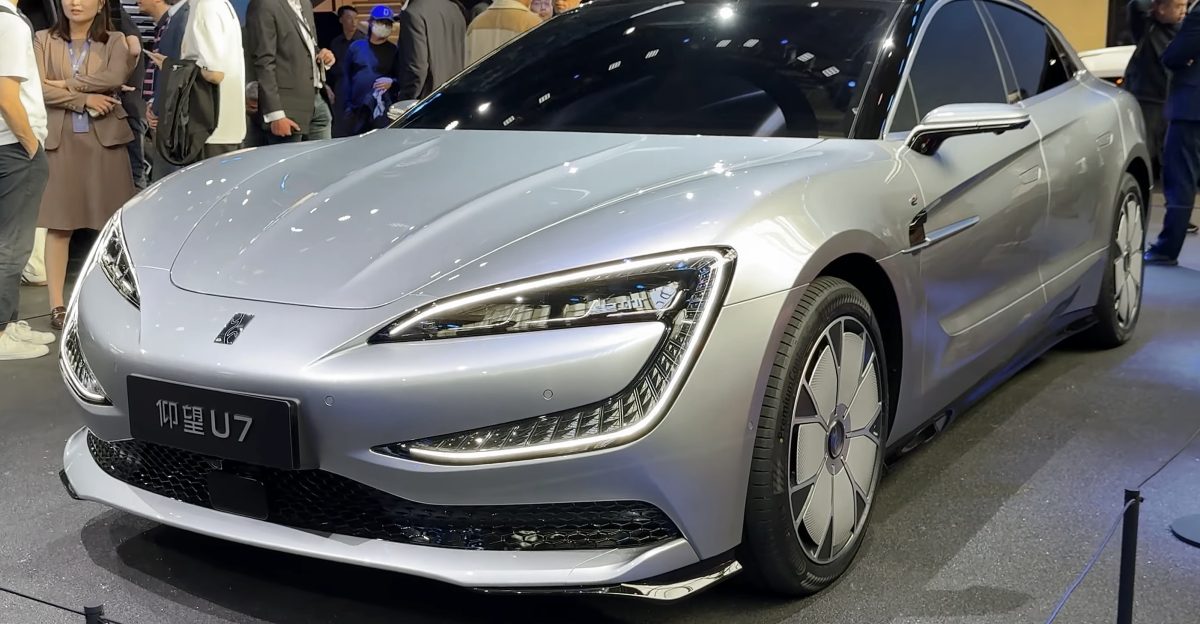
The Yangwang U7 rolled into frame on the presentation screen: 1,006 km of CLTC range (approximately 625 miles), quad-motor performance producing 1,340 horsepower, and a full charge from 10% to 97% in exactly nine minutes flat. Not a concept vehicle teased for future production. Not a low-volume prototype. A production vehicle launching immediately with the second-generation Blade Battery 2.0 installed under its floor. BYD chairman Wang Chuanfu had declared months earlier that “the ultimate solution is to make charging as quick as refueling a gasoline car.” The auto industry treated that statement as marketing hyperbole. It was actually a public deadline—and BYD just met it ahead of schedule.
The Benchmark
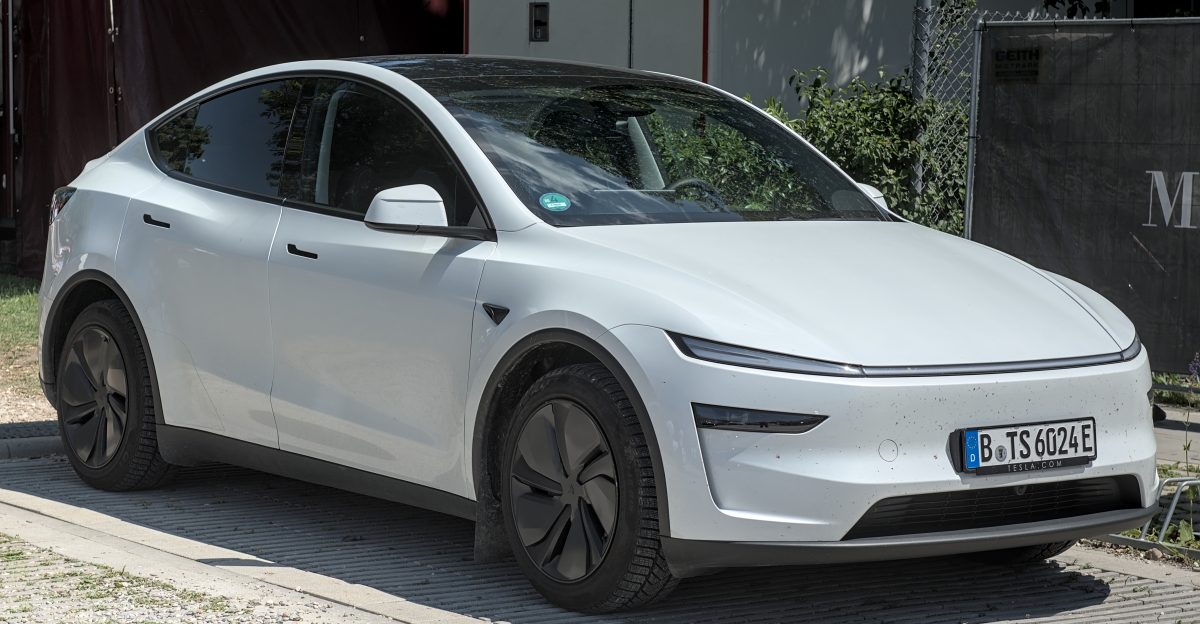
For years, the Tesla Model Y set the global premium EV standard: approximately 330 miles of EPA range, access to the Supercharger network, and a premium pricing tier. Every competitor measured itself against it and came up short. BYD’s Denza Z9 GT now claims 1,036 km on China’s CLTC testing cycle—that’s roughly 644 miles. Even heavily discounting for CLTC’s notoriously generous testing methodology (approximately 35% more optimistic than EPA), the EPA-equivalent estimate lands comfortably above 400 miles of real-world range. That doesn’t just match the Model Y benchmark—it obliterates it completely. And the Denza charges from 10% to 70% in five minutes flat.
Five Minutes
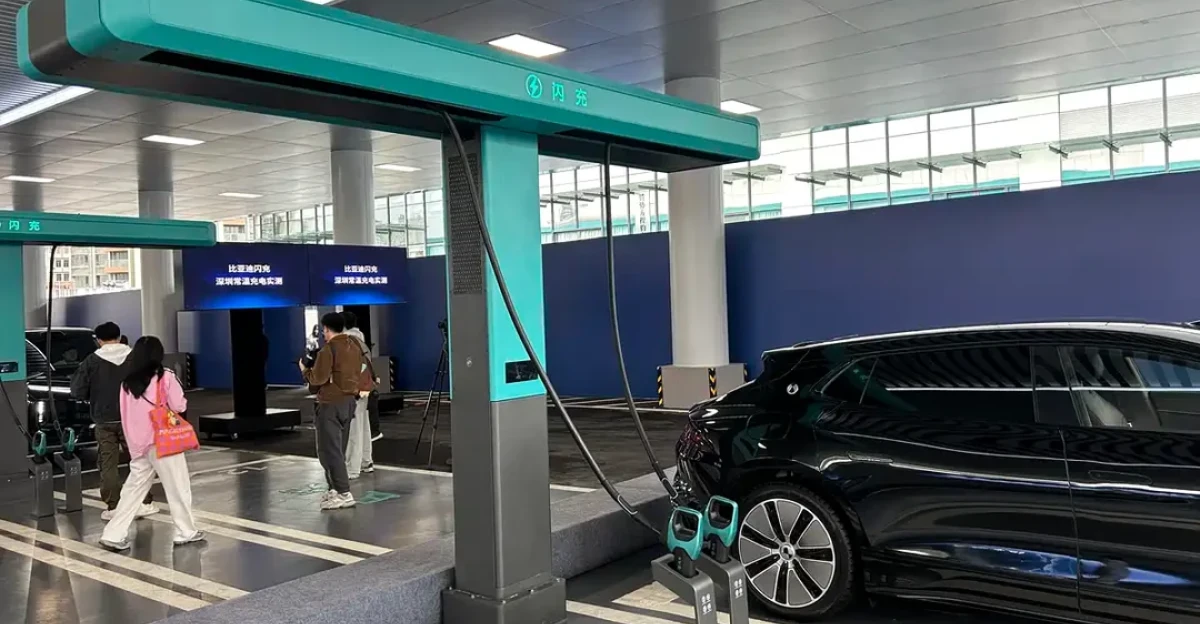
In exactly five minutes, the Blade Battery 2.0 charges from 10% to 70% state of charge, restoring roughly 240 kilometers of usable driving range. That precisely matches the typical 5-to-8-minute gasoline refueling window at conventional gas stations. The primary excuse that kept millions of potential buyers from buying EVs just evaporated. BYD’s Flash Charging stations deliver 1,500 kW through a single overhead connector gun—that’s 87.5% more peak power than competitors’ current-generation 800 kW ultra-fast charging systems. Faster energy transfer than a gasoline pump. From battery chemistry, the industry confidently declared that it couldn’t physically exist at scale.
The Hidden Engine
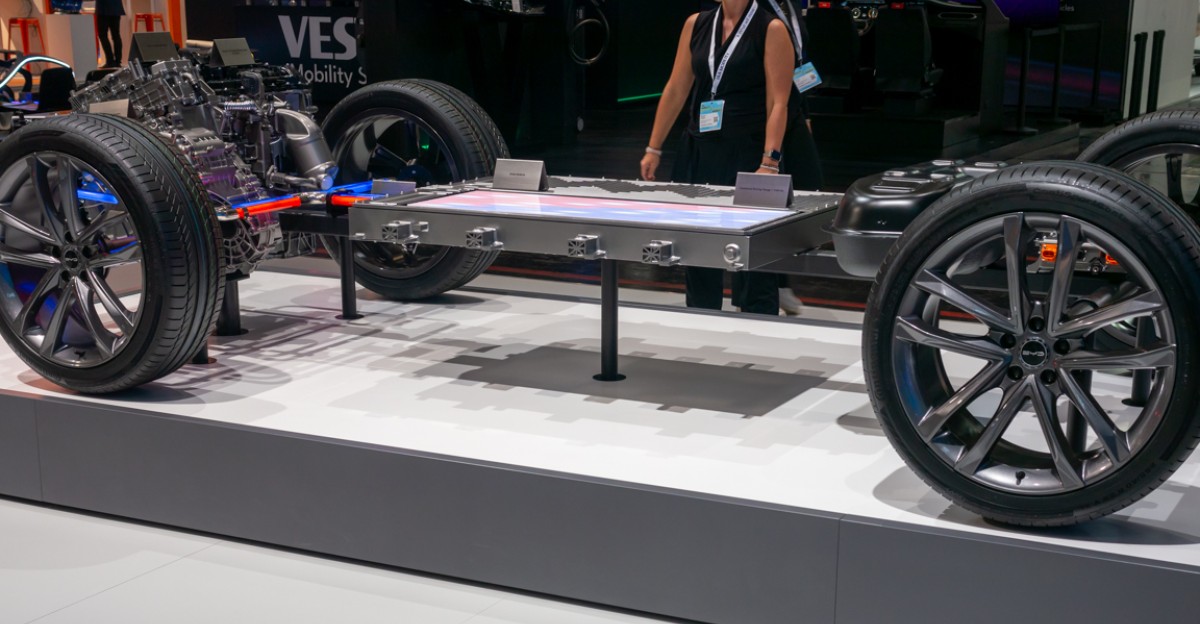
The breakthrough technology has an official name: Ion Transport System, or “FlashPass” internally at BYD. Engineers completely redesigned the cathode structure, anode architecture, and electrolyte chemistry to cut internal electrical resistance by 50% compared to first-generation Blade batteries. That single fundamental change dissolved the impossible triangle entirely—range, charging speed, and performance no longer competed for limited resources. And the underlying chemistry is LFP, the cheapest and safest battery formulation widely available in the market. The chemistry legacy automakers dismissed years ago as “too low energy density for premium vehicles” now outperforms their expensive nickel-cobalt cells across every measurable performance category.
Cold Proof
The persistent criticism of LFP batteries has always been cold-weather performance degradation. Winter conditions dramatically reduced charging speeds, adding 20-plus minutes to fast-charge sessions and stranding drivers in freezing parking lots. BYD tested the Blade Battery 2.0 at -30 degrees Celsius after the vehicle sat parked outdoors for 24 hours. Total charging time penalty? Three extra minutes. The battery charged from 20% to 97% in 12 minutes, even at temperatures that completely cripple competitor batteries. The seasonal vulnerability that kept skeptical buyers in northern climates away from EVs is effectively eliminated. BYD also subjected the battery to 500 consecutive Flash Charging cycles, then physically drove a nail through the charged cell.
The Grid Trick
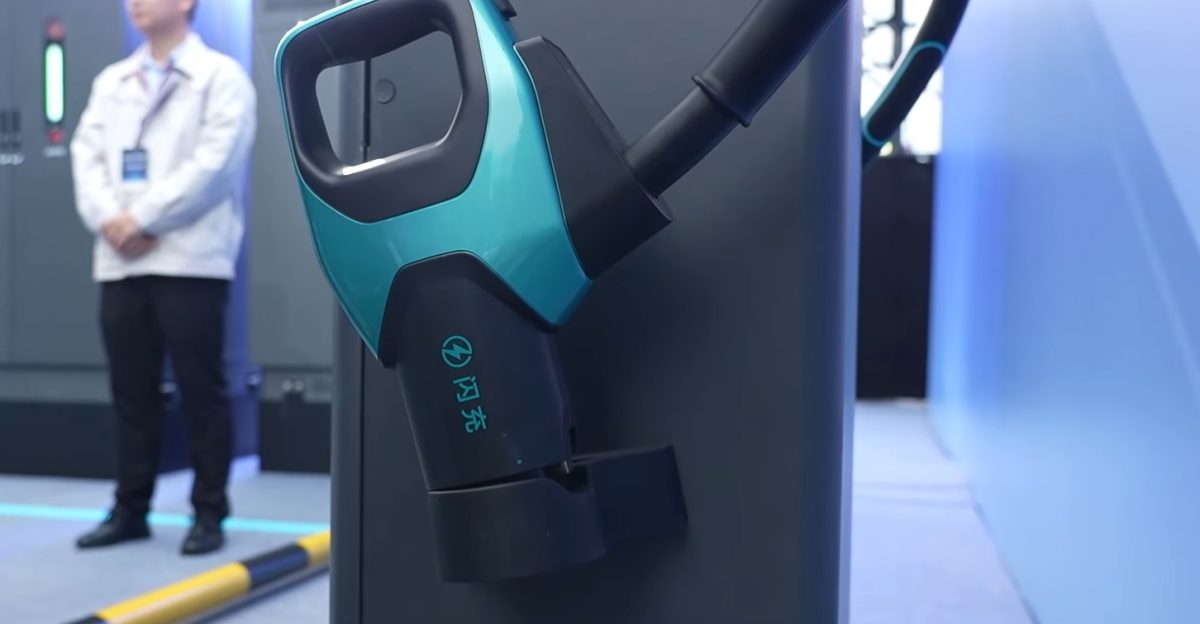
Every BYD Flash Charging station carries 200 to 300 kWh of onsite battery energy storage installed directly at the location. The station charges its own battery storage from the local grid during overnight off-peak low-demand hours, then discharges that stored energy directly into customer vehicles during daytime demand spikes. BYD manufactures the stationary storage batteries completely in-house—the identical cells powering its vehicle fleet. One vertically integrated company controls vehicle battery technology, vehicle manufacturing, and charging infrastructure hardware.
The New Rule
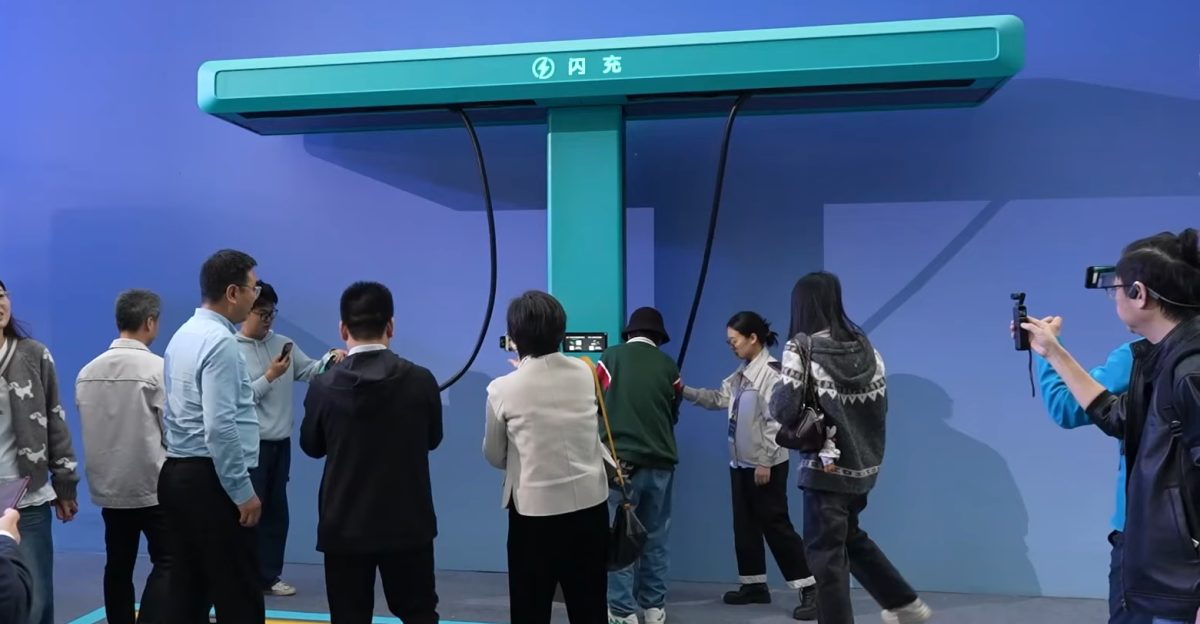
This stopped being merely a battery product launch the moment BYD publicly announced deployment of 20,000 Flash Charging stations across China by December 31, 2026. As of March 5, when the technology launched, 4,239 stations had already been constructed and were operational. The first 1,000 dedicated highway service area stations go online before May 1, 2026—covering major long-distance routes. Every station simultaneously functions as a grid-stabilization asset, a branded consumer marketing footprint, and a structural competitive moat that no rival can match at comparable deployment speed or scale. The old industry assumption was that charging infrastructure rollout required government-led grid investment and public-private partnerships.
The Scramble
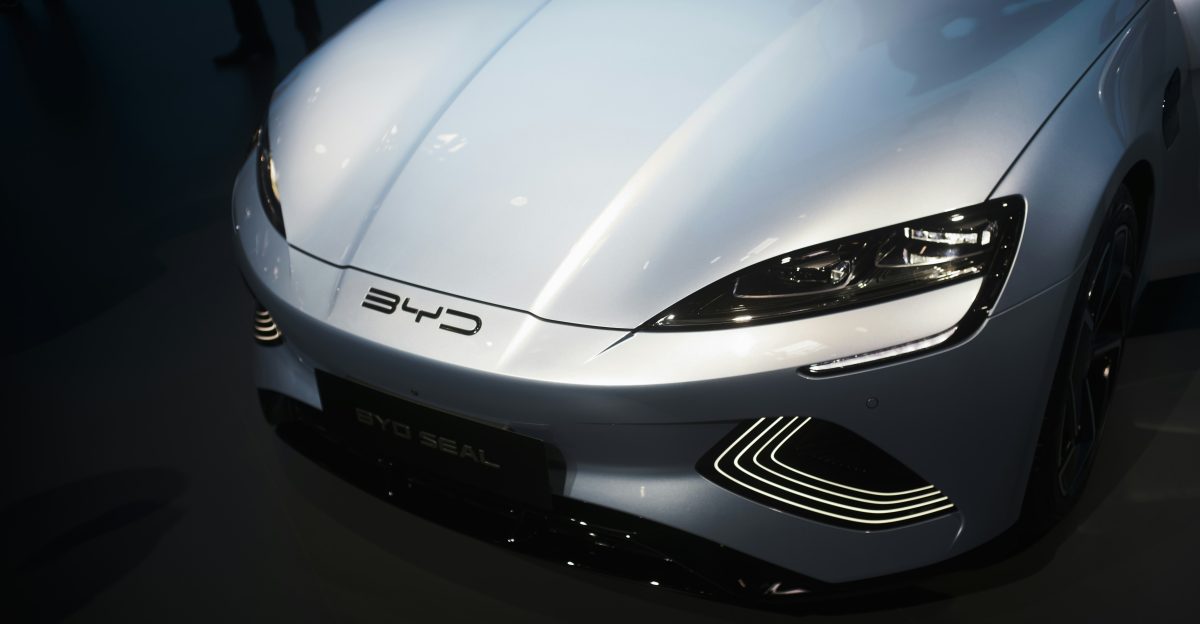
BYD’s overseas export sales surged 41.4% year-on-year in February 2026, with international Flash Charging infrastructure rollout planned globally by late 2026. Legacy automakers face an accelerating timeline crisis. The second-generation Blade Battery 2.0 demonstrates 2.5% lower capacity degradation than its already industry-leading predecessor, meaning these vehicles retain resale value significantly longer than competitors’. Tesla’s historical margin strategy faces existential pressure from a competitor simultaneously offering more range, drastically faster charging, and lower underlying manufacturing costs. When the cheapest battery chemistry comprehensively outperforms the most expensive formulations, competitive pricing moats don’t gradually shrink—they collapse catastrophically.
What Comes Next
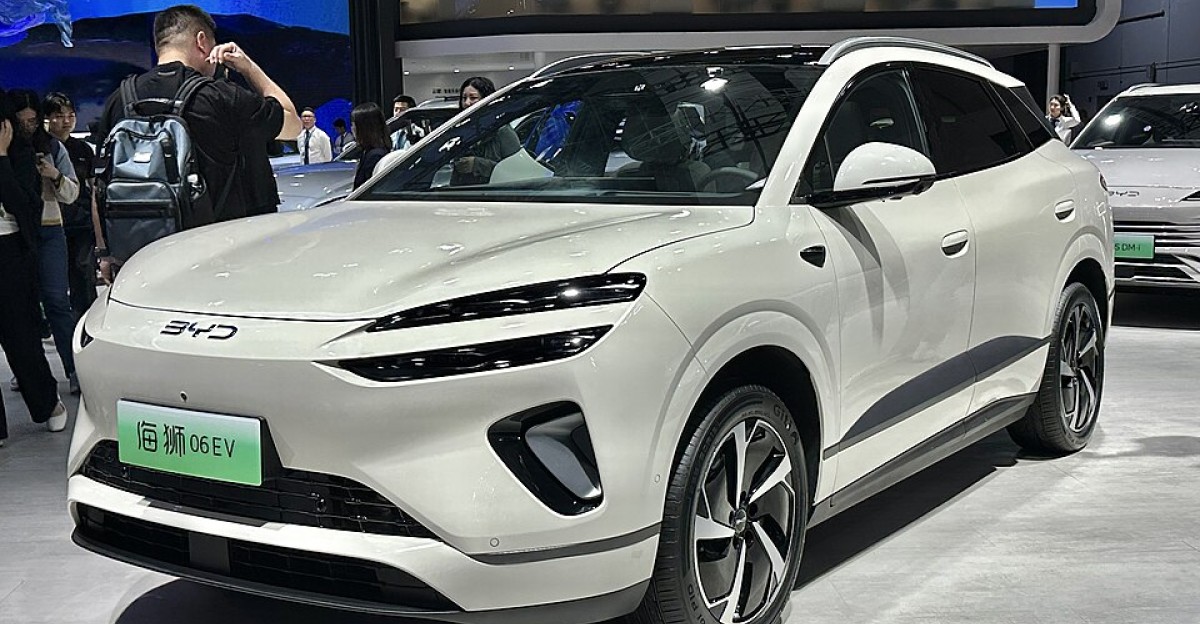
BYD’s product offensive spans every market segment simultaneously. The Sealion 06 undercuts comparable premium EVs while delivering 710 km range with Flash Charging capability. The Great Tang SUV hits 950 km. The Seal 07 reaches 705 km. The Denza Z9 GT claims the global production record at 1,036 km. BYD isn’t releasing one breakthrough vehicle—it’s systematically flooding every vehicle segment with specifications that fundamentally redefine baseline consumer expectations. The person who purchased a 2025 model-year EV now owns objectively obsolete technology.
Sources:
Electrek, “BYD’s new EV battery unlocks 1,000+ km range, 10 min charging,” March 5, 2026
CnEVPost, “BYD launches world’s most powerful 1,500-kW EV charger, plans 20,000 stations by year-end,” March 5, 2026
CarNewsChina, “The world’s longest-range EV launched: Denza Z9 GT offers 1,036 km and 9-minute full charge,” March 5, 2026
TechCrunch, “BYD rolls out EV batteries with 5-minute ‘flash charging,’ but there’s a catch,” March 5, 2026
The Driven, “BYD launches ‘game-changing’ new Blade battery with 5 minute charge time,” March 6, 2026
EVReporter, “BYD introduces Blade Battery 2.0 and FLASH Charging technology,” March 5, 2026