BYD Pours Billions Into EV Megacity As It Targets Global Dominance
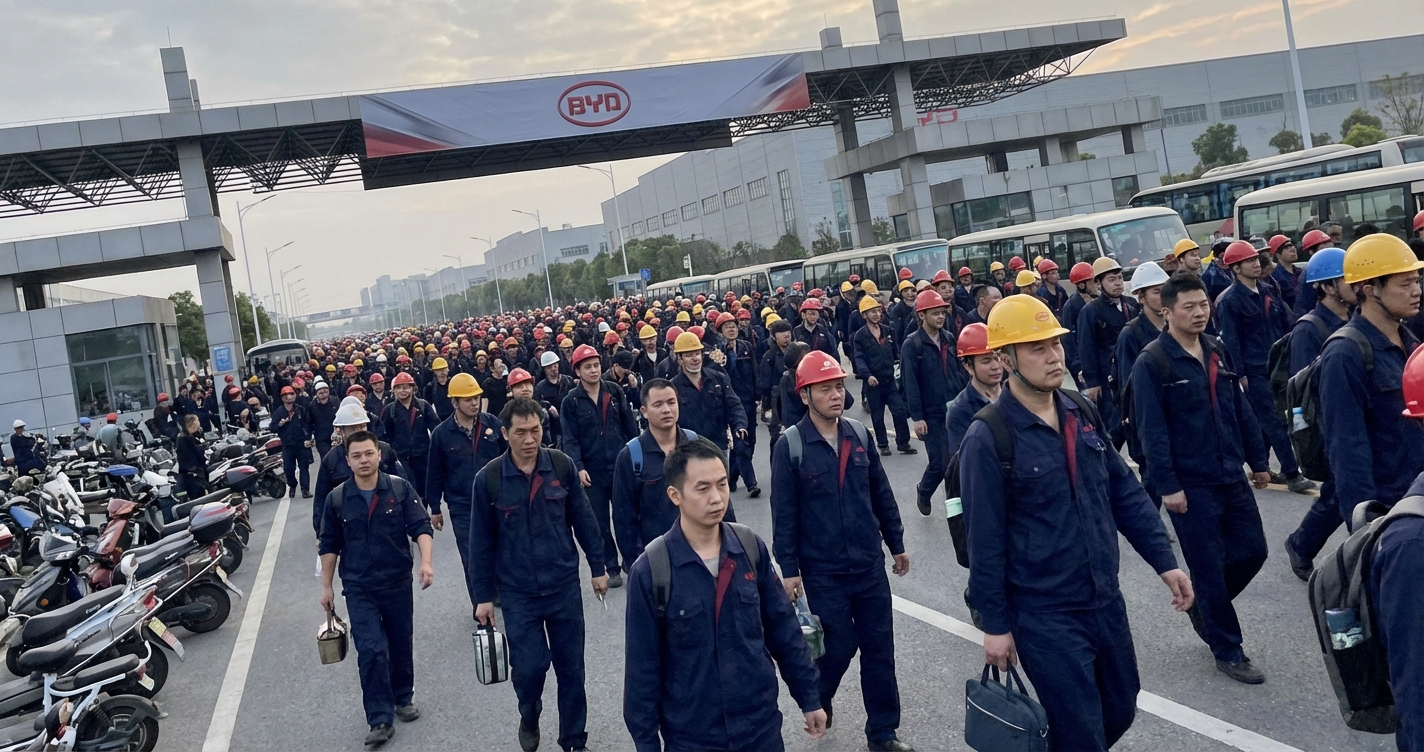
Somewhere in central China, there is a factory so large it has its own traffic management system. Not because the parking lot is big, but because the internal roads run long enough that workers drive between buildings. There is a football pitch between the production halls, hospitals on the grounds, and restaurants that never close.
Sixty thousand people live and work inside a single address, and every sixty seconds, day and night, seven days a week, a finished electric vehicle rolls off the line. The company running it has poured over $14 billion into this site and hasn’t stopped building. It just dethroned Tesla as the world’s largest EV seller, not by a rounding error, but by more than 600,000 cars.
A Factory the Size of a City Isn’t a Metaphor
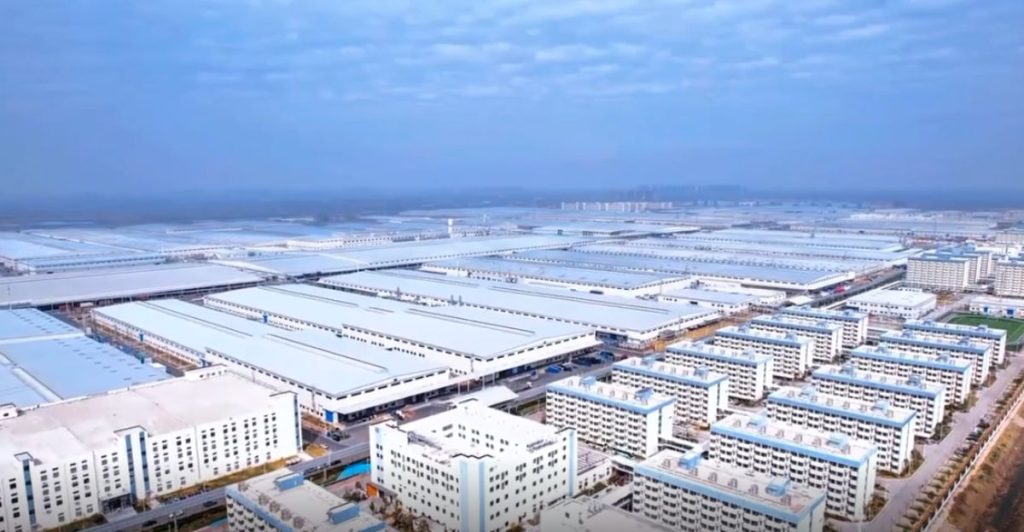
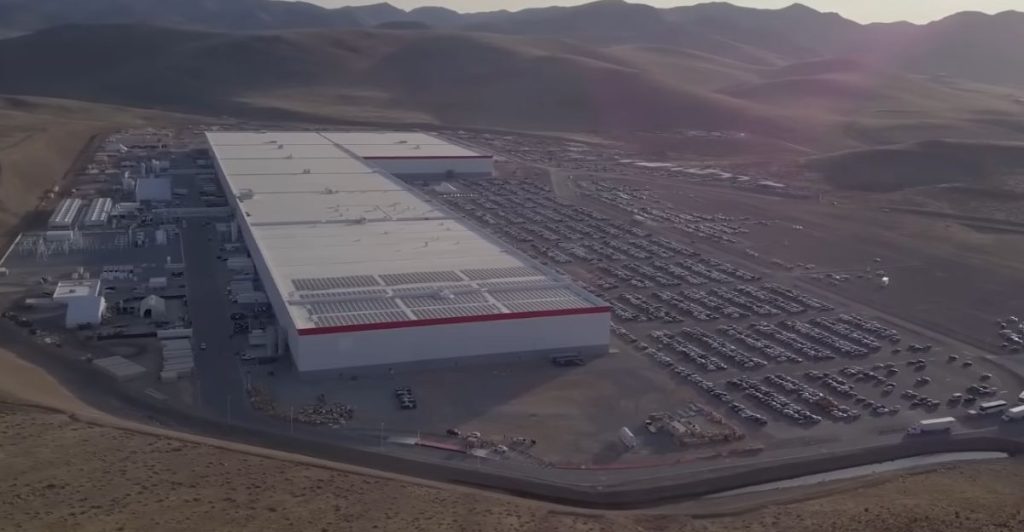
Tesla’s Nevada Gigafactory was supposed to be the benchmark, the largest manufacturing building on earth when it opened, a monument to what EV ambition looked like at full stretch. It covers roughly 4.5 square miles. BYD’s Zhengzhou site, measured by satellite as of late 2025, already covers 8.7 square miles and has more than doubled its footprint since mid-2023 alone. The full planned build-out sits at approximately 12.4 square miles.
San Francisco, the whole city, covers 46.9 square miles. Zhengzhou isn’t San Francisco yet. It’s growing toward it while the cranes are still running, the dormitory towers are still rising, and the raw land at the perimeter is still waiting to be broken. The comparison to a city stopped being rhetorical the moment it needed its own traffic system.
37 Days From Handshake to Hard Hat
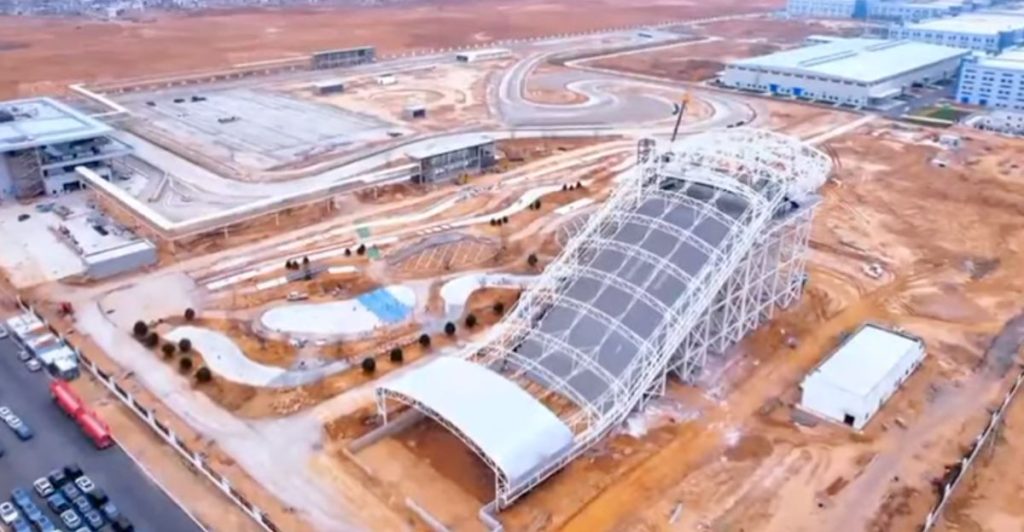
Most infrastructure projects of this scale take years to obtain permits. BYD signed its cooperation agreement with the Henan provincial government in September 2021 and broke ground thirty-seven days later. Not a ceremonial first shovel. Construction. Eighteen months after that, in April 2023, the first vehicles were rolling off the line. By the end of 2024, the plant was producing roughly 545,000 units a year, one car every sixty seconds, around the clock. That’s with only some of its 16 production lines active.
The stated target, when all of them are running, is 1 million units annually from this address alone. BYD’s Xi’an factory already hit that number, the first single auto plant in China ever to do so. Zhengzhou is being built to match it, and the construction crews haven’t left yet.
The Scoreboard
For a decade, Tesla owned the EV conversation. The brand, the margins, the mythology, no one in the industry was seriously discussed in the same breath. Then the 2025 sales figures came in. BYD: 2.26 million battery-electric vehicles. Tesla: 1.64 million. The gap wasn’t a surprise result from a single bad quarter; Tesla’s deliveries fell 8.6% across the entire year, while BYD’s pure-EV volume climbed 28%.
More than 620,000 cars separated them at the final count. The lines on the chart aren’t converging. They’re moving in opposite directions, and the distance is widening with each reporting period.
The Revenue Line
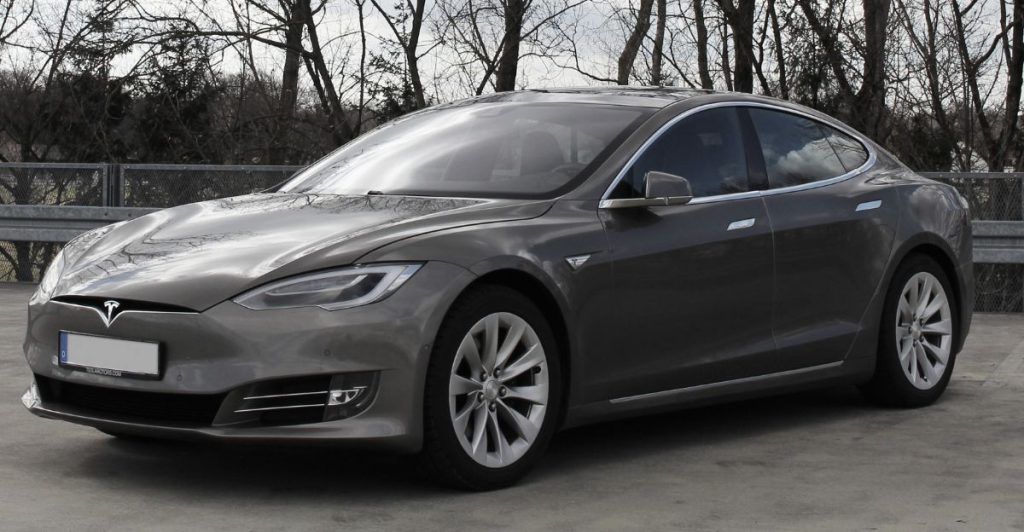
Tesla has never posted an annual revenue decline. Not during a recession, not during a retooling year, not during a price war — until 2025. Full-year revenue came in at $94.83 billion, down 3%, with automotive sales off 11%. Energy storage growth softened the fall, but energy storage doesn’t build cars.
BYD closed the same period at roughly $107 billion, a company that started in a rented warehouse making rechargeable batteries for mobile phones, now out-earning the most mythologized car brand of the last twenty years. BYD’s Hong Kong shares rose 46% entering 2025. Tesla shed more than 31%. Capital that size doesn’t rotate without a reason.
The Structural Advantage Nobody Priced In
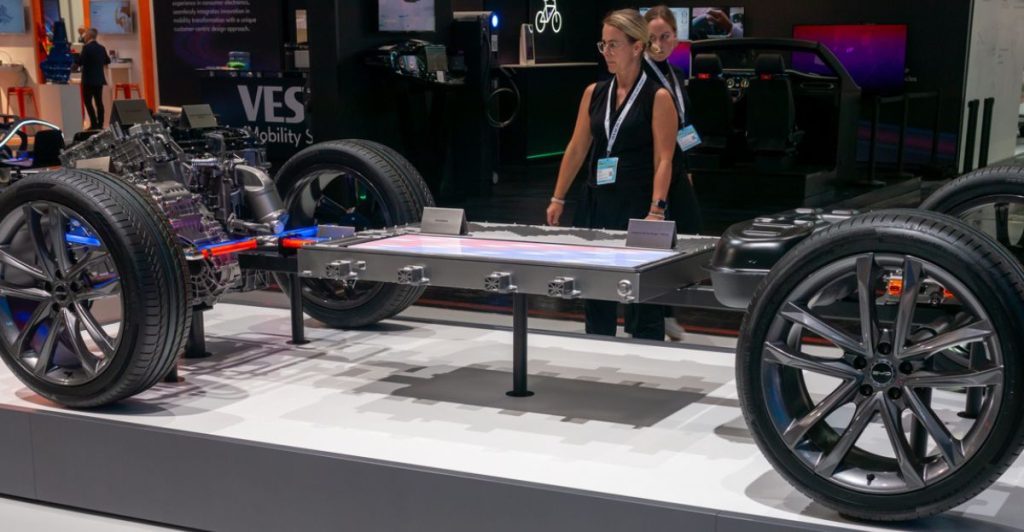
Every automaker on earth buys something from someone. BYD mostly doesn’t. Batteries, motors, and semiconductors, roughly 75% of what goes into a BYD vehicle was made by BYD. Its semiconductor division has grown large enough to sell chips externally, with analysts placing it ahead of Infineon in China’s power module market. That matters most when things go wrong elsewhere … when lithium craters, when a chip shortage hits, when a tier-one supplier raises rates. Those events ripple through the industry.
At BYD, they land differently. The domestic price war still compressed quarterly profits through mid-2025, but the net margin held above 5%. A company cutting prices aggressively while holding its margin is not losing a price war. It’s running one.
The Price War Has a Floor. Only One Side Knows Where It Is
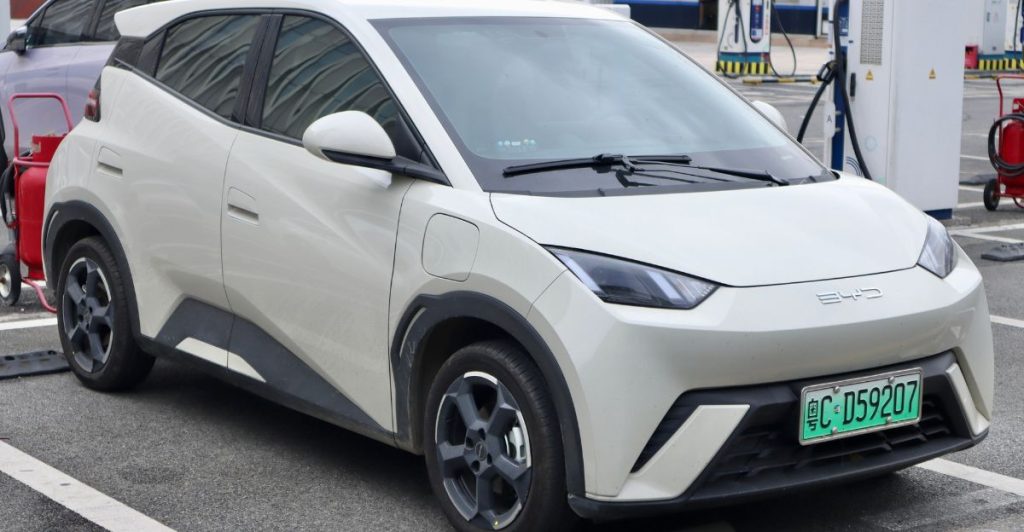
In May 2025, BYD cut prices by up to 34% across 22 models. The Seagull, which is already among the cheapest new electric vehicles on earth, dropped to 56,800 yuan on promotion in April 2025, roughly $7,800. Lithium spot prices have fallen roughly 90% from peak. Because BYD owns the battery supply chain, that collapse in input cost lands directly on the sticker price.
Rivals sourcing batteries externally see the same raw-material decline filtered through a supplier’s margins first. Everyone of them followed BYD down. None of them arrived at the same number, and none of them can be certain where the floor actually is.
The Numbers Are Ugly
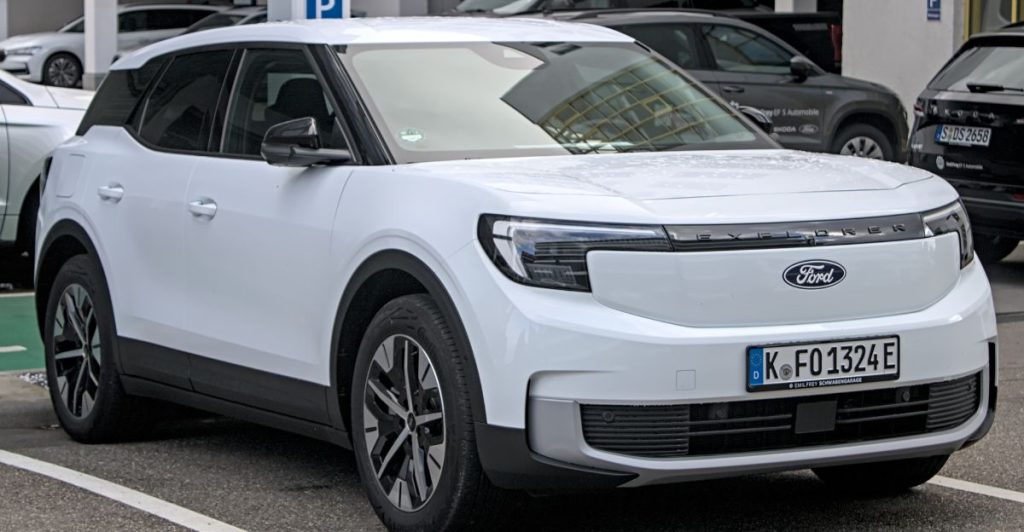
In 2015, Ford sold 6.6 million vehicles globally, but by 2025, that number had shrunk by roughly a third. The same year, BYD delivered 4.6 million vehicles, surpassing Ford in total global sales for the first time in either company’s history. The Big Three’s combined market share fell from around 21% in 2019 to an estimated 15.7% by 2025, while BYD and Geely together climbed from under 3% to roughly 11.1%.
Tariffs knocked $1.1 billion off GM’s operating income in a single quarter, and the company warned the next quarter would be worse. Ford projected $3 billion in tariff-related costs for the full year. These aren’t one-time charges to be written off and forgotten. They are the recurring costs of having been caught on the wrong side of the biggest shift the auto industry has seen in a century.
The Wall Around America
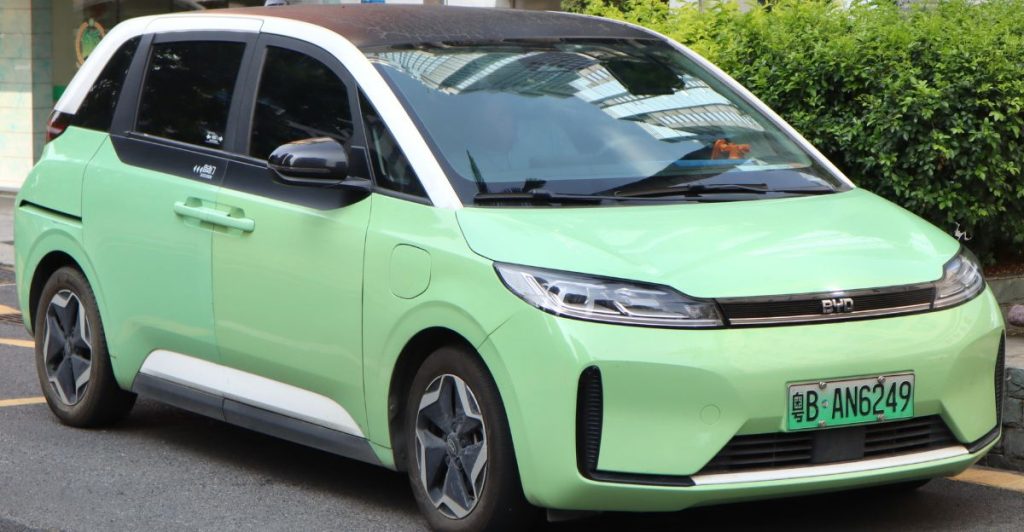
BYD is not selling passenger cars in the United States. At a 127.5% import tariff, it can’t. In January 2026, four BYD subsidiaries filed suit in the US Court of International Trade, challenging the legal authority behind those tariffs … a long game, not a quick fix. The faster answer is already running. BYD’s Szeged, Hungary plant began trial production in early 2026, the first BYD facility assembled inside EU borders.
Series production is scheduled for Q2 2026. Planned capacity: 200,000 vehicles a year. Every car built there clears Europe’s 35.3% import tariff without a fight. The wall around America is real. BYD stopped trying to climb it and started building factories on the other side.
What Winning Looks Like Before Everyone Says It Out Loud
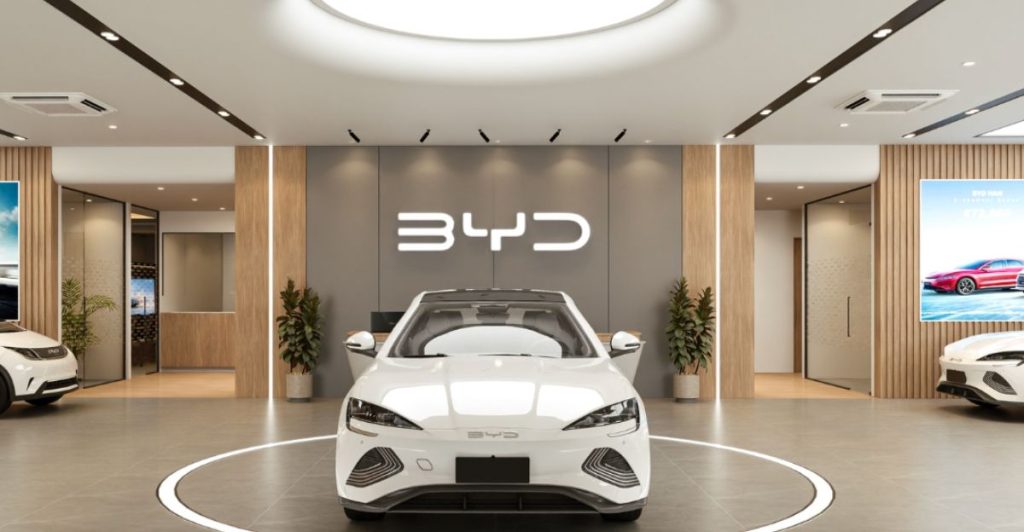
BYD exported 1.05 million vehicles in 2025, up 145% year-over-year — into Latin America, Europe, and Southeast Asia. A plant near Hyderabad is in development. The Seagull costs less than a used Corolla. The Zhengzhou complex is still expanding, with cranes working on parcels that sat untouched a year ago. The auto industry spent a century building mythology around the showroom, the brand, the badge, the emotional pull of a test drive. BYD decided the war would be won somewhere else entirely: in the battery plant, in the semiconductor fab, in the 37 days between a government handshake and the first truckload of concrete.
The tariff walls are real. The margin pressure is real. The competition inside China is the most brutal the global auto industry has ever generated. None of it has changed what the output numbers say, and the output numbers are still climbing.
Sources:
BYD Satellite Images Show Megafactory Expansion — Business Insider
BYD Overtakes Tesla as World’s Biggest EV Seller in 2025 — Carbon Credits
Tesla Q4 and Full Year 2025 Update — Tesla Investor Relations
BYD Sues US Government Over Trump Tariffs — CarExpert
BYD Begins Trial Production of Passenger Cars in Hungary — Electrive
2025 BYD Global Surge: Exports Over 1 Million — AutoCango