Automakers Lose $65B As U.S. Energy Department Destroys Loophole That Made EVs ‘7x More Efficient’
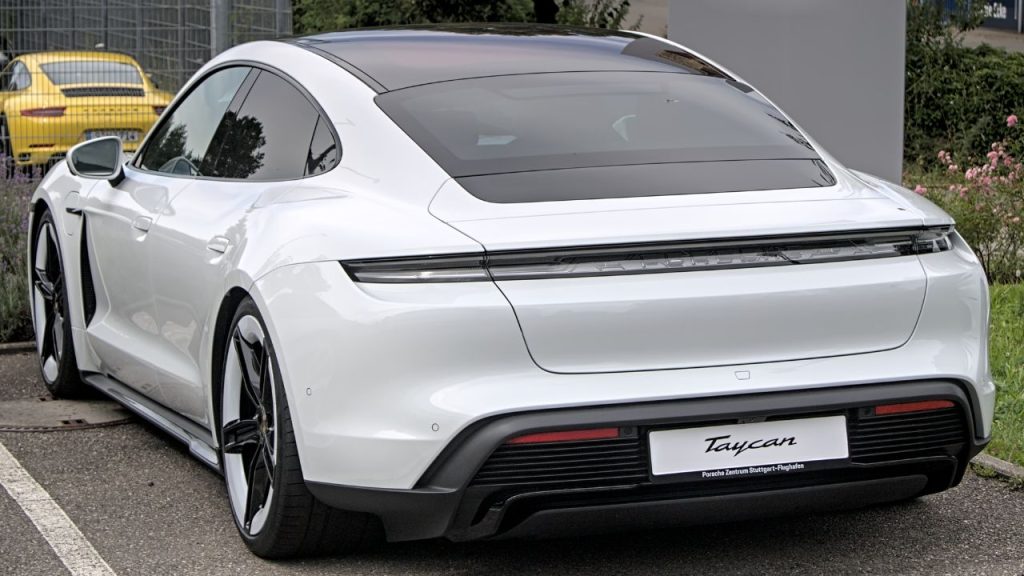
The U.S. Department of Energy destroyed the fuel content factor on February 19, 2026, effective immediately. For over two decades, that formula let automakers count every EV as roughly seven times more efficient than its actual energy consumption. The financial damage preceded the formula’s death. By early 2026, major automakers had booked roughly $65 billion in EV-related writedowns, losses driven by the same regulatory collapse the fuel content factor once held together. The rescission didn’t start the cascade. It completed it. Ford announced $19.5 billion in December 2025. GM reported $7.6 billion for full‑year 2025. Stellantis booked $26.2 billion in the second half of 2025. The Big Three account for $53.3 billion. Volkswagen absorbed roughly $6 billion from Porsche’s EV retreat, and Honda expects $4.5 billion in annual EV losses. Combined with smaller charges across the industry, the global total reaches roughly $65 billion. That’s the damage everyone sees. The cascade behind it runs deeper.
The Ghost Formula
The loophole dated back to the late 1990s. DOE’s petroleum‑equivalency factor hadn’t been updated in over two decades. In 2021, the NRDC and Sierra Club reportedly petitioned DOE to fix the outdated math. The core was a single number: a “fuel content factor” of 0.15, which multiplied EV regulatory ratings by 1 ÷ 0.15 = 6.67—”about seven times” more efficient on paper than their direct energy‑equivalent rating, per the Congressional Research Service. In September 2025, the 8th Circuit ruled in State of Iowa v. Wright that the factor exceeded DOE’s statutory authority. On February 19, 2026, DOE rescinded it immediately (Federal Register Vol. 91, No. 33). One ruling. No grace period.
Your Fuel Savings
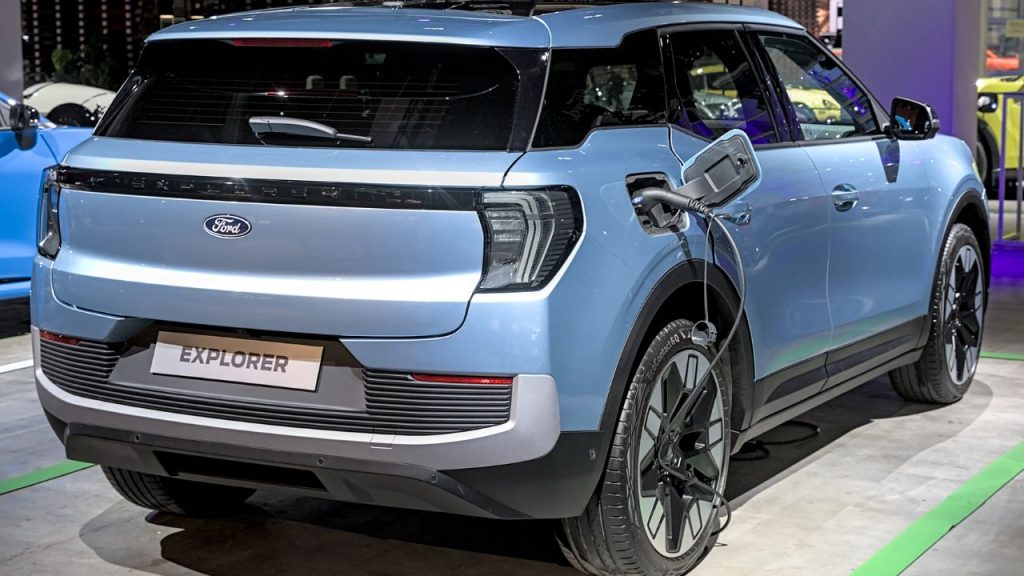
Model year 2024 vehicle owners save roughly $9,000 over the car’s lifetime from current fuel economy standards. Biden’s proposed targets would have saved consumers tens of billions in aggregate fuel costs. The CAFE reset drops the fleet target from about 50.4 mpg to roughly 34.5 mpg by 2031. Federal regulatory impact analyses projected over $100 billion in aggregate consumer fuel savings under the stricter standards now being rolled back. Tariffs add roughly $3,000 per vehicle; the CAFE rollback claims to save about $1,000. Net result for buyers: worse.
Factory Panic

Ford, GM, and Stellantis face a brutal choice: keep building EVs that generate almost no compliance value, or pivot back to profitable gas vehicles. Ford’s Model e lost roughly $5 billion in 2024 alone. The industry committed over $300 billion to electrification between 2021 and 2024, betting Washington would hold steady. Roughly one‑fifth of that bet evaporated in roughly 15 months. Credit trading gets eliminated starting model year 2028. The exits are closing. The supply chain is next.
China’s Gift
While American automakers write off billions, BYD sold 2.25 million battery‑electric vehicles in 2025, surpassing Tesla globally. BYD’s European sales surged year‑over‑year; Tesla’s European share fell by double digits. The BYD Dolphin starts below $14,000 in China. The average American vehicle costs around $48,000. That price gap reflects BYD’s domestic manufacturing advantage and dense Chinese supply chains—without a single U.S. subsidy. Every regulatory pillar supporting American EV competitiveness has been removed or weakened in under a year. One policy retreat. One Chinese manufacturer now owns the global market.
Broken Twice
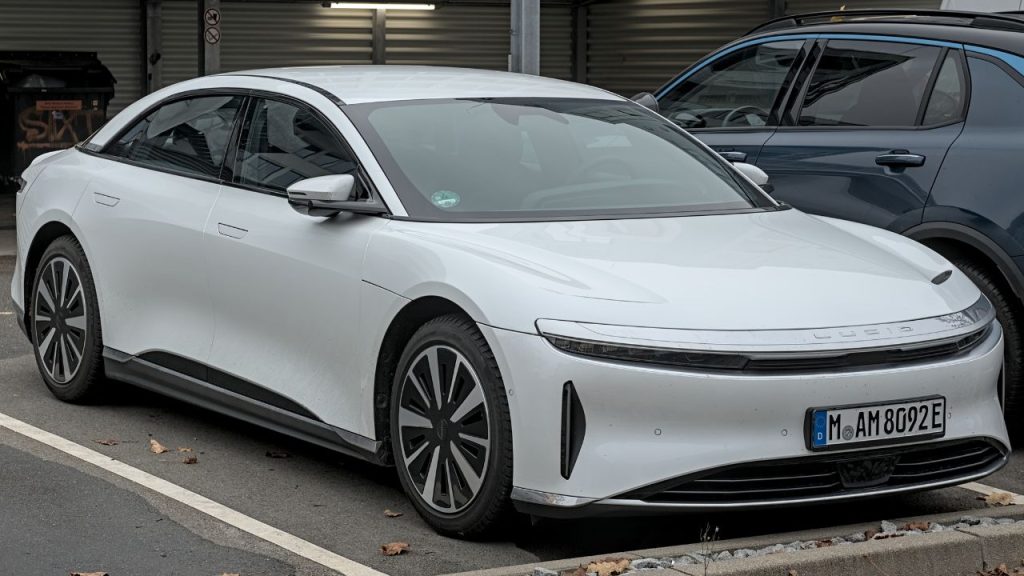
CAFE compliance credits function like currency. For a decade, EVs generated the most valuable credits because the fuel content factor multiplied their rated efficiency by 6.67. The February 2026 rescission removed that multiplier. But Congress had already zeroed noncompliance penalties in July 2025—setting fines to $0 for the first time since 1975. Standards with no penalties. Credits with no inflated value. The system isn’t weakened. It’s performative. Federal EV tax credits expired late 2025. CAFE reset, December. FCF gone, February. Your gas bill. Your car payment. All connected.
Strange Bedfellows
“Politics sometimes makes strange bedfellows,” one report noted, describing how environmental groups “that have opposed President Donald Trump every step of the way were fully behind his latest decision.” The Sierra Club and NRDC spent years proving the fuel content factor was scientifically outdated and legally vulnerable. They won the technical argument. Trump used their victory—and the 8th Circuit’s ruling—to justify immediate elimination rather than the gradual phase‑out they wanted. They got accurate math. He got the policy weapon. Their legal win became the foundation for the outcome they feared most.
Rules Rewritten
The EPA’s February 2026 endangerment finding revocation has been called the “single largest deregulatory action in U.S. history.” Retroactive CAFE standards now apply to already‑manufactured vehicles from model years 2022 through 2026, locking lower efficiency into a decade of cars already on the road. Future administrations face a new precedent: regulatory standards can be reversed retroactively, without phase‑in periods. No automaker can trust a ten‑year investment horizon when the rules change overnight. The planning window collapsed from a decade to maybe two years.
Winners and Losers

The oil industry wins. Reduced efficiency mandates mean higher fuel consumption for years. Automakers selling high‑margin gas SUVs win short‑term, freed from compliance pressure. Consumers lose $9,000 or more in lifetime fuel savings per vehicle. EV workers face an estimated 10,000 to 50,000 direct job losses by end of 2026, according to industry projections, with supplier bankruptcies expected to follow. Federal safety standards accounted for only about 3 percent of vehicle cost increases between 2002 and 2019. The affordability argument was never just about regulations. Someone profits from every ripple, and it’s not the buyer.
Still Cascading
Environmental groups have already sued the EPA over the endangerment finding rollback. California is preparing Advanced Clean Cars III to replace blocked standards. Some manufacturers, including Volvo, have publicly committed to EV timelines regardless of Washington’s reversals. Chinese automakers are exploring U.S. market entry through Mexico and Canada to sidestep tariffs. The cascade from one rescinded formula now touches courtrooms, statehouses, foreign trade routes, and factory floors on three continents. Anybody who read the headline and thought they understood this story just got a look at the full map.
Sources:
“Petroleum-Equivalent Fuel Economy Calculation (Interim Final Rule).” Federal Register, 19 Feb 2026.
“Global Carmakers Book $55 Billion Hit from EV Rollback.” Reuters, 6 Feb 2026.
“Big 3 Automakers Take $52.1 Billion Hit from EV Pivot.” Yahoo Finance, 6 Feb 2026.
“EPA Rescinds Greenhouse Gas Endangerment Finding and Eliminates Mobile Source GHG Emissions Standards.” DLA Piper, 12 Feb 2026.