Auto Parts Giant Execs Ran $2.3B ‘Ponzi Scheme’ For 7 Years—17,500 Workers Lost Jobs
Inside First Brands Group, employees maintained two sets of books. One reflected the actual numbers, while the other was crafted for lenders. These were called “bridge files,” and the finance team understood which column held the truth.
For seven years, from 2018 through 2025, a company that claimed $5 billion in annual sales and sold Fram filters, Autolite spark plugs, and Anco wiper blades across the country ran on fabricated invoices. The genuine cash position revealed a much different story.
Paper Empire
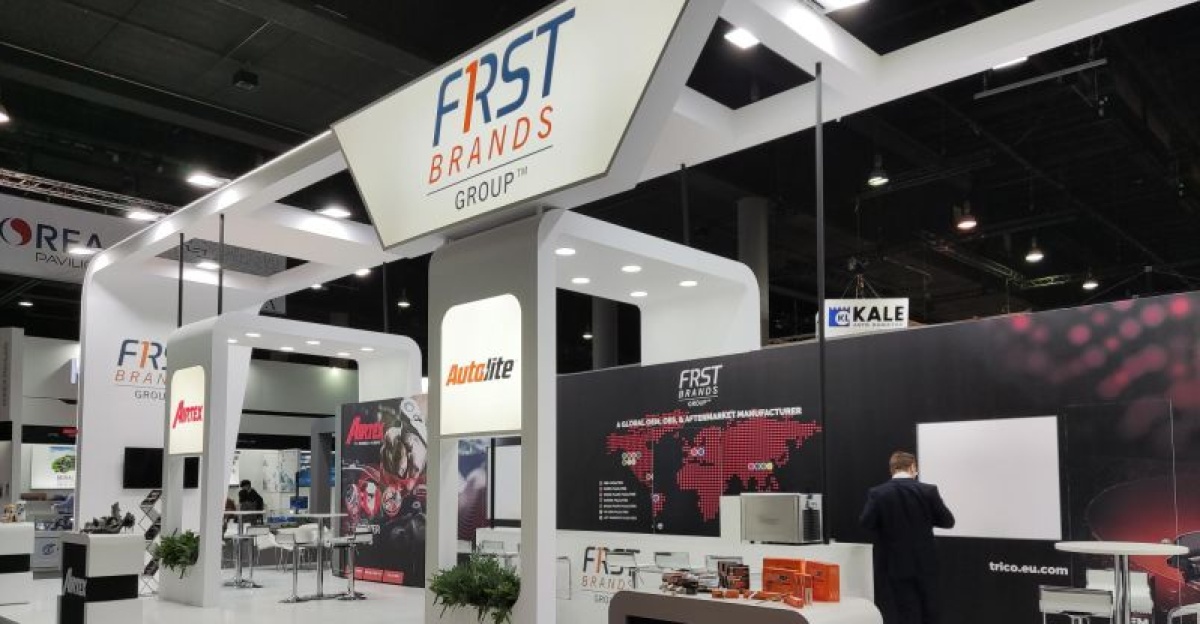
First Brands claimed around $5 billion in annual sales worldwide and oversaw about 25 automotive brands. Its operations included 36 plants in Mexico and a workforce of roughly 6,000 in the United States. That scale drew major Wall Street lenders: Jefferies, UBS, BlackRock. In the summer of 2025, Jefferies led a $6.2 billion debt refinancing effort that stalled when potential lenders asked for a Quality of Earnings report that never came.
Within weeks, first lien term loans dropped from near par to $0.36. The entire financing structure began to unravel.
Twelve Million
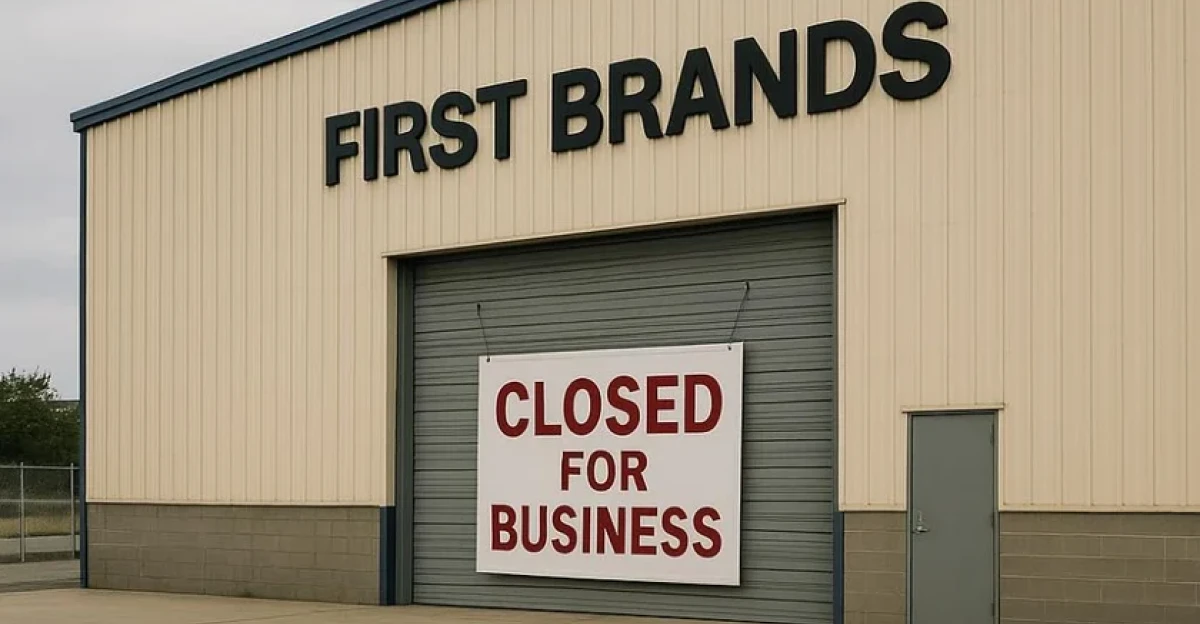
On September 28, 2025, First Brands filed for Chapter 11 bankruptcy. The filing exposed a capital structure that shattered every assumption about the company’s health: more than $10 billion in total liabilities, including over $2.3 billion in off-balance-sheet factoring and about $800 million in supply chain finance liabilities.
Just days earlier, SouthState Bank swept approximately $27 million from company accounts, leaving only $14 million in cash and forcing an emergency $24.5 million bridge loan to keep operations running. Lenders had poured in billions without ever checking whether the customers on those invoices existed.
Knew Wrong
On March 2, 2026, former CFO Stephen Graham stood in federal court and said it plainly: “I knew that the financial statements issued to First Brands’ lenders contained false and misleading information. I also participated in lender presentations where I presented the false and inflated financial statements to First Brands’ lenders to obtain financing for First Brands on better terms than the banks would otherwise offer.
I knew this was wrong.” He pleaded guilty to four counts, including bank fraud and wire fraud. Graham had served as CFO since 2014. For seven years, he orchestrated a deliberate deception. No rogue algorithm. No complex derivative. One man submitting fake spreadsheets while the authentic ones sat in a file on his desk.
Phantom Invoices
The mechanics were almost insultingly simple. First Brands submitted invoices to factoring companies for transactions that never happened. Other invoices were inflated up to ten times their real value. The same collateral was pledged to multiple lenders at once. It was like selling the same house to three buyers and collecting down payments from all of them.
Investigators uncovered about $2.5 billion in factored invoices with no corresponding inventory sales. IRS Criminal Investigation Executive Special Agent in Charge Kareem Carter described First Brands as a “Ponzi scheme in which new loan proceeds were used to pay back old lenders.”
Lifestyle Math
As the company scraped together only millions in available cash before filing, founder Patrick James and his brother Edward allegedly routed lender proceeds into personal accounts and entities. Civil lawsuits and asset-acquisition records allege they amassed seven properties, seventeen exotic cars, a $500,000 annual personal chef, and a $3 million New York City townhouse rental.
Off-balance-sheet obligations alone reached about $2.3 billion in third-party factoring and $800 million in supply chain finance liabilities. Jefferies took a roughly $30 million pretax loss on its exposure. Western Alliance Bank filed a $126.4 million claim against Jefferies over related loans. The fraud was simple. Lenders never traced an invoice to an actual customer.
Human Wreckage
More than 3,500 U.S. workers face layoffs as plants close in Ohio, Texas, Tennessee, and other states. Several thousand Mexican maquiladora workers have been fired or idled. In Brownsville, Texas, 571 people are set to lose their jobs from three facilities by April 30, 2026. In Fayetteville, Tennessee, 333 employees will lose their positions when Toledo Molding & Die closes the same day.
In Mexico, about 14,000 employees have seen plants idled and occupations organized as workers in Mexicali, Matamoros, and Ciudad Juárez occupy facilities to secure unpaid wages. In all, around 17,500 workers across the U.S. and Mexico have lost jobs or are left fighting for unpaid wages as plants closed or sat idle. Executives collected luxury cars. Factory workers occupied buildings, hoping for paychecks.
Broken Gates

This kind of fraud was supposed to be impossible. Major investment banks performed due diligence. A Big 4 auditor signed off on the books. Factoring companies advanced billions against what they believed were legitimate receivables. Every institutional safeguard failed against the most basic fraud technique in finance: fake invoices.
Patrick James had faced similar allegations before. In 2009, Tristate Capital Bank sued him for “repeatedly misleading” lenders about collateral and asset values. The system had a warning, ignored it, and extended billions more. Now an independent examiner with a $7 million budget is investigating the $2.3 billion receivables discrepancy.
Trial Clock

The criminal trial of Patrick James and Edward James is scheduled for July 13, 2026. Both face nine counts each, including conspiracy to commit wire fraud, bank fraud, and money laundering.
The prosecution has two cooperating witnesses: Graham, who signed a cooperation agreement on February 25, 2026 and faces as many as 30 years in prison on each of his four counts, and Peter Andrew Brumbergs, former Senior Vice President of Finance, who pleaded guilty on January 27, 2026. Competing creditor lawsuits from Onset.
Open Wound

Corporate bankruptcies hit 717 in the eleven months through November 2025, about 14% above the prior year and the highest rate since 2010. First Brands sits at the top of that wave and changes the risk calculus for every private credit fund holding receivables-backed securities.
The fraud did not exploit a loophole. It took advantage of a design feature: invoice factoring often rewards speed over verification, and too few participants in the chain trace invoices to actual customers. That structural blind spot remains. Every portfolio holding factored receivables currently faces the same vulnerability. Nobody has closed it.
Sources:
U.S. Department of Justice (SDNY), First Brands Executives Charged With Multibillion-Dollar Fraud, January 28–29, 2026
Reuters, First Brands files for bankruptcy, revealing billions of dollars in liabilities, September 29, 2025
Transportation Topics, Ex‑First Brands CFO Pleads Guilty in Fraud Case, March 5, 2026
CFO.com, First Brands’ ex‑CFO pleads guilty to wire fraud, March 8, 2026
Truck Parts & Service, How Mexican plants may be a thorn in any First Brands deal, March 2, 2026
WSWS, Auto parts workers occupy plants across northern Mexico, February 17, 2026