America’s Busiest North-South Interstate Shuts Down Half Its Lanes—100,000 Vehicles A Day Squeezed
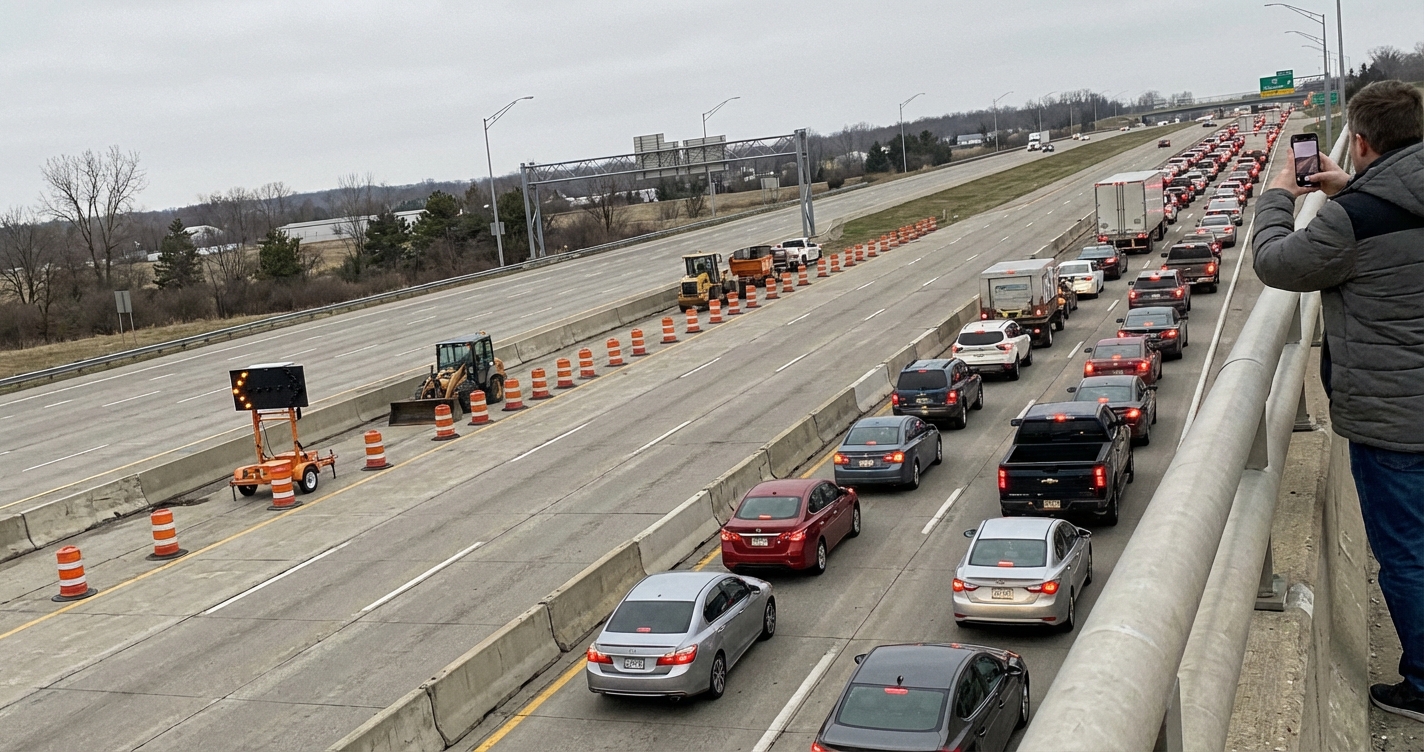
At 9 a.m. on Friday, March 13, 2026, orange barrels swallowed a 3.2-mile stretch of I-75 in Monroe County, Michigan. Crews closed two lanes in each direction. Roughly 100,000 vehicles that use this corridor daily had nowhere to go but through the bottleneck or onto detour routes, adding 30 to 60 minutes to their commute. The construction zone sat on pavement 53 years old, crumbling toward the end of its engineered lifespan. That Friday was just the beginning of something much bigger and much more painful.
A Corridor Too Important to Close
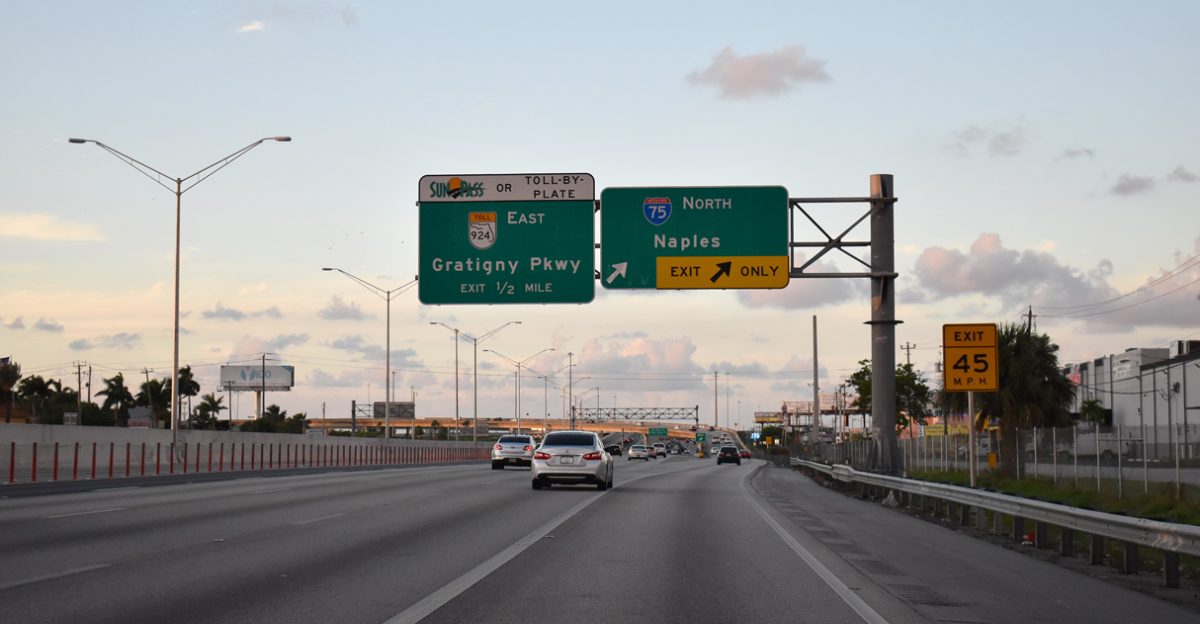
I-75 runs 1,786 miles from Florida to Michigan’s Upper Peninsula, serving as a primary north-south artery connecting Great Lakes manufacturing to southeastern ports. In the Detroit metro area, I-75 traffic volumes exceed 190,000 vehicles daily at peak segments. Monroe County sits squarely in that pipeline. Five bridges need repair on this stretch. The River Raisin Bridge needs a complete rebuild. The $325 million price tag makes this the largest I-75 reconstruction in Monroe County since the freeway’s original 1973 completion. And MDOT cannot simply shut it down, because nothing else can carry the load.
The Myth of a Quick Fix

Michigan signed what labor organizations called “the biggest roads deal in state history.” Governor Whitmer’s administration has fixed more than 26,500 lane miles and nearly 1,900 bridges since 2019. That sounds like a problem getting solved. It sounds like record investment should mean shorter disruptions on critical highways. But here in Monroe County, record funding bought a two-year construction timeline stretching through November 2027, with the full $325 million rebuild not even starting construction until 2029. Historic money and the most important corridor still bleed for years.
The Safety Paradox

MDOT said closing lanes was “necessary to provide the safest work area possible for crews and motorists.” The project’s own stated goal: remove the Elm Avenue interchange to “eliminate the weave/merge and safety concerns.” Both statements are true. Both contradict each other. The interim traffic plan consolidates northbound vehicles onto the southbound side, forcing exactly the weaving and merging that the $325 million project exists to eliminate. Two lanes in each direction. Both directions on one side. That configuration is the hazard. And it lasts eight months.
How the Squeeze Actually Works

After the initial weekend closures, MDOT moved all northbound traffic onto the southbound lanes through November 13, 2026. Then in 2027, the reversal: southbound traffic shifts to the northbound side for reconstruction of those lanes. Two full construction seasons of contraflow driving on a national trade corridor. The Elm Avenue interchange, a documented safety problem for decades, remains open during the very period when its weaving hazards are exacerbated by compressed traffic. The system that created the danger cannot pause the danger while fixing it.
The Numbers Behind the Pain

The initial $71 million phase supports roughly 675 jobs. That works out to approximately $105,000 per position. Detour routes through I-275 and I-94 add an estimated 15-30 miles per trip. Freight companies absorb that mileage in fuel, dwell time, and rescheduled deliveries across every truck that would normally barrel straight through Monroe County. Multiply those costs by eight months of contraflow in 2026 and another season in 2027. The construction creates jobs. It also creates a regional economic drag nobody has fully calculated.
Ripple Effects Nobody Planned For

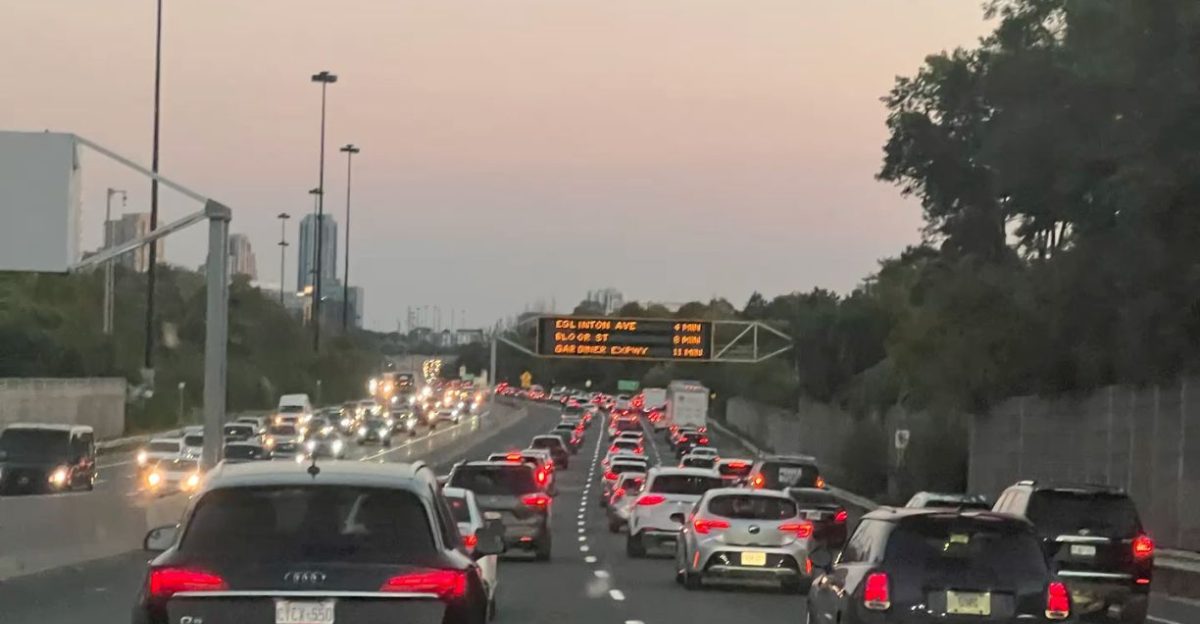
Commuters fleeing the bottleneck flood secondary roads across adjacent counties. Logistics companies pre-position inventory and adjust delivery windows to avoid Monroe County entirely. Local businesses along I-75 exits face reduced drive-by traffic for two full construction seasons. Restaurants, gas stations, and service stops that depend on through-traffic absorb losses that compound over months and ripple through the surrounding county’s economy.
The Precedent That Outlasts the Project
I-75 was completed in 1973. Its bridges were designed for a decades-long lifespan, and now they are approaching their end. That means an entire generation of structures approaches failure simultaneously, not just in Monroe County but across the system. If this extended phased approach proceeds without major public backlash, MDOT and agencies nationwide will adopt it as the template for I-94, I-696, and every other aging corridor. Once you see it, the pattern is inescapable: record funding does not buy faster repair. It buys the right to disrupt critical corridors for years instead of decades.
The Dominoes Still Standing

If the 2027 southbound reconstruction phase hits delays, the project cascades into 2028, pushing back other major state highway work. The full $325 million rebuild from Laplaisance Road to North Dixie Highway does not even begin construction until 2029, with completion targeted for 2030. That is a planning-to-completion timeline stretching past four years on a corridor the state itself calls “a significant local and national trade corridor.” Advanced construction methods, such as prefabrication, could compress the schedule. MDOT apparently chose cost efficiency over time efficiency.
What $5.8 Billion Cannot Buy

Michigan committed $5.8 billion to roads and 30,500 construction jobs annually. Governor Whitmer said the state fixed more than 24,500 lane miles and 1,900 bridges “without raising taxes by a dime.” All true. And one of the most critical north-south trade corridors in the Midwest still operates at half capacity for two construction seasons because no amount of money can rebuild a highway while it’s in use. The reader who drives I-75 already knew that. Now they know the system was designed to make it unavoidable, and no funding deal in history has changed the math.
Sources:
Michigan Department of Transportation, “I-75 project begins Friday, March 13, in Monroe County,” March 10, 2026
CBS News Detroit, “Lane restrictions, road work to begin along I-75 south of Monroe,” March 10, 2026
Michigan Department of Transportation, “I-75 Rebuilding Project – Monroe County,” December 31, 2025
Michigan Governor’s Office, “Governor Whitmer’s Budget Fixes the Damn (State AND Local) Roads,” October 13, 2025
Small Business Association of Michigan, “Whitmer Hits The Road With Full Year Of $2B Plan,” February 16, 2026
Michigan Department of Labor and Economic Opportunity, “LEO, MDOT: Michigan jobs numbers highlight need for road funding,” August 14, 2025