$4,992 Hidden ‘Middleman Tax’ On Every New Car Exposed—70-Year-Old US Dealer Law
Walk into any dealership in America and the sticker price stares back at you like a dare. Fifty-one thousand dollars. That’s the average new-car MSRP as of January 2026, and it marked the tenth straight month above $50,000. Somewhere inside that number, buried across destination charges, doc fees, and dealer overhead, sits a cost most buyers never see. Not because it’s small. Because it’s scattered across so many line items that nobody can find the total. A new study just did the math, and the figure should make your blood pressure spike.
The $30 Billion Nobody Talks About

The International Center for Law & Economics published its findings on March 30, 2026, and the headline number landed like a brick: state franchise laws add $3,934 to $4,992 to every new vehicle sold. Across roughly 16 million annual new-car sales, that amounts to tens of billions transferred from American consumers to dealerships each year. Another $2 billion vanishes entirely as deadweight economic loss. Younger Millennials absorbed the worst of it, facing 60% higher monthly payments than seven years ago. The price floor isn’t softening, and the laws keeping it rigid date back to the Great Depression.
A Law Built for a Different Century
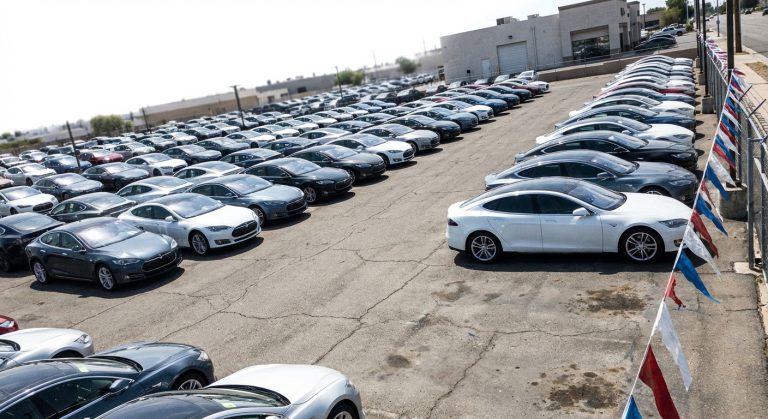
Most people assume car prices reflect supply, demand, and maybe a greedy salesman. That assumption is wrong. Franchise laws originated in the 1930s through 1950s when small dealers genuinely needed protection from Big Three manufacturers who forced unwanted inventory and terminated franchises without cause. Congress formalized that protection with the 1956 Automobile Dealers’ Day in Court Act. Legitimate shield for the vulnerable. That was 70 years ago. The manufacturers those laws restrained now share a market with Tesla, Rivian, and Lucid, companies that sell direct and prove the middleman is optional. Except the law says otherwise.
The Shield Became a Cage
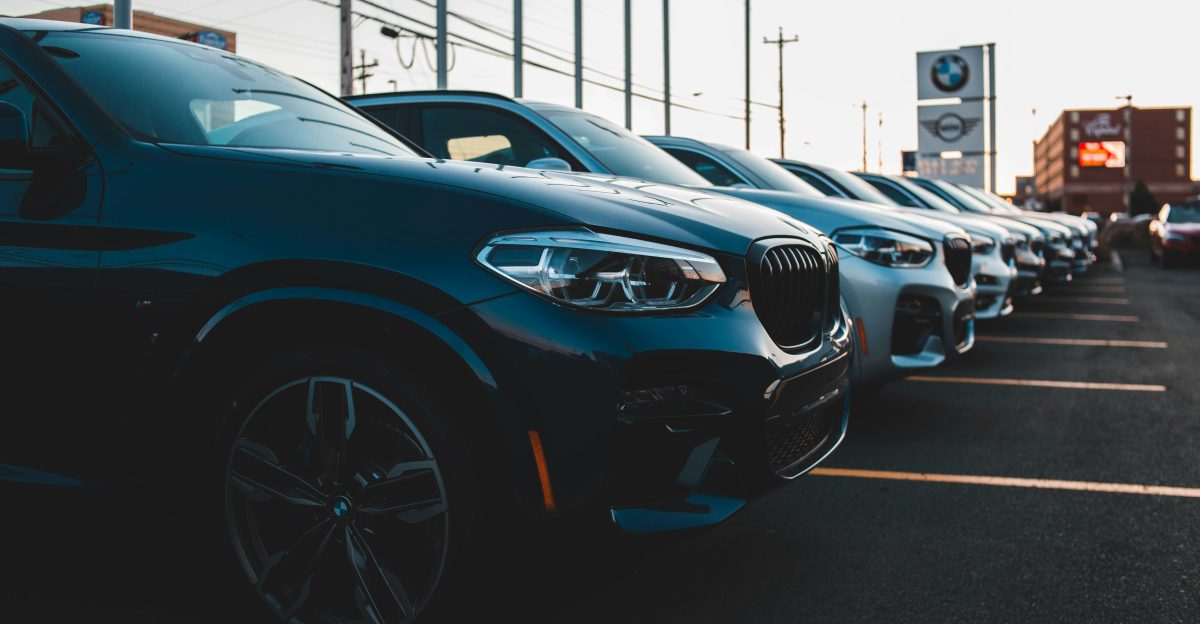
All 50 states prohibit or severely restrict manufacturer direct-to-consumer sales. Every single one. That means the party 75% of Americans believe is lying to them about prices is the only party the law allows you to buy from. The ICLE report calls it what it is: “Protecting an incumbent distribution channel is not the same as protecting consumers.” The law designed to stop exploitation became the exploitation. Dealers averaged over $4 million in pre-tax earnings per store in 2025. Record profits. The people those laws were written to protect now extract nearly $5,000 per car from captive buyers.
Where Your Money Actually Goes
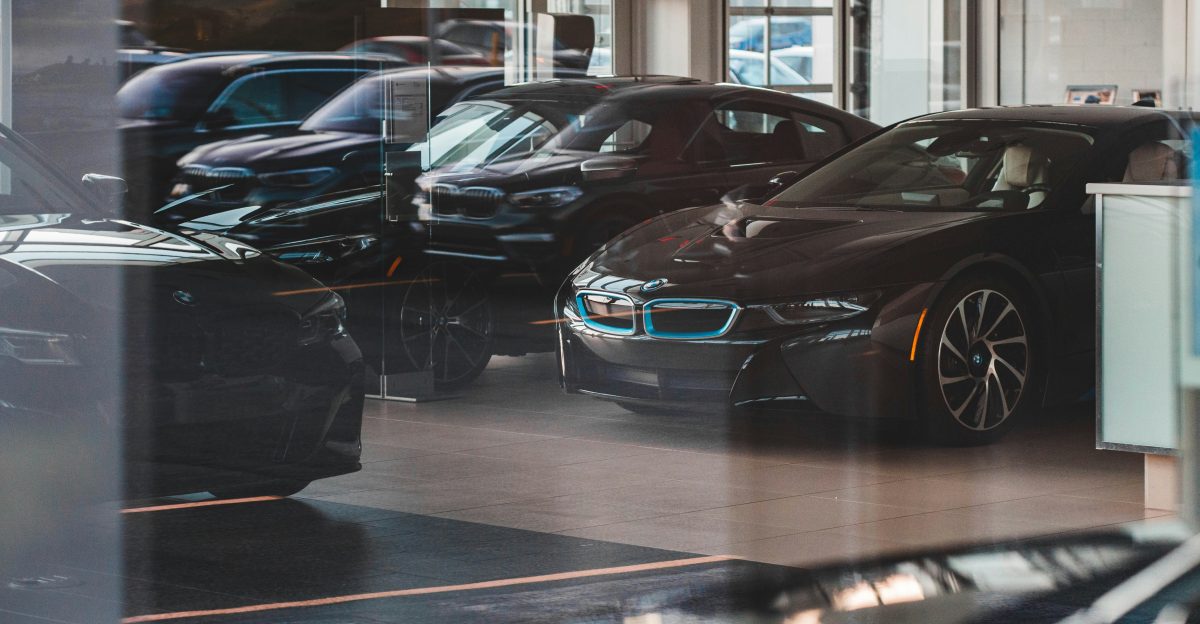
The ICLE study, updating the Department of Justice’s own 2000 methodology, broke the franchise tax into components. Inventory carrying costs run $1,045 to $1,105 per unit. Supply-demand mismatch adds $1,600. Overhead and commissions pile on another $1,200 to $1,900. Floor-plan interest rates sit between 6% and 9%, and that expense per vehicle rose 39% in just the second quarter of 2025. None of these appear as “franchise tax” on your bill. They’re scattered across destination charges, doc fees, and baked into MSRP. The cost is hidden by fragmentation.
Destination Fees Tell the Whole Story
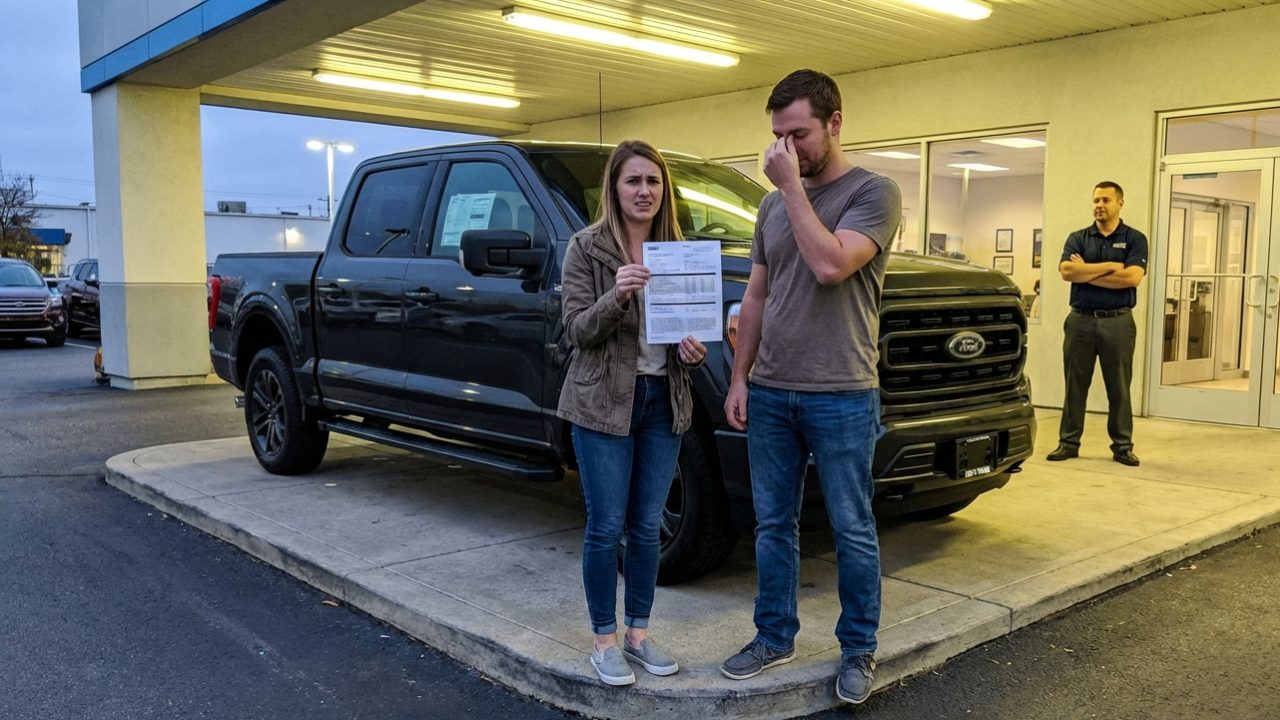
Destination fees averaged around $1,550 in recent years, up 67% from their 2015 baseline. The 2026 Ford F-150 charges $2,795 to ship your truck to the dealer. GM and Ford hiked full-size truck destination fees to $2,795, increases of hundreds of dollars in a single model year. These are supposedly shipping costs, yet a buyer in Kentucky and a buyer in Alaska pay the same amount. That’s not logistics. That’s a pricing lever. Manufacturers use destination charges to absorb margin compression from tariffs and inflation without raising the sticker MSRP. The fee looks routine. The increase is anything but.
A Generation Locked Out
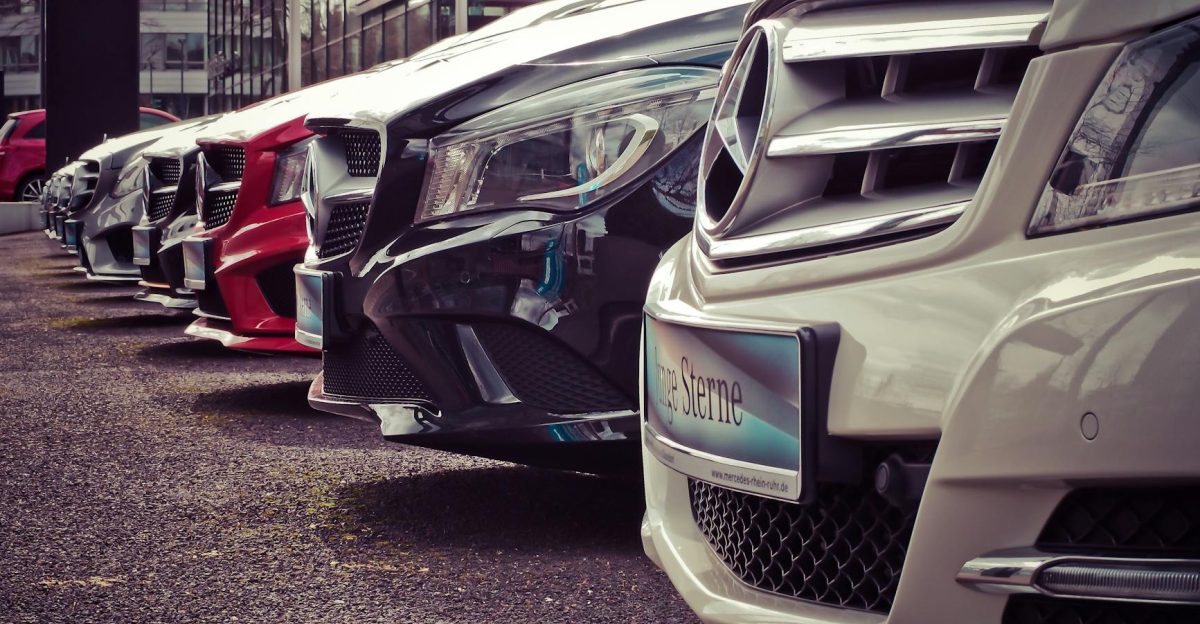
Younger Millennials now face monthly car payments 60% higher than in 2019 for functionally identical vehicles. Meanwhile, 56% of middle-market consumers report spending more and saving less, and 56% say financial stress harms their mental health. Inventory hit 2.97 million units in November 2025, an 88-day supply compared to 71 days the prior year. Cars sit on lots longer, carrying costs climb, and those costs cascade to buyers who have no legal alternative. Dealerships post record profits. Young families delay homes and children. The franchise system transfers wealth upward by design.
This Isn’t an Exception. It’s the New Rule.

The DOJ flagged franchise laws as anticompetitive barriers in 2000. Twenty-six years later, the ICLE study used the same methodology and found costs have risen, not fallen. The system does not self-correct. Software-defined vehicles requiring over-the-air updates and digital pricing are structurally incompatible with a model demanding physical dealership intermediation. California’s SB 766 now mandates a three-day return window and pricing transparency for used cars. One state cracking the door open. Once consumers in one market taste direct pricing, the 49 others become politically indefensible.
NADA Draws the Battle Line

The National Automobile Dealers Association declared blocking direct-to-consumer sales its top legal priority for 2026. Ninety-five percent of its dealer board supports the fight. ICLE Director Kristian Stout offered the counter: “Allowing manufacturers to compete through different models would better align the law with the realities of the modern automobile market.” That word, “allow,” is the entire war. State law currently forbids what consumers want. Tesla operates over 300 stores proving the direct model works. EV startups face a choice: franchise through misaligned dealers, litigate state by state, or exit markets entirely.
The Tax You Can Name but Can’t Escape

Fifty-two percent of dealership visitors say they’re frustrated by pushy sales tactics. Fifty-six percent say transparent pricing would make them more likely to buy. The industry’s response to that feedback: hire more lawyers, not fewer salespeople. You now know something most car buyers don’t. The nearly $5,000 extra on your car exists because state law requires it, not because the market demands it. Remove the legal mandate and that money stays in your pocket. NADA will spend 2026 making sure that never happens. Whether your state legislator listens to dealers or voters determines who pays next.
Sources:
“The Middleman Tax on Car Buyers: How Dealer Franchise Laws Raise Vehicle Prices and Limit Competition” — International Center for Law & Economics (ICLE), March 30, 2026
“Dealership ‘Middleman Tax’ Is Adding Nearly $5,000 To Car Prices” — Jalopnik, April 6, 2026
2025 Blue Sky Report: Dealership Buy/Sell Market Sets New Record — Kerrigan Advisors, March 29, 2026
“Auto Dealers Seek More Policy Wins in 2026, Including Curtailing Direct Sales” — Wards Auto, February 9, 2026
“Newsom Vetoes Car Dealers’ Bill to Hike Fees on Buyers” — CalMatters, October 14, 2025