Gas Stations Hit Florida With 5 Price Jumps In One Week—$9.4B Monthly Drain On American Drivers
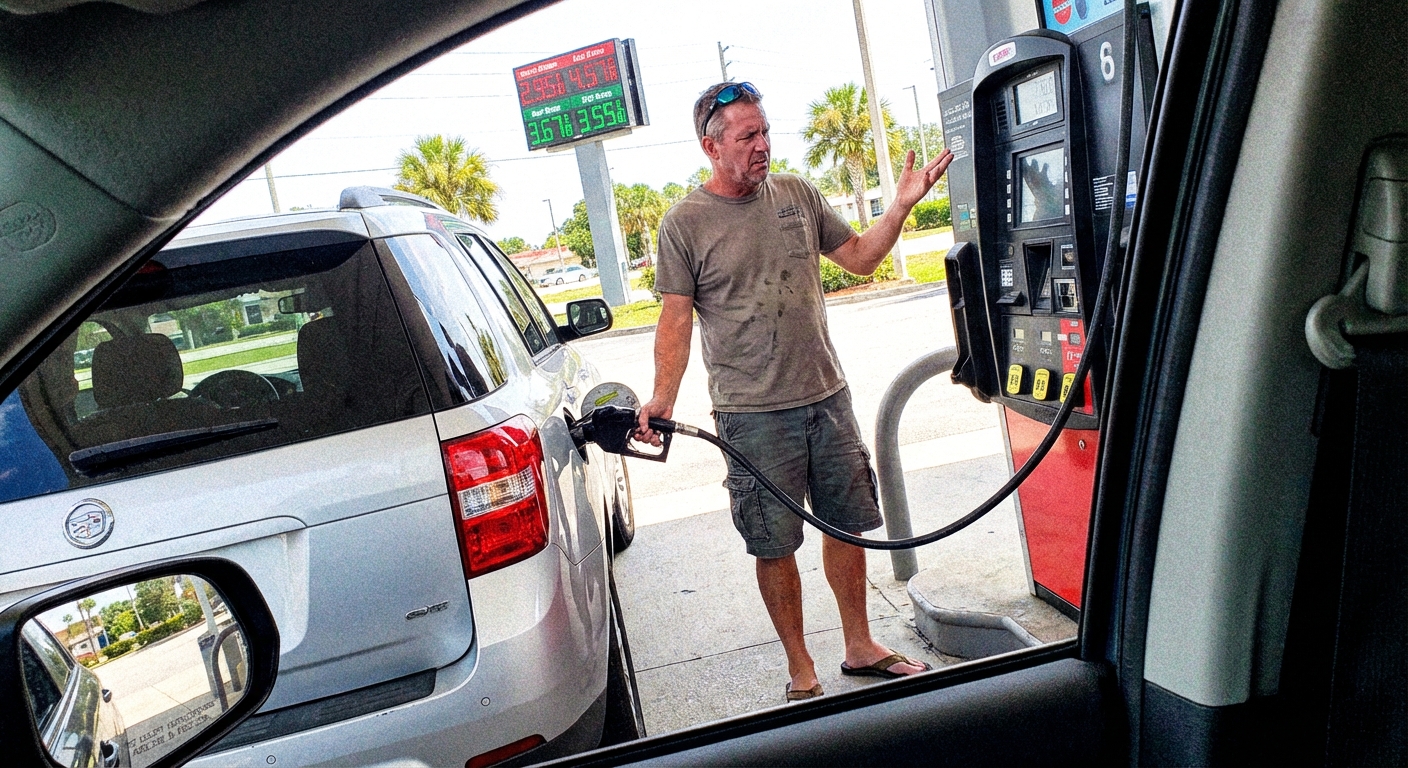
Five separate price jumps in a single week. That’s what Florida drivers absorbed in early March 2026. By March 31, the relentless pace had pushed the statewide average to $3.96—a four-year high. GasBuddy’s Patrick De Haan tracked the acceleration in real time: “That’s now the fifth jump in the last week. It’s been pretty fast and furious.” Tampa stations moved from $2.99 to $3.79 in days. A $1.07 increase in one month. Most people saw the headline and thought “Florida problem.” The $9.4 billion monthly cost to American drivers says otherwise.
Why Prices Moved This Fast

The Iran conflict created shipping hesitancy around the Strait of Hormuz. Oil prices briefly spiked above $120 per barrel before plunging below $90 and then climbing back over $100 again. But crude oil only represents about 50% of the pump price. Refining adds 20%. Taxes lock in another 20%. Retailers keep roughly 10%. That breakdown matters because it reveals who actually profits from the chaos. Stations change prices three to four times weekly, and when wholesale costs spike, they reset collectively. Not because they’re colluding. Because they’re all reading the same wholesale data on the same morning.
The 40-Cent Overnight Trap
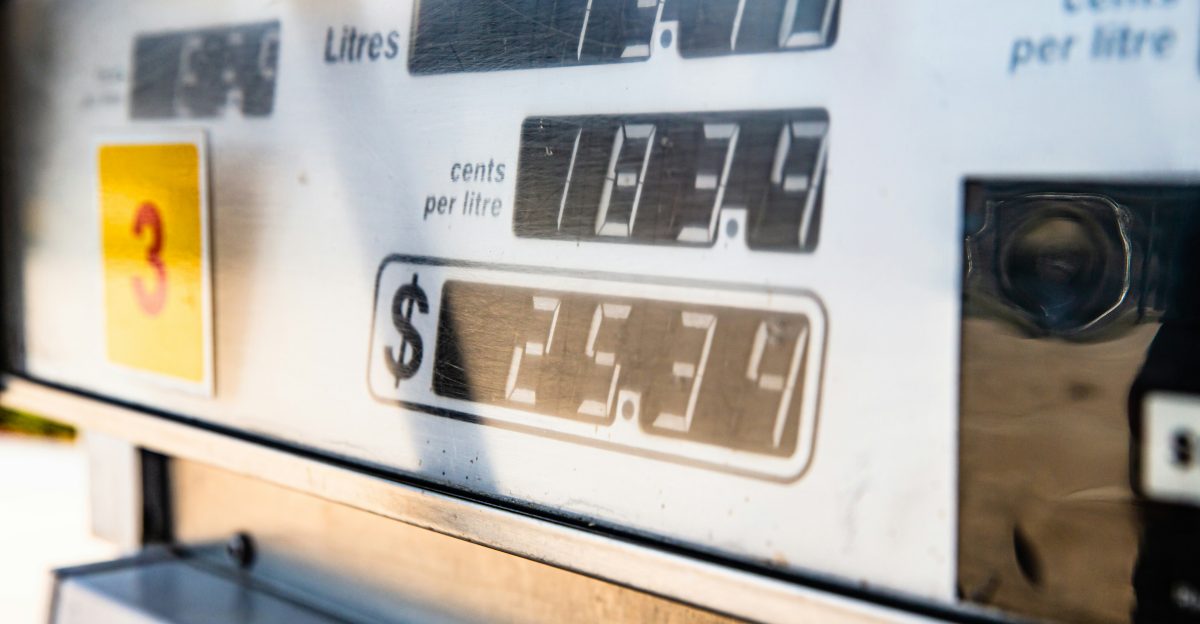
South Florida saw prices swing 40 cents from one day to the next. Fill up Wednesday at $4.25, watch it drop to $3.85 Thursday. That charge on your card is permanent. The savings window is not. Price cycling creates a mathematical trap: drivers who wait five to seven days after a spike can save 15 to 45 cents per gallon. Miss the window, and the cycle resets. ITEP calculated the South is absorbing $4.2 billion of the $9.4 billion monthly national hit. Alabama residents alone are paying $52 extra per month per driving-age person.
Stations Are Bleeding Too
Here’s what nobody expects: gas station margins actually compress during price spikes. Retailer markup averages 38 cents per gallon over five years, but net retention after labor, rent, and credit card fees runs closer to 15 cents per gallon. Prices rise like a rocket and fall like a feather, and stations absorb the lag. The moment they should profit most, they lose most. Higher pump prices also reduce in-store spending on snacks, drinks, and higher-margin convenience items. Independent stations with thin reserves get squeezed hardest. The villain everyone blames is actually getting crushed. The real money flows upstream.
The Costco Effect Widens the Gap
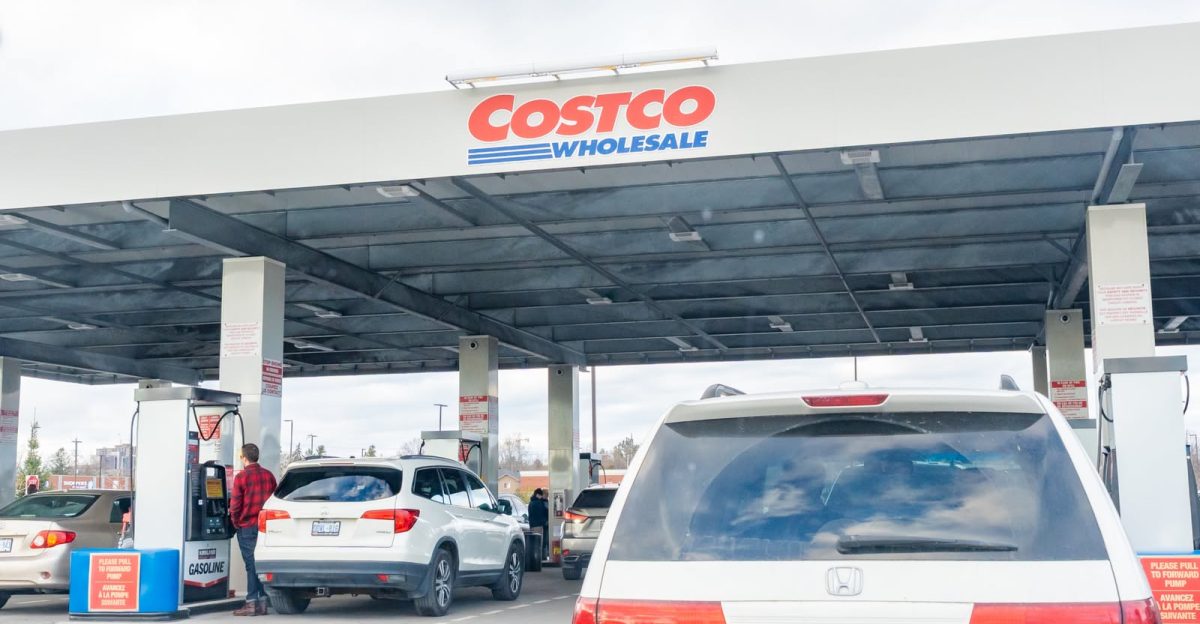
Costco maintains a 20-cent per gallon advantage over local competitors through purchasing scale, high fuel volume, and a membership model that effectively subsidizes the discount. Members benefit. Everyone else absorbs the spread. That 20-cent gap during a $4 average means Costco members pay $3.80 while the station across the street charges full price. Same crude oil. Same refining cost. Same taxes. Different leverage. The competitive spread is accelerating independent station closures in markets where Costco operates, reducing the price competition that would otherwise protect consumers.
Same Machine, Every State
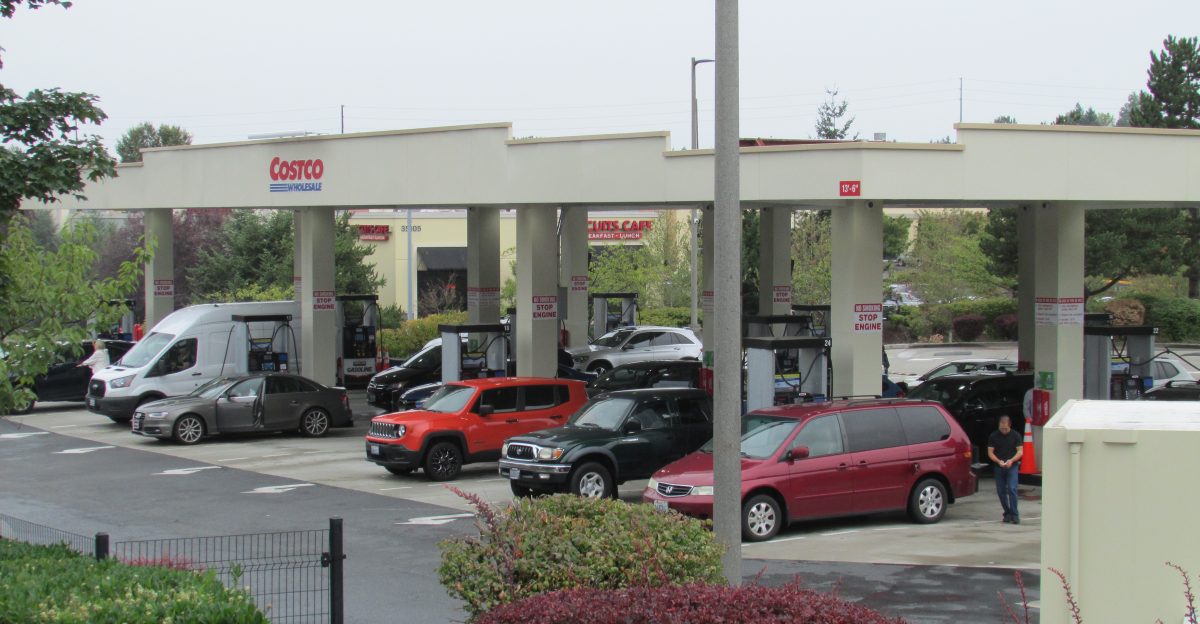
Price cycling has operated for 25 years across Florida, Ohio, Michigan, Indiana, Kentucky, and Texas. A quarter century. Same pattern. Prices drift down for one to three weeks, then jump sharply on the same day across competing stations. The cycle persists because it works: stations access shared wholesale pricing data, reset collectively, and maintain plausible deniability as “price-takers.” One operations director put it plainly: “We price based on what we’re able to buy fuel at.” Meanwhile, five stations on the same block raise prices the same morning. That’s the system. It reaches your kitchen table every single week.
The Voice From Inside the Pump
De Haan explained the Strait of Hormuz factor with blunt clarity: “If I had $200 million of cargo and someone told me to be careful going through, I’d probably avoid it too.” Shipping companies did exactly that. Oil futures spiked. Wholesale costs followed. Stations reset. Drivers paid. And legal analysts at Troutman flagged unprecedented trading volume in oil markets before official announcements as warranting investigation for potential manipulation — concerns that nobody in Washington has addressed. The people absorbing $52 a month in Alabama didn’t create geopolitical instability. They’re just the ones who can’t pass the cost along to anyone else.
The Tax That Hasn’t Moved Since 1993
The federal gas tax has sat at 18.4 cents per gallon for 33 years. The longest period without an increase in the tax’s history. Politicians propose gas tax holidays during every spike, but research shows the savings primarily benefit oil companies and pass-through visitors rather than struggling local families. Governors who once rushed to suspend state fuel taxes have largely stopped bothering. The structural failure runs deeper than any holiday can fix: refiner margins widen during every crisis, the cycling pattern ratchets prices higher permanently through asymmetric adjustment, and no regulatory framework addresses synchronized station resets. The rules haven’t changed because the rules were never written.
Who Profits, Who Pays
For every $100 spent at the pump, roughly $50 goes to crude oil producers, $20 to refiners, $20 to taxes, and $10 to the station. The station keeps about 15 cents per gallon after expenses. Refiners keep $15. Think about that ratio the next time someone blames the guy behind the counter. Low-income households and rural communities lose disproportionately because they drive farther, own older vehicles, and have fewer stations competing for their business. GasBuddy confirmed Sunday is the cheapest day in 41 states. Wednesday through Friday costs the most. Knowing the pattern is now a financial survival skill, not trivia.
The Cascade Keeps Breaking
If this pricing template holds, it spreads. Grocery chains, heating oil distributors, and any retail sector with shared wholesale data and competitive clustering can replicate the same synchronized reset pattern. Independent gas stations will continue closing, reducing local competition and locking in higher baseline prices. The $9.4 billion monthly drain persists as long as crude stays volatile and the Strait of Hormuz remains contested. Drivers who understand the five-to-seven-day window, who fill up Sundays, who check GasBuddy before pulling in, will save hundreds annually. Everyone else funds the cycle. The cascade started at one pump in Tampa. It reaches every wallet in America.
Sources:
“Florida gas prices remain at 4‑year high as war with Iran continues to disrupt oil supply.” CBS Miami, 29 Mar 2026.
“Florida Gas Prices Reach Four‑Year Highs Amid Global Oil Volatility.” National Today, 28 Mar 2026.
“These States Are Most Impacted by the Spike in Gas Prices.” Institute on Taxation and Economic Policy (ITEP), 22 Mar 2026.
“New from ITEP: Gas Price Surge Costs American Drivers $9.4 Billion a Month; Gas Tax Holidays Won’t Solve This Problem.” Institute on Taxation and Economic Policy (ITEP), 22 Mar 2026.