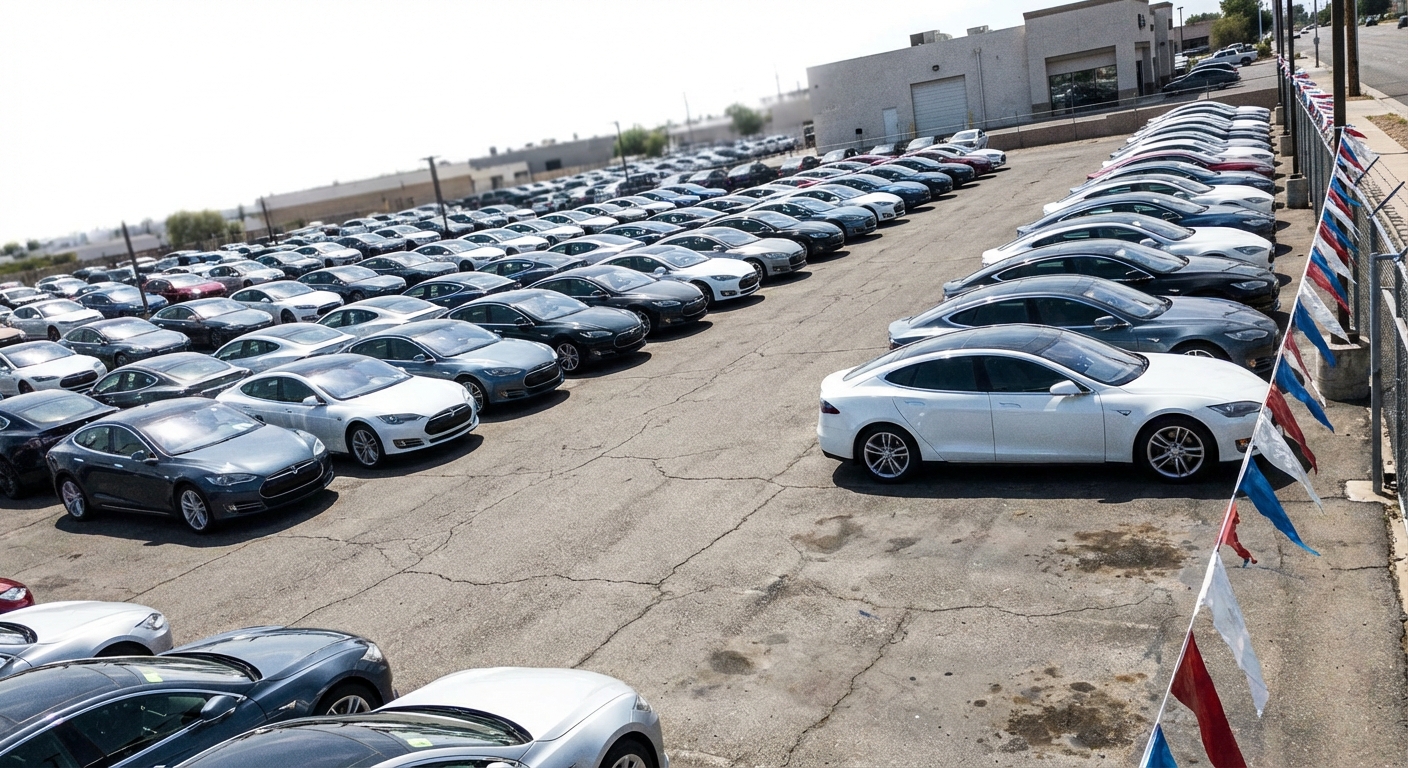
1.1 Million EVs Leased Under Federal Subsidy Hit Used Lots At Gas-Car Prices—Nobody Wants Them
Between January 2023 and September 2025, automakers leased over 1.1 million electric vehicles under a federal tax credit structure that made monthly payments artificially cheap. Those leases are now maturing into a used market where three-year-old EVs retain just 40% of their original value, down from 90% in early 2022. That 50-percentage-point collapse represents the steepest residual value decline in modern automotive history for any vehicle category. The industry faces $8 billion in collective losses by 2028. And the first wave of 300,000 returns just started landing on dealer lots.
The Tax Credit Trap That Built the Bomb
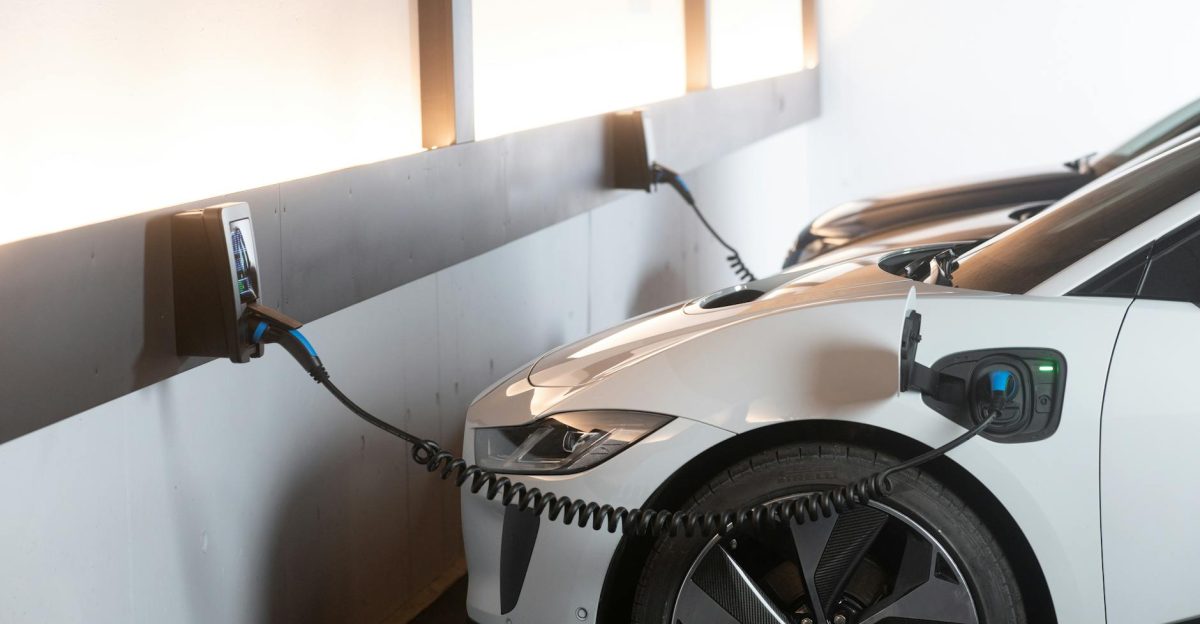
The IRS 45W commercial clean vehicle credit gave leased EVs a $7,500 advantage without the income caps, vehicle price limits, and domestic content requirements that restricted retail buyers from accessing the equivalent consumer credit. Automakers exploited this by pushing leases over purchases. By mid-2025, 58% of new EVs moved through lease contracts, the highest ratio ever recorded. Finance teams set residual values at 50%, assuming three-year-old vehicles would hold half their sticker price. They built those assumptions on policy stability and rising consumer enthusiasm. Both assumptions shattered on September 30, 2025, when federal credits expired overnight. The demand they’d been measuring was never real.
Your Neighbor’s Lease Return Just Lost $10,000
Automaker finance arms expected lease trade-ins to be worth an average of $10,000 more than their current market values. That gap is now baked into every returning vehicle. Used EVs average $34,821 in Q1 2026, within just $1,300 of the $33,487 average for used gas cars. That near-parity sounds like progress until you realize what it actually means: a technology that commanded premium pricing three years ago now trades at commodity levels. EVs depreciate 58.8% over five years versus 45.6% for all vehicles. The premium evaporated. The losses didn’t.
Automakers Threw $13,000 Discounts at a Collapsing Market
By Q4 2025, EV-only discounts reached $13,161 per vehicle, up $2,211 from the prior year. Automakers slashed prices to offset the vanished federal credits. New EV sales still crashed 28% year-over-year in Q1 2026. That’s the part worth sitting with: record incentives produced record declines. Every price cut on new models accelerated depreciation on the existing off-lease fleet, forcing steeper cuts, forcing deeper losses. Automakers built themselves a spiral with no exit ramp. Used EV sales rose 12%, but that growth came from bargain hunters, not believers.
California Auctions Are Half Electric
Wholesale auto auctions in southern California now operate with 50% of daily sales being electric vehicles. That saturation forced automakers into geographic arbitrage: shipping vehicles from California to Texas, Georgia, and Florida to capture $3,000 to $5,000 in incremental value per unit from price-sensitive regional buyers. Think about that for a second. An EV loses thousands of dollars in value by sitting on the wrong lot in the wrong state. The used car market has never operated like this. Location now determines whether a vehicle is an asset or a write-off.
The Machine Behind Every Ripple
One mechanism connects all of this: leases are legally binding contracts. Automakers cannot renegotiate the residual values they locked in during 2023 and 2024. They must accept vehicles at prices set when enthusiasm was high and credits were flowing. Federal credits inflated demand. Inflated demand justified aggressive residuals. Aggressive residuals created binding contracts. Credits vanished. Demand collapsed. Residuals cratered. But the contracts remain. Auction floors. Dealer lots. Your driveway. Same chain, same trap, same math closing in on the same balance sheets.
The Models Never Saw This Coming
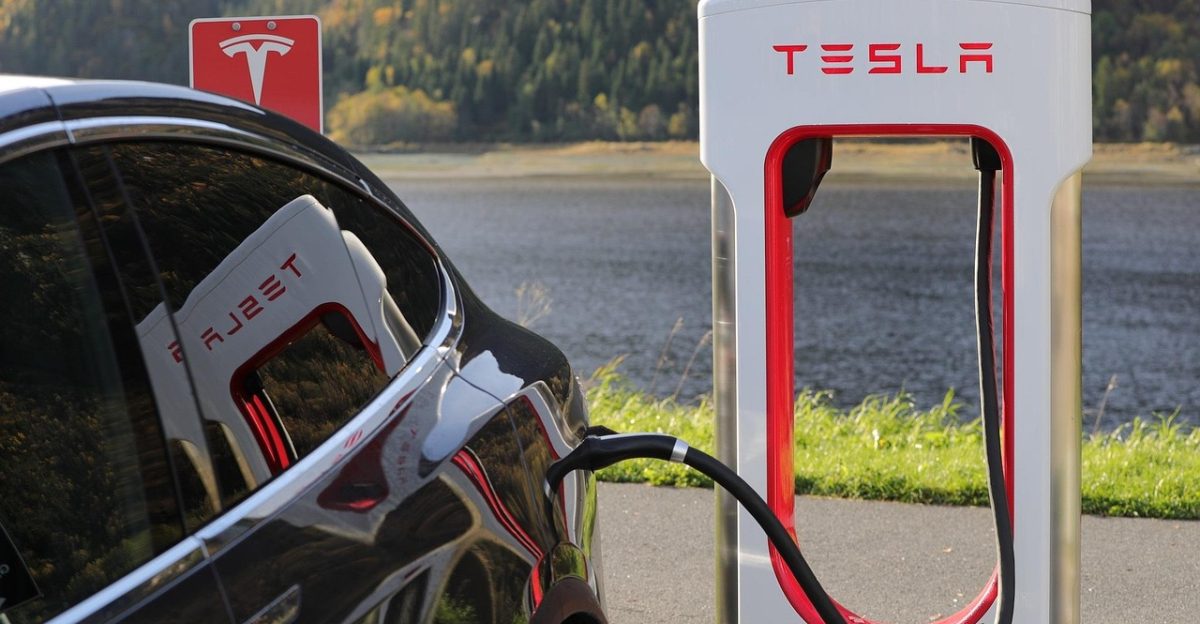
“For a hot minute EV leases were quite attractive, because the predictive depreciation models couldn’t account for a second Trump presidency or an Elon Musk far-right side quest completely torpedoing the EV market.” That sardonic line from Jalopnik’s reporting captures the core failure. Finance teams built sophisticated statistical models using backward-looking data that assumed policy continuity and rising adoption curves. Tesla alone leased 229,000 vehicles in 2025, creating a $2.3 billion exposure at $10,000 average loss per vehicle. GM committed 102,000 leases. Hyundai-Kia committed 78,000. Every one of those contracts is now underwater.
Honda’s 69-Year Streak Just Ended

In March 2026, Honda cancelled three North American EV models — the Honda 0 SUV, Honda 0 Saloon, and Acura RSX — and braced for restructuring charges up to $15.7 billion, its first annual net loss since listing on the Tokyo Stock Exchange in 1957. Sixty-nine years of unbroken profitability, ended by a single strategic bet on electrification. Across the industry, automakers absorbed $65 billion in write-downs by early 2026. Stellantis took $26.2 billion. Ford absorbed $19.5 billion. GM wrote off over $7.6 billion. The $330 billion automakers invested in EVs from 2021 to 2024 now looks like the largest herd-behavior capital deployment in post-war automotive history.
Who Wins, Who Bleeds
The winners are patient buyers. Nearly one-third of pre-owned EVs now list under $25,000, with substantial factory and battery warranty remaining. The losers are automaker finance arms trapped in contracts they cannot escape, dealers in saturated markets watching inventory depreciate daily, and EV-division employees facing layoffs as production ramps get postponed. American consumer likelihood of purchasing an EV dropped to 16% from 25% in 2022. The myth that organic enthusiasm drove EV adoption died the month subsidies expired, when market share crashed from 12.9% to 5.2% in 30 days.
800,000 Vehicles and No Off-Ramp

By 2028, off-lease EV volume peaks at nearly 800,000 vehicles entering the market simultaneously. No single vehicle category has ever flooded the secondary market with that concentration of identical inventory. Automakers are already lobbying for partial tax credit reinstatement. Finance companies like Chase Auto are experimenting with direct-to-consumer sales, bypassing dealers entirely. The cascade keeps expanding: battery manufacturers face margin pressure, tier-one suppliers face production cuts, and dealership groups in high-EV markets face inventory imbalances that could take years to unwind. The correction has barely started.
Sources:
“Depreciated Leased EVs Could Kick Off A Nice Little Financing Crisis For Automakers.” Jalopnik, 5 Apr. 2026.
“New EV Sales Drop 28% in Q1 2026, but Used EVs Surge with Prices Now Within $1,300 of Gas Cars.” Electrek, 27 Mar. 2026.
“What 300,000 Returning EV Leases Mean for Dealership Inventory Strategy.” CDK Global, 22 Jan. 2026.
“How Will EVs Perform in the US Following Incentive Expiration?” AutoVista24, 23 Oct. 2025.