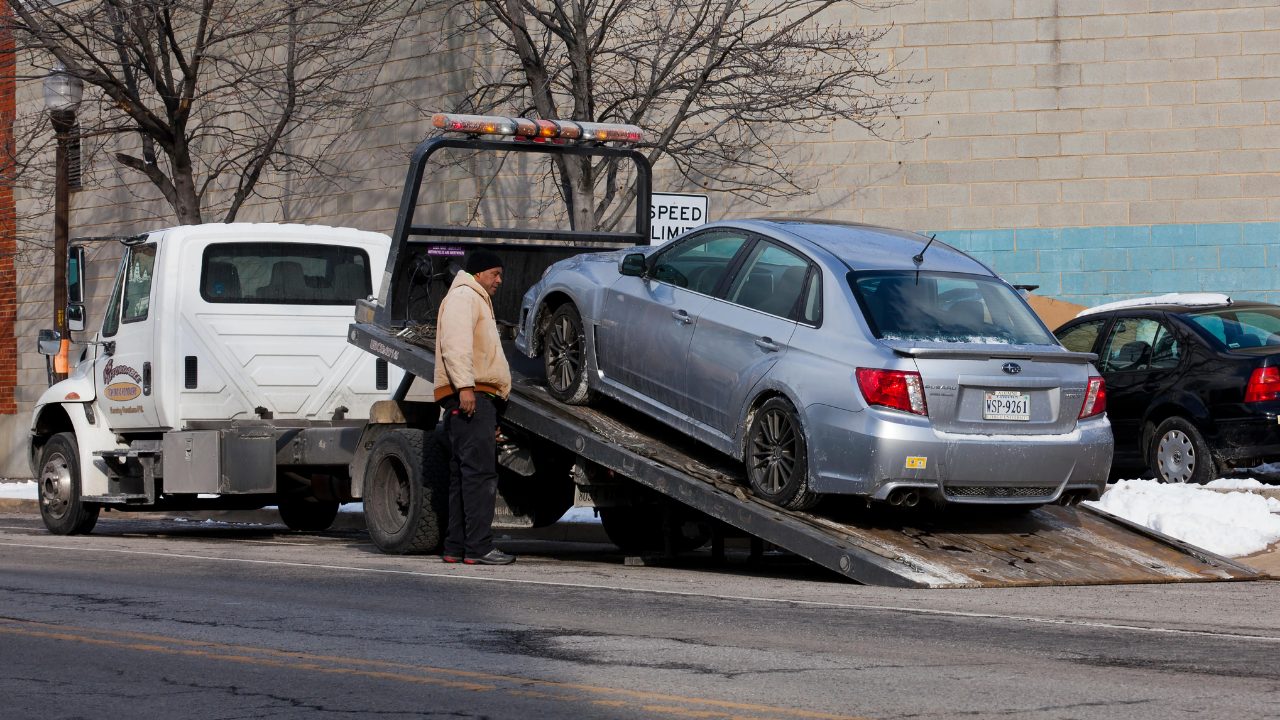
1 in 3 US Car Trade-Ins Now Underwater—27% Owe More Than $10,000 in Record Debt Trap
The buyer walks into the dealership expecting a fresh start. Three years of on-time payments. Oil changes on schedule. Trade-in right on cue. Then the finance manager pulls up the numbers, and the conversation dies. The car they’ve been faithfully paying off is worth thousands less than what they still owe. Across the country, that scene played out in roughly one of every three new-vehicle trade-ins during Q4 2025. The math wasn’t close.
The Hangover

Those loans trace back to 2020-2022, when the semiconductor shortage gutted auto production by 7.7 million vehicles in a single year. Dealerships stripped discounts. Buyers paid at or above MSRP because there was nothing else on the lot. Scott Lambert of the Minnesota Auto Dealers Association put it plainly: “We’re feeling that hangover now that was able 4-5 years ago.” The shortage ended. The debt didn’t. And the vehicles those buyers financed lost 16% of their value in year one alone.
The Myth

Conventional wisdom says falling car prices help buyers. Sounds logical. Prices normalize, trade-in values stabilize, and everyone recovers. Except the opposite happened. When new-vehicle prices dipped 2.2% in January 2026, trade-in values fell faster. Loan balances stayed fixed. The gap widened. Edmunds data shows the average negative equity per trade-in hit an all-time record of $7,214 in Q4 2025. Price normalization didn’t rescue trapped buyers. It buried them deeper, because the debt was never tied to market conditions.
The Trap
Twenty-seven percent of those underwater trade-ins carried more than $10,000 in negative equity. A record. Another 9.2% owed over $15,000. Edmunds director Ivan Drury acknowledged the damage: “Affordability pressures, from elevated vehicle prices to higher interest rates, are compounding the negative effects of decisions like trading in too early or rolling debt into a new loan.” Buyers did everything right. Made payments. Maintained the vehicle. Traded on schedule. Still $10,000 in the hole. The system collected anyway.
The Machine

Here’s how the cycle feeds itself. A buyer with $7,214 in negative equity rolls that debt into a new loan. Finance companies offer 84-month terms to make payments seem more manageable. That stretches the negative equity window from roughly three years to seven. By the time the buyer trades again at year three or four, they’re still underwater. So they roll forward again. It functions like credit card minimum payments: the monthly number shrinks, but the total extraction multiplies with every cycle.
The Numbers
The average monthly payment for buyers rolling negative equity into a new loan reached $916 in Q4 2025. That’s $144 more than the industry average of $772. Those buyers financed $11,453 more than a typical new-vehicle purchaser. Meanwhile, 40.7% of negative-equity purchases used 84-month loan terms. Sixty-two percent of consumers now say new vehicles are unaffordable. The average new car crossed $50,080 in September 2025, the first time in history to reach $50,000.
The Ripple

More than 2.2 million vehicles were repossessed in 2025, a pace matching the Great Recession. Except unemployment sits near 4%. That contrast should stop you cold. Recession-level repossessions in a supposedly healthy labor market mean the stress is structural, not cyclical. Lower-income households saw auto loan delinquencies spike 70 basis points in Q3 2025 alone. Total outstanding auto loan balances hit $1.67 trillion. Owners trapped in negative equity hold their cars longer, tightening the used-car supply and pushing prices higher for everyone else.
The Precedent

Automakers learned something during the chip shortage: eliminate discounts, sell at MSRP or above, and buyers will finance whatever number you put in front of them. That playbook won’t be forgotten. The average vehicle on American roads is now 12.8 years old, the oldest in automotive history, because millions of owners can’t afford to trade without deepening their debt. Cody Anderson at Freedom Ford in Texas said buyers’ “frame of reference is still anchored five years in the past.” The sticker shock isn’t temporary. It’s the new baseline.
The Clock
The math says buyers who purchased between 2022 and 2026 on 84-month terms won’t reach positive equity until 2030 at the earliest, more likely 2034. If a recession hits and unemployment rises, repossession projections climb past 3 million by year-end 2025 and could double from there. An off-lease vehicle flood expected in 2026 threatens to further collapse used-car values, worsening current owners’ negative equity. The Federal Reserve is watching delinquency rates creep upward, with no policy tool to stop them.
The Exit

Some buyers will break the cycle by trading down, absorbing the loss, and refusing to roll equity forward. That might accelerate the adoption of used EVs as the cheapest, newer option available. But for the majority still locked into 84-month terms on $50,000 vehicles that lose value every month, the only winning move is understanding the game before walking into the dealership. Every record broken in 2025, the debt, the payments, the repossessions, traces directly to pricing decisions made during a shortage that ended years ago. The hangover hasn’t peaked.
Sources:
Edmunds Q4 2025 Insights Report, “Falling Underwater on a Car Loan Is Becoming More Common,” January 14, 2026
KSTP News / CBS Minnesota, “Vehicle repossessions surging at pace on par with Great Recession,” November 12, 2025
Federal Reserve Bank of New York, “Early Delinquencies Level Out for Non-Housing Debts,” February 10, 2026
NerdWallet, referenced for negative equity rollover mechanics, 2025
CarBuzz, referenced for affordability survey data, 2025
Cox Automotive, referenced for average vehicle age data, 2025