McLaren’s Formula 1 Title Defence Falls Apart Before The Season Even Gets Going
The opening races were supposed to feel like a coronation lap. McLaren entered the season as the team to beat, the reigning constructors’ champion, the squad that figured out what nobody else could. Instead, the garage has gone quiet in all the wrong ways. Cars failing to even make the grid in positions that don’t match the livery’s pedigree. Engineers huddled over data that contradicts everything the simulator promised. Something fundamental shifted between last season’s dominance and this season’s first green lights, and it showed up immediately.
Loaded expectations
Champions are supposed to start stable. That’s the unwritten rule of Formula 1: you defend from a position of known performance, banking early points while rivals scramble to close the gap. McLaren’s entire winter narrative ran on that assumption. The car was fast last year. But the regulations changed dramatically — 2026 brought F1’s most sweeping joint overhaul in over a decade, simultaneously revising the power unit architecture and the aerodynamic package from the ground up. The driver lineup remained intact, but almost nothing else did. Every ingredient for stability had been stripped away, which made the opening-race results feel less like a stumble and more like a warning. The gap between expectation and reality widened each weekend before anyone could fully explain why.
Cracks start to show
The common assumption was simple: a championship-winning team can just fix it next race. Bring a new floor, adjust the setup, move on. Multiple outlets, including Autosport and Motorsport.com, reported something more uncomfortable. McLaren’s car arrived at the opening races with a downforce shortfall versus Mercedes, and the team lacked the power unit exploitation knowledge to compensate. Peak performance existed in the data, but the operating range where drivers could actually access it on race Sundays kept proving elusive. As team principal Andrea Stella put it, McLaren is learning quite rapidly — but the gap to Mercedes is steep, and the calendar does not pause.
What really went wrong
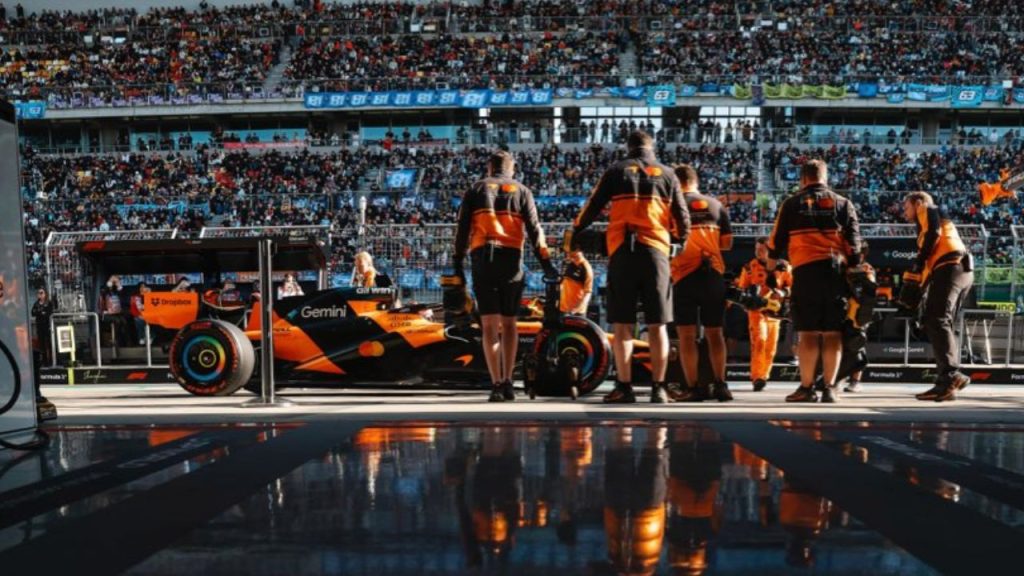
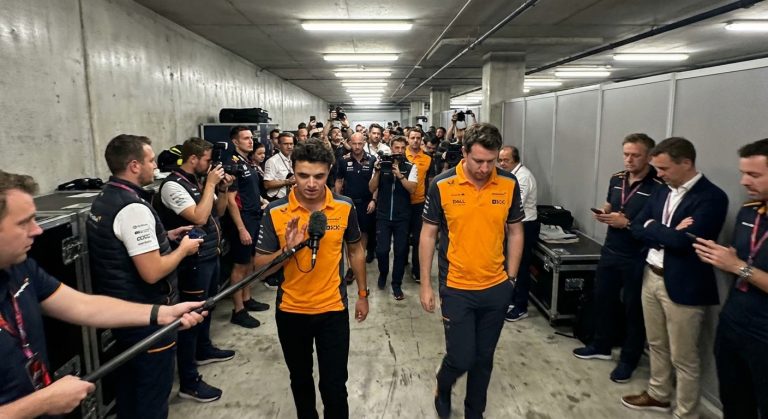
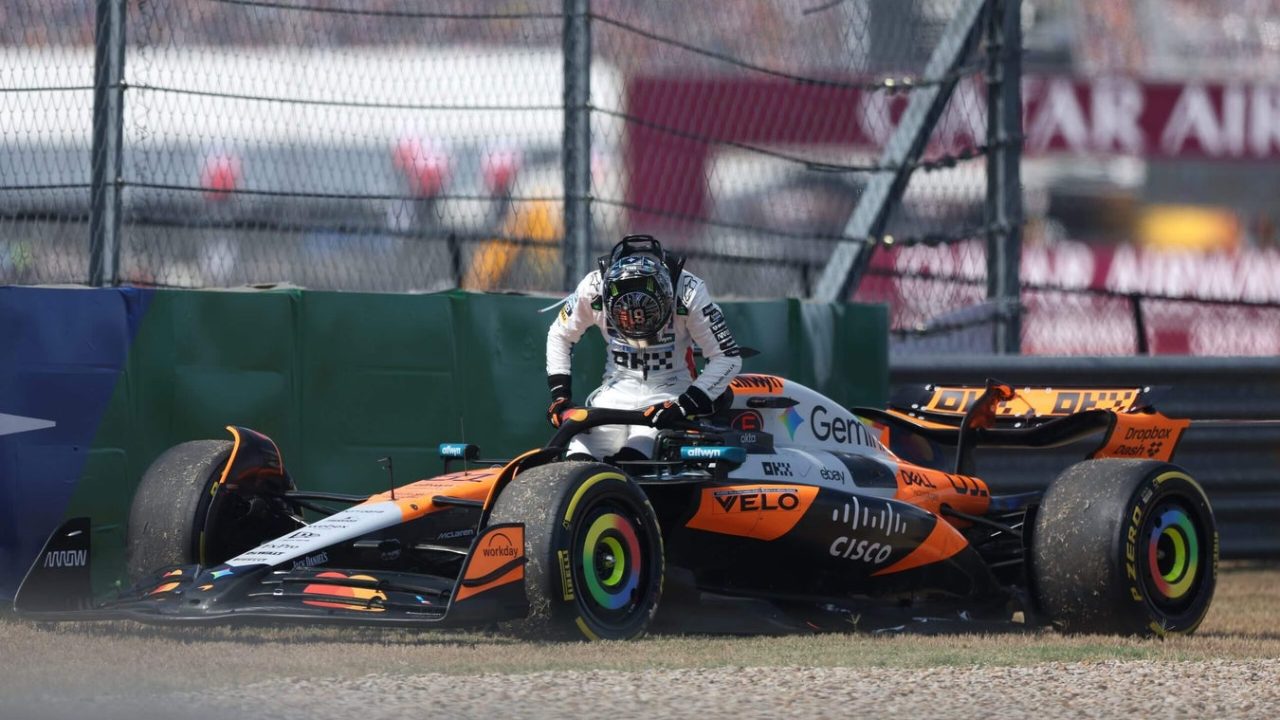
The crisis had two compounding roots. First, a development path challenge: McLaren’s early design choices, made months before the first race under an all-new ruleset, produced a car that is solid in concept but, in Stella’s own words, slightly underdeveloped relative to what Mercedes brought to Australia. Second, and more immediately devastating: at the Chinese Grand Prix, two separate electrical failures on the Mercedes power units left both Lando Norris and Oscar Piastri stranded — one in the garage, one pushed off the grid before the formation lap. McLaren scored zero points in China. Both problems compounded the other. By the time results confirmed the scale of the damage, McLaren already trailed Mercedes by 80 points after just two races.
Trapped by the cost cap
Here’s what most fans miss: modern F1 teams can’t just throw money at a broken car. FIA regulations cap spending and severely limit wind tunnel and CFD testing hours. That constraint transforms early setbacks into long-lived sentences. Compounding this, as the 2025 constructors’ champion, McLaren enters 2026 with the lowest wind tunnel allocation on the grid — just 70 percent of the baseline figure, or 224 wind tunnel runs and 1,400 CFD simulations, compared to rivals like Ferrari and Mercedes. McLaren faces an impossible triage: spend limited resources closing the car’s performance deficit, or chase the power unit exploitation gains that could unlock the car’s real pace. That’s not just a racing problem. That’s a resource allocation nightmare with a ticking clock and no overtime budget.
A car that can’t show its best

The deeper issue is the performance gap itself. Every F1 car has a narrow band of conditions where it performs optimally. McLaren’s car, while conceptually sound, is generating less downforce than Mercedes — and that shortfall has knock-on effects throughout the system. Less rear grip means the car scrambles for traction through corners, which in turn reduces how efficiently it can harvest energy from the new hybrid system. A smartphone with elite specs but catastrophic battery management. The raw capability is present; accessing it consistently became the engineering puzzle nobody in Woking could solve fast enough before the championship got going.
Damage beyond the stopwatch
The consequences spread beyond the car. Rivals studying McLaren’s struggles gained intelligence about what development paths to avoid, effectively learning from McLaren’s expensive early-season difficulties for free. Drivers and strategists absorbed blame for results that no human input could override. Poor finishing positions forced the team into rushed upgrade cycles, and rushed upgrades risk correlation errors between simulation and reality. That spiral — poor results feeding desperate changes feeding worse correlation — is the exact escalation path that turns a bad start into a lost season.
A new kind of champion’s curse
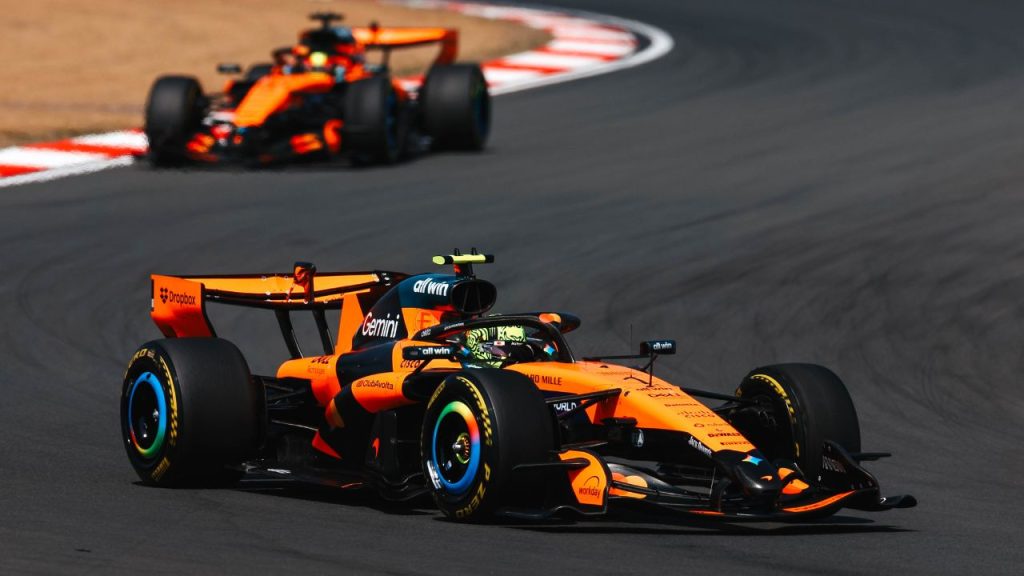
Zoom out and the pattern becomes unmistakable. This isn’t a simple performance dip. Under cost-cap regulations and the new aerodynamic testing restrictions, early-season form effectively dictates how a team spends its entire development budget for months. The precedent McLaren is setting — involuntarily — rewrites the old assumption that champions automatically stay champions. In the constrained era, one wrong early turn doesn’t just cost a race. It locks in a trajectory. Under a sweeping regulation reset like 2026, the gap between the team that best cracked the new rules and the team that arrived slightly underprepared can be 80 points after two rounds.
No easy way back
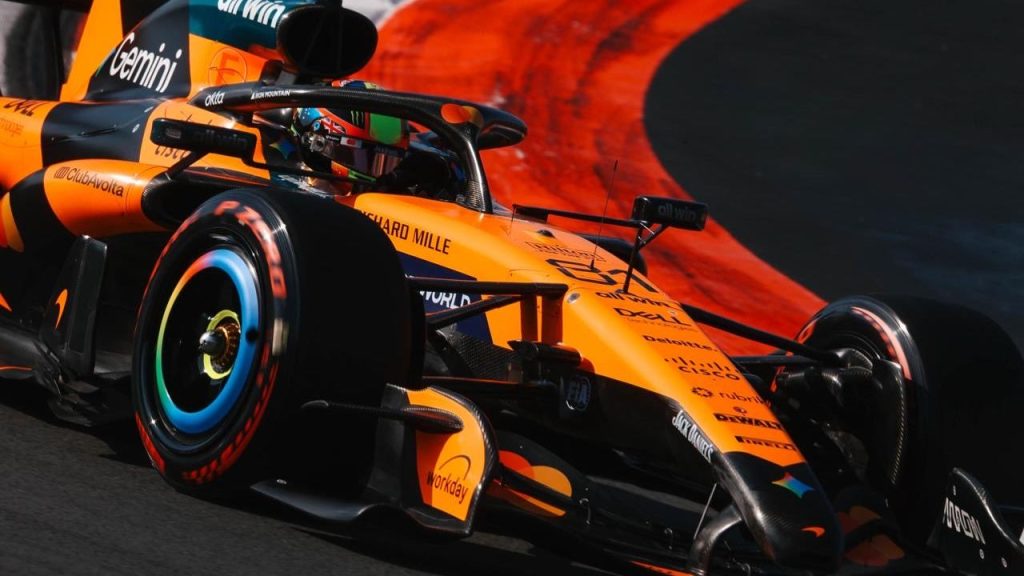
The escape routes are narrow and risky — and a further complication has emerged: the Bahrain and Saudi Arabian Grands Prix have been cancelled, removing two additional races worth of data-gathering time and narrowing the development window further. McLaren’s likeliest counter-move involves closing the power unit exploitation gap with Mercedes HPP, accelerating chassis development, and rebuilding correlation between simulation tools and actual track data. That process eats weeks the championship doesn’t pause for. Meanwhile, every rival with a functioning platform keeps compounding their own advantage. The next few races represent the tightest decision window McLaren has faced since regaining competitiveness. Get the triage wrong now, and the hole doesn’t just deepen. It calcifies into next year’s starting point.
What this season really asks

Most people watching this season see a slumping team and assume talent or luck explains it. After reading this, you see something different: a structural trap where a major regulation reset, the tightest wind tunnel allocation on the grid, and a reliability failure outside the team’s direct control have combined to convert two early race weekends into an 80-point deficit. The question McLaren’s season now answers isn’t whether they’re fast enough. It’s whether any team, no matter how dominant, can recover from an underdeveloped car and a power unit reliability crisis before the budget ceiling makes the damage permanent. That answer shapes every title defense from here forward.
Sources:
“Why McLaren’s F1 Title Defence Has Started So Horribly.” The Race, 17 Mar 2026.
“McLaren Explains Double DNS After Electrical Issues Rule Both Cars Out in China.” News GP, 15 Mar 2026.
“Explaining F1’s New 2026 Regulations: What’s New and What It Means.” McLaren, 15 Jan 2026.
“Wind Tunnel Time F1 Teams 2026.” RacingNews365, 1 Mar 2026.