100% Tariff Kills Volvo’s Smallest Electric SUV Before Most Americans Get To Buy One
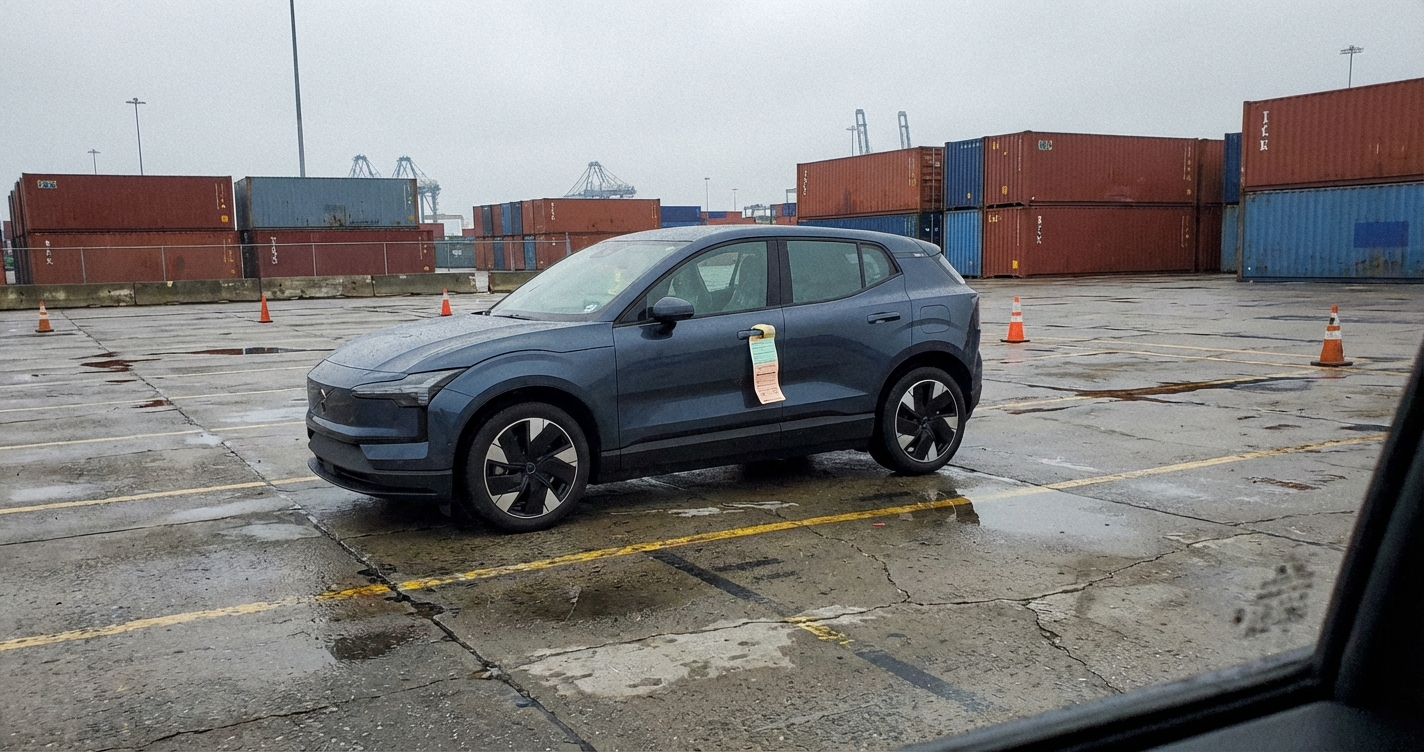
Over 5,400 Americans bought a Volvo EX30 in 2025. And every single one of them got a worse deal than the car was supposed to offer, because by the time the EX30 reached US showrooms, it had already been gutted by tariff math, rerouted through Belgium, and repriced beyond its original promise.
The car started life as a $34,950 entry point. It died as a $46,000 cautionary tale about what happens when trade policy and industrial policy collide in the same vehicle. Nobody issued a recall. Nobody found a defect. Washington just changed the numbers.
The 100% Tariff That Blew Up the Original Plan
In May 2024, the Biden administration quadrupled the tariff on Chinese-built EVs, from 25% to 100%. Volvo had been building the EX30 in China specifically to hit the sub-$35K price point. That arrangement died on the spot.
A 100% tariff isn’t a headwind; it’s a wall. You cannot absorb that on an entry-level vehicle and sell it at a profit. Volvo’s options were to abandon the US market or find another factory. They chose the factory.
The Belgium Reroute Cost a Fortune and Bought Only Time

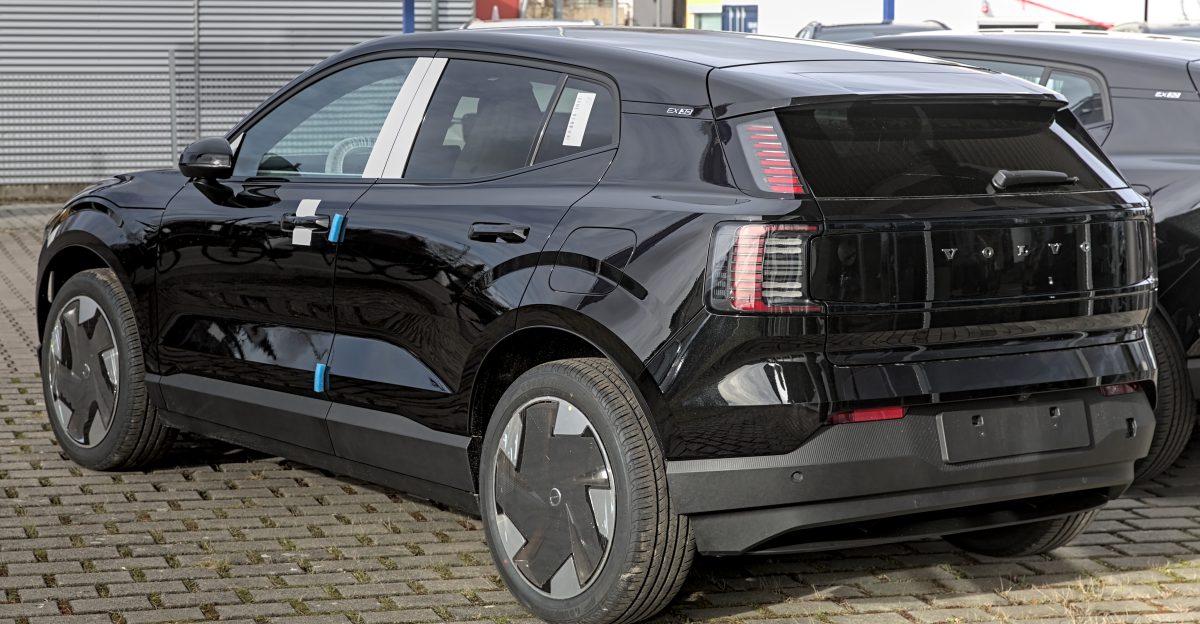
Volvo retooled its Ghent, Belgium, plant to build US-bound EX30s outside the reach of the China tariff. Production shifted in 2025. But building a small, affordable EV in Belgium costs more than building it in China, and every dollar of that difference ends up on the sticker price. The car that arrived in American showrooms was priced meaningfully above the original promise before the second blow landed.
The Trump administration imposed a blanket 25% tariff on all imported vehicles, regardless of origin, and the Belgium workaround became its own wound. By May 2025, CEO Håkan Samuelsson was publicly saying the original price was “almost impossible” to sustain , a comment pegged to the threat of additional EU tariffs stacking on top of what was already there. Volvo raised the starting price to $46,195. That’s a 32% increase on an “affordable” car.
September to October: The Month the Market Told the Truth
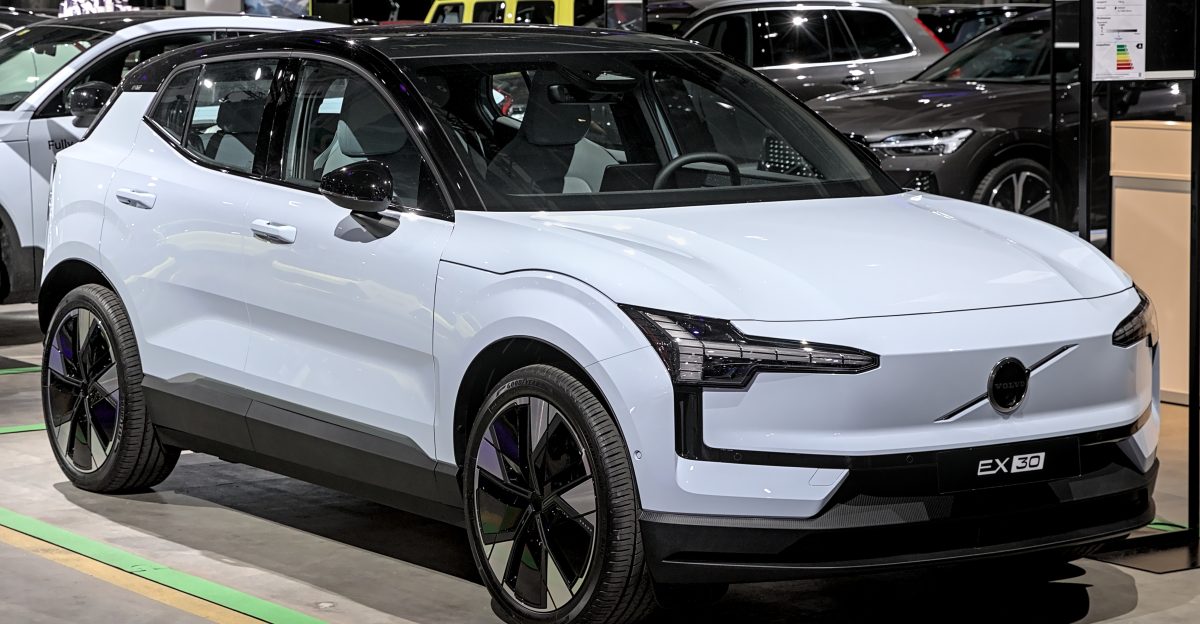
The EX30 moved 542 units in September 2025. In October, the number fell to 184. The difference between those two months was the $7,500 federal EV tax credit, which expired on September 30 when Trump’s “Big Beautiful Bill” eliminated it.
The credit wasn’t a bonus; it was the margin that made a $40,000-plus Volvo subcompact defensible to a budget buyer. Without it, you were asking someone to pay near-luxury money for a subcompact with a two-year tariff history and an uncertain future. The sales data answered that question plainly.
The Tax Credit Exit Sealed the Coffin

The $7,500 federal EV tax credit had been a genuine equalizer, the mechanism that let automakers price EVs competitively without eating into their own margins. Its elimination didn’t just hurt the EX30. It reconfigured the entire affordable EV math for every imported vehicle in America. Volvo sold a total of 5,409 EX30s in all of 2025, its first full year on US soil before the credit died.
After October, the market stalled. Volvo’s operating income fell 51.1% in Q4 2025, with management citing tariffs, the elimination of incentives, and currency pressures in the same breath. At some point, the spreadsheet just says no.
The Fine Print That Nobody Advertised
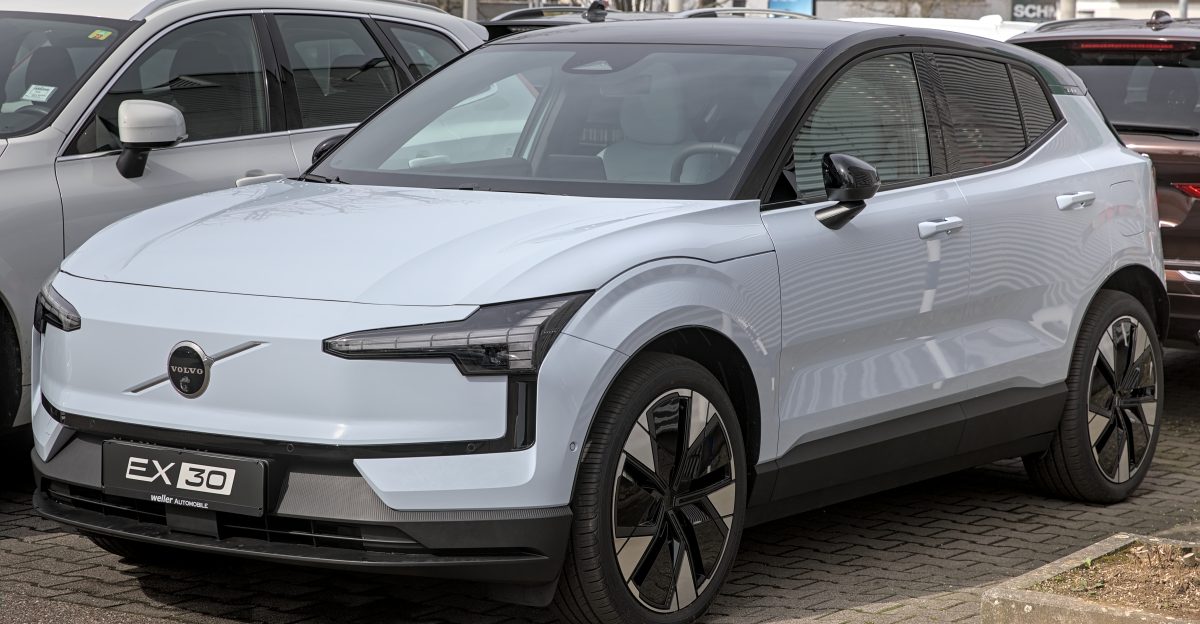
Here’s the layer of the story that didn’t make the press releases: even if the tax credit had survived, the EX30’s eligibility was shaky from the start. The IRA’s clean vehicle credit rules included “foreign entity of concern” restrictions, designed specifically to exclude vehicles tied to Chinese supply chains from qualifying for incentives, regardless of where final assembly happened.
Volvo is owned by Geely, a Chinese conglomerate. The EX30’s architecture connects directly to Chinese EV platforms from the same parent company. The 100% tariff was the gun. The incentive rulebook loaded it. Both were pointed at the same car.
What American Buyers Are Left With
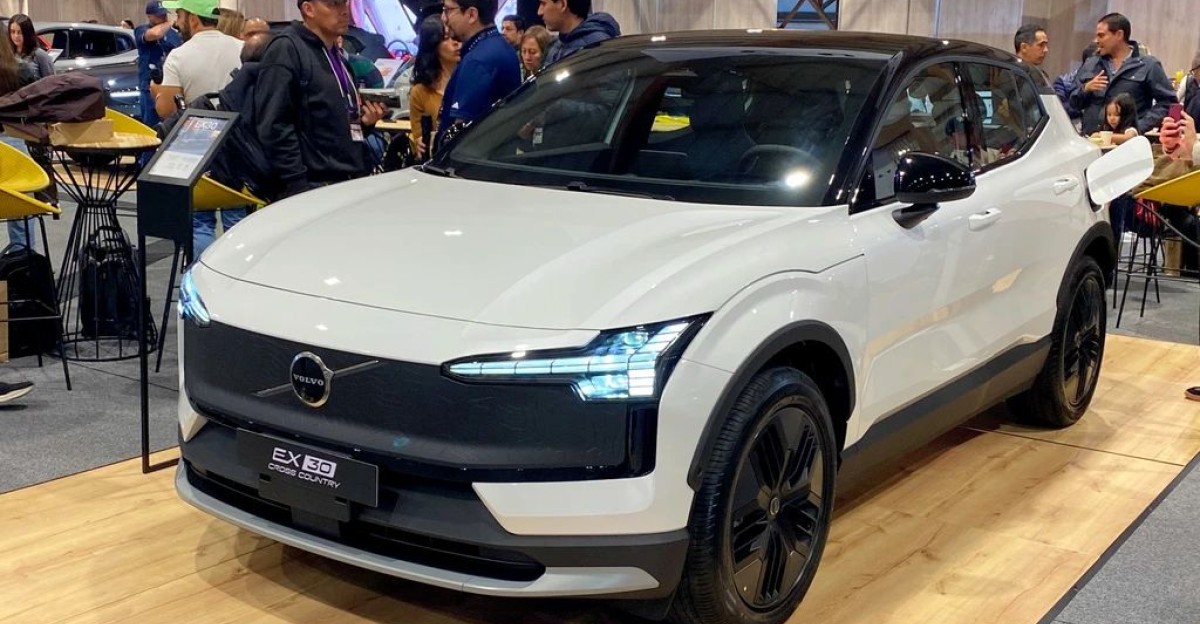
Dealers had until March 20, 2026, to place final EX30 orders. What remains in Volvo’s US lineup starts at $55,150 for the EX40, roughly $20,000 more than the EX30’s original sticker price. The EX90 is a full-size luxury SUV in a different price category entirely. A promised EX60 is expected later this year, spec sheet still forthcoming.
Those are real vehicles for real buyers. But they are not the vehicle Volvo promised in 2023, and they are not for the buyer Volvo was trying to recruit. The entry-level door into the brand just closed.
The EX30 Is Thriving — Everywhere But Here
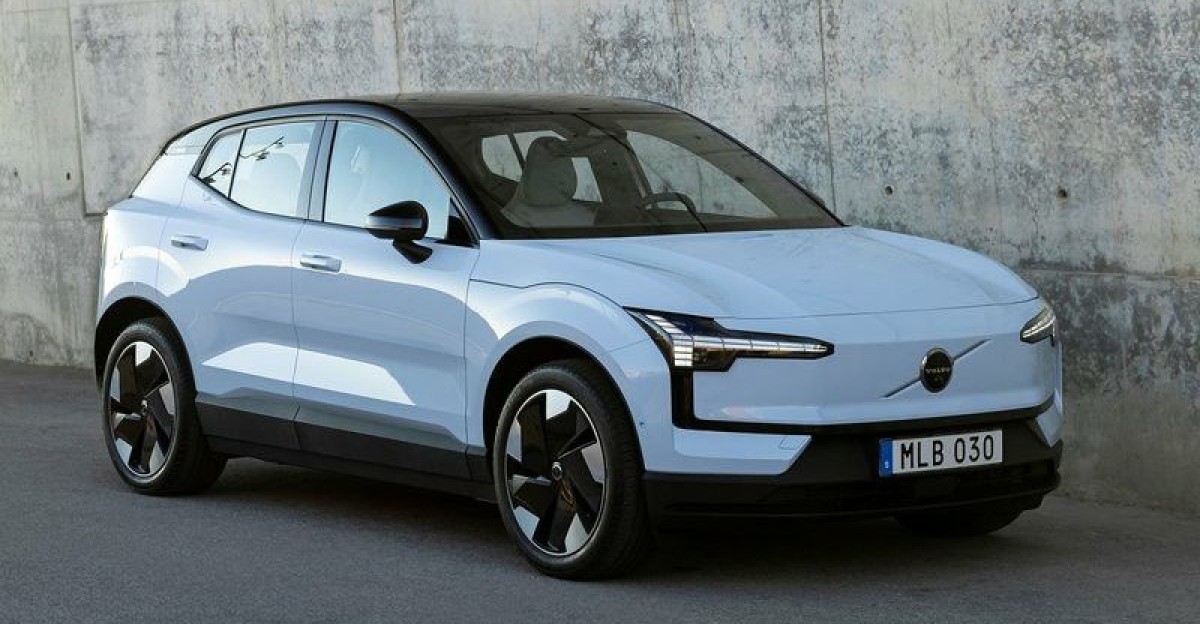
The EX30 isn’t dead. It was the second-best-selling EV in Europe in August 2024, behind only the Tesla Model Y. It’s available in Canada and Mexico today. The exact same car that “couldn’t survive the US market” is doing exactly what Volvo intended, everywhere the US government isn’t involved in pricing it.
A Ghent-built EX30 can cross into Canada and land in a buyer’s driveway for less than it would cost an American 100 miles south of the border. The car’s specs didn’t change. The US-spec Single Motor Extended Range made 248 horsepower and had an EPA-rated range of 275 miles. None of that changed. The border math did.
Volvo Isn’t the Only Brand Doing the Math and Walking Away
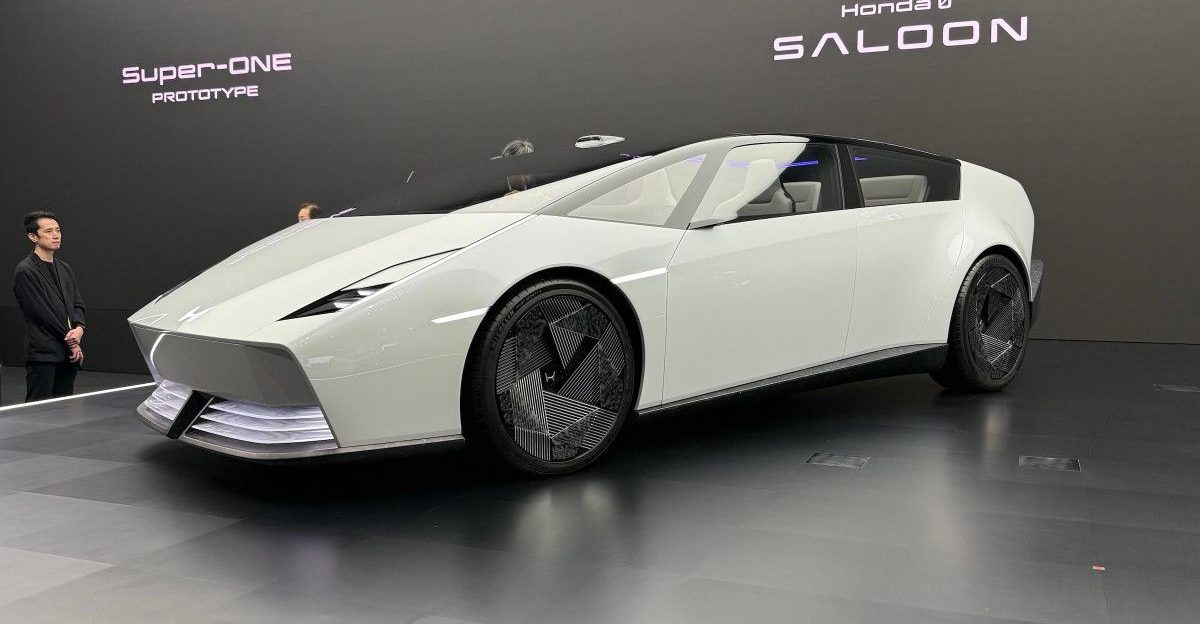
Honda cancelled the 0-Series SUV, 0-Series Saloon, and Acura RSX in March 2026, three EVs that had been planned for 2026 US launches, after projecting over $15 billion in restructuring costs tied to the policy environment. The revived Chevy Bolt, brought back after enormous consumer demand, is set to wind down production by mid-2027 as GM reconfigures that plant.
The EX30 isn’t an anomaly. It’s a template, the preview of how every automaker with an imported, affordable EV eventually runs the same numbers and reaches the same answer.
The Contradiction Nobody in Washington Will Name
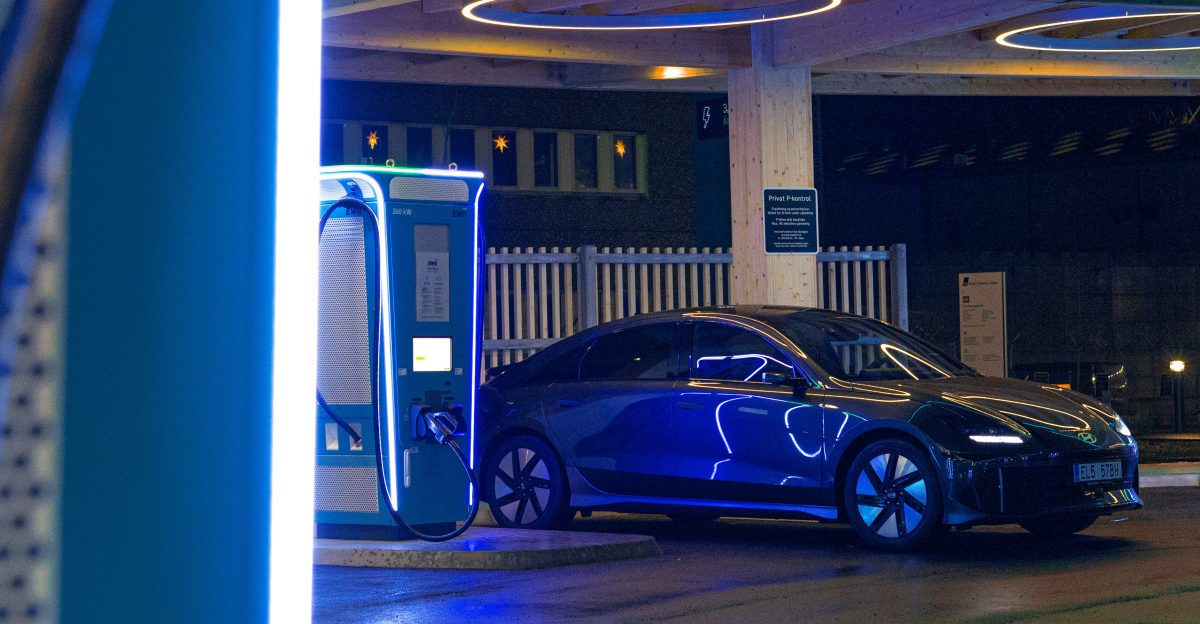
The US spent years building a policy framework to accelerate EV adoption, tax credits, infrastructure funding, and emissions standards. Then it imposed a 100% tariff on the most price-competitive imported EVs, added a blanket 25% levy on all imported vehicles, and eliminated the consumer credit that bridged the affordability gap. Those three moves didn’t strengthen the American EV industry overnight.
What they did was remove the most affordable options from the market and push buyers back toward gasoline or up-market vehicles they didn’t want. The administration is simultaneously demanding domestic manufacturing and penalizing the affordable imports that fill the gap while that manufacturing comes online. Somebody’s paying for that gap.
The Real Lesson the EX30 Leaves Behind
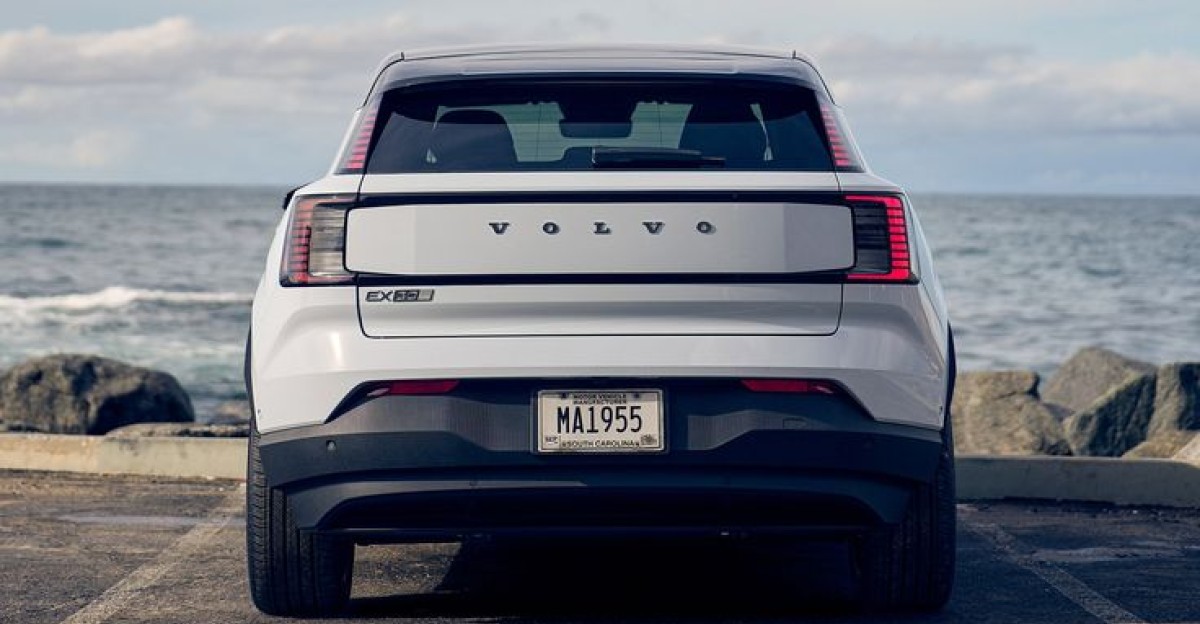
Car launches are now trade-law launches. That’s the EX30’s lasting contribution to automotive history, not its design, not its range, not its World Car of the Year recognition. The lesson is that in today’s US market, the most important spec on a new vehicle isn’t horsepower or charging speed … it’s where it was built, who built it, whether the supply chain passes an eligibility audit, and whether the tariff schedule makes the final price survivable.
The EX30 failed all of those tests, not because Volvo made a bad car, but because Washington rewrote the rules while the car was already in production. That’s the story behind every “discontinued” EV you’re going to read about for the next two years.
Sources
“The Electric Volvo EX30 Is Dead in the U.S. After Just Two Years” — Car and Driver, March 15, 2026
“Volvo is pulling the plug on its entry-level EV in the US” — Business Insider, March 15, 2026
“Volvo to discontinue EX30 in US later this year” — Reuters, March 16, 2026
“Death by Tariffs: Volvo Discontinuing Entry-Level EX30 EV in the US” — CNET, March 16, 2026
“US announces higher China tariffs, including 100% for EVs” — DW, May 13, 2024
“Trump megabill axes $7,500 EV tax credit after September” — CNBC, July 1, 2025