‘It’s One I Try To Forget’ — How Piastri’s Home-Race Crash Reveals the Way Elite F1 Drivers Process Failure
Formula 1 rarely pauses long enough for anyone to process failure. That reality became painfully clear when Oscar Piastri crashed during his home race at the 2026 Australian Grand Prix in Melbourne. In front of thousands of hometown fans, the young McLaren driver saw an entire weekend collapse in seconds before the formation lap even began. Yet within days, attention shifted toward the next race in Shanghai. That rapid turnaround exposes something deeper about elite drivers: failure is processed, contained, and deliberately stripped of power before the next green light.
Home Crowd Horror Before The Grid

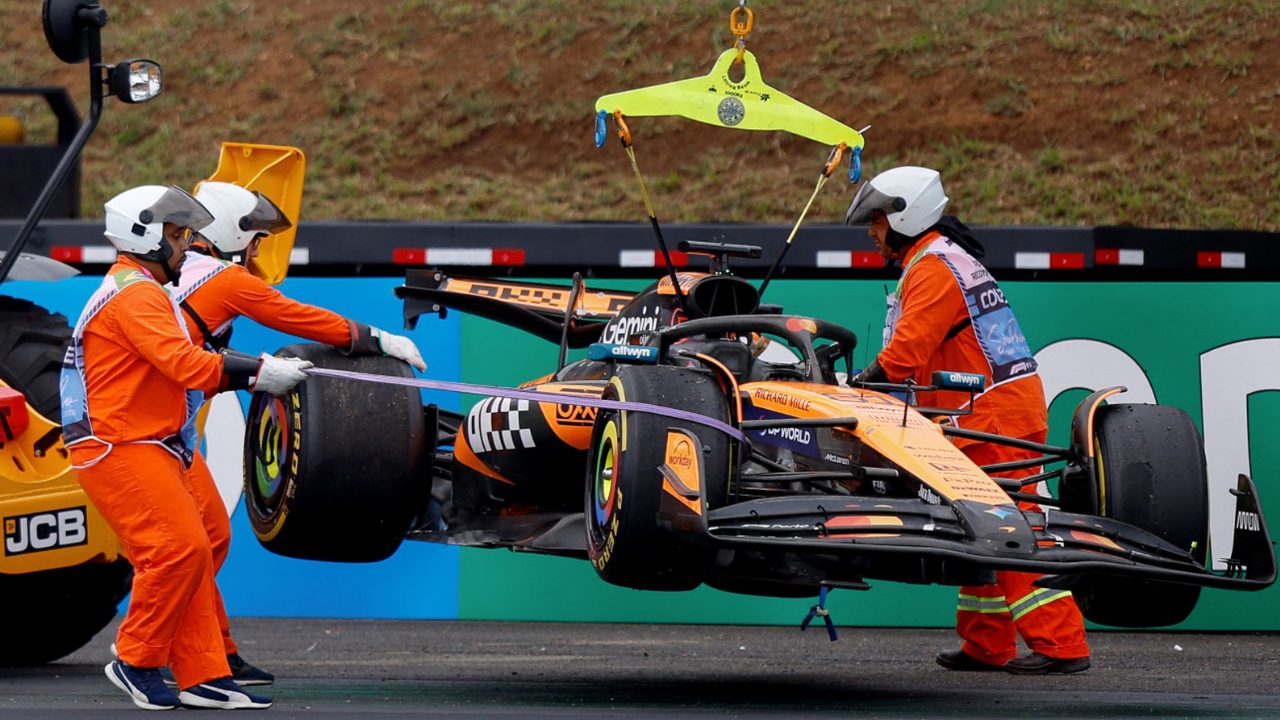
Melbourne. His city. His grandstand, literally the Piastri grandstand. Oscar Piastri’s McLaren MCL40 clipped the exit kerb at Turn 4 on a reconnaissance lap, spun, and slammed into the wall. He never reached the grid. Qualified inside the top five, Piastri saw cameras tracking his face as marshals cleared wreckage. Every F1 driver dreads a DNS. Losing your home race before it starts, in front of your own grandstand, carries a unique weight that championship standings cannot measure.
When Zero Points Rewrite A Weekend
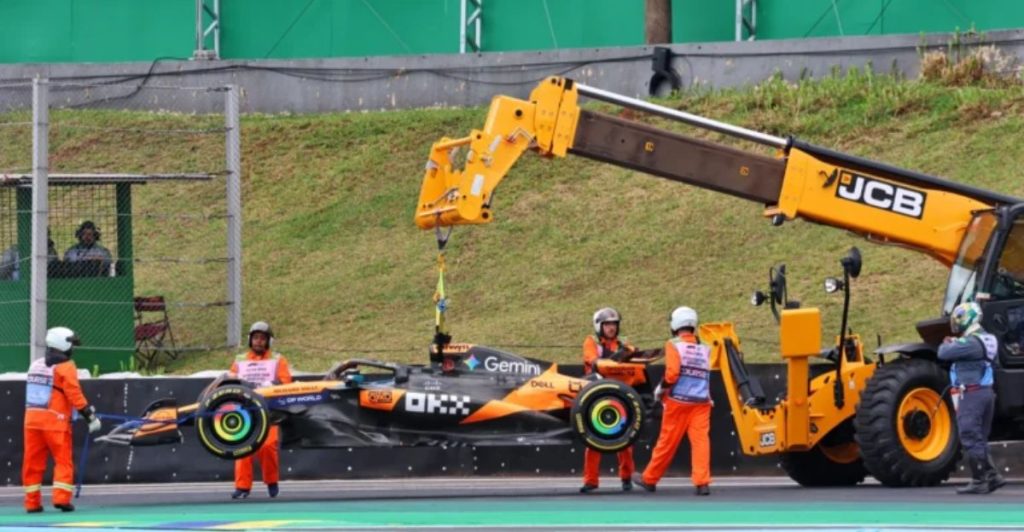
A DNS at your home race doesn’t just cost points. For Oscar Piastri, the crash instantly transformed him from “hometown hero” to “the crash everyone saw.” Racing for McLaren in the FIA Formula One World Championship means official results appear instantly. The 2026 Chinese Grand Prix was only a week away. Piastri’s Melbourne DNS also completed a curious F1 Triple Crown: a DNS in Melbourne, a DSQ in Las Vegas 2025, and a DNF in Azerbaijan 2025, representing three forms of failure across his last nine starts.
The Myth Of Just Moving On

The broadcast narrative is simple: champion mentality, move on, next race. That’s comfortable but misleading. The 2026 F1 calendar compresses recovery into days, not weeks. Melbourne to Shanghai is just one week. Drivers face almost no breathing room between public failure and the next grid slot. Motivation alone cannot bridge that gap. Something mechanical must happen between the wall at Turn 4 and the first braking zone at the Shanghai International Circuit. Without a system, even elite skill cannot erase the weight of a DNS.
Forgetting Without Ignoring

“It was relatively quick to put that behind me — obviously it’s one I try to forget,” Oscar Piastri said about Melbourne. Elite drivers rely on memory, yet forgetting here is a method, not denial. He keeps the data, discards the shame. Piastri explained that cold tyres, the Turn 4 kerb, and 100kW more power than expected after a battery issue caused the crash. “You put all of those together and unfortunately, it ends in the result we got.” Debrief first, then reset—executed step by step under pressure.
How Teams Convert Failure Into Data

F1 teams run structured debriefs that turn crashes into actionable data before embarrassment cools. McLaren isolates controllables from noise. Was it software—the battery deploying unexpected power? Driver input—carrying too much speed over cold tyres? Circumstance—new 2026 torque regulations? Piastri admitted, “A large element of it was just me,” while acknowledging mechanical factors beyond his control. This process is the true recovery mechanism. Not pep talks. Not inspirational quotes. Failures become raw material for preparation before the next green light.
Testing The Reset Protocol

Evidence of Piastri’s reset arrived five days later. Ahead of the Chinese Grand Prix, he told media he was “fine, ready to get back into it.” Statistically, he was only two points worse off than the same stage last year, when he led the championship from Round 5 in Jeddah through Round 20 in Mexico. This comparison reframes the Melbourne DNS as a minor data blip, not a trajectory shift. Round 2 in Shanghai would either validate the reset system or expose cracks. The countdown left almost no time for error.
Preventing Confidence Spirals

Teams without robust reset routines risk one crash triggering a spiral: loss of confidence, conservative driving, slower laps, and mounting pressure. McLaren designed Piastri’s process to prevent exactly this. The stakes are tangible: in Melbourne 2026, teammate Lando Norris finished fifth, 51 seconds behind winner George Russell. The MCL40 is less dominant than the MCL39. Points finishes impact championship standings and constructor payments. A single DNS left unchecked could poison months of preparation under high regulation pressure.
A New Standard Of Mental Recovery

This wasn’t an exception—it’s a visible professional standard. “Forget fast” is becoming the default expectation in high-speed risk work. Piastri’s 2025 season already tested this system: losing a 15-round championship lead, a DSQ in Las Vegas, and still finishing P3 overall. The Melbourne DNS adds another data point to an already stress-tested method. What appears as mental toughness is, in reality, a repeatable recovery protocol. Observers may mistake it for heroism, but it’s structured science under the helmet.
Every New Failure Tests The System
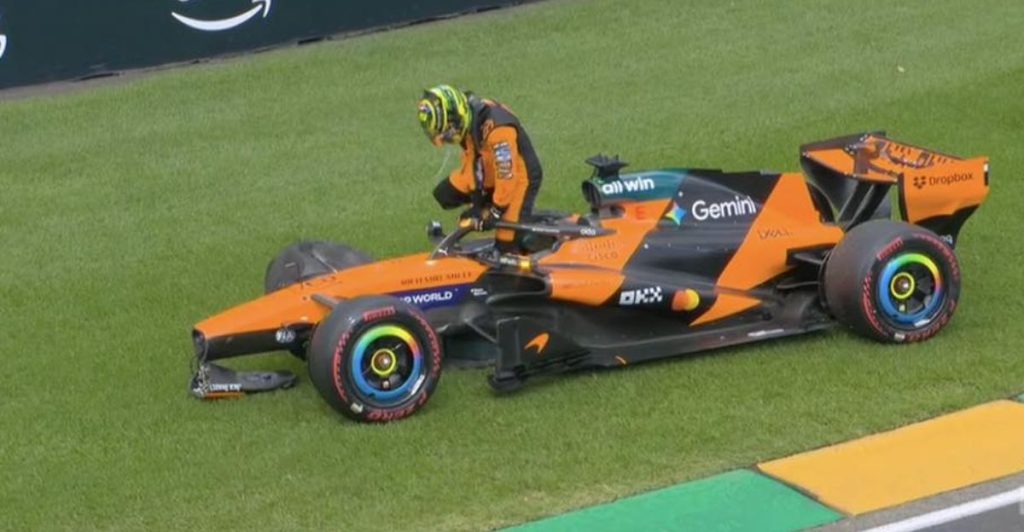
The reset protocol works until it fails. Every subsequent home race, DNS, or DNF tests whether accumulated weight breaks containment. Piastri’s nine recent races include a DNS, a DSQ, and a DNF. That pattern demands the reset architecture perform consistently. Drivers without it face a predictable escalation: crash, doubt, hesitation, lost pace, and more crashes. Piastri’s Melbourne setback built credibility for the next weekend, but the 2026 calendar delivers races at relentless speed. The next wall is always closer than the last recovery, testing both skill and system.
Lessons From 200 MPH To The Office

Piastri didn’t erase the crash; he erased its power over the next lap. “It was relatively quick to put that behind me,” he said, citing metrics, not feelings. Keep the lesson, remove the shame, execute the next attempt. This framework applies at 200 mph or after a failed presentation. The real question: can Piastri and McLaren tighten routines fast enough to offset gaps created by new regulations? The system’s strength is only proven by the next test. This weekend in Shanghai, the next challenge arrives.
Sources:
F1 star Oscar Piastri reveals cause of bizarre Australian Grand Prix crash. GPFans, March 7, 2026
Oscar Piastri secures unwanted F1 Triple Crown after Australian GP nightmare. GPFans, March 10, 2026
Oscar Piastri: McLaren driver unable to start Australian GP after crashing on way to grid. Sky Sports, March 7, 2026
Oscar Piastri ready to move on from Melbourne DNS as 2026 car adaptation crash. PlanetF1, March 12, 2026
How does Piastri bounce back? Hiru News, March 12, 2026