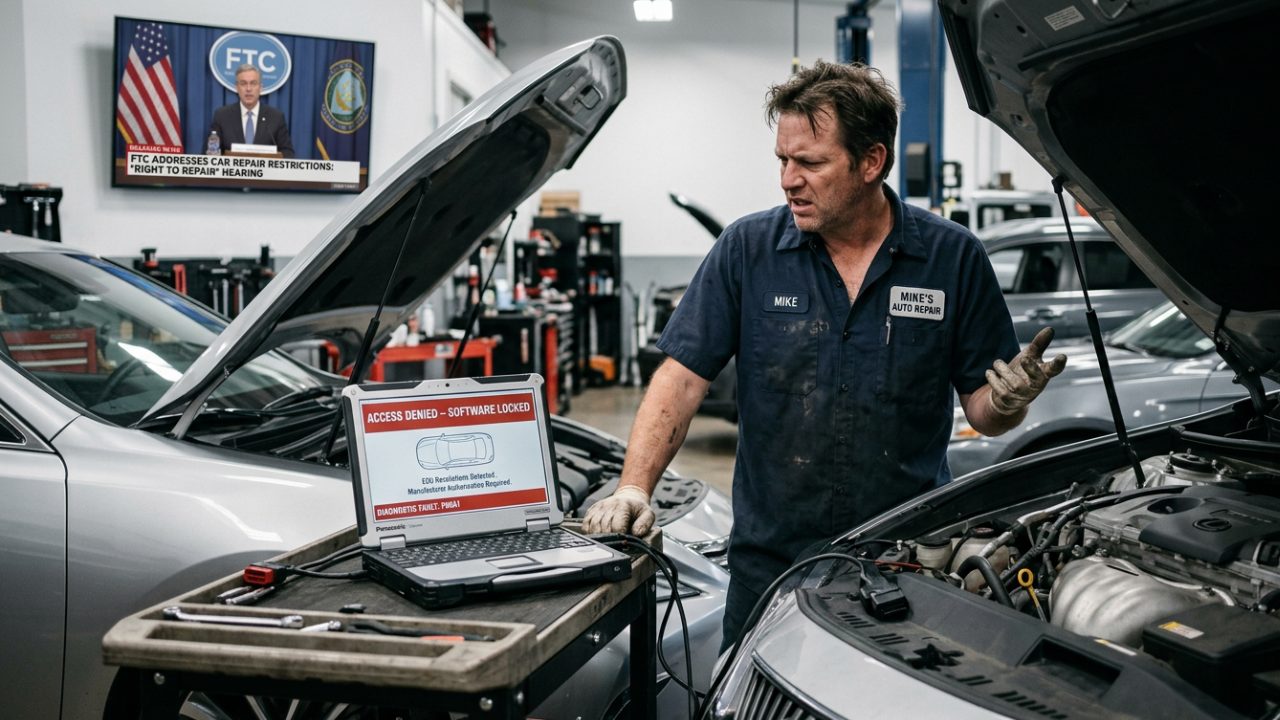
FTC Declares War On Automakers Locking Repairs Behind Software
The Federal Trade Commission voted to ramp up enforcement against automakers restricting vehicle repairs. The Commission stated it will “prioritize investigations into unlawful repair restrictions” under the Magnuson-Moss Warranty Act and Section 5 of the FTC Act. That language matters because it’s a targeting signal aimed at an industry that increasingly gates diagnostics, parts, and fixes behind software permissions. AAA reported average annual new-vehicle ownership costs hit a record high of $12,182 in 2023. The squeeze driving that number runs deeper than sticker price.
The Gate
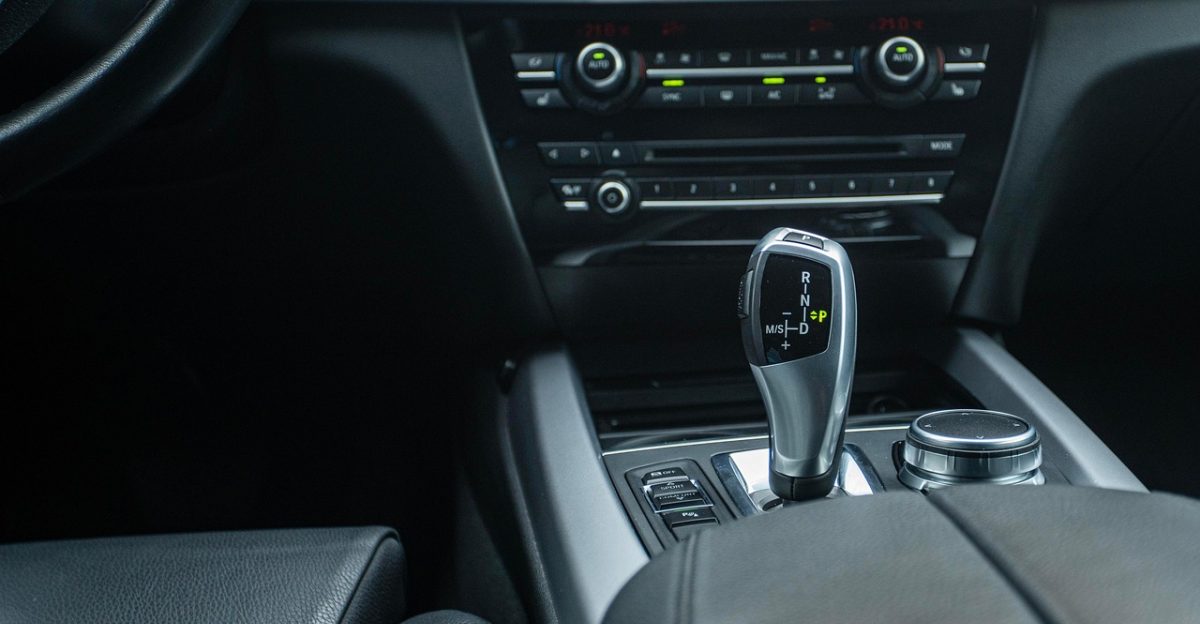
The bottleneck isn’t the bad parts. Modern vehicles run on software, and repairing them often requires manufacturer-controlled diagnostic codes, proprietary tools, and digital permissions. iFixit documents the common barriers: restricted parts, locked manuals, and software that won’t let an independent mechanic run a fix. The DMCA’s Section 1201 makes software access a legal layer on top of a physical repair. Exemptions exist, but they’re narrow and conditional. So the car sits in your driveway, and the code to diagnose it sits behind a wall you didn’t build.
Your Bill

That wall hits your wallet first. The FTC cited evidence that repair restrictions can raise costs and delay fixes, pushing drivers toward dealer-only service at dealer-only prices. BLS data puts the median hourly wage for auto mechanics at $23.01. That’s the labor rate before the shop marks it up, before the proprietary scan tool fee, before the parts surcharge. Roughly $1,015 a month to own and operate a new car, per AAA’s numbers. And a growing share of that monthly burn can be traced to who controls the repair.
Aging Fleet

Businesses and consumers are responding the same way: they’re keeping old vehicles longer. S&P Global Mobility reported the average age of light vehicles in the U.S. reached a record high of 12.5 years. That’s not nostalgia. That’s math. When new-car ownership costs hit records and repair access on newer models is contested, drivers hold onto what they already know how to maintain. The used market absorbs the pressure. Dealerships feel the retention shift. The entire ownership cycle is stretching because the entry cost keeps climbing.
Beyond Cars

The repair-access fight doesn’t stop at the garage. John Deere faced the same pressure from farmers locked out of tractor software, a dispute evident in the company’s own SEC filings that acknowledge regulatory and litigation risks related to repair restrictions. Same mechanism. Different industry. Identical result: the person who bought the machine can’t fix the machine without permission from the company that sold it. Once you see that pattern, the FTC’s enforcement posture stops looking like a car story and starts looking like a property-rights reckoning.
Three Locks

Here’s how the gate actually works. Layer one: copyright law. DMCA Section 1201 treats vehicle software as protected, so accessing it without authorization can carry legal risk even for a physical repair. Layer two: platform control. Manufacturers decide which tools and codes reach independent shops. Layer three: service-channel routing. Known issues get documented in Technical Service Bulletins sent to dealers, not public recalls. Three layers. One outcome. The person holding the keys to your car doesn’t control the fix. That’s the system connecting every ripple on this list.
Locked Out

“The Commission will prioritize investigations into unlawful repair restrictions under relevant statutes such as the Magnuson-Moss Warranty Act and Section 5 of the FTC Act.” That’s the FTC putting manufacturers on notice. Behind that quote are independent shop owners watching their customer base shrink because a sensor code requires a dealer-only scan tool. DIY owners staring at a check-engine light they could diagnose in 2010 but can’t touch in 2024. One sensor failure becomes a dealer-only bill. That fear is already a reality for millions of drivers.
State Battleground

Massachusetts didn’t wait for Washington. Chapter 93K of state law requires motor vehicle manufacturers to provide owners and independent repair facilities access to repair information on fair and reasonable terms. The Massachusetts Attorney General issued guidance about compliance with the state’s right-to-repair requirements. That statute proves the gate is regulatory, not purely technical. If one state can compel access, the precedent pressures every other state. The escalation path is visible: patchwork state laws force federal enforcement actions, which force OEM policy shifts. The rules of car ownership are being rewritten right now.
Winners and Losers

The losers are obvious: independent shops and DIY owners squeezed out of repair access, plus every family absorbing record-high ownership costs. The winners are less obvious. Closed repair networks and restricted-access service programs benefit every time a driver has no choice but to go to the dealership. Some automakers are expanding “authorized” repair programs, which sounds like progress until you notice they can limit full tool and code parity. The appearance of openness, without the substance. Knowing the difference between access and controlled access is worth more than any coupon.
Not Over

The cascade keeps moving. More complaints will trigger more enforcement attention. Manufacturers face a choice: standardize repair access or defend closed systems in court. The FTC’s posture, state-level mandates, and DMCA exemption battles are converging on the same question: Does buying a car mean owning the right to fix it? Reliability used to be an engineering outcome. Now it looks more like a policy choice. The person who understands that distinction walks into the dealership, the voting booth, and the repair shop with a different kind of leverage.
Sources:
“Policy Statement of the Federal Trade Commission on Repair Restrictions.” Federal Trade Commission, 21 Jul. 2021.
“Your Driving Costs 2023.” AAA, 30 Aug. 2023.
“Average Age of Light Vehicles in the US Hits Record High 12.5 Years, According to S&P Global Mobility.” S&P Global Mobility / PR Newswire, May 2023.