EV Market Crashes 50% After Fed Admits EV Fuel Numbers Were ‘Designed To Look Extraordinary’
Every EV sold in America carried an impressive miles-per-gallon-equivalent number on the window sticker. 120 MPGe. 140. Sometimes north of 200. Those consumer-facing figures were calculated using EPA energy-content formulas. But behind the scenes, a separate federal compliance formula inflated EV fuel economy scores even further for the regulatory math that drives automaker production decisions. That compliance formula had been running unchallenged for more than two decades. Then a federal court looked at the math.
How the Formula Actually Worked
The Department of Energy embedded a fuel content factor multiplier of approximately 6.67 into EV compliance calculations starting in the early 2000s. An electric vehicle with a real-world petroleum equivalent of roughly 30 mpg got scored as approximately 200 mpg for CAFE purposes. That roughly 567% boost over the underlying number wasn’t a rounding error. It was baked into the regulatory architecture, originally authorized for ethanol and compressed natural gas under a 1988 law, then extended to electricity without explicit Congressional approval. For about 25 years, nobody in Washington successfully challenged it. Automakers built entire production strategies around that inflated score. Critics argue the multiplier was designed to make EV compliance numbers look extraordinary on paper compared with their actual energy equivalence.
Everything Fell Apart at Once
In September 2025, the 8th U.S. Circuit Court of Appeals ruled the fuel content factor unlawful, finding the Department of Energy had exceeded its statutory authority by retaining it. That same month, federal EV tax credits of $7,500 for new vehicles and $4,000 for used expired under the One Big Beautiful Bill Act. The Biden administration had proposed phasing the multiplier out over several years. The Trump administration chose a different path: immediate elimination with essentially no transition period, announced in February 2026. By declaring the fuel content factor unlawful and forcing DOE to scrap it, the courts and regulators effectively conceded that the old EV compliance math overstated efficiency in a way that could no longer stand. The subsidy vanished. The accounting advantage followed it.
A 50% Crash From the Peak
Car Coach Reports put it plainly in a commentary segment: “If you believed your electric vehicle delivered the equivalent of 120 or 140 miles per gallon, you weren’t naïve. You were reading numbers the federal government designed to look extraordinary.” That’s an opinionated way of describing a real compliance multiplier that boosted EV scores by a factor of about 6.67 in the regulatory math. EV market share spiked to approximately 12% in September 2025 as buyers rushed to capture expiring credits, then fell to approximately 6% by January 2026. That’s roughly a 50% crash from the artificial peak created by last-minute credit shopping. Measured against earlier 2025 averages, the drop is smaller but still significant. Automakers announced billions in EV-related write-downs and paused or canceled some battery factory construction across the country.
Why Automakers Built Cars Nobody Asked For
The multiplier was never about informing consumers. CAFE compliance math drives production strategy. Each EV sold effectively counted as many conventional vehicles toward fleet average targets, creating intense pressure to manufacture electric cars whether buyers wanted them or not. When the Trump administration proposed reducing CAFE standards from 50.4 mpg to 34.5 mpg, the compliance incentive began evaporating from both directions. Automakers wouldn’t need the inflated EV credits anymore, and they wouldn’t need to hit the old target. The forced-production machine began switching off.
The Math Without Subsidies
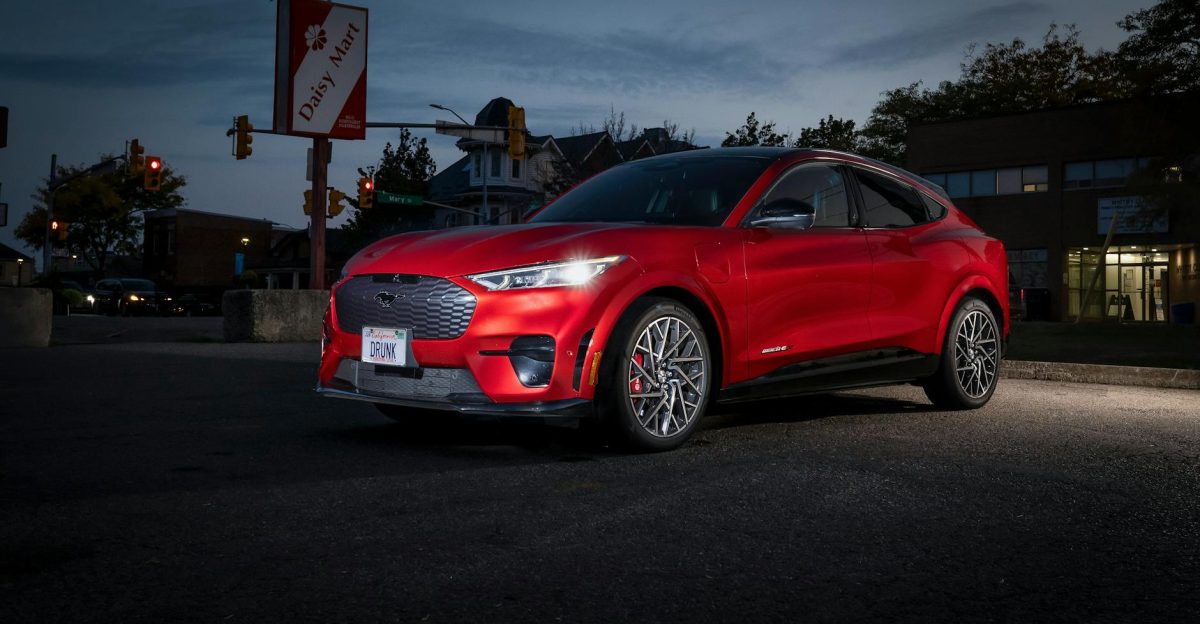
Strip away the subsidies and the compliance pressure, and the raw economics get much tougher. New EVs have generally carried higher average transaction prices than comparable internal combustion vehicles, even as the price gap has narrowed. Ford’s Model e division alone posted about $4.8 billion in EV losses for 2025. Industry reporting shows that, even with incentives, many legacy automakers’ dedicated EV divisions have been consistently loss-making, prompting write-downs and delays to planned capacity. Regulatory math made building them feel mandatory. Remove the mandate, and the losses become optional.
The Damage Keeps Spreading
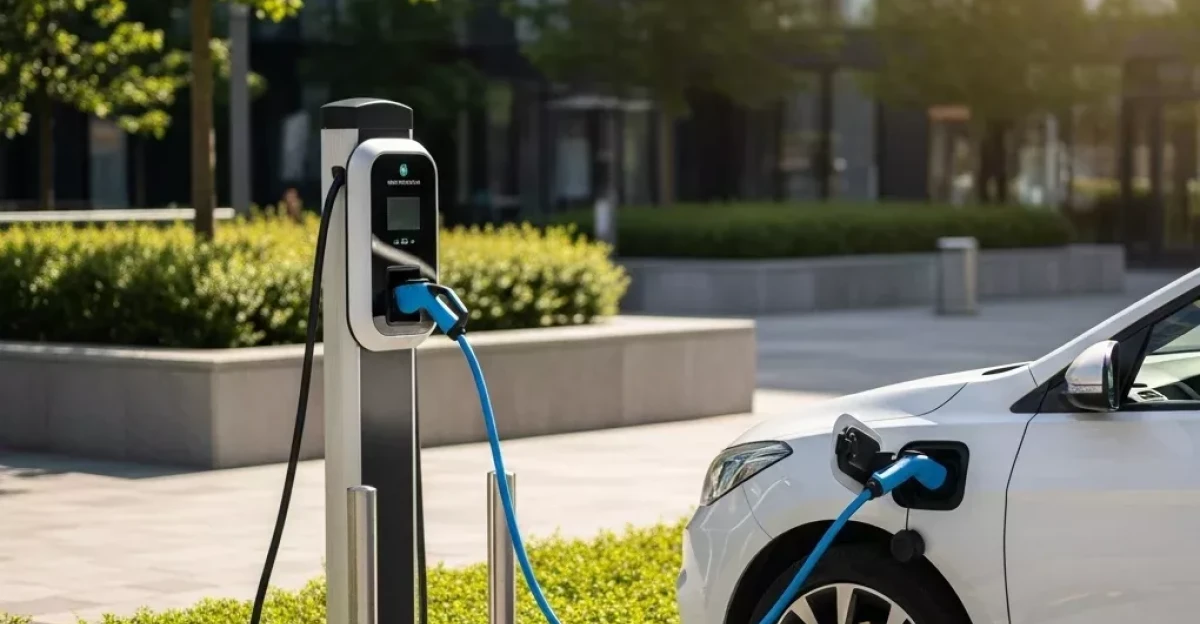
The damage radiates outward. Battery suppliers who scaled for a market near its 2025 peak now serve a much smaller one. Charging network expansion stalled mid-construction in some regions. Used EV resale values came under pressure as new buyers hesitated and supply built up in the secondary market. The EPA repealed the 2009 Greenhouse Gas Endangerment Finding that had underpinned 17 years of federal vehicle emissions regulations, with the administration arguing its broader deregulation package would deliver significant savings for Americans. Workers in battery plants and EV component facilities faced layoffs within months of the regulatory reversal.
A Precedent Was Set
This wasn’t an exception. It was a proof of concept. For a quarter century, compliance accounting multipliers helped push an entire industry to manufacture products many consumers might not have chosen at full market price. The moment a court declared the accounting framework unlawful and the government pulled the subsidies almost simultaneously, demand fell back toward its pre-spike baseline in roughly 120 days. That sequence establishes a precedent: regulatory multipliers built on accounting boosts rather than on organic demand are fragile systems. One legal challenge plus one subsidy cut can trigger a rapid market reversion.
Two Americas for Car Buyers
California and allied states are already moving to impose their own EV mandates through state-level emissions standards, setting up a potential Supreme Court battle over whether states can enforce fuel efficiency requirements the federal government abandoned. If states succeed, America fragments into two automotive markets with different compliance regimes. Automakers would face dual engineering and production lines, a cost problem that could push vehicle prices higher for everyone. The administration has touted per-vehicle savings from deregulation, but how much drivers actually save will depend on the legal fights ahead.
Only Engineering Can Save EVs Now
EV manufacturers have one countermove left: bring down costs and prices until the economics work without subsidies or regulatory crutches. Battery cost reduction is the only path to competing on physics rather than policy. The real number most people still don’t understand is that 6.67 multiplier. It means every EV “success story” of the past 25 years was measured on a scoreboard that gave them a multi-fold compliance boost. Now the scoreboard reads closer to actual energy equivalency, and the market is sending clearer signals. Whether those signals ultimately favor electric or gasoline depends on engineering, not Washington.
Sources:
“State of Iowa v. Wright, No. 24-1721.” U.S. Court of Appeals for the Eighth Circuit, 5 Sep 2025.
“DOE Revises EV Fuel Economy Factor Following Court Ruling.” U.S. Department of Energy, interim final rule summary, 19 Feb 2026.
“EV Market Monitor – September 2025.” Cox Automotive Inc., 21 Oct 2025.
“Ford Motor Reports 2025 Earnings Plunge Due to Various Challenges.” The Courier-Journal, 10 Feb 2026.