Toyota Cuts 40,000 Vehicles From Middle East—World’s Largest Automaker Freezes $4.8B Market
Somewhere in the Persian Gulf, approximately 200 commercial vessels sat anchored and going nowhere. The Strait of Hormuz, a corridor carrying approximately 20% of the world’s daily oil supply, had ground to a near-total standstill following Iran’s formal closure declaration, with traffic effectively halted. MSC, Maersk, CMA CGM, and Hapag-Lloyd all suspended transits. No ships are moving. No insurance available. And inside Toyota’s headquarters, executives faced a decision that would ripple across three continents.
Loaded Pipeline
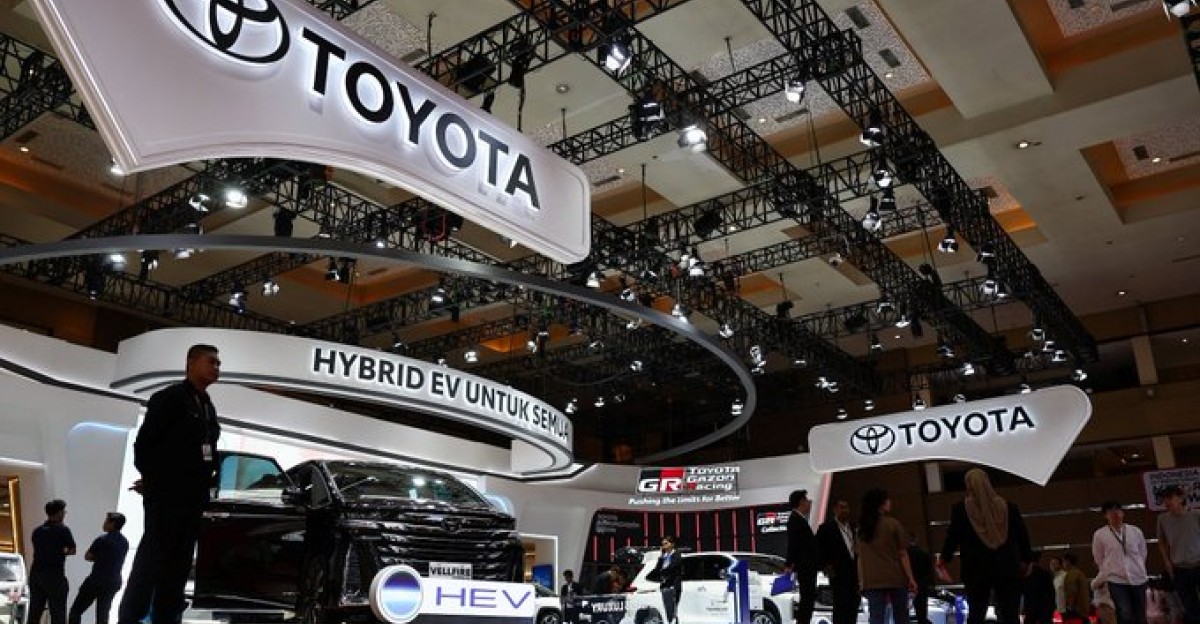
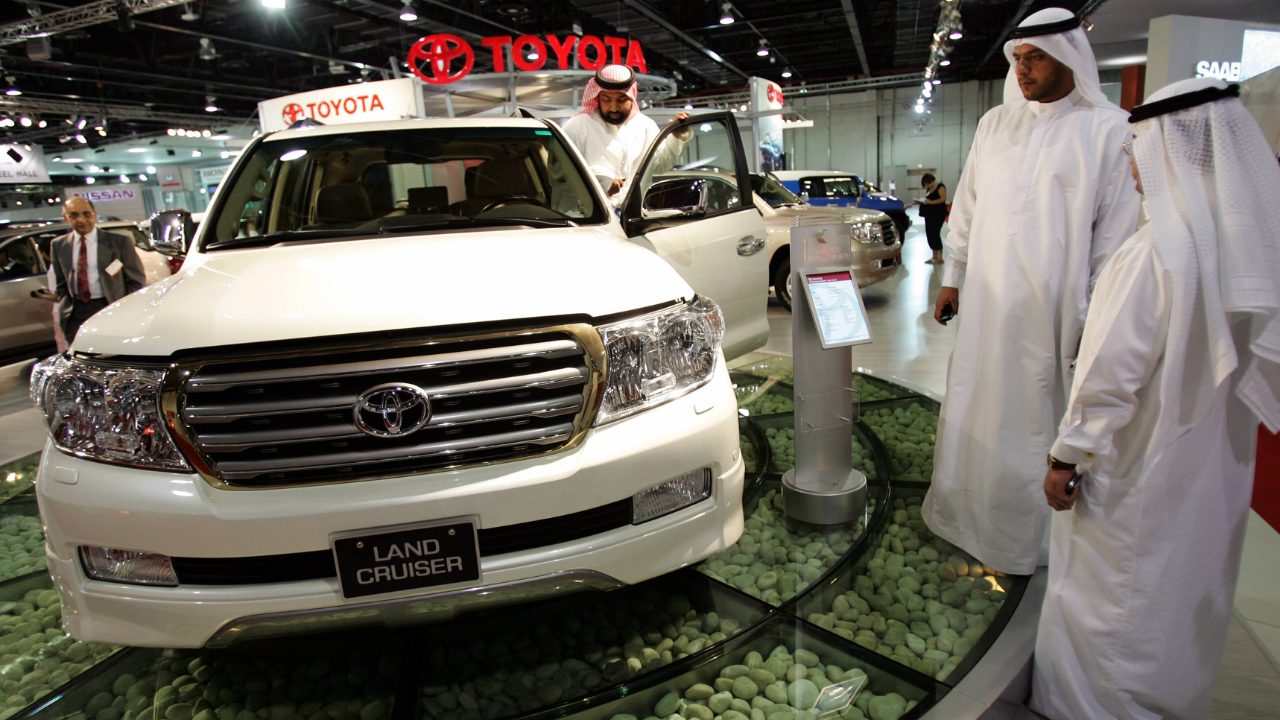
Toyota shipped 320,699 vehicles to the Middle East in 2025, a 5% increase over the prior year. The region absorbs approaching 3 million new vehicle sales annually, a market valued at $112.5 billion. Saudi Arabia accounts for 28.3% of that volume. The UAE takes 24.3%. Toyota owned the corridor. Priced 14% below the industry average at $43,208 per vehicle, the company had built a pipeline calibrated to move product fast and lean. That leanness was about to become a liability worth billions.
Efficiency Trap
Three decades of just-in-time manufacturing cut automotive costs by roughly 30%. Inventory buffers shrank. Suppliers concentrated. Every link in the chain tightened until the whole system depended on corridors nobody treated as strategic facilities. The Strait of Hormuz never appeared in procurement strategy documents. It was abstract, invisible, assumed. Then the U.S. and Israel launched coordinated strikes on Iran starting February 28, with multiple waves of airstrikes continuing through early March. Optimization, it turned out, had been building a trap disguised as a best practice.
The Cut
Toyota will cut nearly 40,000 vehicles from Middle East production across March and April 2026. That represents 12.5% of Toyota’s annual regional volume, gone in a single announcement. War risk insurance premiums surged from approximately 0.2% to 1% or higher of vessel value. Multiple P&I clubs canceled coverage entirely. Rerouting around Africa’s Cape of Good Hope adds 10 to 14 days per voyage. The world’s most efficient supply chain didn’t adapt. It retreated. And the retreat confirmed what the insurance market already priced in: this freeze has no scheduled end.
Broken Hedge
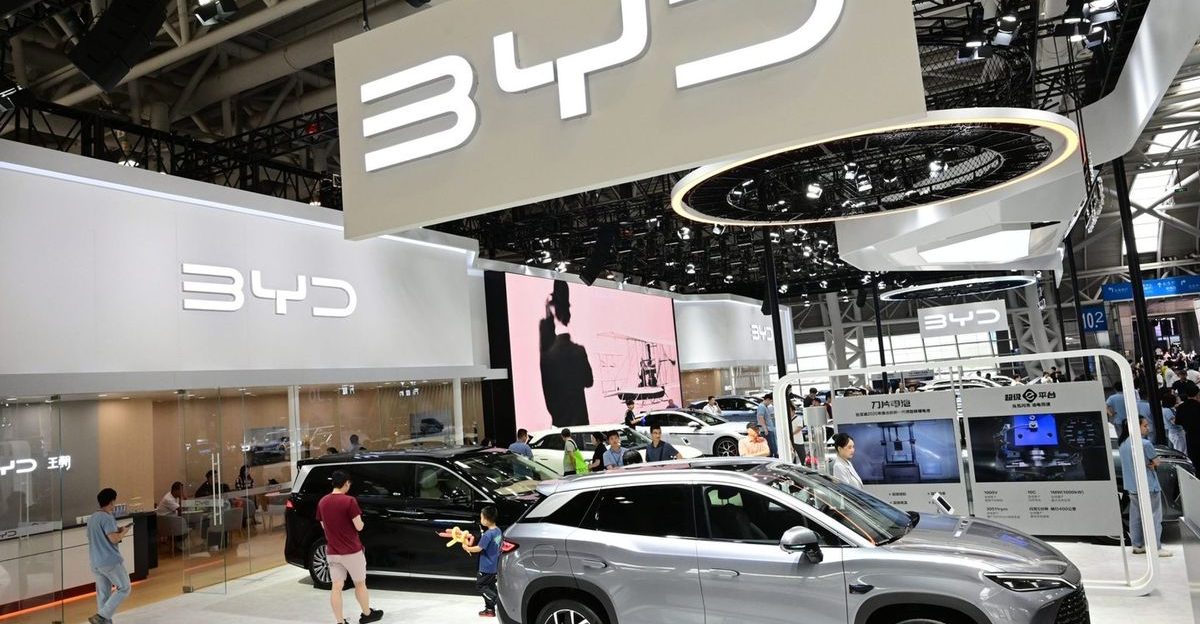
Here is where Toyota’s story turns bitter. For years, Toyota has publicly criticized Chinese automakers’ “lax environmental and labor standards” to justify delaying EV adoption. The company positioned supply chain ethics as a competitive moat. Then the 2026 Lead the Charge scorecard landed: Geely scored significantly higher than Toyota on both environmental and human rights metrics. BYD also scored significantly higher than Toyota overall. The companies Toyota called reckless scored higher on the very principles Toyota claimed to champion.
Numbers Don’t Lie
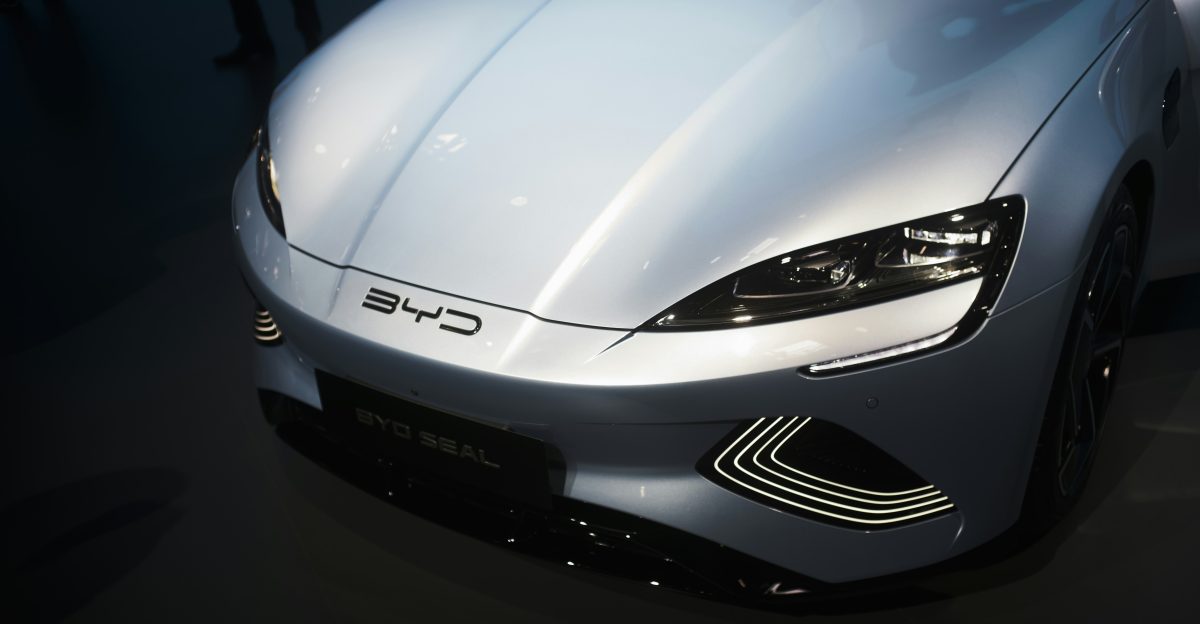
While Toyota pulled vehicles off production lines, BYD’s overseas exports surged more than 150% year over year. BYD’s gains were not a rising tide lifting all Chinese boats; vertical integration was the differentiator. BYD won on vertical integration: batteries, platforms, cost structure, all in-house. Oil prices spiked sharply. Natural gas costs surged. Saudi Arabia’s Aramco took precautionary measures at the Ras Tanura refinery following reported drone activity in the area. Qatar implemented precautionary measures at gas production facilities. The region’s energy infrastructure was under attack alongside its shipping lanes.
Ripple Zone
Toyota is not alone in the blast radius. Hyundai Motor India sends approximately 50% of its $1.8 billion in exports to the Gulf region. India’s entire automotive sector accounted for 25% of $8.8 billion in car exports to the Middle East. China accounted for 17% of total passenger vehicle exports through the region. Analysts predict supply chain resets extending into summer 2026. Multiple major automakers changed CEOs within the past 12 months, driven by tariffs, Chinese competition, and exactly this kind of structural exposure.
New Rule
This is not an exception. This is a precedent. Energy analyst Robert McNally put it plainly: “A prolonged closure of the Strait of Hormuz is a guaranteed global recession.” Hyundai’s planned Saudi Arabia assembly plant, 50,000 units annually launching late 2026, suddenly looks less like expansion and more like a survival strategy. Localized manufacturing now carries a competitive advantage that export-dependent models cannot match. The old truth was that optimization equals resilience. The new truth is that independence from single chokepoints equals survival.
No Exit
The U.S. Maritime Administration warned vessels to avoid the Persian Gulf entirely. Government proposals to offer political risk insurance through the International Development Finance Corporation landed flat. As Morningstar DBRS noted, “insurance cover does not reduce the underlying physical risks faced by crews and ships.” Naval escort capacity cannot handle the dozens of large tankers that normally transit daily. If the Strait closure persists beyond April 2026, analysts suggest Toyota could announce a second, larger production cut within 30 days, with cascading effects across Hyundai, Nissan, and Honda.
Power Shift
U.S. auto sales are forecast to contract in 2026, even as average car payments are already at multi-year highs. Those numbers will worsen as shipping cost shocks compress margins and manufacturers pass increases to consumers. Meanwhile, BYD’s vertical integration model, the one Toyota spent years dismissing, just proved it can gain export momentum at scale while Japanese supply chains freeze solid. The automaker that built its reputation on efficiency is now watching companies with cheaper cost structures and regional independence eat its market share in real time.
Sources:
“Toyota Motor to Cut Output for Middle East by Nearly 40,000 Vehicles.” Reuters, 5 Mar. 2026.
“The War in Iran Could Lead to a ‘Guaranteed Global Recession.'” Fortune, 2 Mar. 2026.
“China, India Lead Car Exports Worth Billions of Dollars to the Middle East.” Reuters, 5 Mar. 2026.
“2026 Leaderboard Report: Automaker Scorecard Shows an Even Cleaner EV Within Reach.” Lead the Charge, 1 Mar. 2026.