
Ford F-350 Hits $105K As CEO ‘Totally Regrets’ Lightning Bet—11K Layoffs Projected
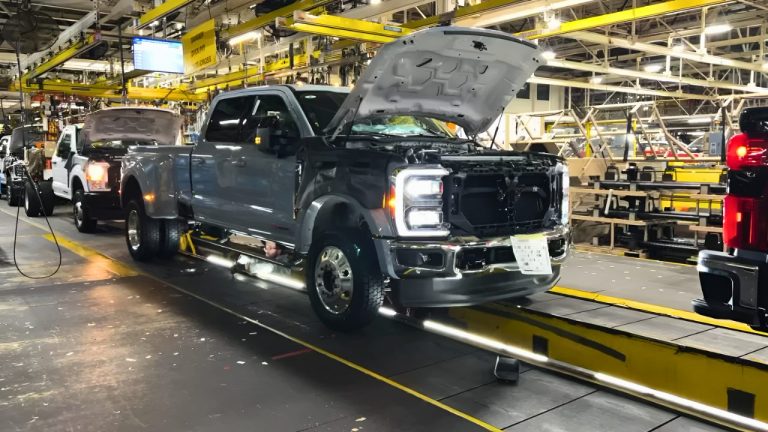
The price tag on the F-350 Platinum read $105,660. An automotive reviewer walking the lot stopped cold. “Man, these used to never be over $100,000.” That single sentence, spoken while scanning rows of unsold trucks baking under dealership lights, captured something bigger than one overpriced pickup. Ford’s F-Series sold 828,832 trucks in 2025—an 8.3% increase and its 49th consecutive year as America’s best-selling truck—but the lots were still full, and the buyers were starting to disappear.
The Affordable Truck That Wasn’t
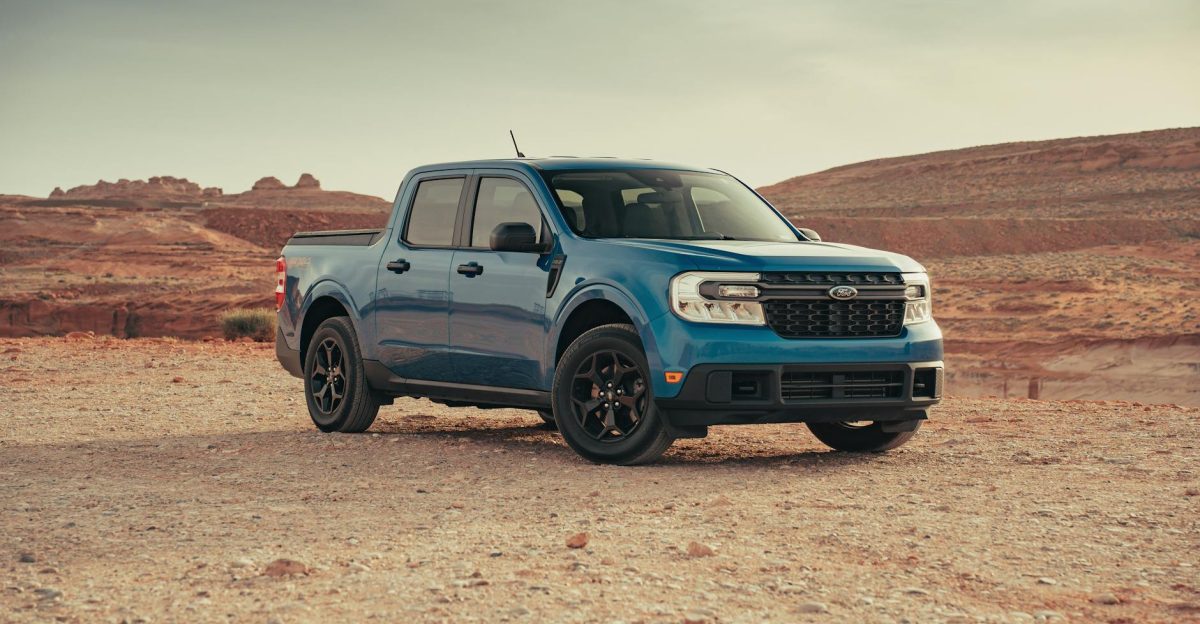
Ford launched the Maverick as a $20,000 truck. The pitch was simple: affordable, accessible, built for people priced out of the truck market. By March 2026, that same Maverick sat on dealer lots at $28,145 on the low end—a roughly 41% increase over the original sticker—with loaded Lariat trims now pushing past $40,000. “So, $42,000 for a Maverick is kind of insane to me,” one reviewer said. “And I can see why they have so many sitting on the lots right now.”
Nineteen and a Half Billion Dollars Gone

In a March 2026 interview with Car and Driver, Ford CEO Jim Farley said of the F-150 Lightning launch: “I totally would’ve done it differently.” FordAuthority framed the admission as Farley “totally regretting” the flagship EV pickup.
When The Remarks Landed

The remarks landed after Ford announced a $19.5 billion write-down on EV investments in December 2025. After Ford terminated a $6.5 billion battery supply contract with LG Energy Solution. After Ford and SK On dissolved the BlueOval SK battery joint venture entirely. Ford has discussed plans for a next-generation Lightning successor, but the current ledger reads: one CEO, one flagship bet, nineteen and a half billion dollars written down.
Built in America, Punished for It
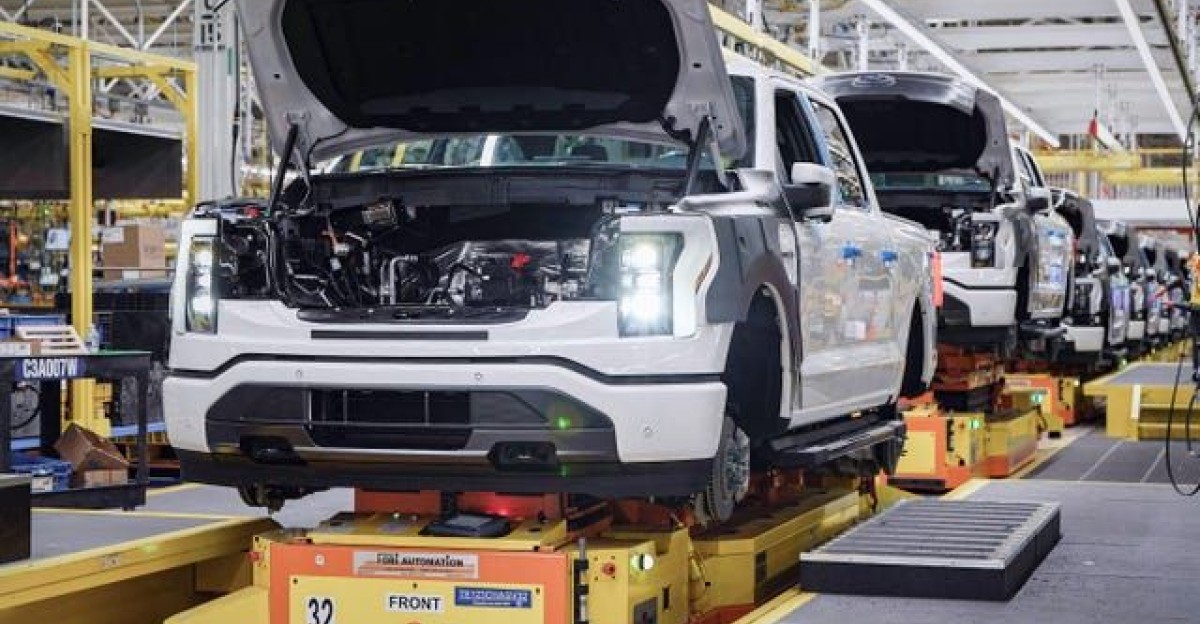
Ford’s hidden problem is structural. The company manufactures roughly 80% of its vehicles in the United States, which sounds patriotic until tariffs on imported components hit. Ford estimated its 2025 tariff exposure at approximately $1.5 billion after mitigation efforts. That figure was lower than some competitors—GM warned of $4 to $5 billion in tariff exposure—but it still compressed margins already thinned by aggressive discounting. Ford raised prices to absorb the costs. Customers walked.
The Bleeding Won’t Stop

The financial damage stacked in layers. Ford’s market capitalization stood at approximately $53 billion at the end of 2025 and had slipped to roughly $48 billion by early March 2026. Ford’s F-150 remained America’s top-selling truck for the 49th consecutive year, and even that crown couldn’t stop the bleeding.
Families Pay the Price

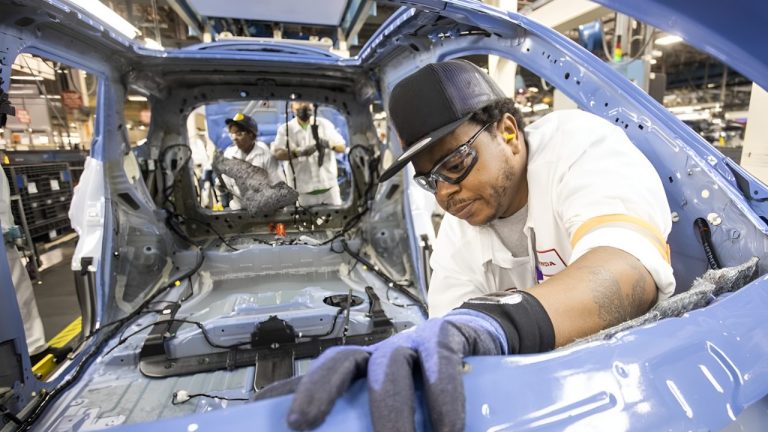
Ford has already begun cutting jobs tied to its EV restructuring. The company confirmed roughly 1,000 layoffs at its Cologne, Germany electric vehicle plant in 2025 amid weak EV demand. Analysts project Ford could cut an additional 8,000 to 11,000 workers in 2026 as plant retooling from the canceled EV strategy continues.
More Than Numbers
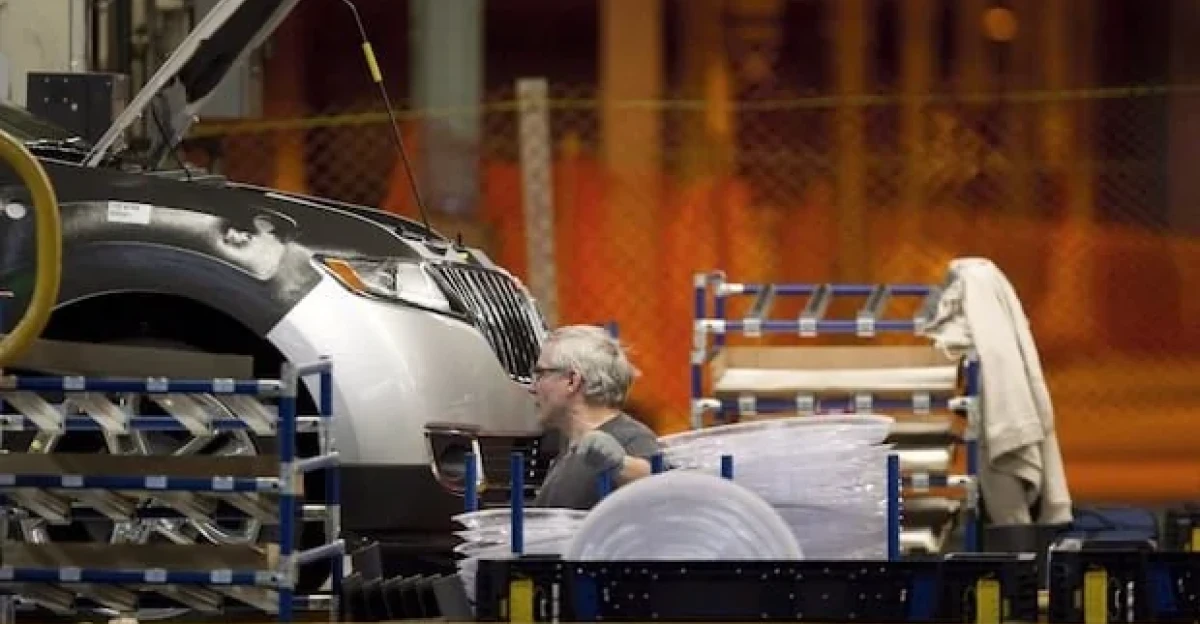
Those aren’t spreadsheet numbers. They’re families in Michigan, Kentucky, and manufacturing towns built around Ford plants. Meanwhile, a fire at a Novelis aluminum plant in September 2025 exposed another fracture: that facility was a major supplier of automotive aluminum sheet for Ford. The fire disrupted F-150 production and exposed the fragility of Ford’s supply chain.
Everyone Else Is Watching

Ford’s retreat set a precedent that extends beyond Dearborn. A CEO publicly admitting he would have done his own flagship strategy differently proves it. Ford bet on tariff protection, EV dominance, and U.S. manufacturing advantage simultaneously. The $19.5 billion write-down, the dissolved battery ventures, and the shelved EV plans tell the story. That pattern may repeat across the industry as legacy automakers reassess their own electrification timelines.
What Comes Next

Ford’s crisis reveals what happens when a legacy manufacturer loses multiple strategic bets at once. The company that wrote down $19.5 billion in EV investments now faces the question of where its next competitive advantage comes from. The counter-move is still forming. Knowing that framework puts you ahead of every analyst still calling this a rough quarter.
Sources:
“Ford’s $19.5 billion EV writedown: five things to know.” Reuters, 15 Dec 2025.
“Ford’s market share rises as F-Series maintains top truck position.” Investing.com, 6 Jan 2026.
“Ford Says Tariffs Will Cost Company $1.5 Billion in 2025.” The New York Times, 5 May 2025.
“Ford will cut 1,000 jobs at Cologne plant amid weak EV demand in Europe.” CBT News, 15 Sep 2025.