Automaker’s First-Ever Pickup Is A Ford F-450 With Yellow Paint—AI Slop Images Exposed
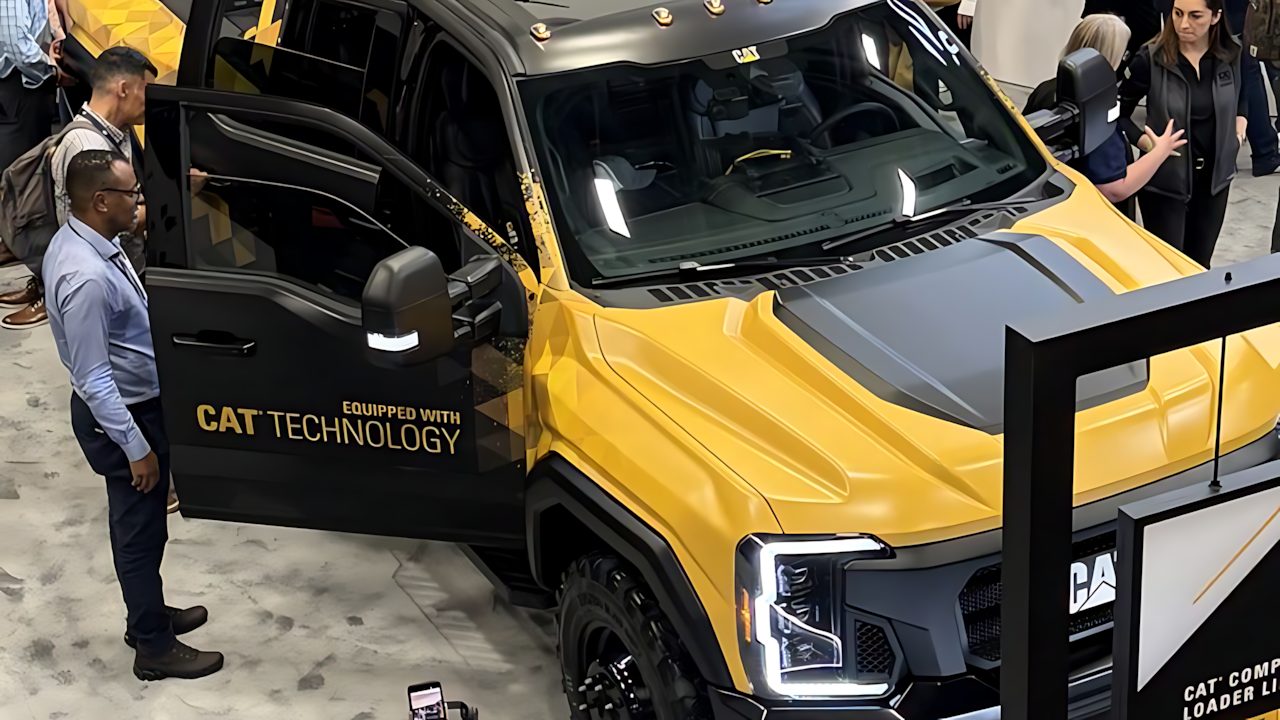
The yellow tarp came off under Las Vegas lights at CONEXPO 2026, and the crowd saw something Caterpillar had never shown anyone before: a pickup truck. Custom grille. CAT badges on the fenders. A drone launcher bolted to the roof rack. For a company that spent a century building dozers and excavators, this was supposed to be the moment it crossed into truck country. The 6.7-liter Power Stroke diesel underneath told a different story than the badges suggested.
It Started With Fake Pictures
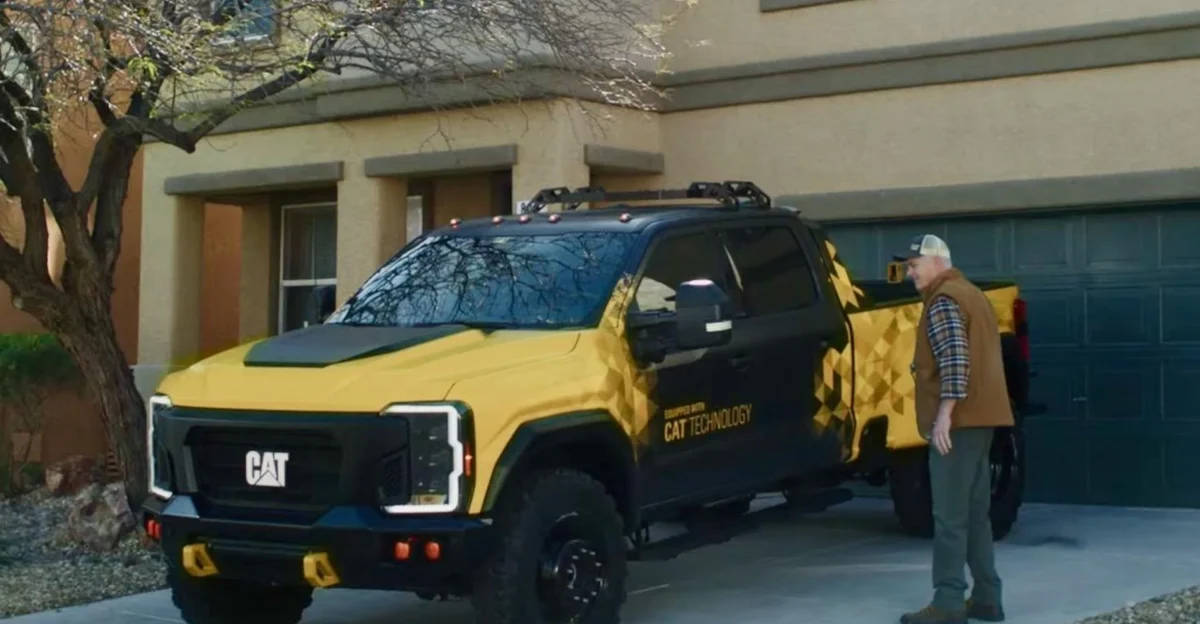
The whole project started with fake pictures. AI-generated images of a CAT-branded truck flooded social media in late 2024, and Caterpillar’s own press release admits what happened next: “Thousands of inquiries flooded in from customers, contractors, and equipment owners.” Computer-generated images that no engineer designed and no factory produced created enough noise that a company worth more than $150 billion treated them as a market signal. CAT listened to demand that never existed for a product that never did either.
The Engine That Never Was
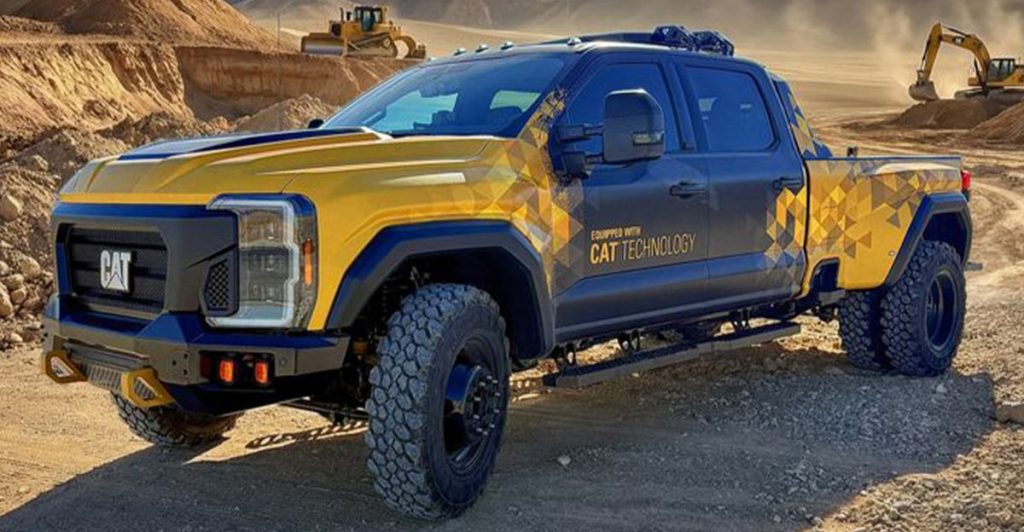
The demand may have been phantom, but the internal plans were real. In 2024, an internal CAT source claimed the company was developing custom V6 and V8 engines for the truck, with pricing between $59,000 and $89,000 depending on the variant. Proprietary powertrains. Consumer price points. A genuine manufacturing commitment from a company that builds its own diesel engines for machines weighing 100,000 pounds. That version of the CAT truck died somewhere between the rumor and the reveal.
Ford on the Inside
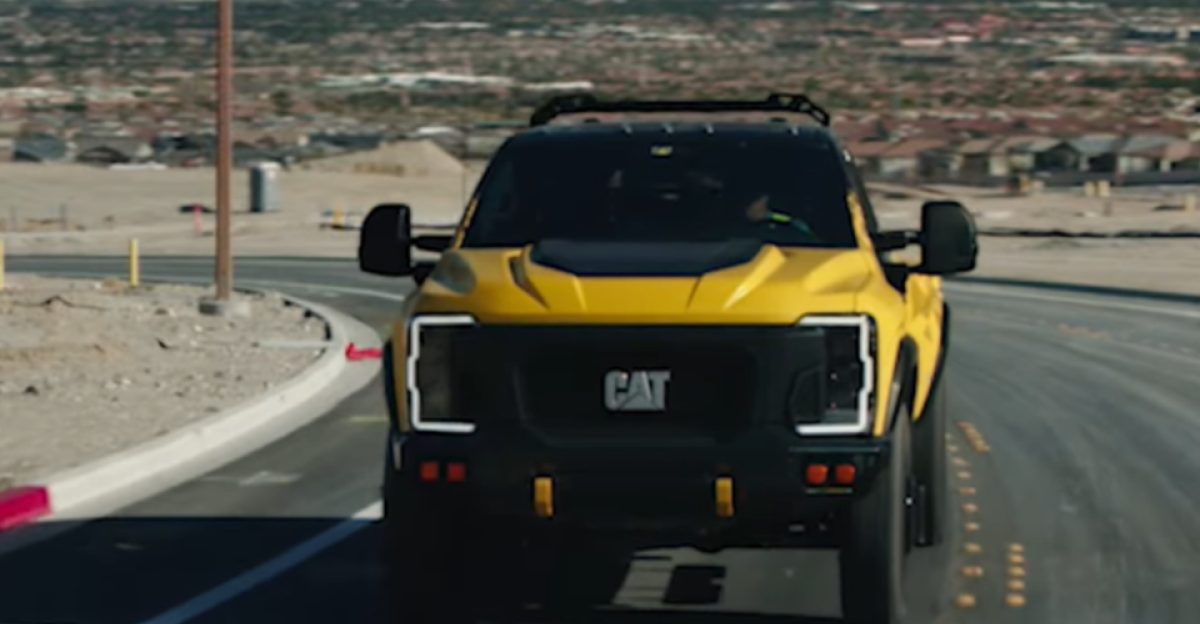
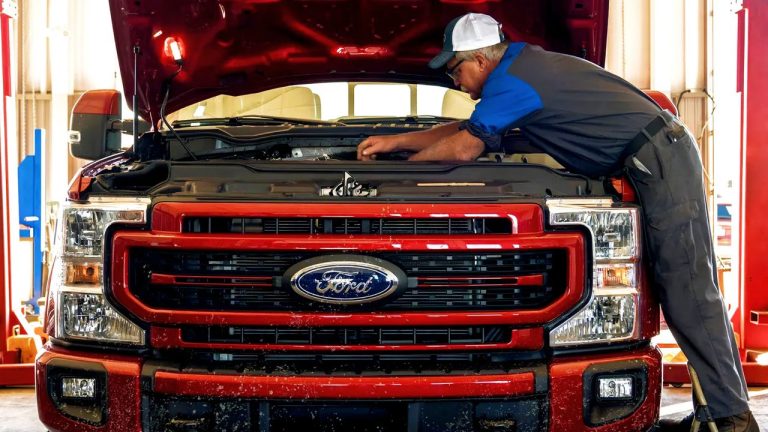
What showed up instead was a Ford F-450 Super Duty with yellow body panels. Same 500-horsepower Power Stroke diesel Ford sells to anyone. Same 1,200 pound-feet of torque. Same 40,000-pound towing capacity. And on the infotainment screen, still glowing in the center of the dash, the Ford logo. Caterpillar’s press release says “We built it” four times in 464 words. Ford’s name is still inside the truck. Four claims of authorship. One visible receipt.
Nothing but Skin
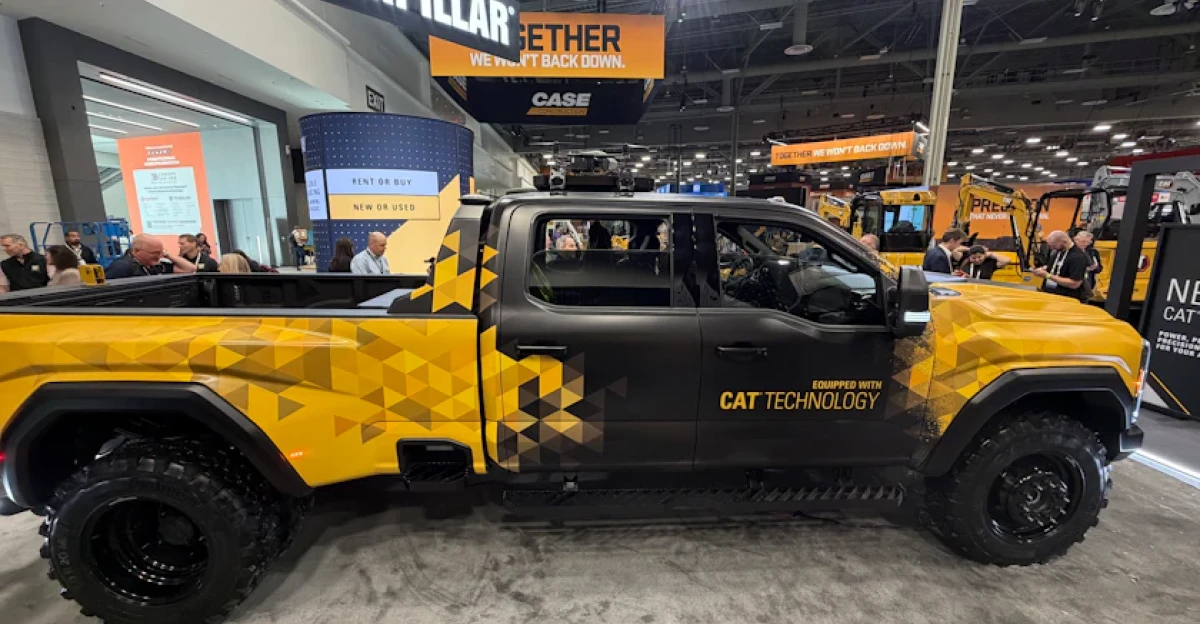
Strip the CAT badges off and the truck vanishes. Custom grille, hood, fenders, bumpers, tailgate, roof rack: all cosmetic. The chassis, drivetrain, suspension, interior, and electronics remain Ford intellectual property. Caterpillar’s official statement frames this as listening to customers, but the company abandoned its own engineers’ custom-engine plans and bought a competitor’s platform instead. That is not a truck built from scratch. That is a wrap job with a press release attached, and the boldness CAT claims lives entirely in the marketing copy.
The Software Behind the Paint
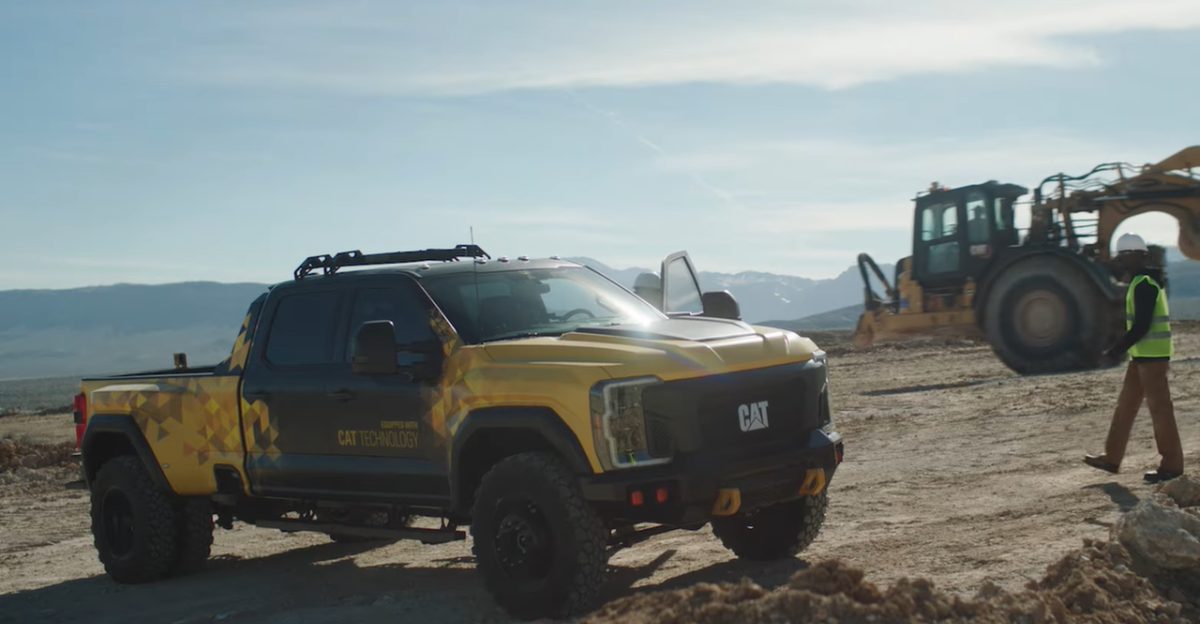
The real product sits behind the yellow paint. An Integrated Display Hub combines a CAT AI Assistant, VisionLink Productivity monitoring, and a Detect collision-alert system into a single command center. A Driver Fatigue Monitoring System tracks operator weariness. An autonomous drone launches from the roof. Every piece of technology bolted onto this Ford can be retrofitted onto any truck through CAT dealers. Which means the truck itself is disposable. The software works on anything with a dashboard.
A Trojan Horse for Subscriptions
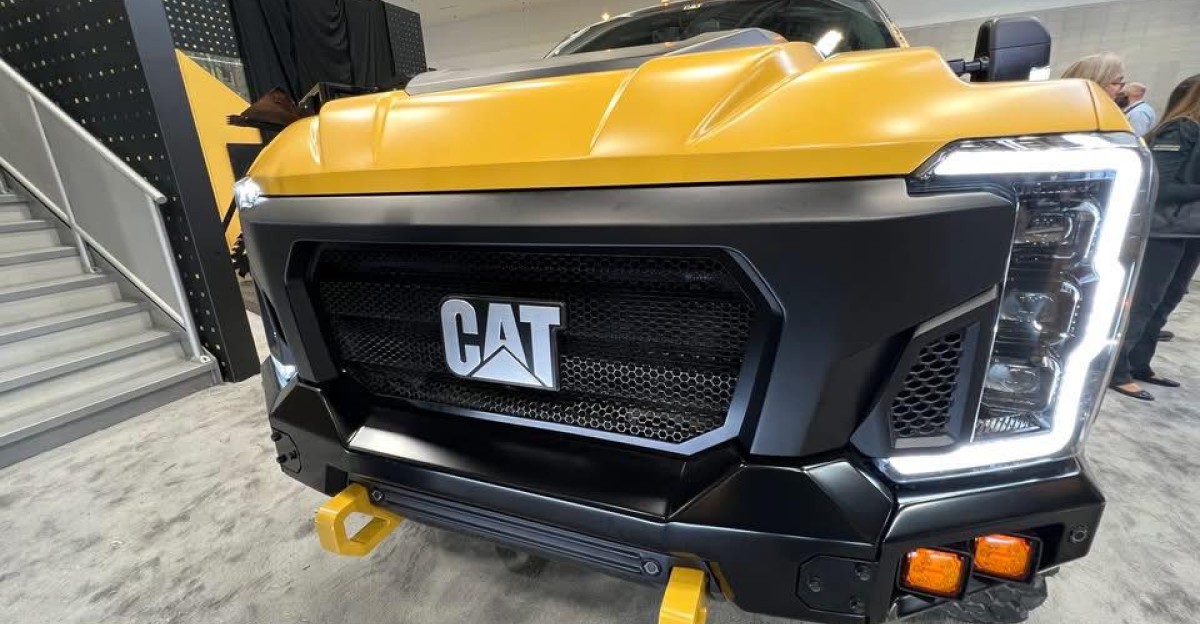
Caterpillar told dealers they can now equip existing trucks with CAT technology packages. Any brand. Any model. The one-of-a-kind concept truck that generated all the headlines is a showroom prop for a software ecosystem that does not require a CAT vehicle to function. Customers who came for the truck leave with a subscription. CEO Joe Creed announced $25 million over five years to train the next generation of skilled tradespeople through the Building the Future Workforce Initiative. The investment goes to technician and operator training, not engine design.
A Precedent Nobody Asked For
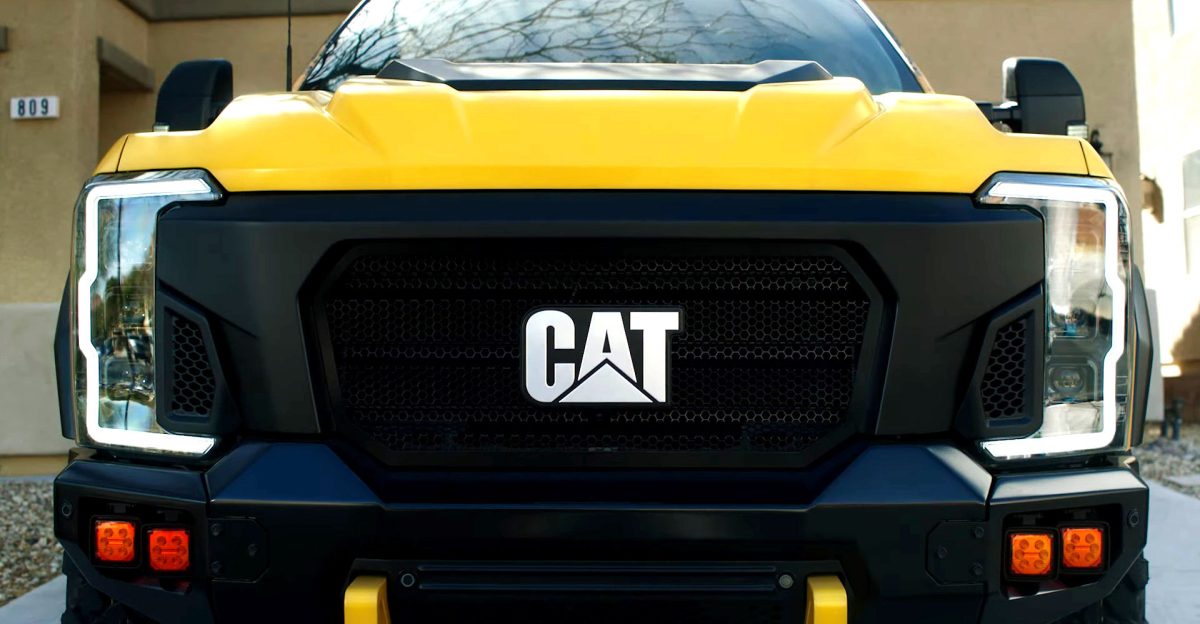
This is the first time a major heavy-equipment manufacturer responded to AI-generated images with a real prototype. Caterpillar did not just rebadge a Ford. It proved that generative AI can manufacture demand signals convincing enough to redirect corporate strategy. The truck is a one-of-a-kind concept with no production timeline and no announced pricing. Caterpillar’s century-long heritage of proprietary equipment design now shares a stage with a competitor’s chassis wearing a costume. That precedent rewrites how companies interpret viral content.
What Customers Actually Got
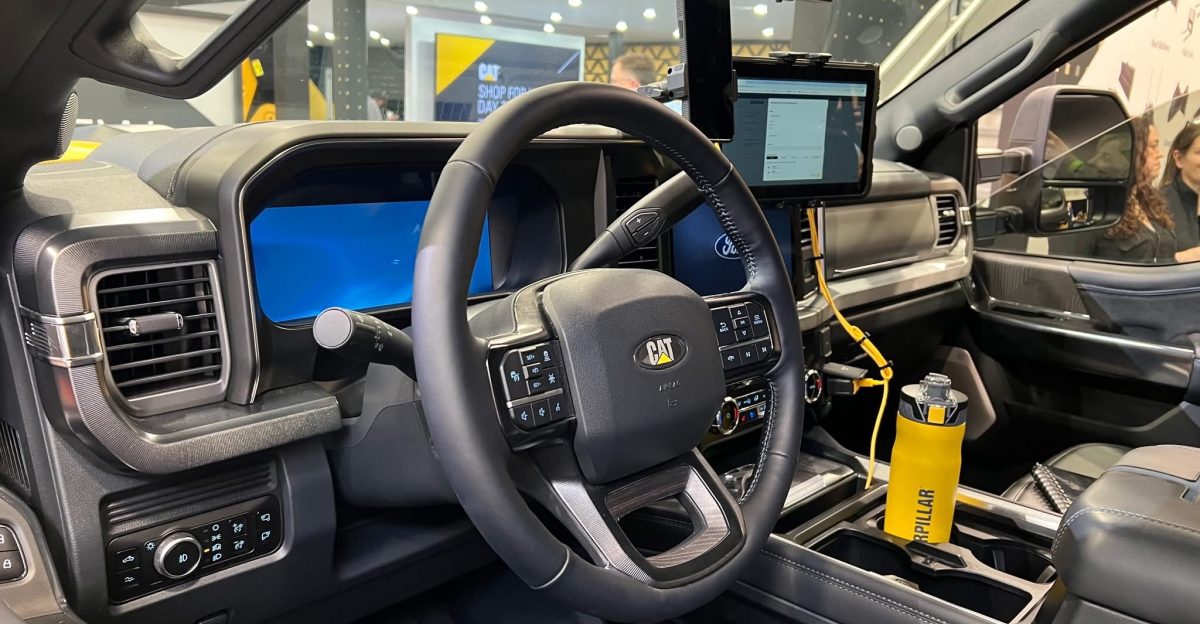
No production run. No dealer orders. No price sheet. Thousands of customers who inquired about a CAT truck in 2024 now face a choice: buy the software package for their existing Ford, Ram, or Chevy, or walk away with nothing. Caterpillar converted hype into a dealer retrofit pipeline without ever manufacturing a single vehicle. The question hanging over the construction industry is whether CAT’s autonomy and AI tools can stand on their own without the yellow billboard that introduced them.
Whose Truck Is It Really
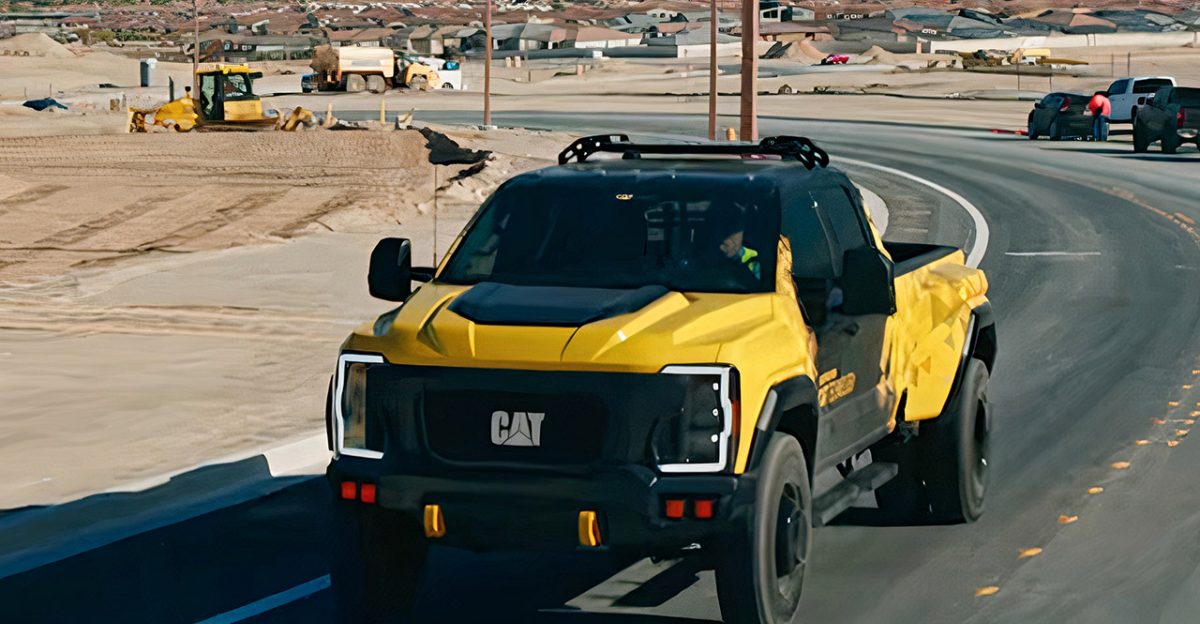
Ford handed Caterpillar a platform, and Caterpillar handed Ford a branding problem. Any equipment manufacturer can now slap logos on a Super Duty and call it innovation. Meanwhile, the people who wanted a real CAT truck got a concept they will never own and a software catalog they never asked for. Caterpillar says “We built it.” Ford’s logo says otherwise. The next company to exploit AI-generated demand for a product that does not exist will not even bother with the prototype.
Sources:
“Cat Truck Equipped with Cat Technology.” Caterpillar, official company blog, 1 Mar 2026.
“Caterpillar Reveals Concept Smart Ford F-450 Foreman Truck.” Equipment World, 3 Mar 2026.
“The Caterpillar Pickup Truck Is Real, But It’s Not What People Were Hoping For.” The Drive, 1 Mar 2026.
“Caterpillar Finally Made a Diesel Pickup Truck, and It’s a Weird Rebadged Ford Super Duty with a Built-In Drone Launcher.” The Autopian, 2 Mar 2026.