Ford VP Promises ‘Same Day’ Repairs While Admitting 5-Day Waits Were Standard—5,000 Mechanic Jobs Unfilled
Somewhere in a Michigan office, roughly 25 people, supported by hundreds more across global call centers, stare at screens tracking every Ford repair order globally. Every stalled F-150, every idle work truck bleeding its owner $500 to $1,000 a day. Ford’s Vice President of Customer Service, Daniel Justo, stood before cameras and said it out loud: “We want customers to be back on the road the same day.” Bold words from a company whose own network was averaging five days per repair.
The Bleed
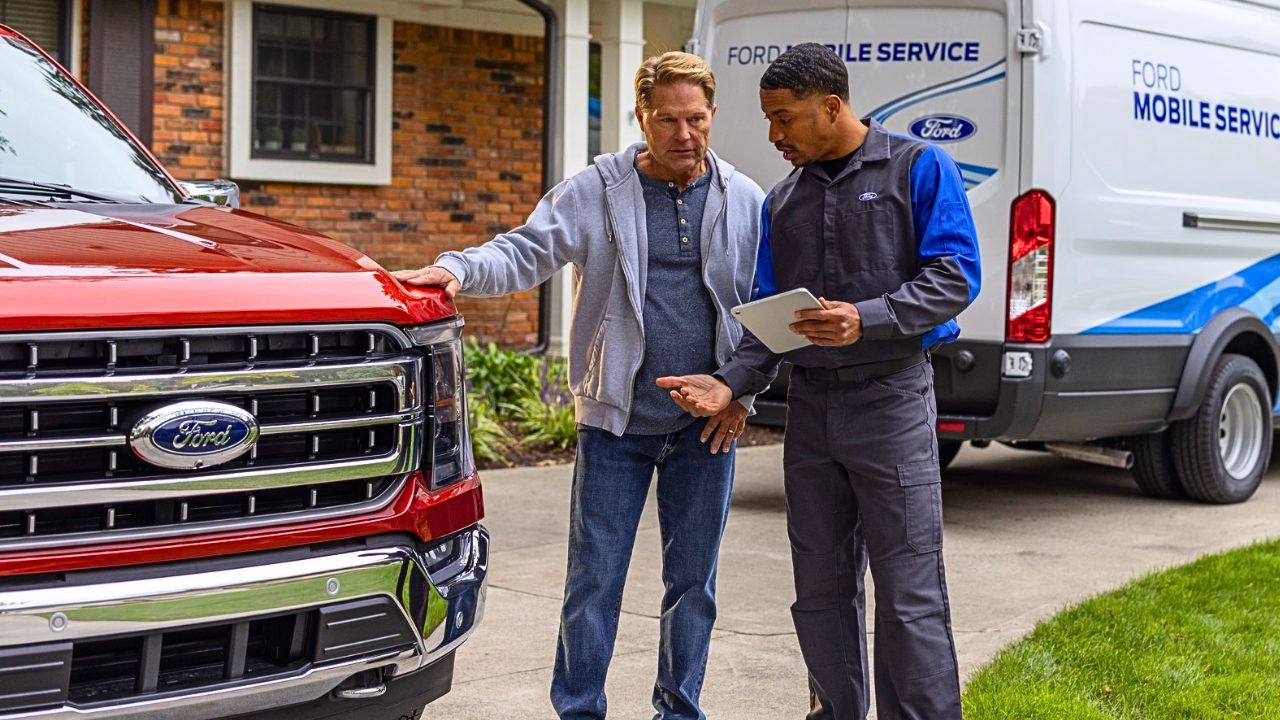
Five days sounds manageable until you own a fleet. A landscaping crew with three F-150s down loses up to $3,000 daily. Multiply that across Ford’s roughly 35 million annual repair orders worldwide, and the math turns violent. Jake Spegal of Madison Tree & Landscape put it plainly: “There was no disruption, no canceled jobs. They recognize that our business can’t stop, and they made sure it didn’t.” That relief only exists because the old system made disruption the default.
The Split
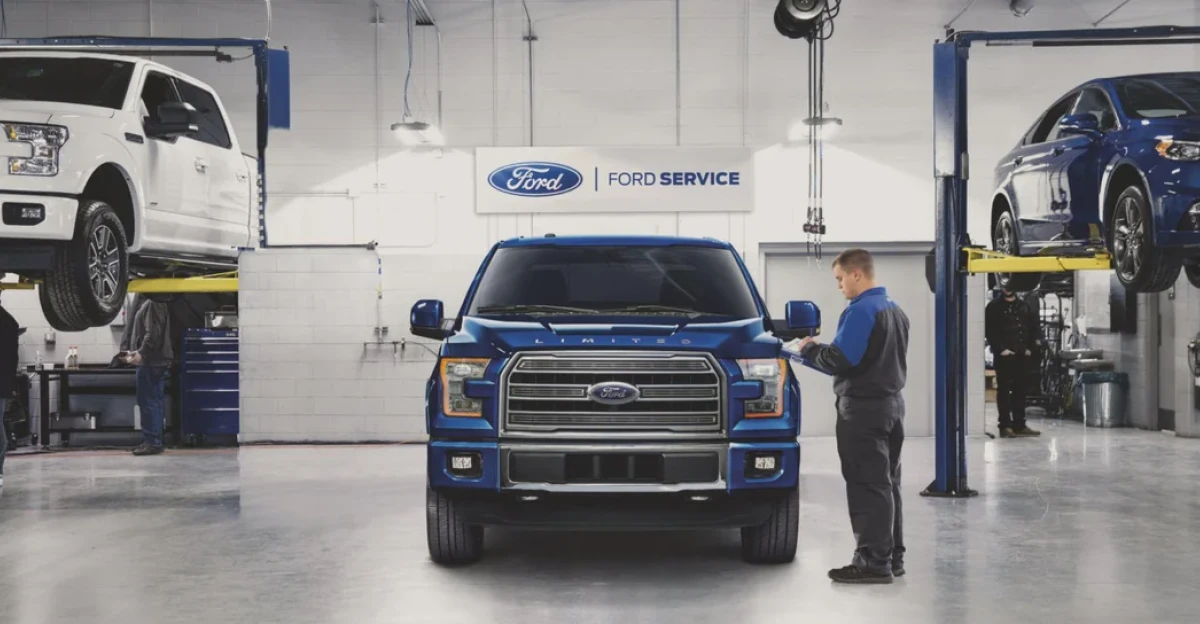
Here is the number Ford buried in the good news: 70% of repairs completed in under 2 days. Sounds great. But that remaining 30% dragged so badly that it inflated the entire network average to five days. Ford’s service system was bimodal. A fast lane and a failure lane, running side by side for years, with nobody in Dearborn watching closely enough to notice. Franchises operated like black boxes. For years, five-day waits were not a crisis. They were the baseline.
The Admission
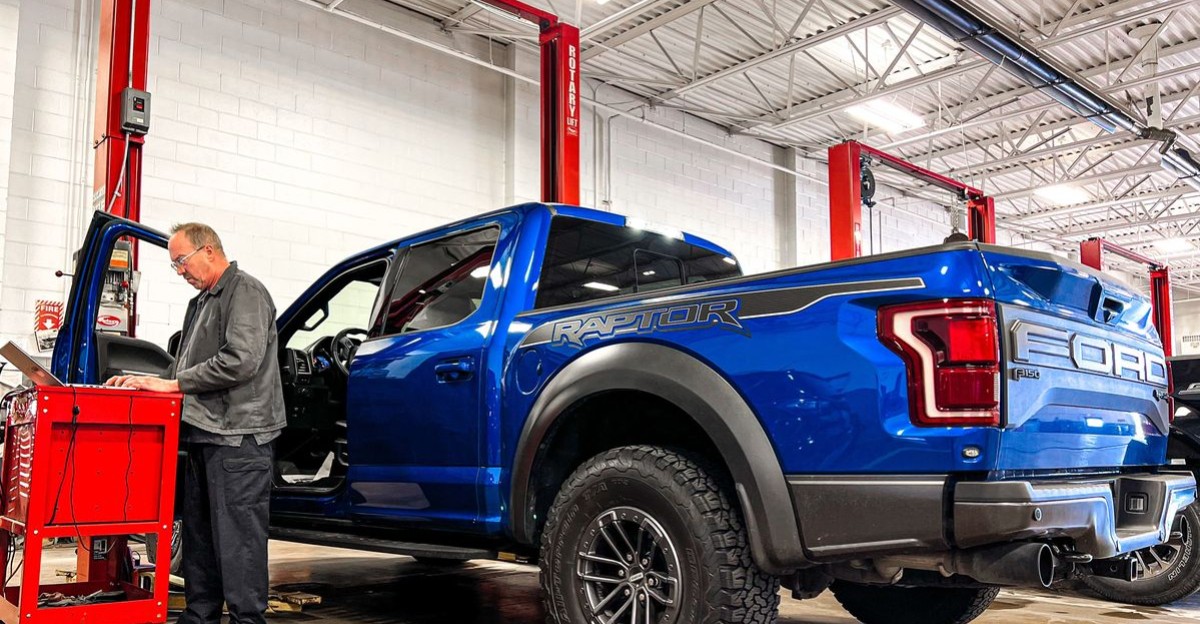
Then Ford launched Uptime Assist in early 2025 and proved the whole thing was broken. Specialist hotlines dramatically shortened diagnostic times. Parts availability hit 97%. Repair times dropped 10 to 15%. Half a day shaved off the average. A roughly 25-person Michigan team backed by global call centers monitoring 35 million orders. Massive intervention. And the result was half a day. That disproportion between effort and outcome tells the entire story of how deep the rot went.
The Mechanism
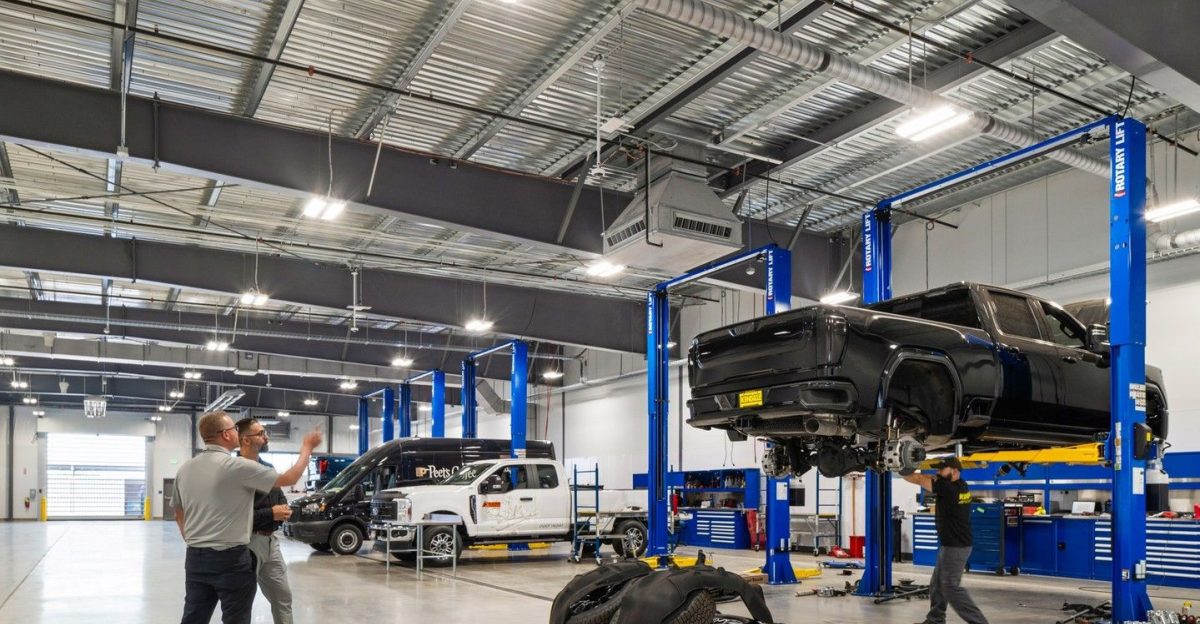
Ford did not build a faster repair system. Ford built a surveillance system. Every order is tracked in real time. Every delay is flagged. Every franchise is visible to a central Michigan team that can see which dealers move trucks in 48 hours and which ones let them sit for two weeks. Ricart Ford significantly expanded its commercial service facility. More than 70 Elite Service Centers now operate up to 72 hours per week. Dealership independence traded for repair speed, and most signed up voluntarily.
The Ghost Bays
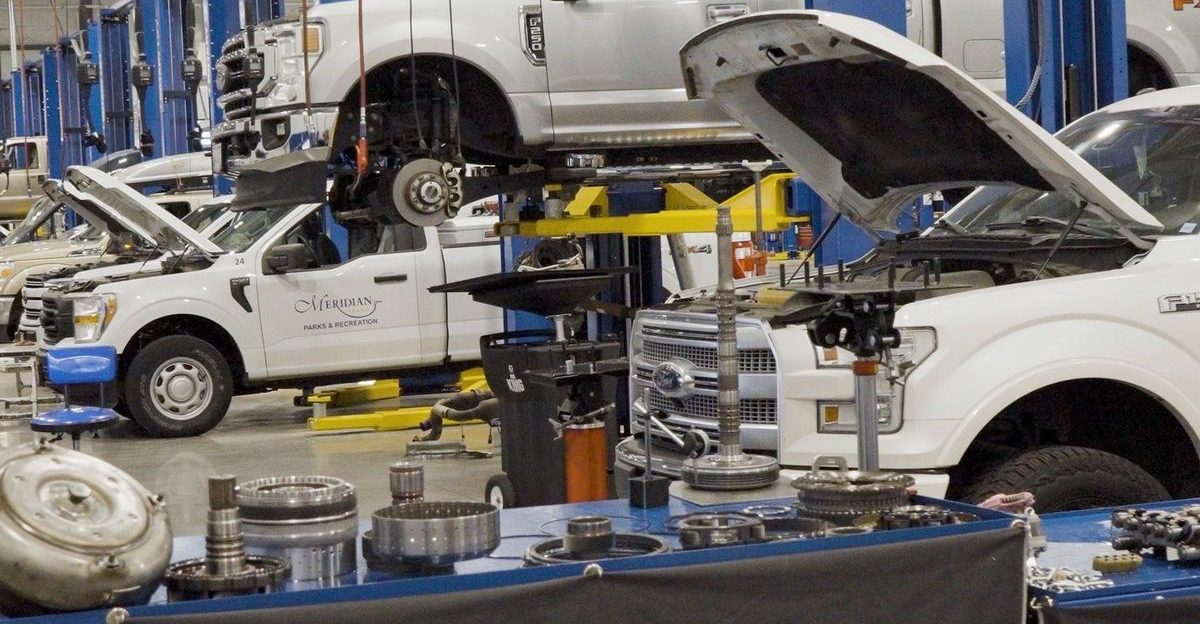
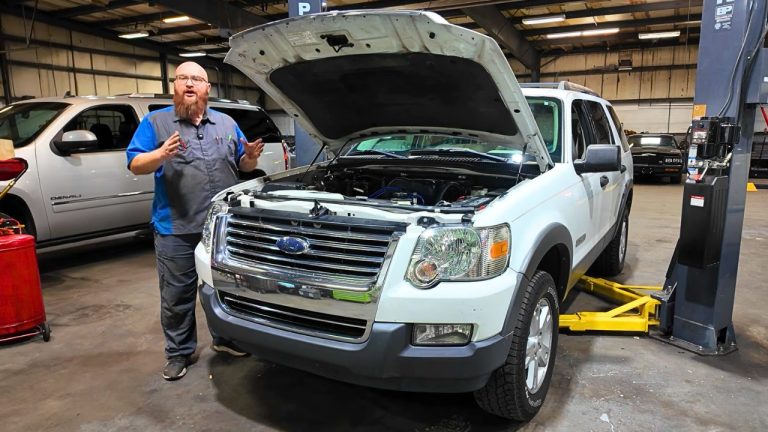
The numbers look impressive until you count the empty toolboxes. Ford had 5,000 unfilled mechanic positions as of late 2025, each paying up to $120,000 annually. Six-figure jobs, sitting open. Across those Elite Centers with a minimum of 24 commercial bays each, that is over 1,500 bays nationwide. Some of them have no one to work in them. You cannot promise same-day service when the people who turn wrenches do not exist yet.
The Ripple

Fleet operators now expect two-day turnarounds. Anything longer feels like failure. That expectation pressure rolls downhill onto technicians already working extended shifts inside centers running up to 72 hours per week, creating a burnout cycle that Uptime Assist metrics never capture. Independent shops face a different threat: Ford’s consolidated Elite Centers pull fleet customers away from regional specialists. Substantial dealer investment has poured into this network. Franchises now carry the risk of service center profitability on top of vehicle sales.
The Precedent
This is not a service upgrade. This is Ford proving that centralizing franchise operations through data surveillance is profitable and legal. Every competitor watched. Competitors may build their own monitoring systems within 12-18 months. The franchise model across the entire auto industry just shifted. Once you see it, every Uptime Assist metric reads differently: 97% parts availability, 10 to 15% faster repairs, and specialist hotlines. Each one is Ford confessing that the old system required constant oversight to function at all.
The Fragile Fix

Ford is already building the next layer. An AI assistant launches in the smartphone app in early 2026, with in-vehicle integration coming in 2027. AI paperwork tools now catch errors that used to stall claims for days. The long-term bet is clear: customers will interact with software, not service advisors. But 5,000 unfilled technician positions remain open. No algorithm turns a wrench. The labor crisis predates Uptime Assist by years, and nothing announced so far closes that gap.
The Trade
Ricart Automotive Group’s philosophy toward Ford’s commercial customers centers on taking care of their business. Honest, maybe. But the business Ford is taking care of now includes watching every repair order, timing every turnaround, and flagging every deviation from corporate targets. Fleet operators got faster service. Dealerships got a corporate eye that never blinks. When they do, this math changes overnight.
Sources:
“Ford Wants Your F-150 Fixed Before You Finish Your Coffee.” CarsCoops, 27 Feb 2026.
“Ford Pro Commits to Commercial Customers with 70 Elite Service Centers.” Fleet Owner, 7 Sep 2025.
“Ford CEO: Company Can’t Fill 5,000 Mechanic Jobs Paying $120,000.” The Independent, 15 Nov 2025.
“Ford Wants to Fix Your Car the Same Day.” Autoblog, 25 Feb 2026.