Detroit’s EV Retreat Costs Ford And GM Billions—Thousands Of American Jobs At Risk As China Gains Ground
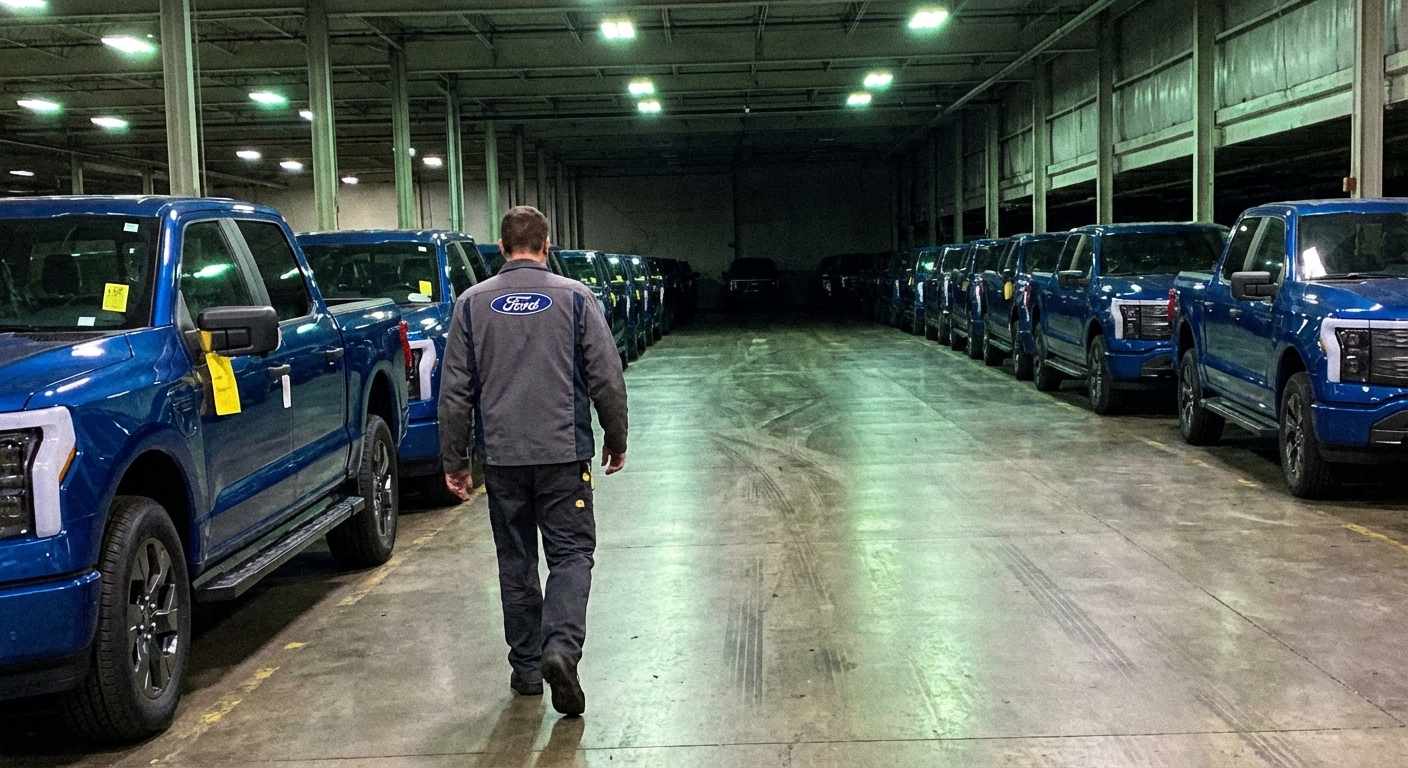
The numbers landed in January 2026 like a confession nobody wanted to hear. General Motors posted $7.1 billion in charges, with $6 billion tied directly to a writedown of its electric vehicle strategy. Ford had already announced a staggering $19.5 billion EV-related writedown in December 2025, while its Model e division reported cumulative operating losses of $4.8 billion for 2025 alone. Both Detroit giants quietly began shifting production back toward gas engines and hybrids. The great electric retreat wasn’t a rumor anymore—it was stamped across quarterly earnings reports in billion-dollar red ink.
The Promise
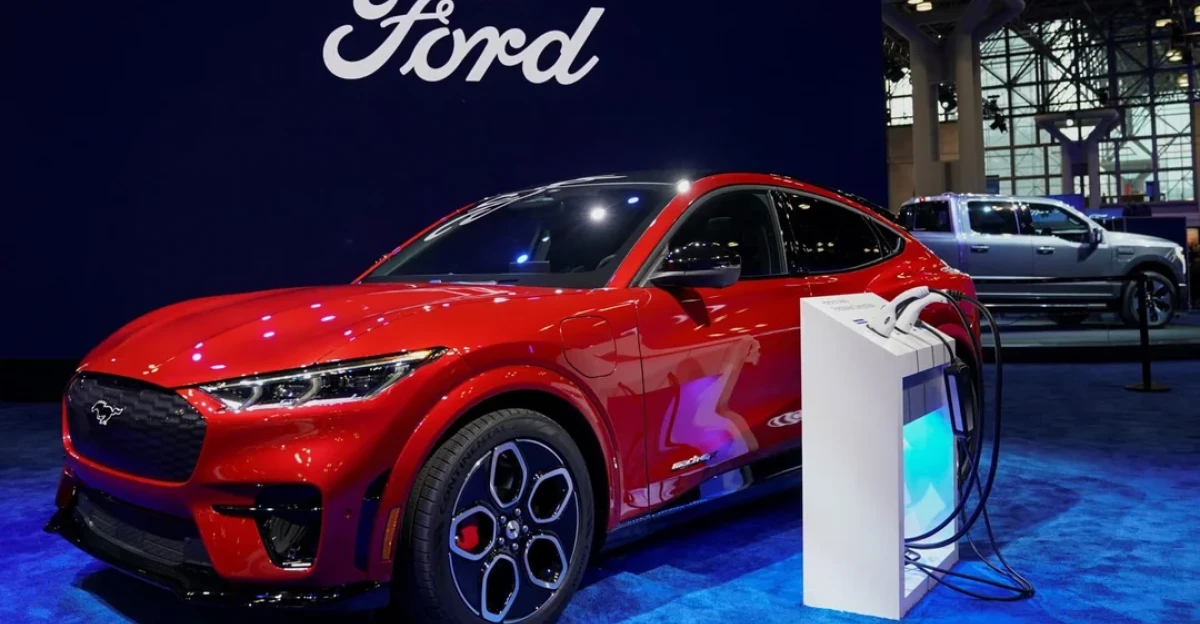
Mary Barra stood before cameras in May 2024 and declared with conviction, “We believe in an electric future.” Ford CEO Jim Farley echoed the same commitment, pouring billions into battery partnerships and electric truck development. Investors bought the vision. Workers relocated to new EV plants. The Big Three staked their corporate identities on leading the electric transition, betting Americans would embrace premium electric vehicles even as the average new vehicle price hit a record $50,000 by September 2025. That bet had a time bomb attached to it.
The Cliff
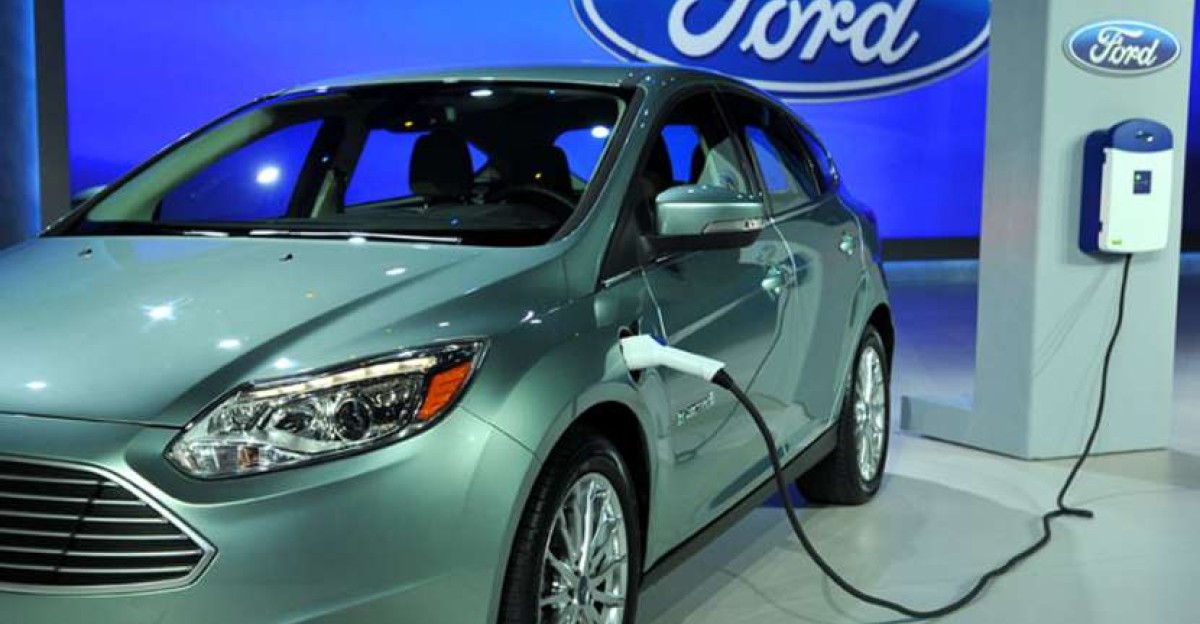
On September 30, 2025, the federal $7,500 EV tax credit expired under the One Big Beautiful Bill Act, and the bottom fell out. Ford’s Q4 EV sales dropped roughly 50% year-over-year. Full-year EV sales tumbled to approximately 84,000 units from around 98,000 in 2024. Industry-wide, Q4 EV sales plunged 36% year-over-year to just 234,000 units—the lowest quarterly total since Q4 2022. Jim Farley later admitted what the data already showed: “The very high-end EVs, the $50,000, $70,000, $80,000 vehicles, they just weren’t selling.” The EV market hadn’t been growing organically—it had been propped up by government subsidies.
The Confession
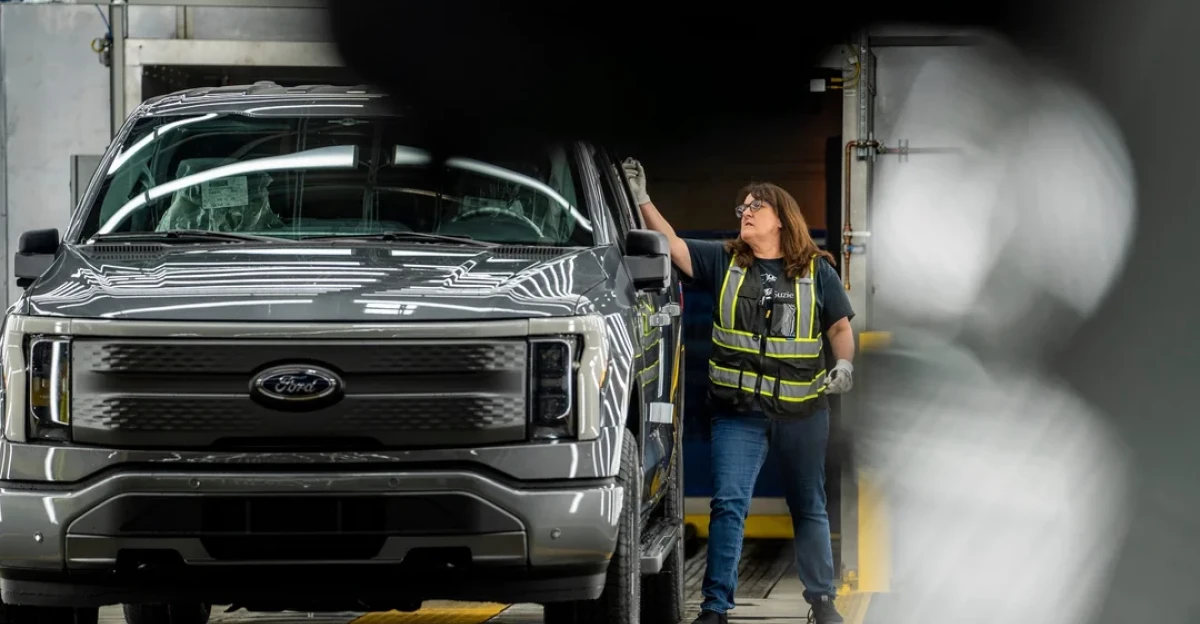
Twenty-one months. That’s the timeline from “We believe in an electric future” to a $6 billion EV writedown confession. Barra’s promise wasn’t just optimistic forecasting—it was a public declaration made while balance sheets were already bleeding red. Ford permanently ended F-150 Lightning production in December 2025. Dissolved the BlueOval SK battery partnership. GM canceled the Chevrolet BrightDrop electric van and repurposed a planned electric pickup plant to build gasoline trucks instead. Two companies. Tens of billions in combined losses. A complete strategic surrender dressed up as a “customer-driven shift.” Reality finally caught up.
The Real Opponent
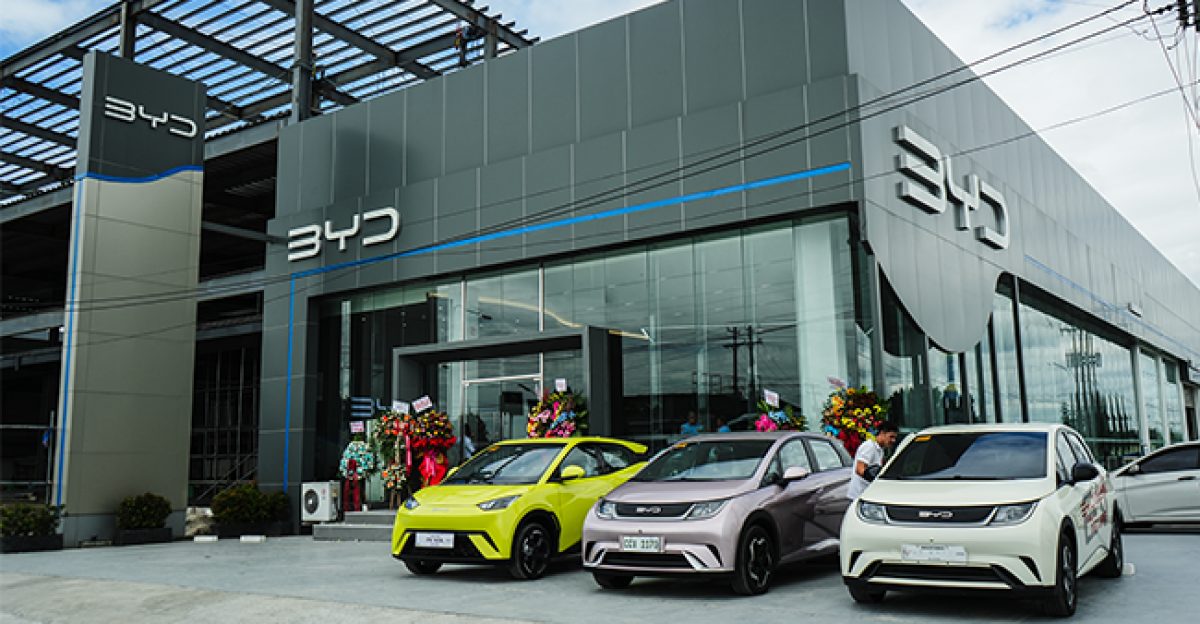
BYD enjoys a $4,700-per-vehicle cost advantage over Tesla, according to a February 2026 Rhodium Group analysis—and only $235 of that comes from Chinese government subsidies. The other 95% stems from structural advantages built over two decades: vertically integrated battery production, in-house component manufacturing, aggressive supplier payment terms, and a complete supply chain from lithium mining to motor assembly. Chinese EV makers launch new models at roughly twice the pace of Detroit competitors. That speed gap compounds every quarter, and no amount of capital can easily close a 20-year manufacturing head start.
The Crown Changes
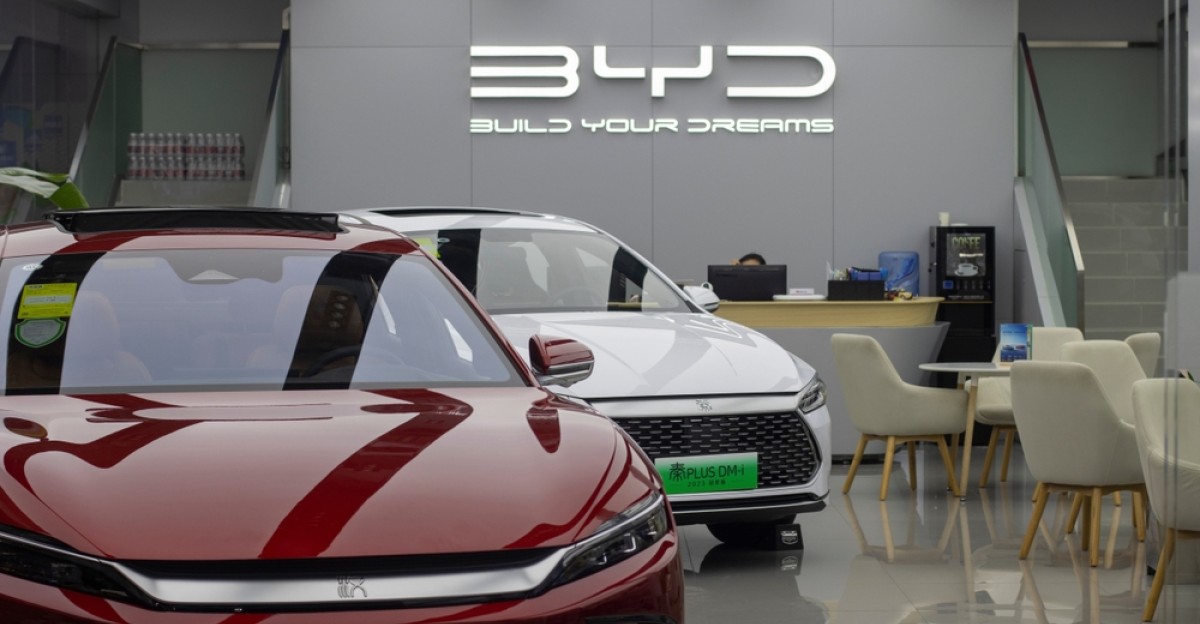
BYD overtook Tesla in global battery-electric vehicle sales in 2025, the first time a non-Tesla company claimed that crown in the modern EV era. BYD sold approximately 2.26 million BEVs compared to Tesla’s 1.64 million—a 27.9% year-over-year increase for BYD while Tesla declined roughly 9%. Chinese new-energy vehicle sales surged past 12 million units in 2024, and BYD’s exports alone hit 1.05 million units in 2025, up 200% from the previous year. The market China built is no longer a regional story—it’s reshaping the global automotive landscape.
The Body Count

Cooper Standard filed a WARN notice announcing the closure of its New Lexington, Ohio, plant, which will eliminate 228 jobs by July 2027. Lear Corporation announced plans to cut approximately 15,000 positions globally in 2024, roughly 8% of its entire workforce, with similar cuts planned for 2025. Ford’s dissolution of its BlueOval SK battery partnership threatens more than 1,500 Kentucky manufacturing jobs tied to the abandoned project. Industry analysts predict a “wave of bankruptcies” among Tier 3 and Tier 4 suppliers throughout 2026. The factories that were supposed to build America’s electric future are closing first.
System vs. System
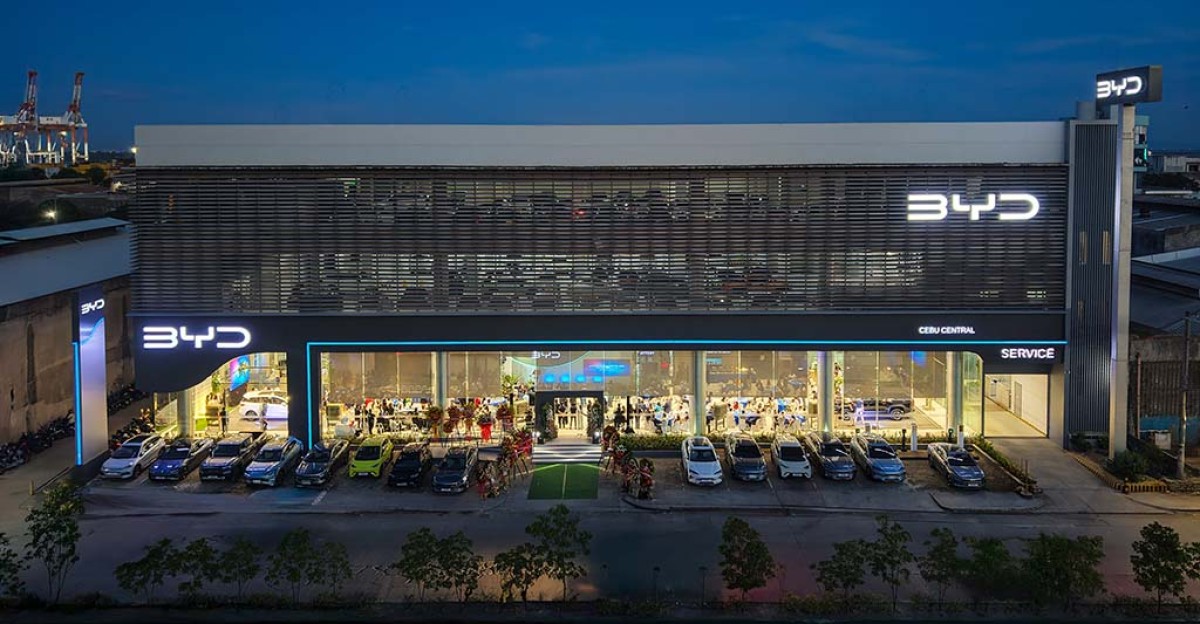
The competition was never just car against car—it was ecosystem against ecosystem. China’s coordinated industrial strategy runs from upstream lithium mining to downstream charging infrastructure under one unified framework. Western automakers operate across fragmented regulatory zones, depend on separate battery suppliers with their own margin requirements, and retrofit aging factory infrastructure. BYD owns its battery production, sources its own rare earth materials, and controls component costs end-to-end. Detroit outsourced those same critical components and watched profit margins evaporate. Once you understand the structural mismatch, billions in losses stop looking surprising and start looking inevitable.
The Next Domino

BYD is building factories in Hungary and Turkey, aiming to localize European production to bypass tariffs. Over 20 Chinese auto brands have announced plans to embed AI models into their vehicles, leapfrogging Western software development. Ford’s counterpunch—a lower-cost Universal EV platform launching in 2027—arrives years after Chinese competitors already locked in cost advantages at massive scale. GM’s results weakened sharply in the second half of 2025, with tariffs alone costing over $1 billion per quarter. The competitive window to catch up is narrowing by the month, and Detroit keeps missing the closing.
The New Map
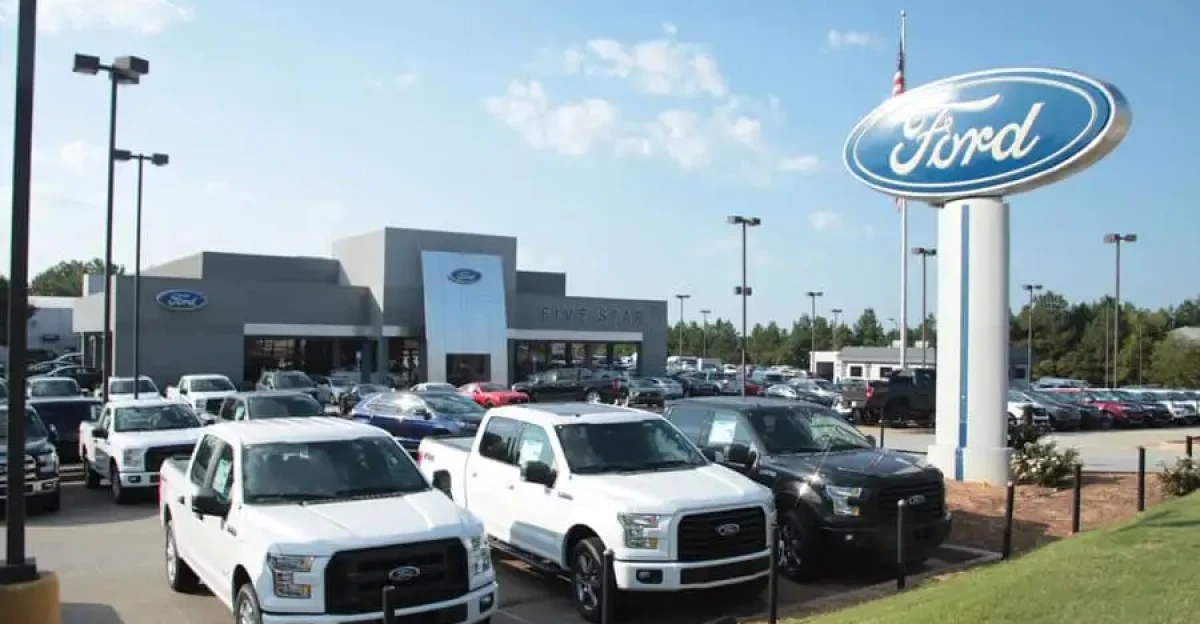
Ford’s Model e division doesn’t expect profitability until around 2029—that’s three more years of hemorrhaging losses in a segment where Chinese rivals already profit on every unit sold. The myth that Detroit can catch up with more investment died somewhere between Barra’s May 2024 promise and GM’s January 2026 writedown confession. The real question now isn’t whether the Big Three can win the EV race—it’s whether they can defend their gas- and hybrid-profit margins long enough to survive while China builds global EV infrastructure around them. Most Americans haven’t read this map yet. Detroit finally has.
Sources:
Reuters , “GM to take $6 billion writedown on EV pullback” , January 8, 2026
Ford Q4 2025 Earnings Report , “Ford slips to full-year loss in 2025 as costs rise and EV writedowns mount” , February 10, 2026
Cox Automotive , “Despite Q4 Collapse, 2025 EV Sales Decline Only 2% Versus 2024” , January 12, 2026
Rhodium Group , “BYD Undercuts Tesla By $4,700 Per Car” , February 28, 2026
BBC , “China’s BYD overtakes Tesla as world’s top EV seller” , January 1, 2026
Autoweek , “Carmakers Took a $50 Billion Loss on EVs” , February 15, 2026