Audi Stakes Its Future On EV Sports Car ‘No One Wants’—Sales Down 19% Six Quarters Straight
Gernot Döllner stood at the podium and said it like a man who’d already won. “Within two years, we will have it in the market.” The Audi CEO was talking about the Concept C, an all-electric sports car confirmed for production with no combustion option. The first Audi sports car without an engine in the brand’s history. Behind him, the renderings gleamed. That €2.5 billion isn’t what Audi wrote as a check for the Concept C. It’s the size of the revenue crater the company is betting this car can fill. Somewhere in Ingolstadt, the spreadsheets told a very different story.
The Crater
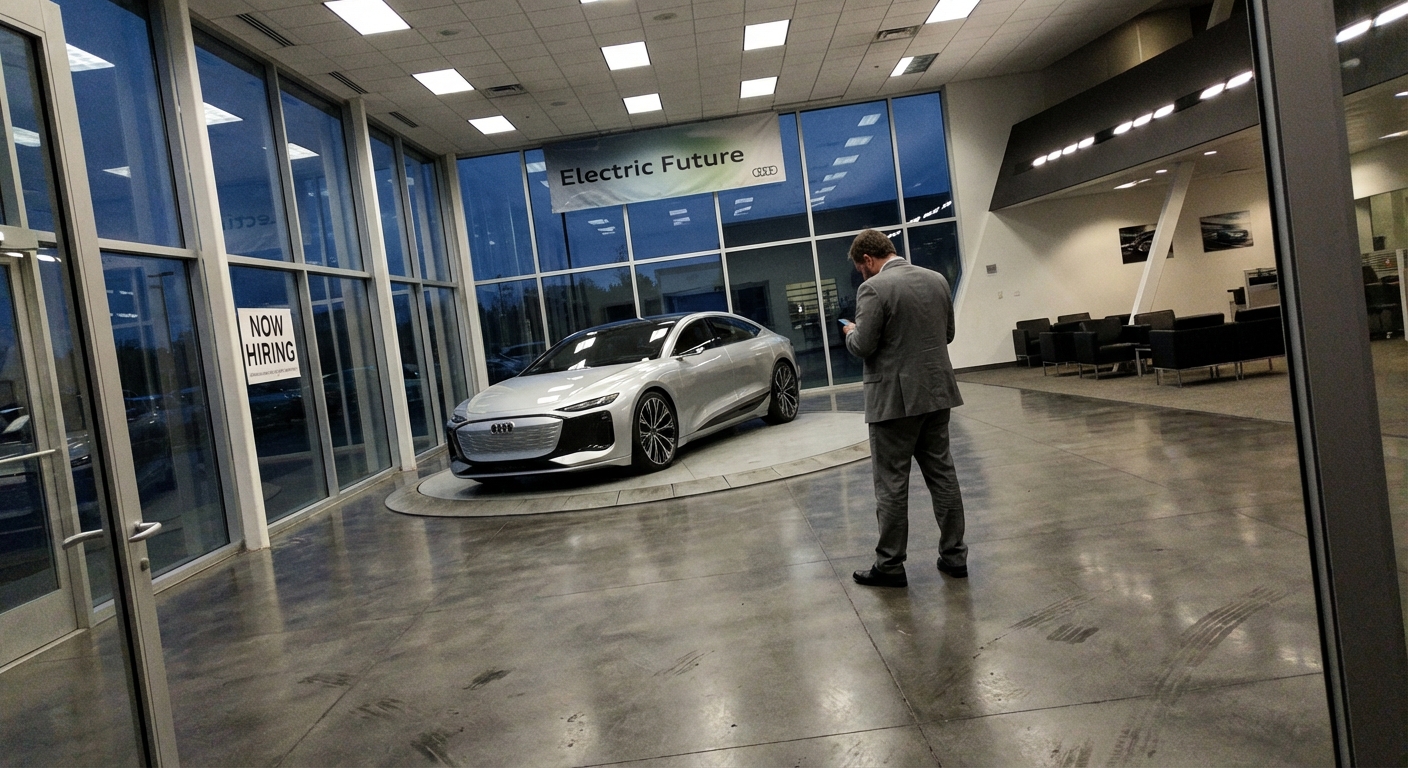
Those spreadsheets: Audi slashed full-year revenue guidance by €2.5 billion, citing tariffs and restructuring costs. U.S. sales fell 19% in Q2 2025, the sixth consecutive quarterly decline. Full-year 2024 wasn’t better. Total U.S. deliveries dropped 14% to 196,576 vehicles. The Q5, Audi’s best-selling model, collapsed 23% in full-year 2024. Operating margin forecasts shrank from 7–9% to 4–6% after two successive guidance cuts in 2025. By year-end 2025, U.S. deliveries had declined a further 12.2% annually, with Q4 alone falling 36%. Reports internally described Audi’s financial position as a “crisis case.” That’s the backdrop for a CEO promising a brand-new sports car in 24 months.
The Graveyard
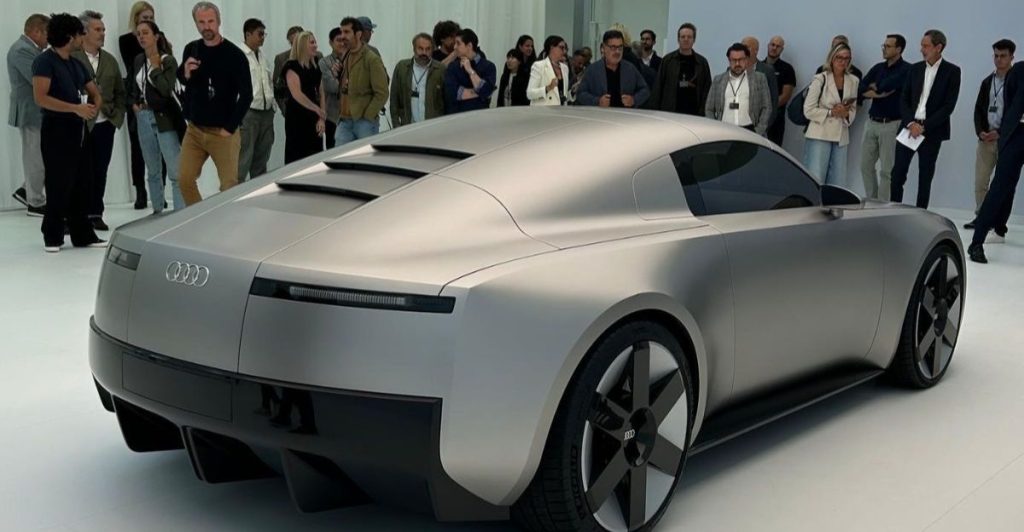
Audi killed the TT. Then killed the R8. Two icons, gone. The assumption was always that German engineering heritage would carry the brand through any transition, that loyal buyers would wait. They didn’t wait. Six straight quarters of declining sales suggest heritage alone stopped being a competitive advantage somewhere around quarter three. Now the Concept C is supposed to fill both voids simultaneously, positioned between the TT and R8 in Audi’s lineup. One car replacing two legends, built on a platform that doesn’t fully exist yet.
The Real Bet
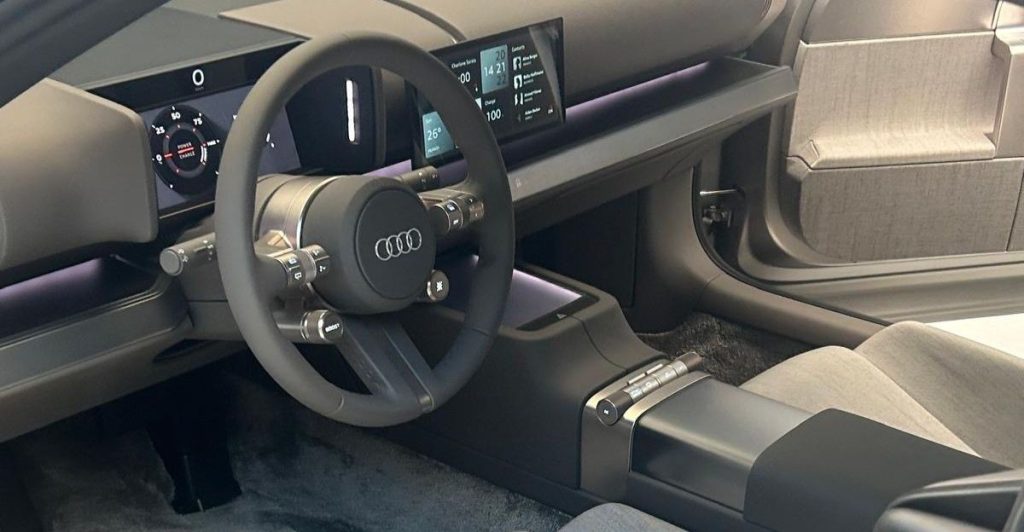
Döllner called the Concept C “the first proof point to our strategy.” Read that again. Not a proof point. THE first proof point. His entire turnaround rides on one car. The €2.5 billion revenue hole isn’t what Audi spent on the Concept C. It’s the size of the financial crater that makes this car existential. If it ships on time, the strategy works. If Porsche’s shared electric platform slips further, the timeline collapses. One car. One platform partner. No backup plan.
China Speed
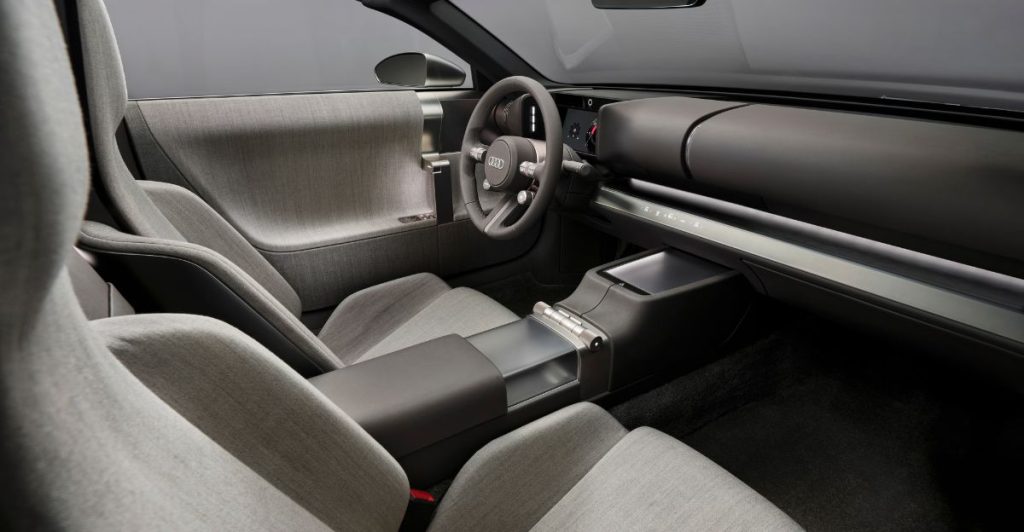
The real revolution isn’t electric. It’s organizational. Audi gutted its traditional committee-driven development process, where cars took five to seven years from concept to production, and replaced it with “project houses” — small integrated teams with direct board access and no cross-functional escalation delays. The target: concept to customer in roughly two to three years. A premium German automaker restructuring its development philosophy to survive Chinese competition. The irony writes itself, but Döllner doesn’t seem to care about irony. He cares about speed.
The Machine
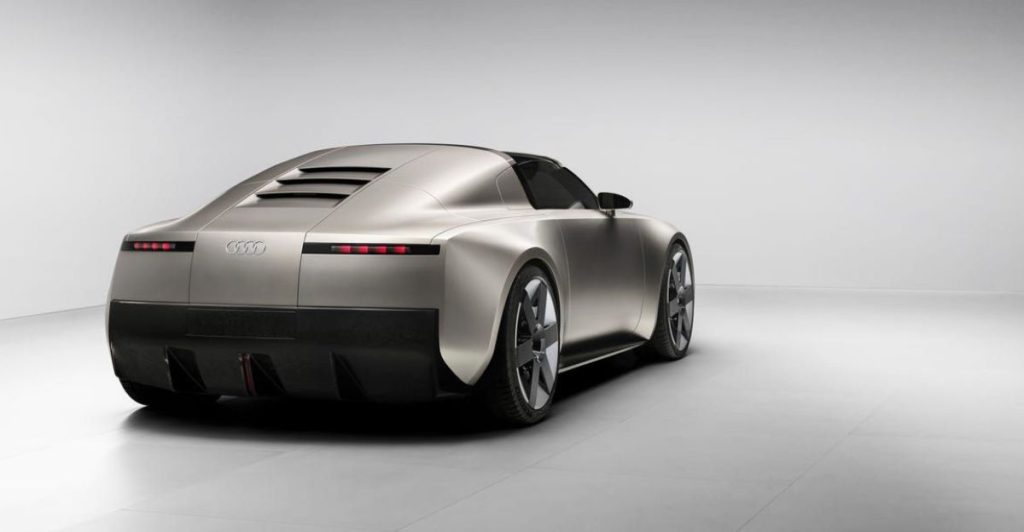
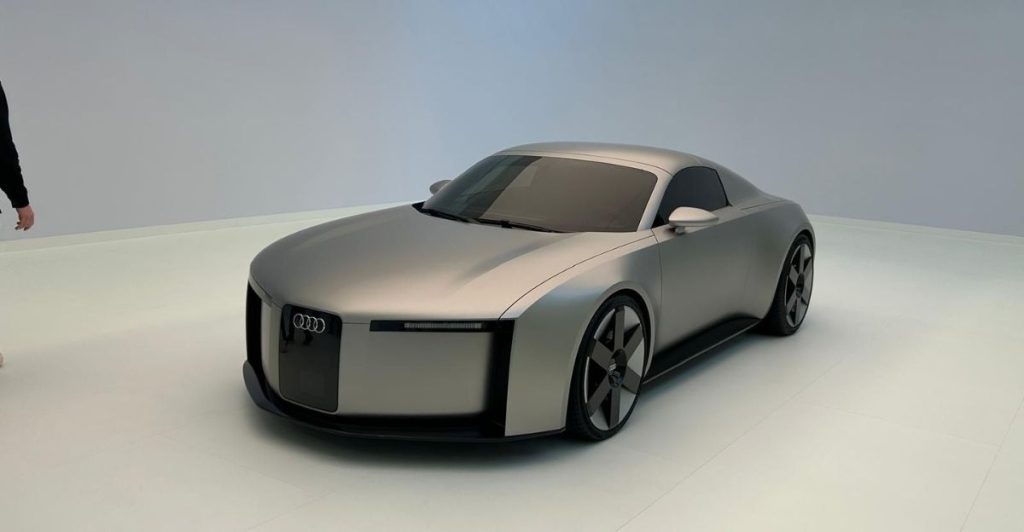
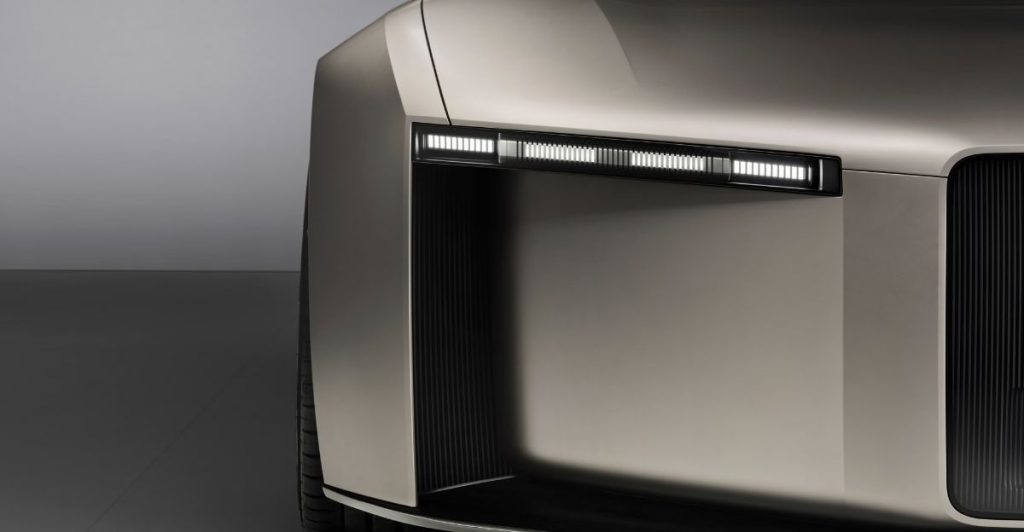
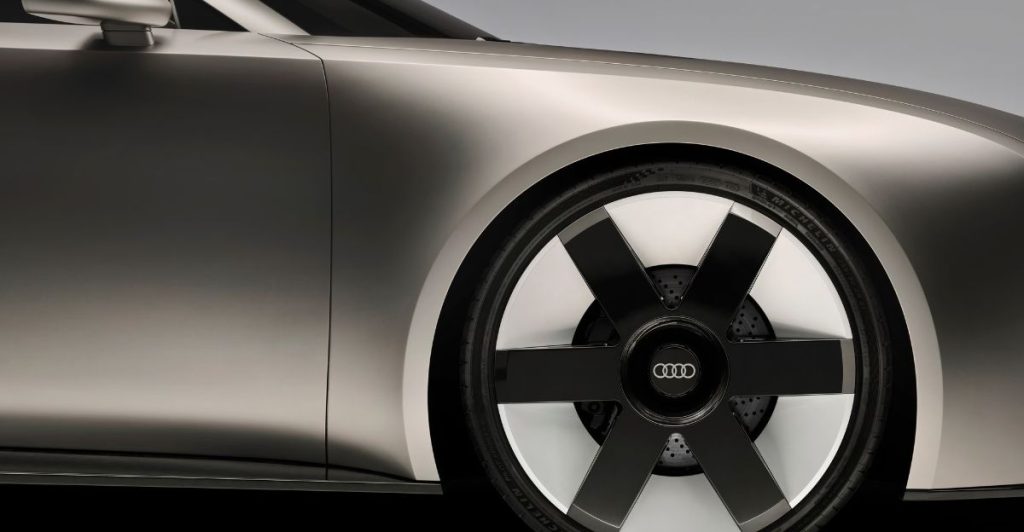
The Concept C itself is no afterthought. At 4.52 meters long, it’s actually larger than the R8 was. At the concept stage, Audi disclosed an 89 kWh battery, a projected range exceeding 300 miles, and 350 kW DC fast-charging capability, though final production specifications remain subject to change. Gross vehicle weight is rated at 1,690 kilograms. Rear-wheel drive standard, with a quattro all-wheel-drive variant also planned. A retractable hardtop. The battery stacks behind the seats, dropping the center of gravity low enough to mimic a mid-engine layout. Audi sold 223,000 EVs globally in full-year 2025, a 36% jump. The demand exists somewhere. Whether it exists for this car is the billion-dollar question.
Domino Line
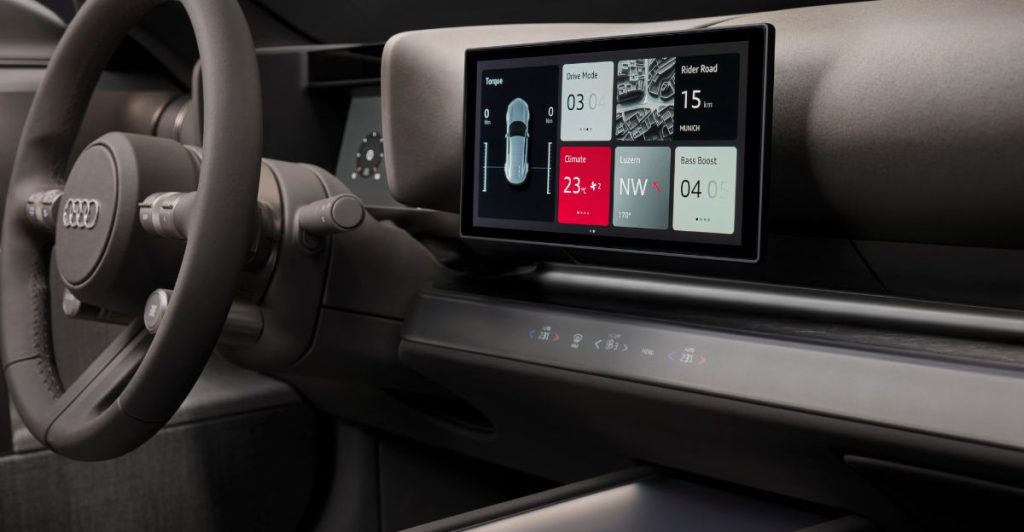
If Porsche’s electric 718 program keeps slipping, the platform underneath the Concept C slips with it. That’s not speculation. That’s architecture. Porsche officially announced in late 2025 that its 718 EV platform would be technologically redesigned and delayed well into the 2030s, with reports in early 2026 suggesting the all-electric 718 may not arrive at all. Döllner stated in early 2026 that platform delivery for the Concept C is “not in doubt” and that work is proceeding in good collaboration. Lamborghini’s Lanzador, originally planned as the brand’s first EV supercar, has since been cancelled as a full EV and pivoted to a plug-in hybrid. The entire VW Group sports car strategy sits on the same foundation. One platform delay doesn’t just threaten Audi. It threatens Porsche’s 718, Lamborghini’s flagship direction, and every dealership counting on a halo car to drive floor traffic.
New Rules
Döllner isn’t really selling a sports car. He’s selling proof that European automakers can match Chinese development speed without sacrificing quality. The Concept C’s September 2025 reveal to late 2027 production target compresses what historically took five to seven years into roughly two to three years. If that timeline holds, every boardroom in Stuttgart and Munich has to answer the same question: why are we still running committees? Chinese premium brands already price 15 to 25% below German equivalents, according to industry estimates. Speed isn’t a luxury anymore. Speed is survival.
The Clock
The market consensus on EV sports cars remains brutal. “No one really wants electric sports cars” is how industry observers frame it. Audi’s own spokesperson, Daniel Schuster, responded with five words: “sold exclusively as an EV.” No hybrid escape hatch. No combustion fallback. If the Concept C misses its 2027 window, analysts project second-stage restructuring, potentially including factory closures. If it launches and nobody buys it, Audi exits the sports car segment entirely and repositions as a mass-market EV brand. Either outcome erases decades of identity.
Legacy Bet
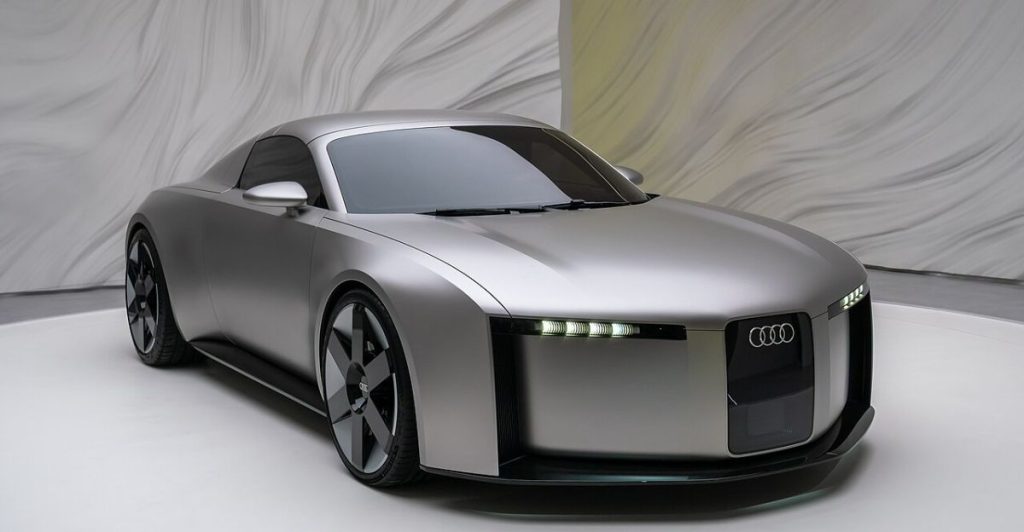
BMW and Mercedes are watching. If Döllner’s project-house model delivers a production sports car in three years, it rewrites the playbook for every premium European manufacturer still running five-year development cycles. The Concept C becomes the first major European car built on a compressed, challenge-driven organizational model. In industry circles, it’s already being called an identity builder — a second TT moment. That framing tells you everything. This car either rebuilds the brand or becomes the most expensive proof that German automakers waited too long to change how they build things.
Sources:
“Audi cuts forecast over US tariffs and restructuring costs.” Reuters, 28 Jul 2025.
“Audi’s 2024 Sales Tanked And The Numbers Are Worse Than You Think.” Carscoops, 9 Jan 2025.
“Audi Concept C electric sports car to enter production in 2027.” Carsales, 2 Mar 2026.
“Lamborghini Cancels First EV, Lanzador to Become a Plug-In Hybrid.” Car and Driver, 22 Feb 2026.