Thousands Of Fords Sit Unfixed For Months As Worst Mechanic Shortage In US History Empties 6,000 Service Bays
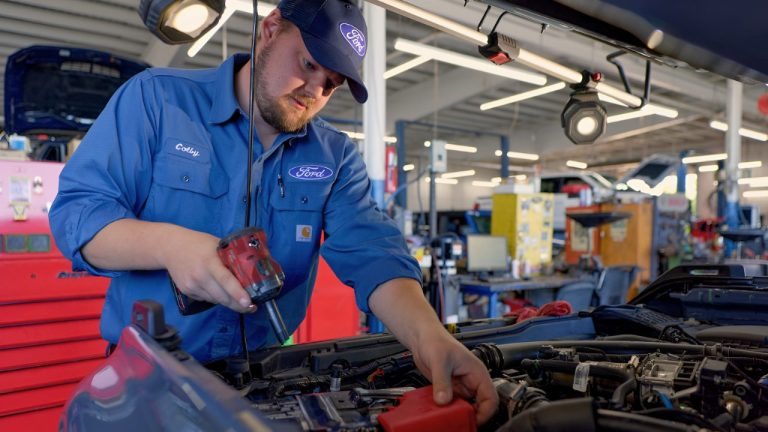
Ford CEO Jim Farley said it himself: “This morning when I woke up, there were 6,000 bays in our dealerships with no tech.” “We don’t have the mechanics.” Six thousand service bays across America, lifts up, tools ready, nobody there. One of the most severe mechanic shortages in recent U.S. automotive history has emptied those bays. You heard the headline. You probably figured it meant longer wait times. The part about why those bays stay empty is where this story turns ugly.
Rigged Pay

Here’s the engine driving the exodus: tens of thousands of mechanics leave the industry every year, and many blame the flat‑rate pay system that can pay them for well under an hour on jobs that stretch across most of a workday. Ford advertises mechanic roles with potential six‑figure pay, up to about $120,000. The Bureau of Labor Statistics puts the typical automotive service technician around $47,770 to $49,670 a year, depending on the year you look at. That’s roughly a 60% gap between the recruiting poster and the median paycheck. Manufacturers redesign vehicles every three years, but often fail to keep labor-time guides current with that added complexity. Complexity has multiplied compared to the Model T era. The basic pay formula has barely budged, and it is starting to strain everything it touches.
Your Bill

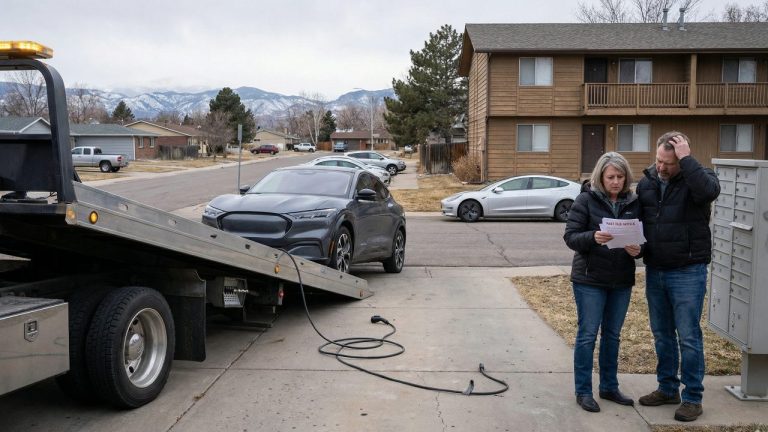
The direct hit lands on your wallet first. Dealerships routinely charge $150 to $200 per hour for labor. The mechanic turning the wrench often sees something closer to $40 to $45 of that on a flat‑rate basis, sometimes less in real, clocked hours. With more than 12.9 million Ford vehicles affected by recalls in 2025 alone, and many technicians trying to avoid poorly paid warranty work, your recalled truck can sit for weeks or even longer while you keep writing monthly payment checks. That’s not a scheduling inconvenience. That’s paying full price for a vehicle you might not be able to drive.
Dealership Math
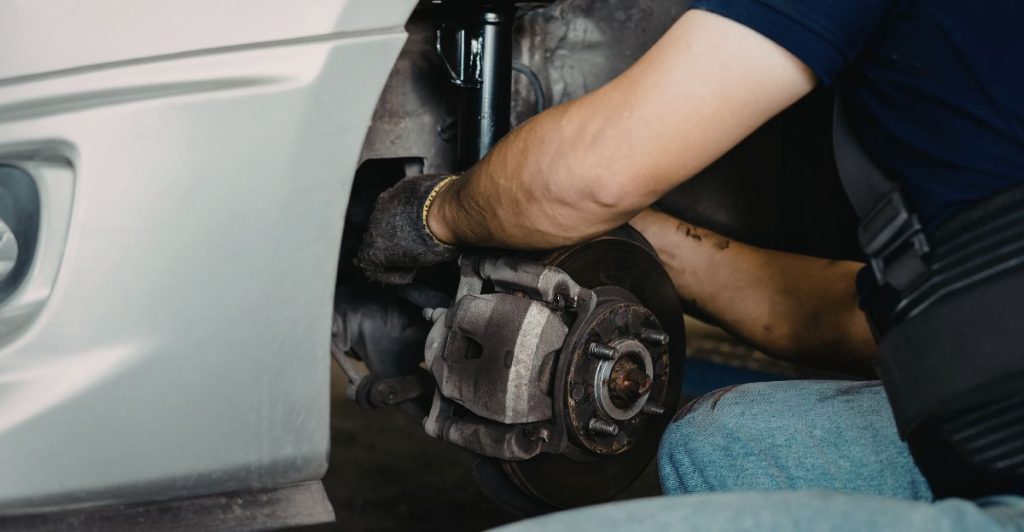
Dealerships aren’t panicking the way you’d expect. That roughly 70‑plus percent gross margin on every labor hour billed means a service department charging $200 per hour can keep around $140 to $160 of it. Sharing more of that margin to attract mechanics would ease the staffing crunch, but it would also cut into one of the most profitable departments in the building. So bays stay empty. Industry estimates point to hundreds of thousands of technician positions unfilled across North America, with tens of thousands more needed each year just to replace retirees. Trade schools and training programs produce only a fraction of that. Many dealerships close or underutilize bays rather than close the pay gap.
Recall Collapse
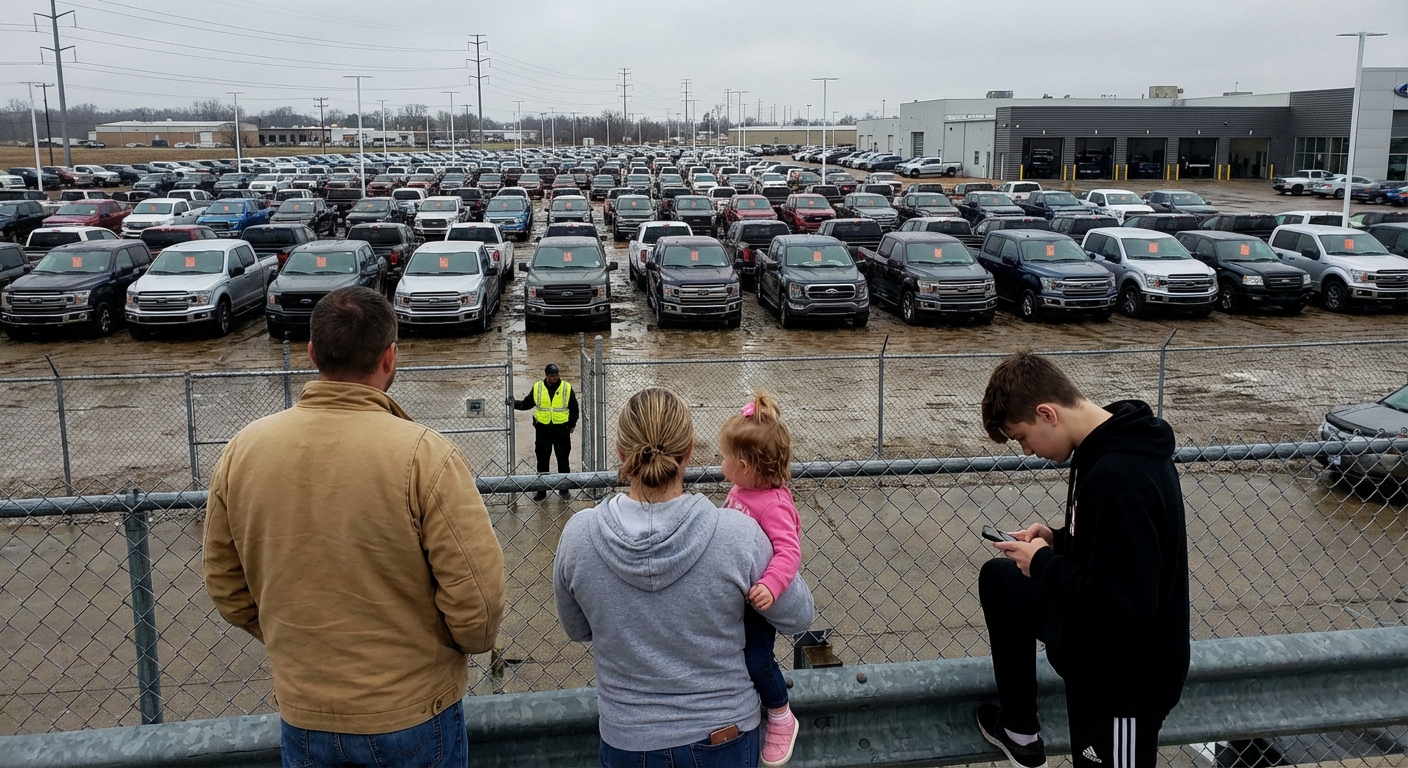
Here’s where the cascade crosses a line nobody expected. Ford carried out more than 150 recall campaigns in 2025 alone, affecting about 12.9 million vehicles. Warranty work often pays mechanics less than customer-pay jobs, so many actively try to avoid it, leaving recalled vehicles stuck in scheduling backlogs or waiting on the one tech willing to touch them. Think about that: a safety recall issued by the manufacturer, and the compensation structure makes it harder to get those repairs done quickly. Same mechanism. Different consequence. The backlog grows every single day, and the practical risk increasingly shifts from Ford’s balance sheet to your driveway.
The Machine

The flat‑rate system connects every one of these ripples. Manufacturers set warranty labor times and pay rates that are often lean. Dealerships retain 70‑plus percent of what customers pay for labor. Mechanics absorb the gap. Tool debt that can reach tens of thousands of dollars traps them in jobs they can’t easily leave. Vehicle redesigns every few years outpace their training. A long burnout cycle means only a minority of technicians ever reach the six‑figure incomes used in recruiting pitches, while many others walk away entirely each year. Ford’s service crisis. Your repair wait. The recall backlog. The empty bays. One system produces all of it, and nobody with the power to change it has much incentive to go first.
Walking Out

Farley said: “We are in trouble in our country. We have over a million openings in critical jobs. It’s a very serious thing.” A master technician at one Ford dealership reportedly earned around $160,000 in a single year, but it took him a decade to reach that level. Most never get close. Veteran mechanics with decades of experience are leaving. Entry‑level techs can work 50 hours in the shop and only get paid for a fraction of that under a flat rate. Industry estimates suggest thousands of mechanics exit the field every month. The people who know how to fix your truck are disappearing, and the system that chased them off is still running.
Structural Shift

The flat‑rate pay model has survived largely unchanged since the early days of mass‑produced cars, even as vehicle complexity has multiplied many times over. That precedent is cracking. Other skilled trades using similar piecework structures, HVAC, plumbing, and electrical, face their own shortages and burnout math. Recent reporting points to more than a million unfilled skilled‑trade positions nationally. In some analyses, new graduates across all trades are still falling short of the total number of open jobs. One broken compensation model in one industry looks increasingly like a blueprint for strain across every trade that builds and maintains America.
Winners and Losers
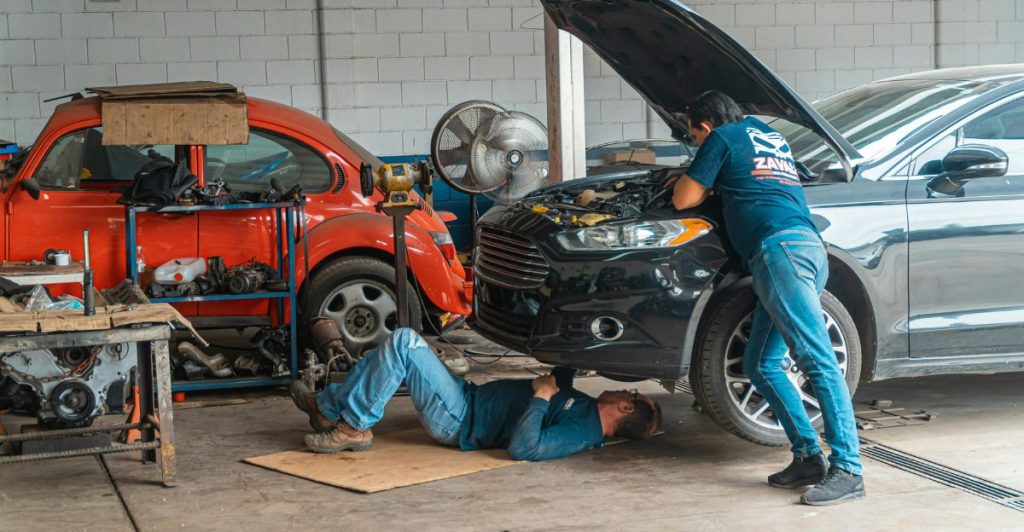
Independent repair shops are absorbing customers fleeing dealership wait times. Aftermarket parts suppliers are benefiting as owners attempt DIY or independent fixes rather than waiting months. The losers are harder to look at: older‑vehicle owners on fixed incomes facing repair bills they can’t schedule, rural families who need a truck to get to work, and anyone holding a recalled Ford caught in a backlog. Trade school and vocational enrollment have seen a noticeable increase in the last few years, with at least one data set showing a 16% jump in career and technical program enrollment between 2022 and 2023, the biggest rise since before the pandemic. But if those graduates discover the $120,000 promise looks more like a $50,000 reality, the pipeline dries up again.
Still Breaking

The cascade hasn’t peaked. The average vehicle age in the U.S. hit 12.8 years in 2025, the highest since reliable tracking began, meaning repair demand is climbing while the workforce shrinks and struggles to keep up. If current trends continue, the shortage could deepen significantly over the next several years. Dealerships will eventually have to raise mechanic pay or watch fixed‑operations revenue erode. Manufacturers will come under pressure to update labor times and pay structures or face regulatory and reputational fallout. None of that helps the Ford owner whose truck sits in a queue today. The system built this crisis. The system hasn’t changed yet. And your next service appointment just got longer.
Sources:
“Ford has 5,000 open mechanic jobs with up to 6-figure salaries: ‘We are in trouble in our country.'” Fortune, Feb 2026.
“Ford Recalled More Cars Than the Next 9 Brands Combined in 2025.” CarScoops, Jan 2026.
“Occupational Outlook Handbook: Automotive Service Technicians and Mechanics.” U.S. Bureau of Labor Statistics, 2025.
“U.S. Vehicle Age Rises Again to 12.8 Years in 2025, According to S&P Global Mobility.” S&P Global Mobility / PR Newswire, May 2025.