Nissan Kills America’s Cheapest EV After $4.5B Loss—20,000 Workers Axed As Sales Collapsed 93%
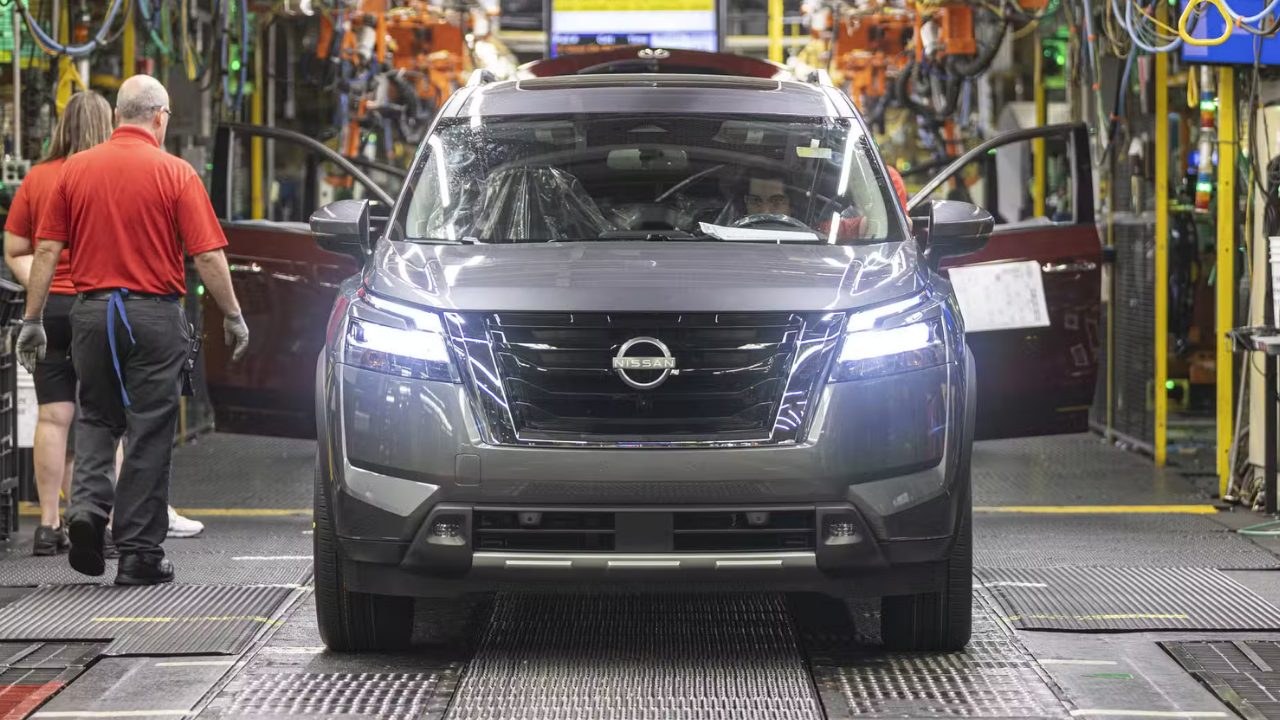
The affordable EV the American market had been waiting for is not coming, at least not this year. Nissan has confirmed it will not launch the Leaf S, a planned sub-$30,000 variant featuring a smaller 52-kilowatt-hour battery and 174 horsepower, for the 2026 model year. The announcement, made through an emailed statement to InsideEVs, marks a significant retreat by the automaker that invented the affordable mass-market electric vehicle with the original Leaf in 2010.
What Nissan Said and What It Didn’t
In a written statement, Dominic Vizor, Nissan’s U.S. Director of Product Communications, offered a carefully worded explanation: “Nissan continually evaluates market trends, customer preferences, and the evolving EV landscape to ensure we are focusing our resources where they create the most value. As part of that process, we have decided not to introduce the smaller-battery variant of the 2026 Nissan LEAF in the U.S. this model year.” Notably absent from the statement was any mention of tariffs, import costs, or margin pressures, the factors analysts say are the real drivers behind the decision.
The Financial Crisis Behind the Decision

The delay does not exist in a vacuum. Nissan reported a net loss of approximately $4.5 billion for fiscal year 2025, its worst financial result since its near-bankruptcy crisis in 2000. The company’s Re:Nissan recovery plan calls for cutting 20,000 jobs globally and consolidating its production footprint from 17 plants down to 10 by fiscal year end 2027. CEO Ivan Espinosa stated: “In the face of challenging FY24 performance and rising variable costs, compounded by an uncertain environment, we must prioritize self-improvement with greater urgency and speed, aiming for profitability that relies less on volume.”
A Sales Collapse That Changes the Math

U.S. market conditions have made the Leaf S’s business case even harder to justify. Combined Nissan EV sales, covering both the Leaf and the now-discontinued Ariya crossover, plummeted 93.2% in Q4 2025 to just 577 total units, down from 8,546 units in the same quarter of 2024. The new-generation Leaf alone posted an 86% sales decline over the same period. This crash followed the expiration of federal EV tax credits, which helped trigger a broader 36% contraction in U.S. EV sales during Q4 2025, dropping the total market from 365,830 to 234,171 units.
The Tariff Problem Nobody Is Talking About

Because the Leaf is manufactured in Japan, it is subject to U.S. import tariffs, a structural disadvantage that analysts say makes sub-$30,000 pricing economically untenable. Industry observers estimate tariff exposure at $1,500 to $2,500 per vehicle, based on a 2.5% base duty with the potential for additional reciprocal tariffs. On a model already priced for affordability, that cost layer effectively eliminates any profit margin. Cars.com noted that at the Leaf S’s expected price point, Nissan would likely be absorbing losses per unit, an unsustainable position for a company already deep in restructuring.
The Range Equation Nobody Wanted to Solve
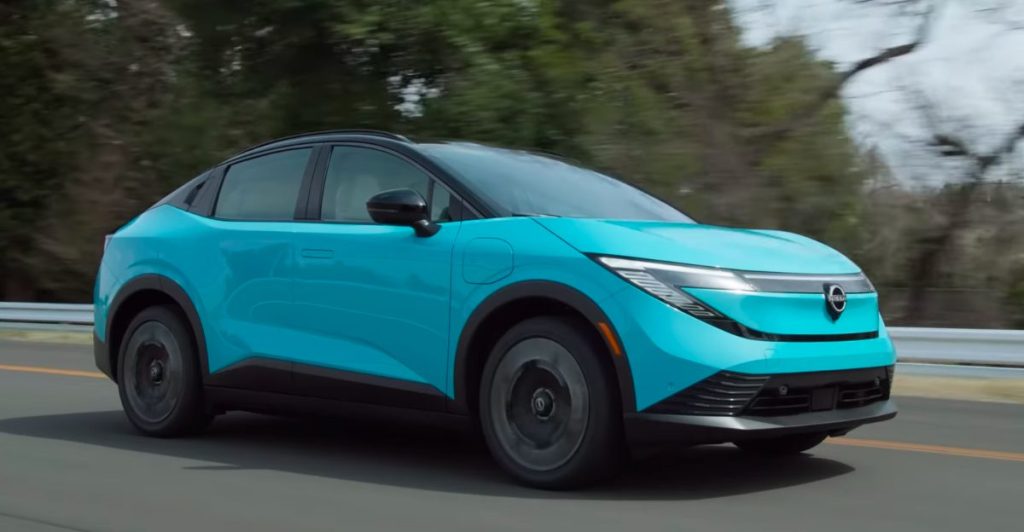
Even setting aside financial pressures, the Leaf S faced a real product challenge. Reducing the battery from 75 kWh to 52 kWh, a 25% reduction, would have delivered estimated real-world range of roughly 200 to 220 miles. That places it below the 250-mile threshold U.S. consumers have come to expect as a baseline. The current Leaf S+ earns its strong reception partly because of its 303-mile range. A shorter-range base model at a modest price saving would have been a tougher sell in a market where range anxiety remains a top concern for 32% of existing EV owners.
The Rivals Moving Into the Gap
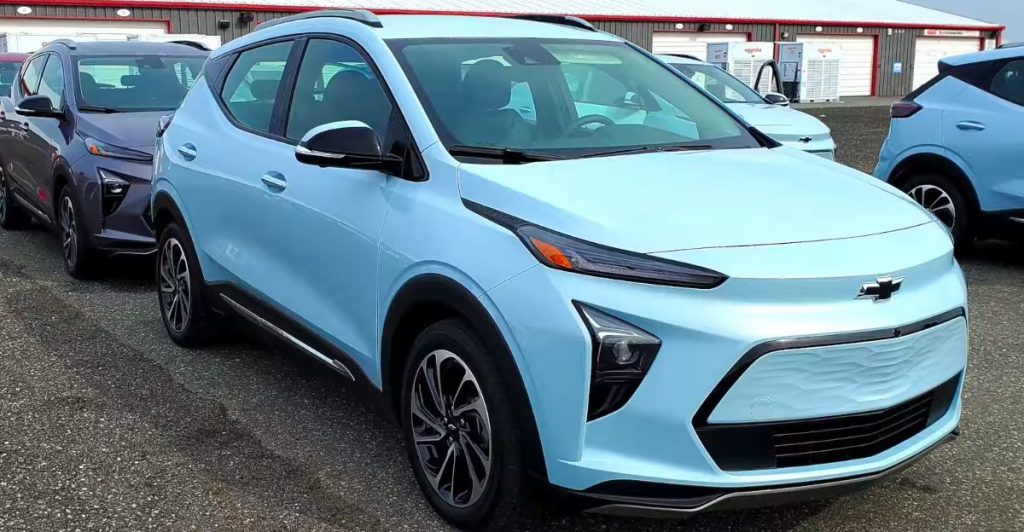
While Nissan pulls back, competitors are moving aggressively into the affordable segment it is vacating. The 2027 Chevrolet Bolt has arrived at dealerships with a starting price of $28,995 and an EPA-rated range of 262 miles, a figure that would have undercut any Leaf S launch price. The Kia EV3 is also on track for a 2026 U.S. launch at an estimated starting price of approximately $35,000, offering 201 horsepower and up to 375 miles of WLTP-rated range, positioning itself as a premium-affordable alternative for buyers seeking longer reach.
Nissan’s Narrowing EV Portfolio
The Leaf S delay is not Nissan’s only EV retreat in 2026. The company also removed the Ariya crossover from the U.S. lineup this model year, leaving the Leaf as the sole electric option available to American buyers. That concentration of the entire EV strategy on a single model, one whose sales are already under significant pressure, raises the stakes considerably. Nissan has not formally canceled the Leaf S, but with no firm timeline and a corporate restructuring still underway, its future remains genuinely uncertain.
What the Numbers Say About Consumer Confidence

The delay arrives against a backdrop of broader consumer hesitation around vehicle purchases. According to Wipfli’s automotive affordability analysis, 72% of U.S. consumers say now is a bad time to buy a vehicle, with average monthly car payments up 38% compared to 2018. A separate EY Mobility Consumer Index found that global consumer preference for battery-electric vehicles has fallen to just 14%, down 10 percentage points from prior surveys. The average new EV now sells for $55,689, making the Leaf S+’s $29,990 pre-destination price a genuine outlier, though clearly not enough to move volume at pace.
A Watershed Moment for the Affordable EV Segment

Nissan’s retreat signals something larger than a single model delay. The company that made affordable EVs viable in 2010 is now finding them financially unsustainable in 2026, a dynamic driven by import tariffs, post-incentive demand softness, and the structural cost advantages held by domestic U.S. producers and Chinese manufacturers. If even Nissan, with 16 years of EV experience and a market-leading range-to-price ratio, cannot absorb the economics of sub-$30,000 electric vehicles, it raises a serious question for the industry: the affordable EV era for imported traditional automakers may be entering an indefinite pause of its own.
Sources
“Nissan Delays Plan for Cheaper Leaf.” Kelley Blue Book, 23 Feb 2026.
“The Sub-$30,000 Base Nissan Leaf S Has Been Delayed Indefinitely.” Car and Driver, 22 Feb 2026.
“Nissan Posts $4.5 Billion Annual Net Loss, to Cut 20,000 Jobs.” Assembly Magazine, 13 May 2025.
“Nissan Sets the Stage for Change with the Bold Re:Nissan Plan.” Nissan Global News, 12 May 2025.
“Global Consumers Driven Back to ICE Vehicles as EV Enthusiasm Cools.” EY Global Newsroom, Dec 2025.
“Top Affordability Challenges for Automotive Suppliers in 2026.” Wipfli, 19 Feb 2026.
Q4 2025 Electric Vehicle Sales Report. Kelley Blue Book / Cox Automotive, 14 Jan 2026.