Giant Auto Supplier Dumps 59 Plants And 31,000 Jobs In Fire Sale
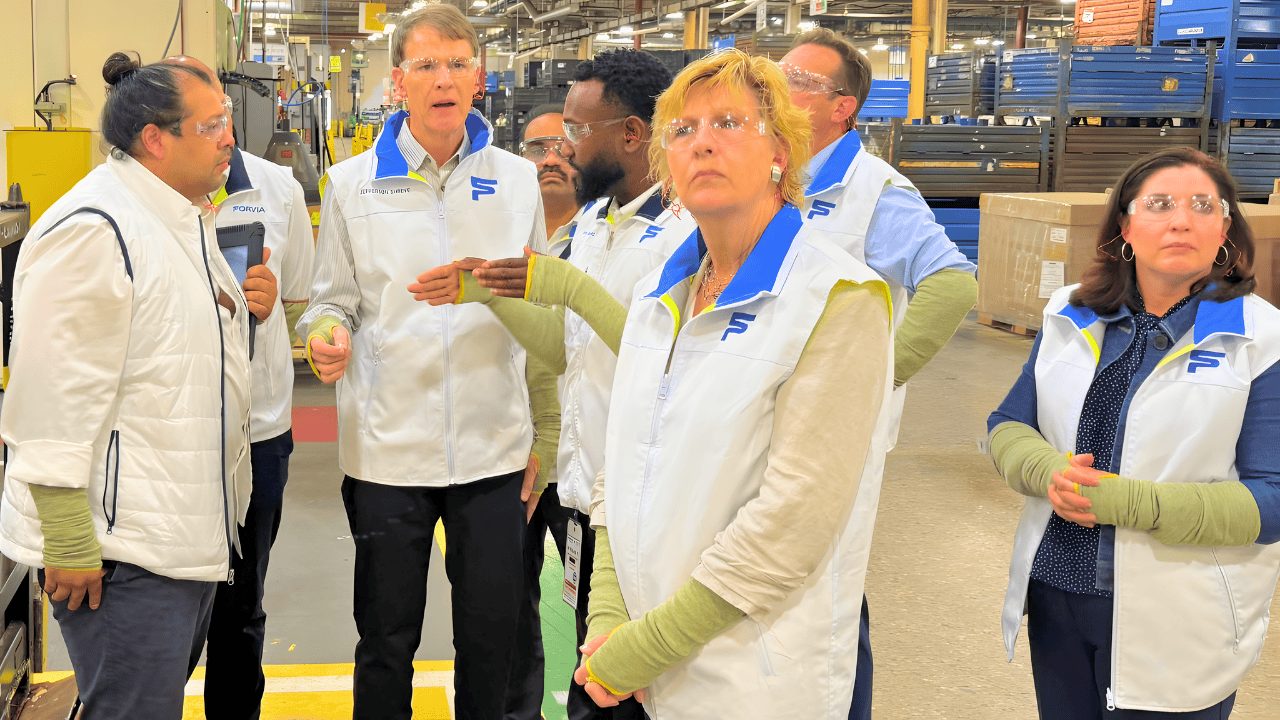
Europe’s largest auto parts maker stepped to the podium with €2.1 billion in red ink and called it progress. Forvia CEO Martin Fischer unveiled the damage on February 24, 2026, framing massive write-downs as “clear and disciplined portfolio decisions.” But behind him was a company carrying €6.0 billion in net debt, a suspended dividend, and 6,400 workers already cut ahead of schedule. The language was polished, and the balance sheet was bleeding. Fischer had one more announcement, and it involved selling the company’s most stable division.
The Debt Anchor
Four years earlier, Forvia bet €5.3 billion on acquiring HELLA, creating a mega-supplier spanning 249 industrial sites worldwide. The plan was simple: scale plus synergies equals pricing power with automakers. By the end of 2025, HELLA integration had delivered €400 million in cumulative synergies, mostly from procurement savings. The margins barely moved. Forvia’s operating margin sat at 5.6%, and was up just 40 basis points despite €165 million in cost cuts. Global auto production grew 3.9% that year. Forvia’s organic sales were flat. The acquisition that was supposed to create dominance had created a trap.
Best Positioned
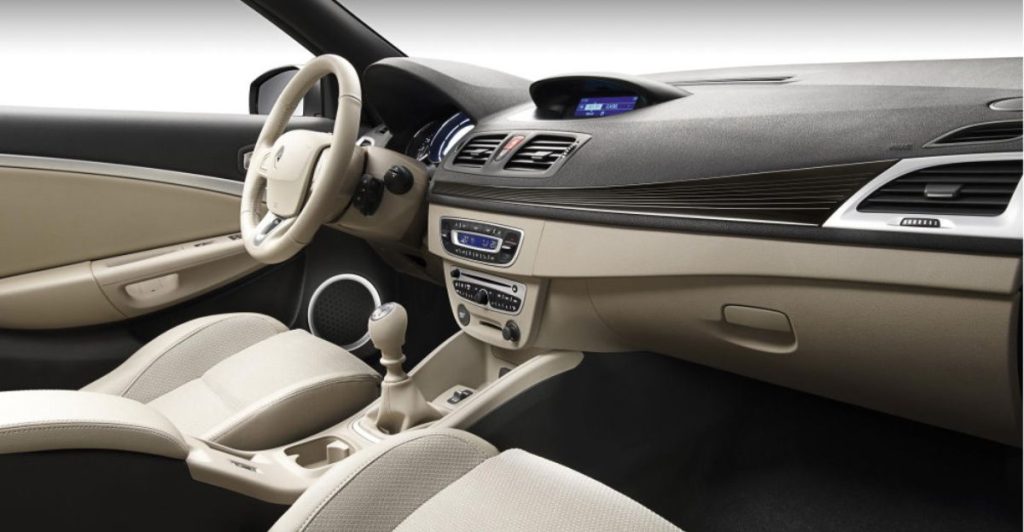
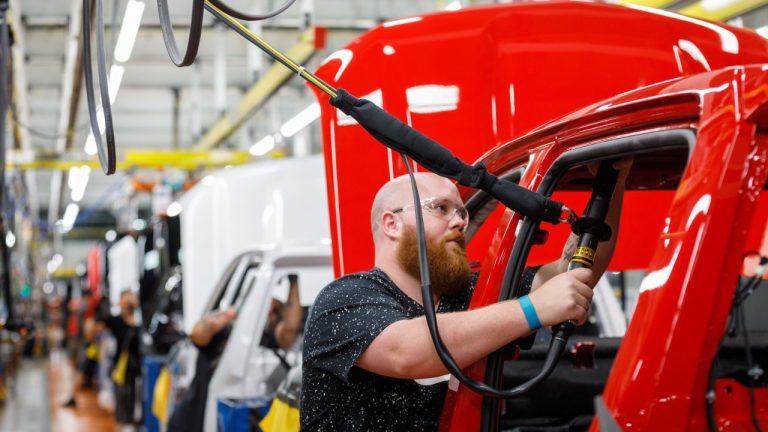
Fischer described the planned Interiors divestiture as a step toward refocusing the Group on “domains where we are best positioned to win and create long-term value.” The unit generated €4.8 billion in annual sales across 59 plants with 31,000 employees. It posted €109 million in operating income for 2025, maintaining a 2.3% margin through the restructuring chaos. It was profitable and stable, employing a small city’s worth of workers. And Fischer was about to announce its sale at a €578 million loss. The consolidation playbook said scale wins, but the balance sheet said otherwise.
Crown Jewels
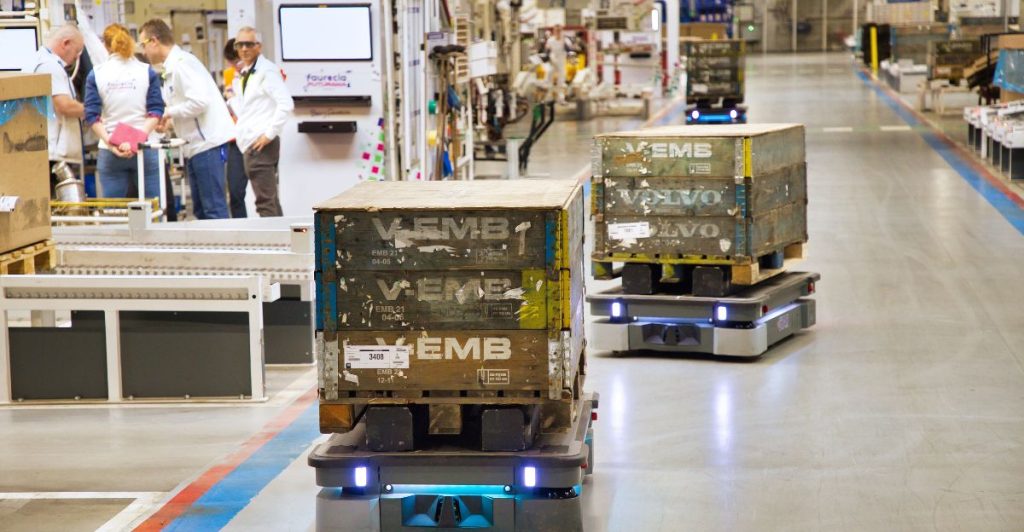
Forvia booked that €578 million capital loss under IFRS 5 before the sale even closed. A profitable division, marked down on the books like damaged inventory. The company entered advanced negotiations with multiple buyers, aiming to complete the deal this year. Proceeds would cut at least €1 billion from the debt pile. Fifty-nine factories and thirty-one thousand workers were suddenly gone to service a 2022 acquisition that never delivered its promised margins. The CEO called it a strategic focus, but the accounting called it what it was.
The Hostage Dynamic
Forvia’s four largest customers, Volkswagen, Stellantis, Ford, and Mercedes-Benz, account for 45.8% of sales. When one of those customers makes a unilateral decision, the supplier absorbs the hit. Stellantis decided in July 2024 to halt its hydrogen-related activities. Forvia held a stake in the Symbio hydrogen joint venture alongside Michelin and Stellantis. No veto power. No early exit. The result was a €209 million write-down and a workforce downsized to 175 employees facing an uncertain future. Tier-1 suppliers don’t negotiate with their biggest customers; they comply.
The Numbers
Order intake dropped 13% in 2025, falling to €27 billion from €31 billion as electrification demand stalled and OEM tenders dried up. The Lighting division suffered a 190-basis-point margin collapse, triggering impairment charges of €920 million across Lighting and the Clarion Electronics unit. Meanwhile, 2026 sales guidance came in at €20 to €21 billion, down from €21.3 billion in 2025 on an IFRS 5 pro forma basis, though roughly 23% below pre-IFRS 5 reported 2025 revenue of €26.2 billion. Forvia promised margins would expand to 6 to 6.5% amid that volume collapse. Shrinking your way to profitability works until you run out of things to shrink.
Jobs At Risk
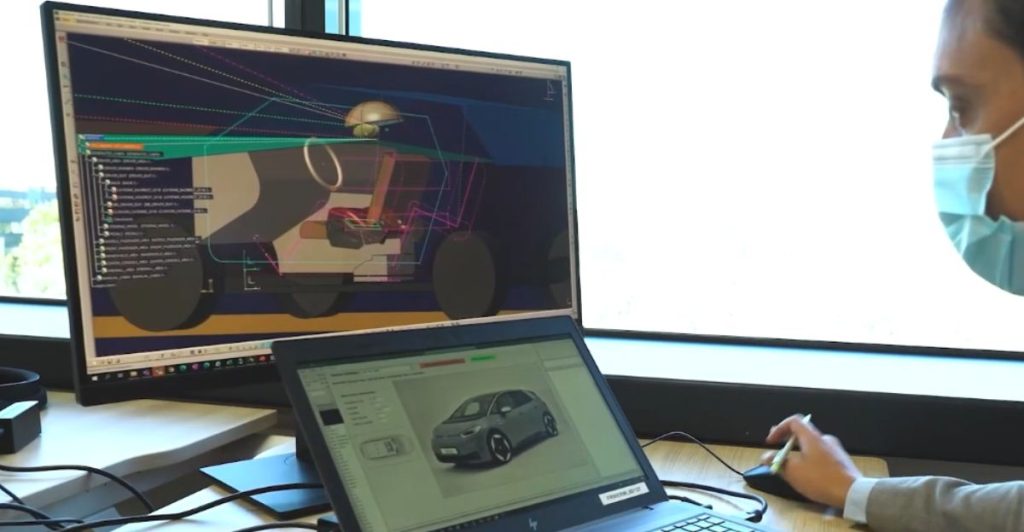
The Interiors divestiture puts 31,000 jobs at risk across auto manufacturing clusters in France, Germany, and Poland. Private equity buyers are the likely acquirers, which means a hold period of four to seven years and permanent separation from Forvia. Peer suppliers face the same OEM concentration trap. Lear, Magna, and Aptiv now evaluate their own portfolio divestitures as the consolidation narrative reverses across the sector. The HELLA deal was supposed to prove that bigger meant safer, but instead, it proved that debt-funded scale creates fragility, not resilience.
New Rules
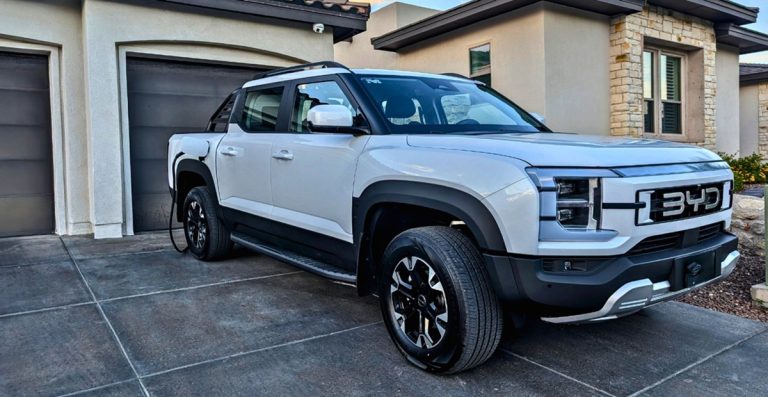
Forvia standalone achieved 5.2% margins pre-HELLA in 2021; by 2025, two-plus years into the post-HELLA integration. One year and €63 million in additional synergies later, the combined entity managed 5.6%. That 40-basis-point improvement came atop a €5.3 billion acquisition and a mountain of debt that has yet to deliver structural margin expansion. The precedent is brutal for the entire Tier-1 sector: mega-mergers at cycle peaks destroy value when integration delivers procurement savings instead of structural margin expansion. Chinese OEMs like BYD and Geely are building vertically integrated supply chains that bypass the outsourced Tier-1 model entirely. The consolidation era reversed.
The Tightrope
Forvia’s IGNITE roadmap targets sales of €21 to €22 billion, at least 7% operating margins, and 1.2x leverage by 2028. That requires roughly 47 basis points of annual margin improvement over three consecutive years, while global auto production is forecast to decline by 0.2% in 2026. Miss the sales target, and the leverage ratio stays elevated. Stay above 1.5x, and covenant risk emerges. Banks tighten facilities, and refinancing costs spike. The company would face a choice between cutting capital expenditure, which kills future competitiveness, or divesting more divisions at a loss.
The Real Bet
Clean Mobility returned to organic growth in 2025 after years of decline. Electronics delivered a 140-basis-point margin improvement and double-digit organic growth, the lone bright spot. Forvia is betting its survival on Electronics reaching strong annual organic growth after 2028. That bet assumes the outsourced Tier-1 model still has a future while Chinese competitors vertically integrate everything from battery cells to interior trim. Anyone who reads this as a turnaround story is missing the structural question underneath: whether the entire business model Forvia depends on is already obsolete.
Sources:
“2025 Annual Results: Performance significantly improved, solid progress on Group key priorities, on trajectory to 1.5x leverage at the end of 2026.” FORVIA Press Release, 24 Feb 2026.
“FORVIA 2026 Capital Markets Day – IGNITE: Drive what matters, unlock what’s next.” FORVIA Press Release, 24 Feb 2026.
“Clarifications from FORVIA and Michelin regarding the future of Symbio.” FORVIA / Michelin Joint Statement, 15 Jul 2025.
“Car parts supplier Forvia to simplify its portfolio to drive growth.” Reuters, 24 Feb 2026.