Trump’s ‘Largest Deregulation In History’ Hands China 70% Of EV Market—50K American Jobs Already Gone
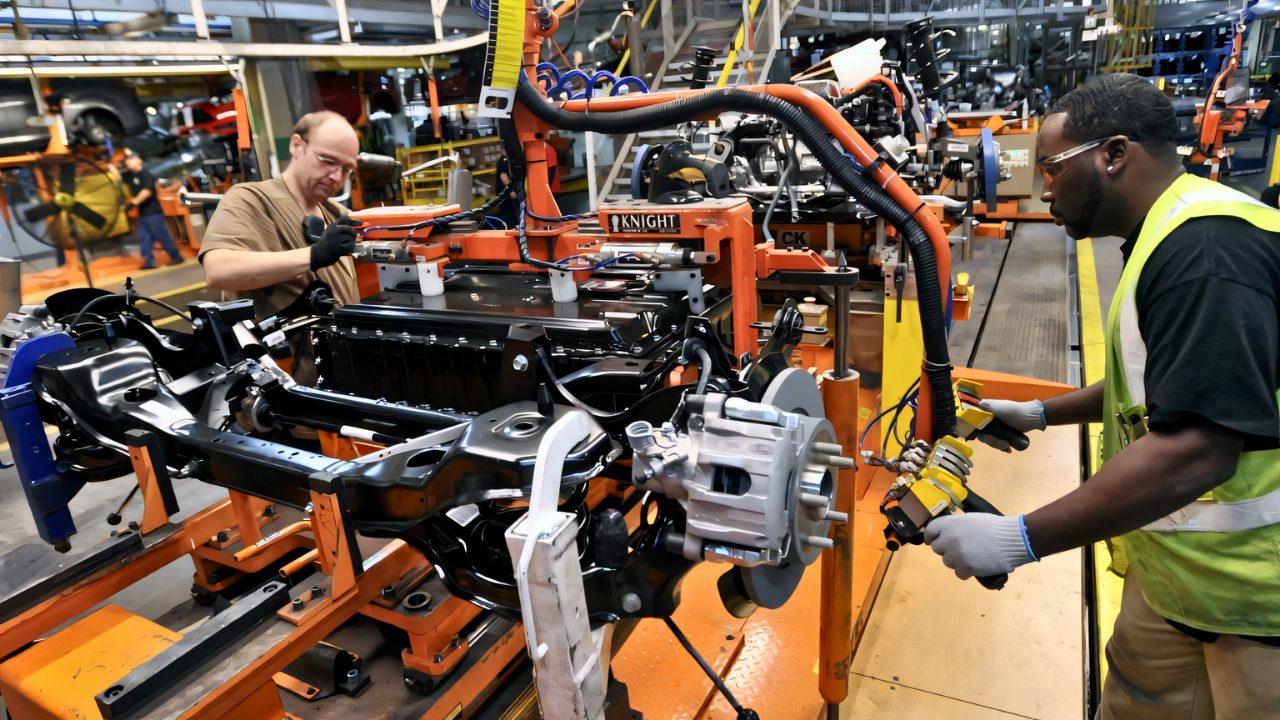
Trump didn’t tweak fuel rules; he yanked the engine out of the whole emissions system. In February 2026, his EPA tore up the 2009 Endangerment Finding, the legal foundation that allowed Washington to tell carmakers how clean their engines had to be. Along with it went federal greenhouse‑gas standards and compliance tools that quietly pushed Ford, GM, and Stellantis toward EVs instead of another run of big-displacement trucks.
Lee Zeldin, Trump’s EPA chief, called it “the single largest deregulatory action in U.S. history.” On paper, it’s a regulation gone. In the showroom, it’s something else entirely, and Detroit’s first move after the rule change tells you exactly where this is heading.
Detroit Torched Its EV Bets the Second the Pressure Disappeared
The moment the federal pressure eased, the balance-sheet knives came out. Ford booked a $19.5 billion write-down on its EV business in December 2025. GM took roughly $7.6 billion in charges tied to EVs and related restructuring in late 2025. Stellantis reported impairments of about €22.2 billion—roughly $26 billion—largely due to misjudging the pace of the EV transition.
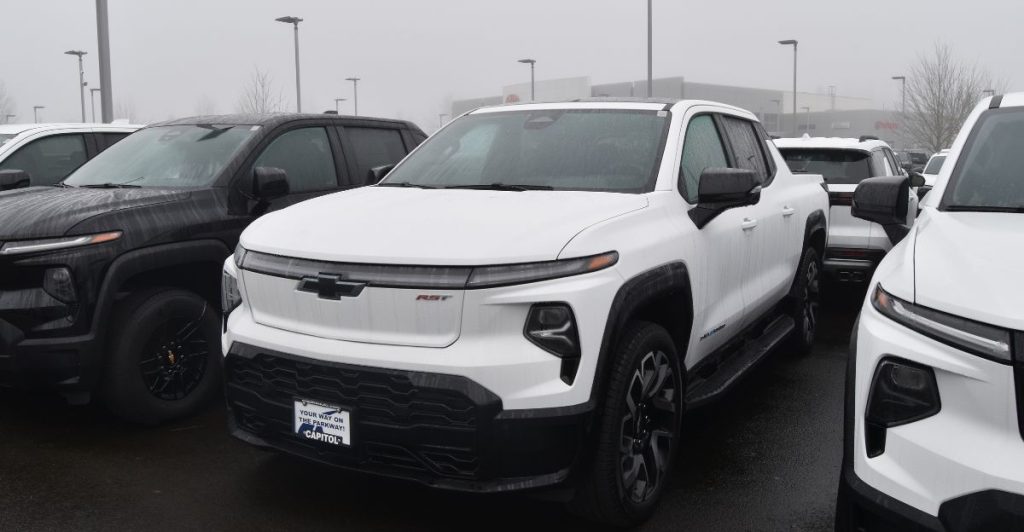
Taken together, legacy Detroit and its peers admitted their first big EV wave would not pay off under the new rules. Those “future of the brand” electric F‑150s, Silverado EVs, and Ram spin‑offs? Many of them quietly died on the spreadsheet the moment they could.
GM and Ford Slammed the Shifter Back Into Gas Trucks
Freed from having to chase aggressive emissions targets, the Detroit answer was simple: go back to what prints cash. GM lifted its 2026 guidance to about $13–15 billion in adjusted earnings, leaning harder into “more profitable” trucks and SUVs and a slower EV ramp. Ford told investors it expected significantly higher earnings as it pulled back on unprofitable EV programs and focused on vehicles that make money now, with CEO Jim Farley saying it made no sense to keep pouring billions into EVs that wouldn’t pay off.
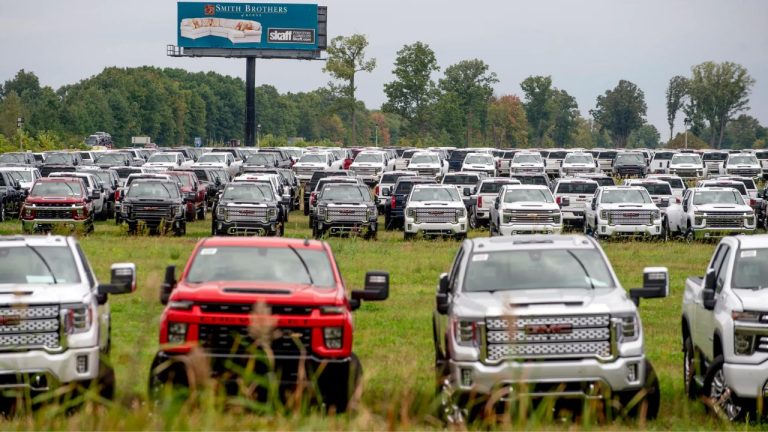
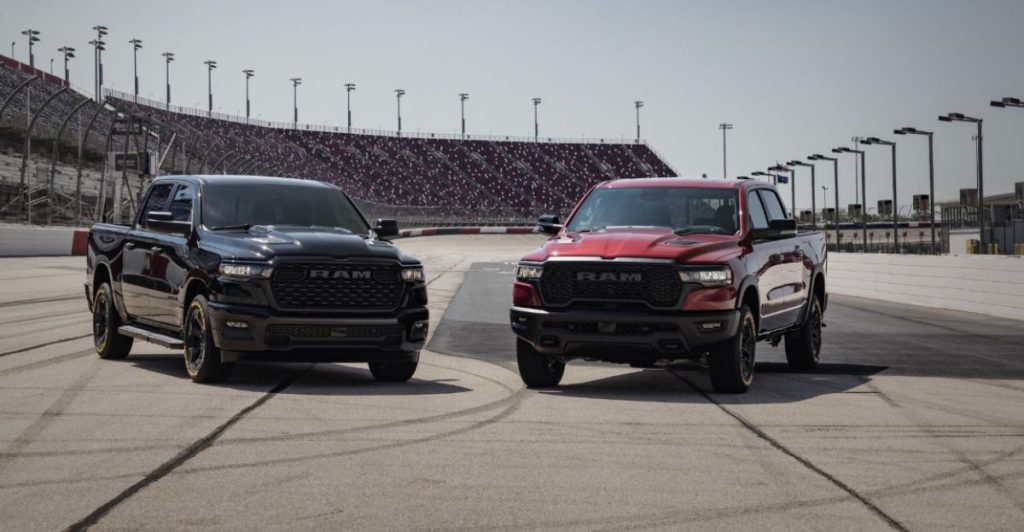
Stellantis went further, returning V‑8 power to the Ram 1500 with the 5.7‑liter HEMI and marketing it directly to buyers who missed eight cylinders. In the short term, it’s a return to what Detroit does best. But while they double down on gas torque, somebody else is quietly owning the future torque.
While Detroit Looks Backward, BYD Is Lapping Tesla
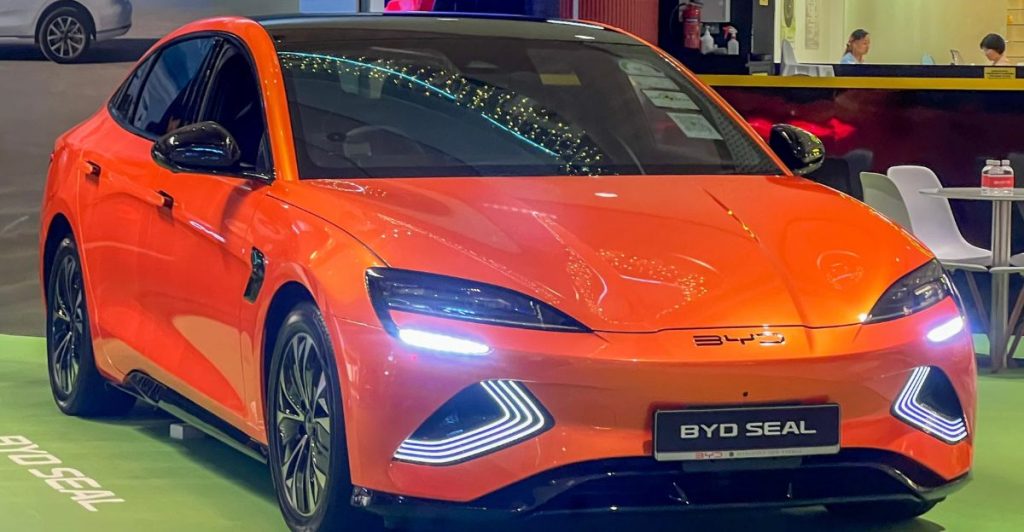
As the Big Three retreat, BYD is doing exactly what Detroit said it couldn’t: make EVs at scale and at a profit. In 2025, BYD sold about 2.26 million battery‑electric vehicles and pushed past Tesla to become the world’s top EV seller on an annual basis. Tesla delivered around 1.64 million, a drop of roughly 9–10% from the year before.
In Europe, Chinese brands led by BYD saw sales surge while Tesla’s fell, with several key markets showing double‑digit declines for Tesla and sharp increases for newcomers. That isn’t just a scoreboard flex; it’s proof someone figured out how to build EVs the way Detroit builds trucks. And BYD isn’t just winning on volume; it’s winning on speed to market, which is where the next twist for American buyers comes in.
China Builds EVs in About 20 Months
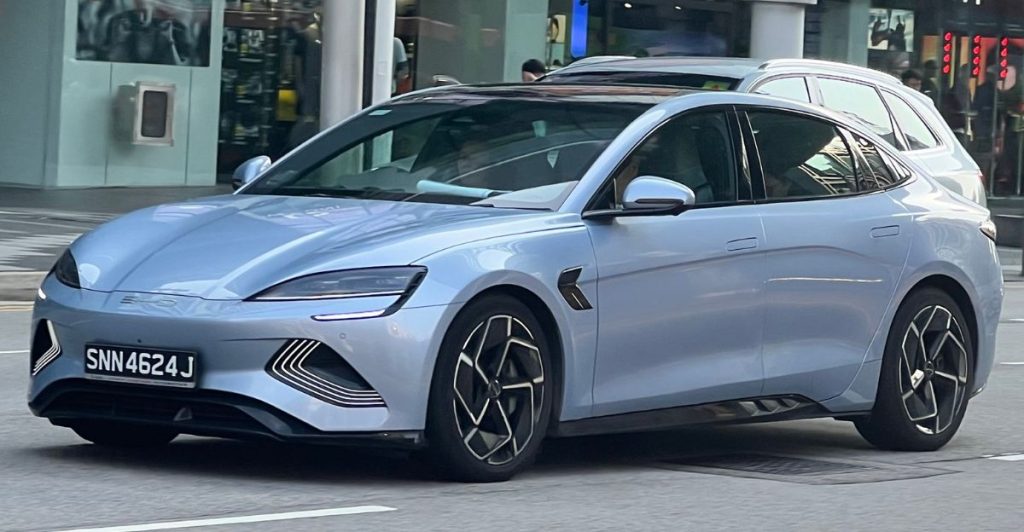
Chinese automakers are now getting from clean sheet to production EV in roughly 20 months, according to industry research, while legacy carmakers still work on cycles closer to twice that. That gap means every time a US or European brand finally launches one electric model, a Chinese rival can already be on its second update.
It shows up in hard numbers: China produces more than 70% of the world’s EVs and dominates global battery manufacturing through giants like CATL and BYD, which together hold well over half the market. They’re already entrenched in Europe, Asia, and Latin America. The only thing slowing them at America’s border is policy, and even that wall is starting to crack.
Chinese EVs Are Flooding Everywhere the Tariffs Don’t Reach
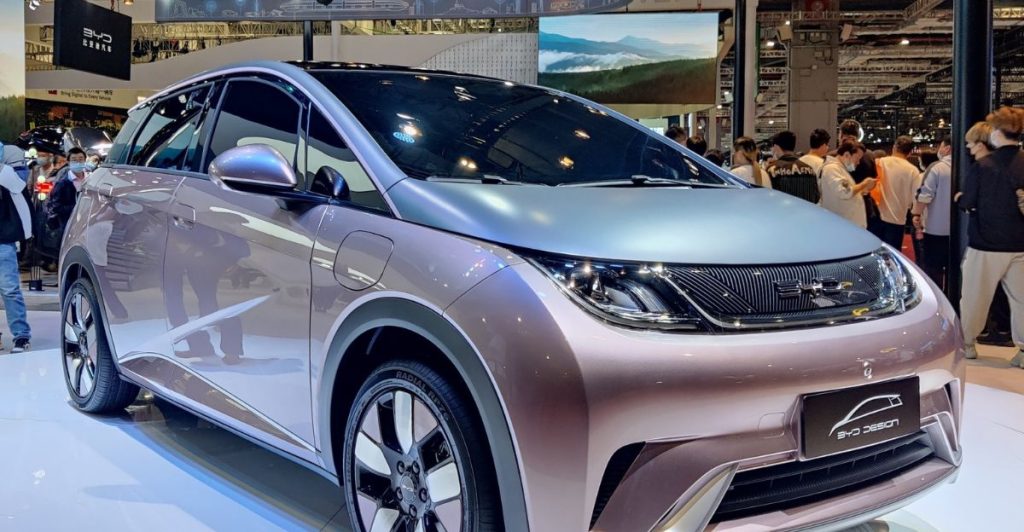
Look where US brands eased off, and that’s where China floored it. In Europe, Chinese automakers now hold roughly a mid‑teens to high‑teens share of EV sales, up from low single digits just a few years ago. Across Asian markets outside China, their footprint has grown rapidly and now accounts for a significant share of EV demand. In parts of Latin America, Chinese brands have quickly captured most of the EV segment, while local and Western brands lag.
The United States is still blocking direct imports with 100%‑plus tariffs and software restrictions, but Chinese automakers are already moving to build vehicles in Mexico to reach North America, with several plants under discussion or construction that could be supplying the region around 2027 if timelines hold. When that happens, those cheap EVs don’t have to cross an ocean. They just have to cross a border.
Ford Delayed the EV Truck It Actually Needs
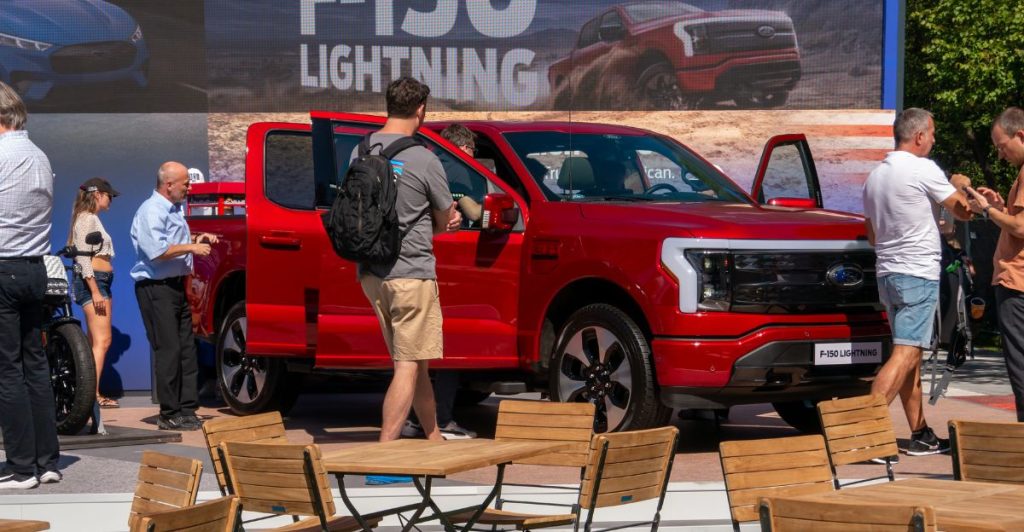
Here’s the painful part for truck guys: Ford knows it needs a cheaper EV truck. The company has talked up a next‑generation “affordable” electric platform and a mid‑size pickup aimed at undercutting rivals on cost, with a target price around $30,000. It’s described as a multibillion‑dollar program, and one of Ford’s biggest engineering pushes in years. But after the EV write‑down and policy shift, that truck has effectively been pushed into the latter half of the decade, with executives now pointing to 2027 as the year the new platform hits the market.
The future got delayed while the present snapped back to gas F‑150s and SUVs. In the meantime, Chinese brands will get multiple model cycles to refine cheap EV pickups and crossovers. By the time Ford’s budget EV truck rolls onto the lot, the bar will have moved again.
Stellantis Chose More HEMI and Less Electric Ram
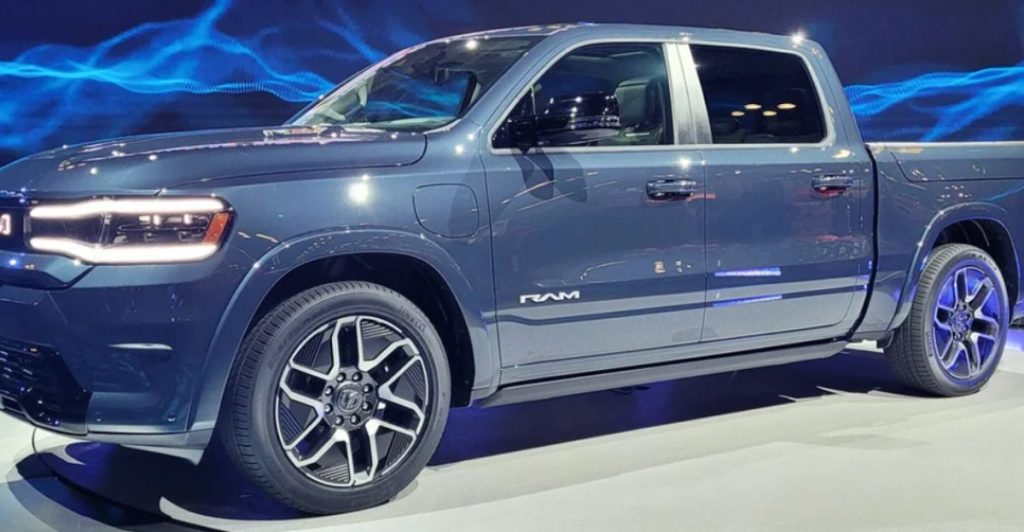
Stellantis made the call that says more than any press release. The all‑electric Ram 1500 REV, which was supposed to stand toe‑to‑toe with the F‑150 Lightning and Silverado EV, has been pushed back as part of a broader EV “reset,” with the company reworking its rollout and investments. At the same time, it’s re‑emphasizing V‑8 power, bringing the 5.7‑liter HEMI back for Ram 1500 buyers who never wanted to give it up in the first place.
This move plugs a profit hole in 2026 because a high‑margin gas truck is still easy to sell in the US. But it’s also a clock. Every HEMI‑powered Ram Stellantis sells into the late 2020s is a slot not filled by a competitive electric truck in markets racing toward stricter emissions rules. The longer that bet runs, the harder it will be to catch up.
Tesla Walked Away From Its Flagships to Chase Robots
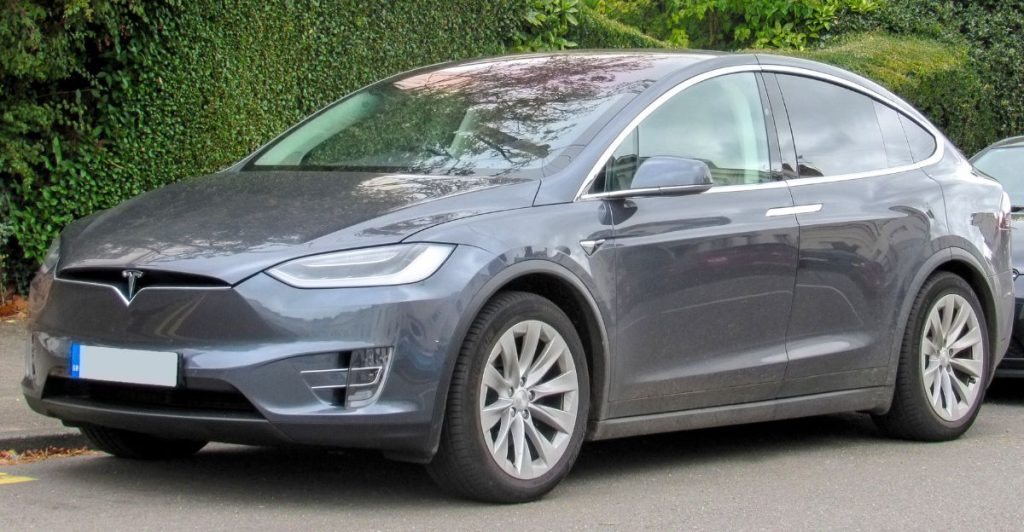
Then there’s Tesla, which chose a different kind of distraction. Instead of using Detroit’s retreat to reassert dominance, it moved to wind down Model S and Model X production and free up plant space and resources for its Optimus humanoid robot program. At the same time, volumes slipped, and BYD took the global EV crown, with Tesla delivering about 1.64 million vehicles in 2025 versus BYD’s 2.26 million. Tesla also reported its first annual revenue decline, confirming the slide wasn’t just about units but dollars.
In Europe, Tesla’s market share dropped as Chinese brands moved in and expanded their footprint. For US truck and SUV buyers, that matters because Tesla was the one American brand proving EVs could be aspirational and mainstream at the same time. With Tesla chasing robots and Detroit chasing short‑term margins, there’s a wide‑open lane, and right now, Chinese brands are the ones flooring it.
50,000 Jobs Down and the EV Supply Chain Is Buckling
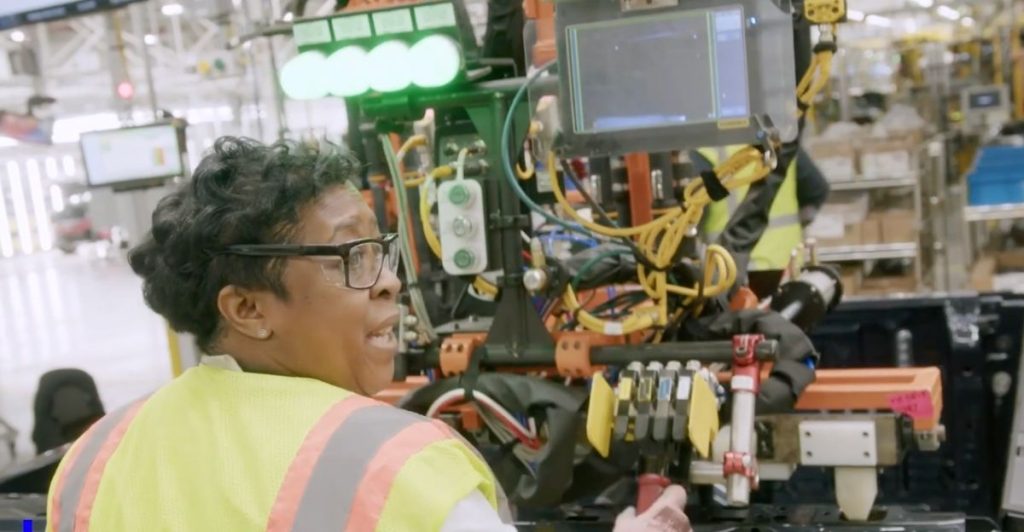
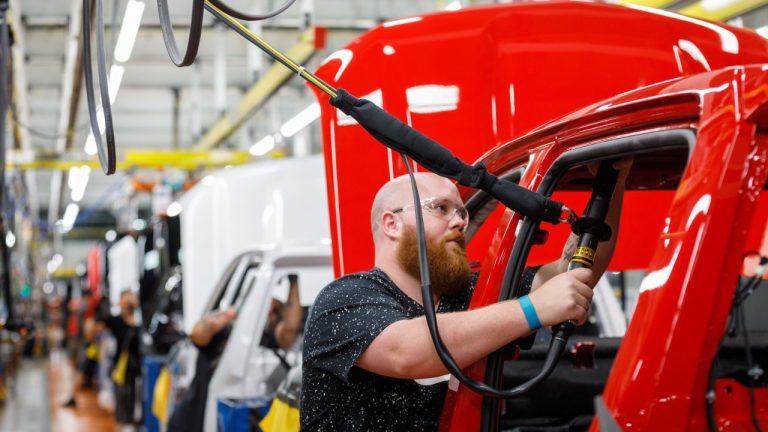
Since around mid‑2025, tens of thousands of jobs have disappeared across the US auto sector as EV plants cut shifts, battery factories pause, and suppliers scramble—industry estimates put the total at well over 50,000 positions. GM has dialed back work at EV assembly and Ultium battery sites, while Ford has reduced staffing at facilities like its Rouge Electric Vehicle Center in Dearborn as Lightning demand cooled. Workers who were told they were building the future of American manufacturing are now facing pink slips or transfers.
Automakers globally announced hundreds of billions of dollars in EV and battery investments between 2021 and 2024, then absorbed at least $60‑plus billion in losses and writedowns by early 2026 as plans were scaled back. Public charging networks built with roughly $5 billion in US federal funding now risk becoming underused assets if EV adoption continues to stall. Suppliers that poured hundreds of millions into EV components are being forced back toward internal‑combustion business … or into the red.
Detroit Just Made a Bet That Could Take 20 Years to Unwind
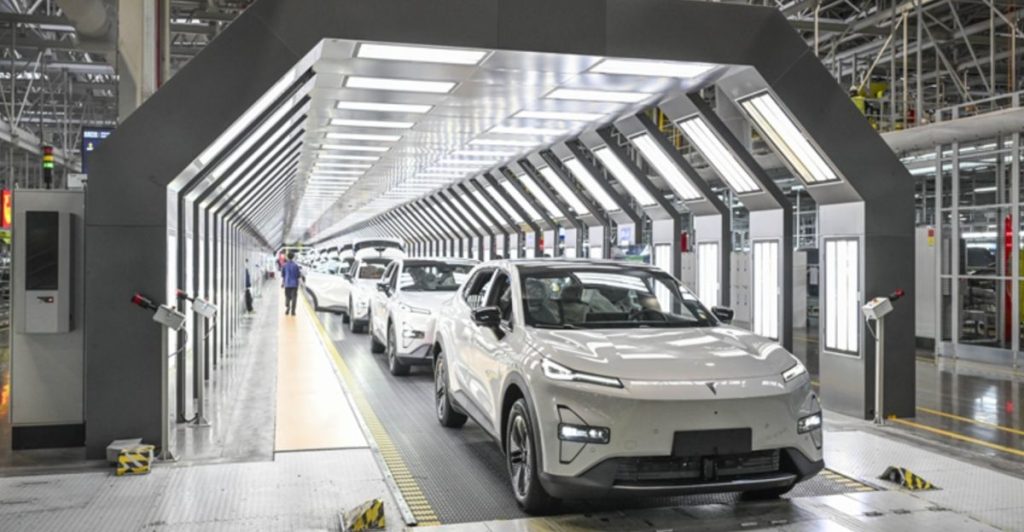
Detroit got breathing room and a clear runway to sell gas‑powered trucks through the decade. Chinese automakers got something more valuable: time—time to lock in more than 70% of global EV production, time to scale battery output to roughly 70% of the world’s supply, time to keep cutting development cycles while US brands hit the brakes. California and other states still have 2035 zero‑emission mandates on their books, but federal moves to roll back the legal basis for stricter vehicle emissions rules have sparked lawsuits and set up a Supreme Court fight over how far states can go on their own.
By around 2027, Chinese factories in Mexico could be shipping affordable EVs into North America just as Ford’s next‑generation electric truck finally arrives and GM is still leaning on full‑size gas trucks to hit its guidance. Global EV sales are expected to reach roughly a quarter of the passenger car market in the coming years, even with US rollbacks. Detroit doubled down on gas just as the world went electric. The numbers work for now. In a few years, the gap becomes a canyon.
Sources:
“President Trump and Administrator Zeldin Deliver Single Largest Deregulatory Action in U.S. History” — U.S. Environmental Protection Agency
“Ford retreats from EVs, takes $19.5 billion charge as Trump policies take hold” — Reuters
“Stellantis Resets its Business to Meet Customer Preferences and to Support Profitable Growth” — Stellantis (official press release)
“GM just wrote down $7.6 billion on its EV business—and the stock jumped” — Fortune
“Tesla loses EV crown to China’s BYD as competition, tax credit expiry weigh” — Reuters
“BYD’s Jan new car registrations in Europe surge 165%, while Tesla drops 17%” — CnEVPost (citing ACEA data)