Musk Confirms Grok Voice Control For 4M Cars As AI Will Override FSD Parking Decisions
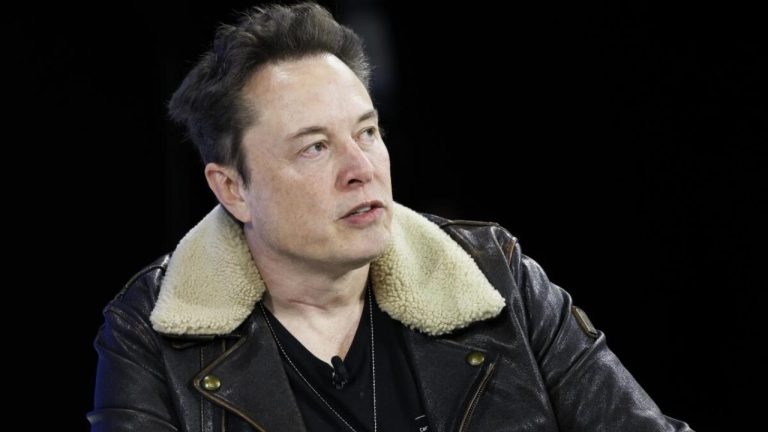
A Tesla owner finally said what the rest of us have been screaming into the void: FSD cannot park to save its life. It shoves your trunk against a wall. It leaves your charge port facing the completely wrong direction. The car just does whatever it thinks is best, your opinion be damned, and you’re sitting there like a passenger in your own life. So naturally, Elon Musk saw that post on February 21, 2026. His entire response was a single word that sent the industry scrambling.
Rigid Logic
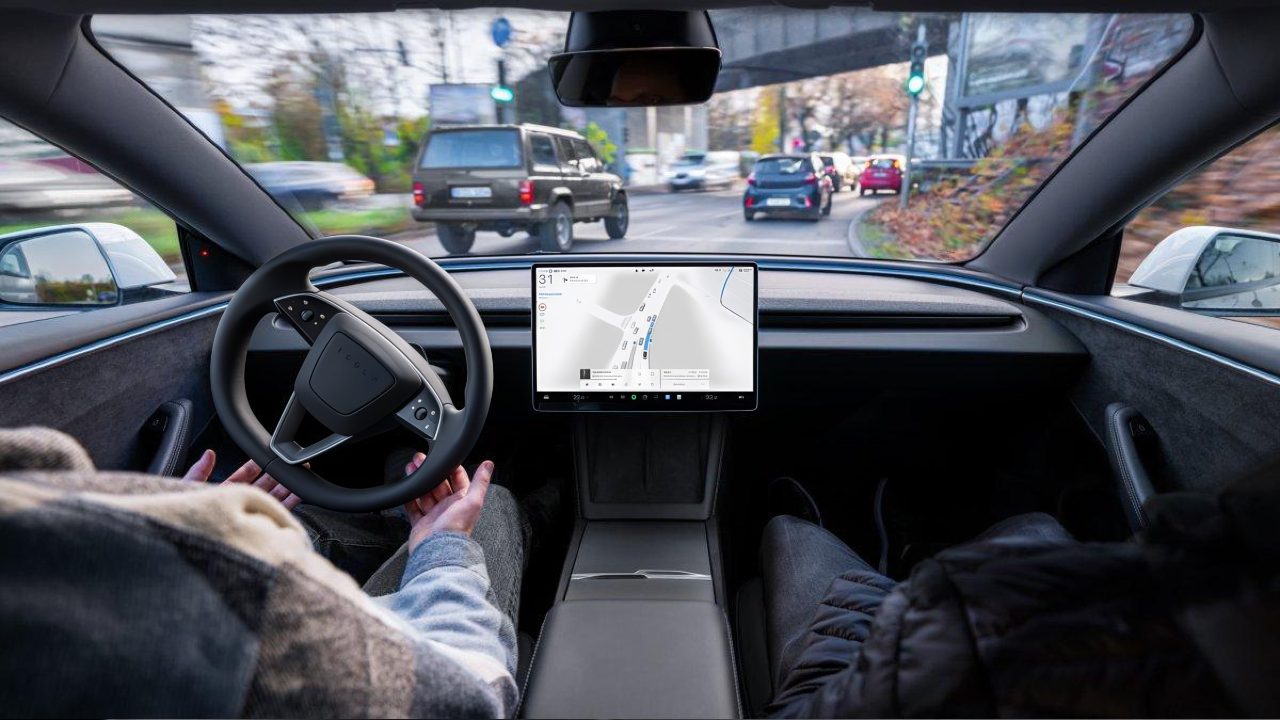
FSD v14 already offers five arrival options: Parking Lot, Street, Driveway, Garage, and Curbside. It has five speed profiles ranging from Sloth to Mad Max. That level of granularity suggests a system that understands nuance. It doesn’t. When the car reaches a destination, it defaults to whatever its neural net calculates as the most efficient, ignoring the driver’s preferences entirely. All that sophistication, and it still can’t process “back into the spot on the left.” The tools existed for over a year with no voice interface to reach them.
The Gap
Grok started life as a chatbot back in November 2023. Fast forward to mid-2025, and it was living inside Tesla cars across North America — with navigation voice commands added in the December 2025 Holiday Update. The voice tech? Already there. Already working. But parking was still locked behind the car’s stubborn, rigid logic. FSD had parking options baked right in. Grok could totally understand what you were saying. The Grok Voice Agent API, first announced in late 2025 and widely available by early 2026, responded in under a second — significantly faster than most competing voice APIs. All the pieces existed. They just weren’t connected to each other.
“Coming.”
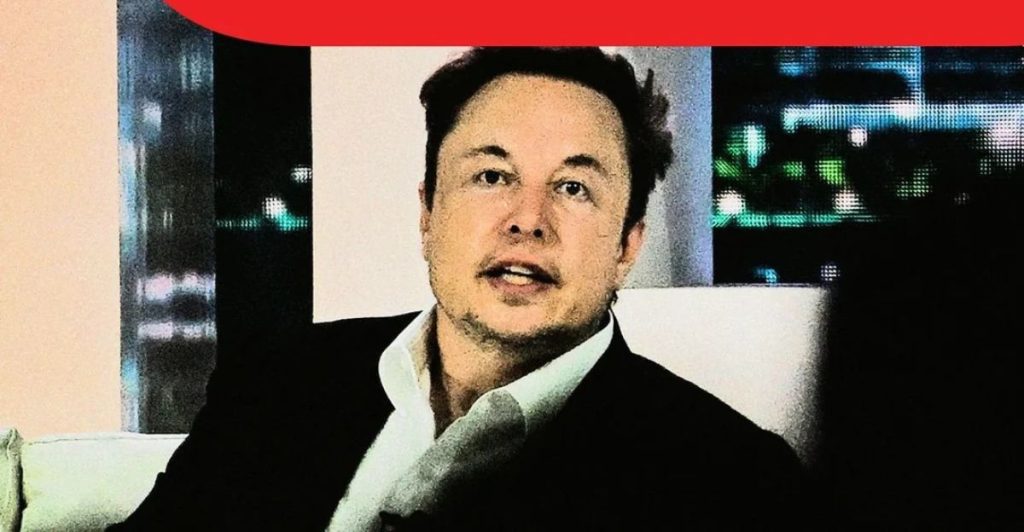
That was it. The whole announcement. One word. No spec sheet, no timeline, no fancy whitepaper, nothing. Musk confirmed voice-controlled parking for FSD on February 21, 2026, and honestly? That single word landed harder than an entire product launch from literally any competitor. And here’s the kicker: just nineteen days before that, SpaceX had scooped up xAI in a $1.25 trillion all-stock deal. So the guy casually typed “Coming”? He owned the AI, the cars and, the satellites. Four million vehicles could get this feature. One word. That’s all it took to rattle the entire market. Peak Musk energy — say less, mean everything.
The Bridge
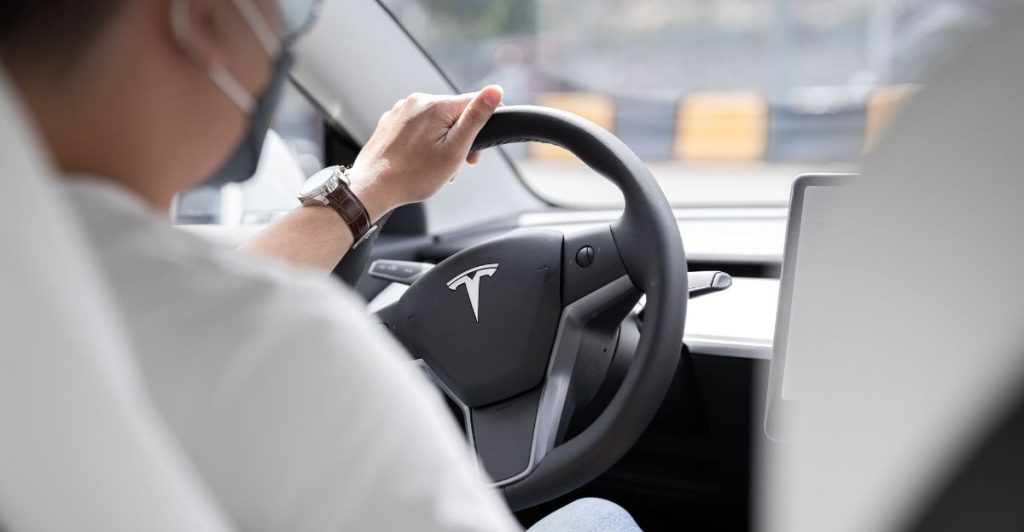
Grok is not just there for show. It acts as the link between what the driver wants and what the car does, letting people give spoken instructions without touching the screen or the wheel. Say “pull forward into the driveway,” and Grok understands it, translates it, and overrides FSD’s default choice on the spot. Recent Grok updates have significantly reduced error rates compared to older versions. That improvement is the bare minimum needed before you can trust a voice AI to handle a parking maneuver just feet away from other cars.
The Numbers
Tesla revived its Dojo supercomputer program in January 2026, while xAI’s Colossus cluster — powered by roughly 200,000 GPUs — continues to train next-generation AI models. Grok 5, scheduled for release in 2026, has 6 trillion parameters, roughly 3.5 times GPT-4’s estimated architecture size. Musk himself put a 10% probability on Grok 5 achieving artificial general intelligence. That is the highest public AGI probability estimate from any AI company founder. Voice parking is not the destination. It is the real-world training ground for a model being built to think.
Data Harvest

Every voice command gets fed back into the system to help it learn. Say “back in on the left,” and Grok records what you wanted, where you were, and what happened. Now multiply that by millions of cars, and you get a data collection no competitor can match. Drivers think they are just telling the car what to do. In reality, they are creating training data for a massive AI model with six trillion parameters. The EU has already held up Grok’s launch due to privacy and AI safety laws. Regulators spotted the data collection before most drivers even thought about it. The convenience is real. But so is the data grab.
New Rule
Voice parking creates a situation no regulator has fully figured out yet: it is the first time a consumer car feature is controlled by voice AI in a real-time, safety-critical moment. Once drivers get comfortable with voice parking, voice-controlled routing comes next. Then, personalized driving styles. Then the car comes to you on its own without supervision. Each step makes it more normal to control a two-ton machine with your voice. This is not a one-off. It is the new playbook. The same system that needed Grok to understand “park here” is being trained to eventually make that decision without being asked.
Who Loses
Voice recognition in cars still struggles with things like accents, background noise, and vague commands. If the car mishears a parking instruction mid-maneuver, no one has figured out who is responsible — the driver or Grok. Tesla already caught heat for using cameras only, which can fail in fog or condensation. Now that the same camera setup has to handle voice commands while navigating a parking lot. Traditional voice interface designers risk becoming irrelevant. Tesla owners with FSD but no Premium Connectivity are completely locked out of the feature. And competitors like Waymo and older car companies are now under pressure to add conversational AI or risk falling behind.
Your Move

Grok is in beta. The feature is confirmed, not deployed. And the man who said “Coming” runs all three companies required to deliver it. That mix of existing infrastructure, centralized control, and a fleet of 4 million cars is something no competitor can match by issuing a press release. You will tell your car where to park. Your car will learn why you picked that spot. The next version will choose it before you speak. The question every Tesla owner should be asking is not whether voice parking arrives, but what Grok remembers after it does.
Sources:
Not a Tesla App, FSD parking shortcomings and Grok voice control coverage, February 2026
Teslarati, Musk’s “Coming” confirmation and Grok 5 projections, February 2026
Tesla Support, Grok in-vehicle deployment and fleet details, February 2026
Fortune, EU regulatory delays and Grok data concerns, February 2026
Basenor, Grok Voice Agent API launch, February 2026
Drive Tesla Canada, Dojo supercomputer and FSD training infrastructure, February 2026