$114B EV Collapse Marks Largest Automaker Strategic Failure Since 1970s Oil Crisis
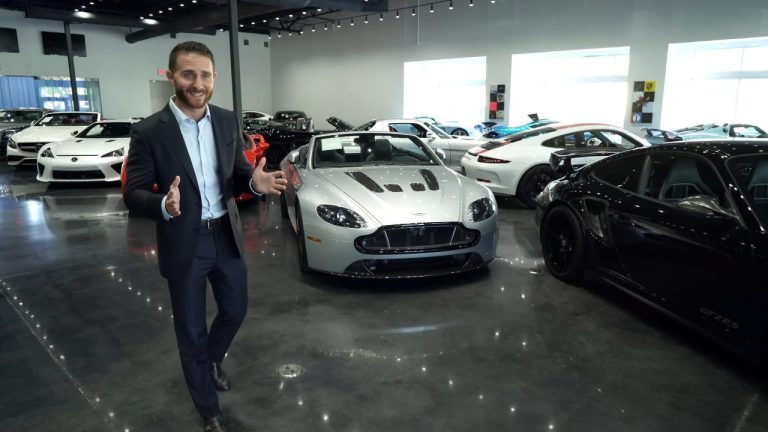
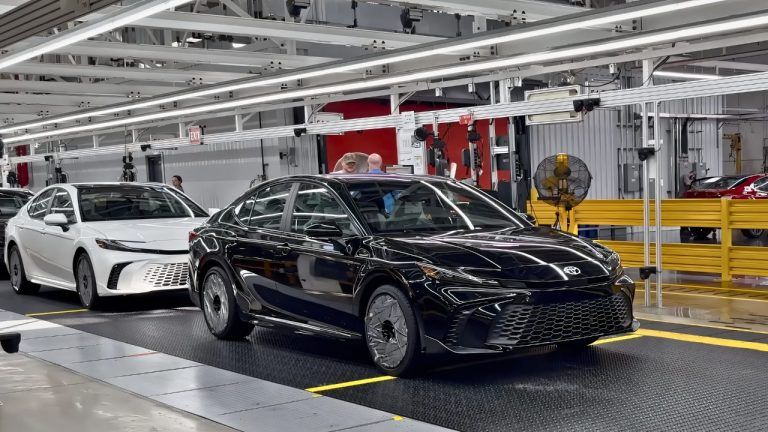
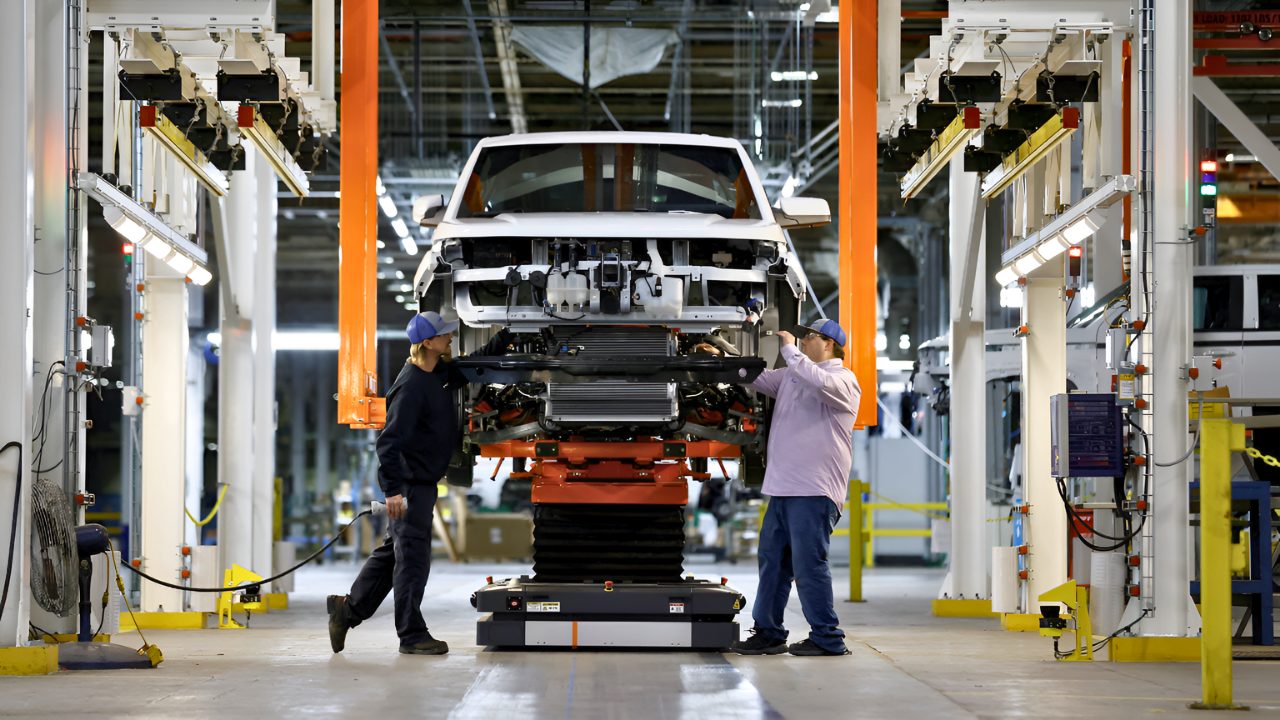
It’s a sad reality, but massive assembly lines across Detroit, purpose-built for electric vehicles, are now sitting completely idle. Billions of dollars in specialized tooling just gathering dust while the world moves on. Outside, dealer parking lots overflow with unsold cars, 168 days’ worth of inventory by January 2026, the highest stockpile since July 2024, according to Cox Automotive.
American automakers bet everything on an electric future, but everyday consumers never really demanded it on their own. The entire movement depended on a $7,500 federal tax credit to make EVs affordable enough to consider, but when that credit officially expired on September 30, 2025, demand fell off a cliff almost overnight.
The $114 Billion Gamble That Backfired
Between 2022 and the third quarter of 2025, seven major automakers, Ford, GM, Stellantis, Honda, Mercedes, Volkswagen, Rivian, and Lucid, built approximately 5.4 million electric vehicles. Every single one lost money. The average loss? About $20,887 per car. Across that entire production run, cumulative losses reached roughly $114 billion, a figure that includes approximately $83.6 billion from the seven legacy automakers and another $30.2 billion from Rivian and Lucid.
That total rivals what NASA spends over five full years and these weren’t companies stumbling through one bad quarter. They poured staggering capital into factories, battery plants, and supply chains, all based on the assumption that government mandates and growing consumer excitement would hold steady indefinitely.
When the Government Pulled the Rug
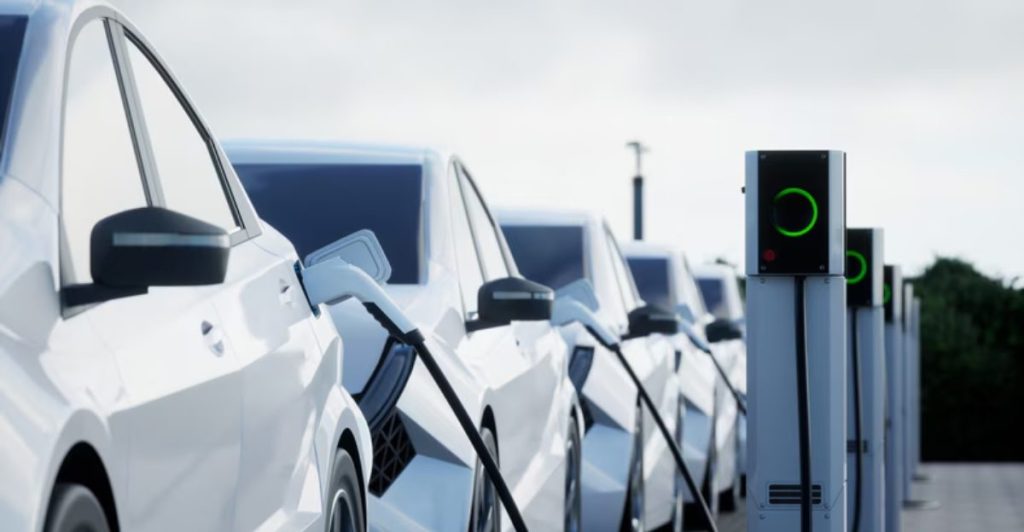
The prevailing narrative held that EV adoption was an unstoppable global megatrend fueled by consumer demand, and automakers built massive factory capacity targeting 50-mpg CAFE standards and ambitious 2035 ICE phase-out requirements. Then Washington changed direction entirely. The One Big Beautiful Bill terminated both the $7,500 new-vehicle and the $4,000 used-vehicle federal EV tax credits effective September 30, 2025.
US EV sales actually declined approximately 2 percent for the full year of 2025, despite record-breaking Q3 numbers driven by the credit deadline rush. In Canada, the damage was even sharper, EV sales dropped roughly 25.5 percent year-over-year as tariff uncertainty and a pause on federal incentive programs compounded the downturn.
Big Promises, Bigger Losses

GM CEO Mary Barra stood before cameras and confidently declared, “We believe in an all-electric future.” That statement didn’t age well. Shortly after, GM announced a $7.1 billion earnings charge, with a full $6 billion tied directly to her failed EV strategy. But Ford made GM’s losses look almost manageable by comparison. Ford’s EV division accumulated $35.1 billion in cumulative losses, a total that includes $15.6 billion in operating losses since 2022 and a staggering $19.5 billion write-down announced in late 2025.
Ford’s write-down alone exceeded the entire cost of Chrysler’s 2008 financial crisis restructuring, adjusted for inflation. One company, one division, burning through more cash than the last time Detroit nearly collapsed entirely.
Millions in Pay, Billions in Losses
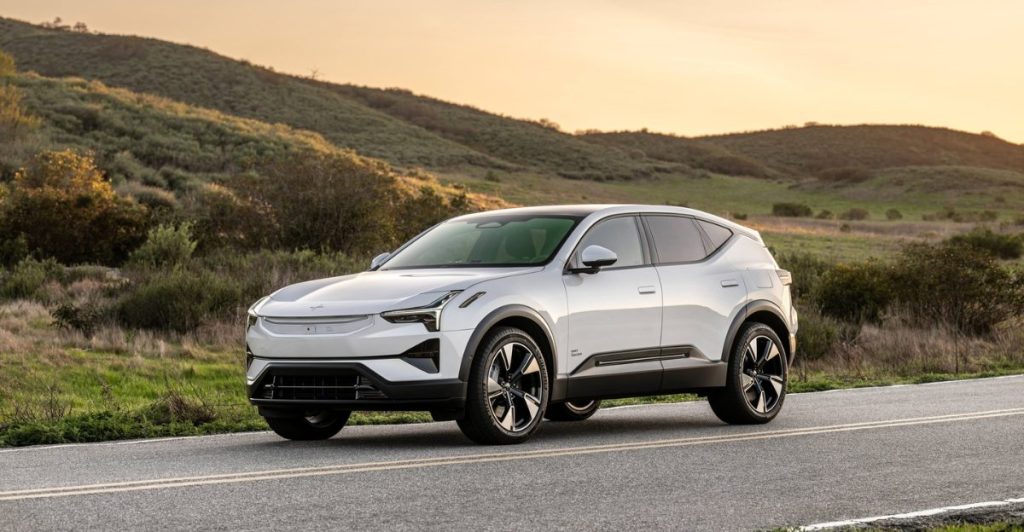
While her company hemorrhaged money on electric vehicles, Mary Barra collected $29.5 million in total compensation for 2024, a 6 percent raise over the prior year. Ford CEO Jim Farley took home $24.9 million while presiding over that $35.1 billion hole in Ford’s balance sheet. How is this even possible?
Board compensation structures measured overall company profitability rather than divisional accountability, so EV losses hid comfortably behind profitable truck and SUV divisions. Stellantis pulled off an even more remarkable feat by previewing approximately $26 billion (€22.2 billion) in charges in 2025, just one year after posting $5.8 billion in profit for 2024, a staggering swing from one strategic miscalculation.
The Numbers That Tell the Real Story
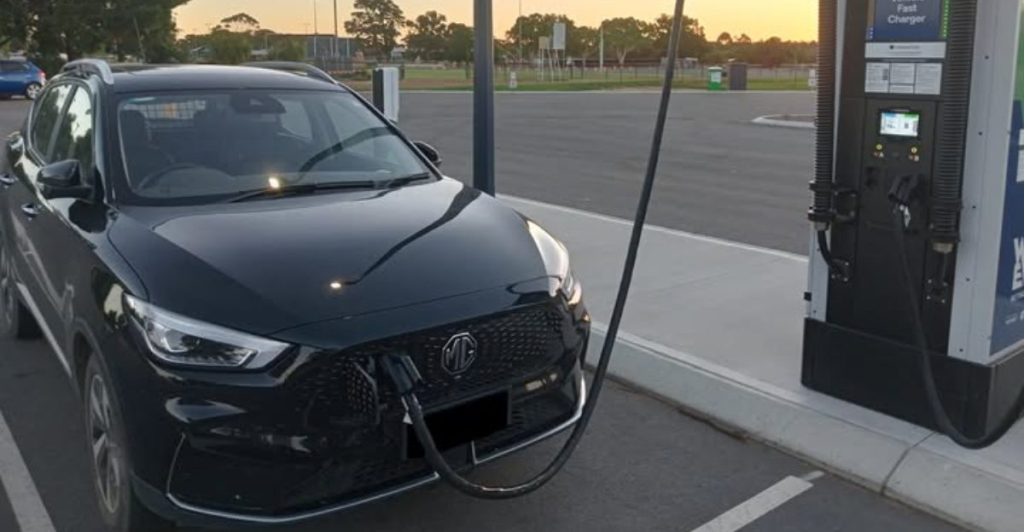
US EV market share actually went backward in 2025, slipping from 8.1 percent to 7.8 percent. EV share peaked at 10.5 percent in Q3 2025 as buyers rushed to claim the expiring tax credit, then cratered to just 5.8 percent in Q4, roughly equal to where it stood in early 2022. Average new-car transaction prices pushed past $50,000, and EVs still carried a significant premium over their gas-powered equivalents.
But here’s the real kicker, globally, EV sales grew a healthy 20 percent, reaching 20.7 million units. The US saw sales decline about 2 percent, while China’s EV market grew 17 percent while North American registrations fell 4 percent for the full year, according to Benchmark Mineral Intelligence. The global EV transition is still very much accelerating, it’s just happening almost entirely outside America’s borders.
China Took the Lead While Detroit Stalled
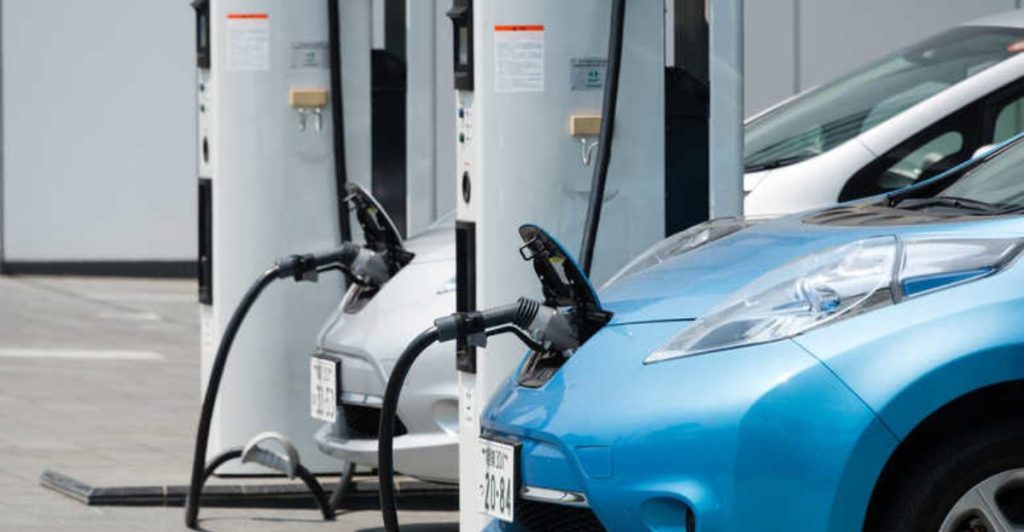
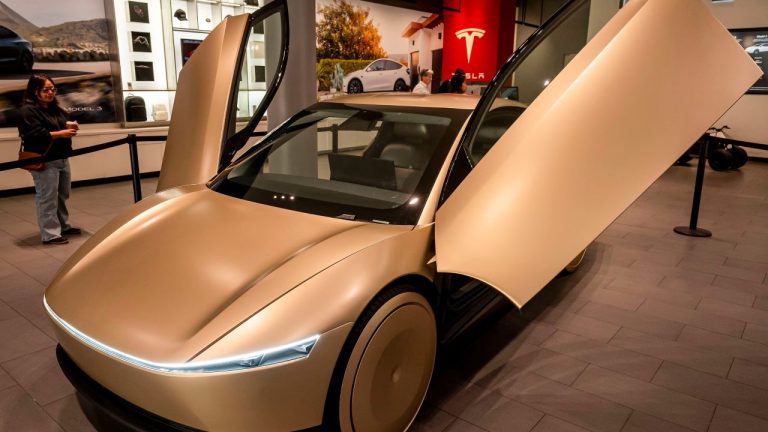
While American automakers bled red ink, China’s BYD quietly became the world’s largest electric vehicle maker. In 2025, BYD sold 2.26 million battery electric vehicles, surpassing Tesla’s 1.64 million units. Include plug-in hybrids, and BYD moved a staggering 4.6 million total vehicles, with over a million sold outside China’s borders. Tesla’s position in Europe deteriorated sharply, with sales falling significantly across major markets — including declines of roughly 37 percent in France and as much as 70 percent in Sweden, though results varied widely by country.
Across the globe, China accounted for 12.9 million of the world’s 20.7 million EV sales, a dominant 62 percent of every electric car sold on the planet. Meanwhile, the $11.4 billion battery supply chain that Ford and SK On built together essentially dissolved. Chinese companies have sold roughly 19 percent of the EVs in Europe so far in 2025, up from just 2 percent in 2020, according to Benchmark Mineral Intelligence.
This Wasn’t a Market Failure
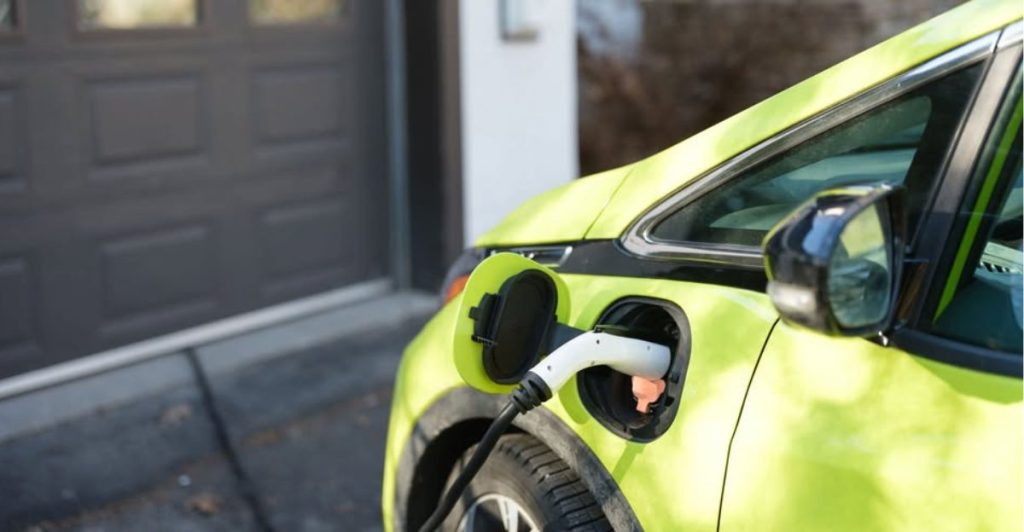
Electric cars didn’t fail because the market rejected them, they failed in America because governments promised a transition, automakers invested $114 billion to deliver it, and then politicians reversed course before anyone crossed the finish line. The pattern mirrors the 2008 financial crisis almost eerily, massive capital poured into an asset class whose entire value depended on assumptions that turned out to be wrong. Subprime mortgages then, EV production capacity now.
Making matters worse, Chinese competitors maintained profitability selling vehicles at roughly $25,000 on average, while American automakers lost money on cars priced around $55,000. That cost-structure gap can’t be closed with tariffs alone. But until the cost equation changes, losses will continue compounding regardless of what policy levers Washington pulls.
The Fallout Is Still Getting Worse
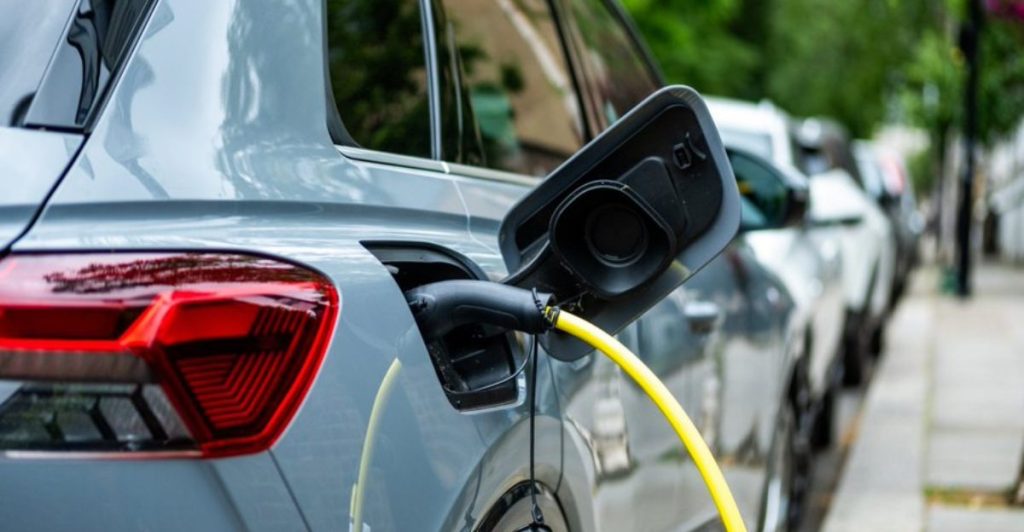
The damage isn’t finished, it’s actively spreading into new corners of the economy. Rivian has burned through more than $21 billion since its 2021 IPO with no clear path to sustained profitability in sight. Korean battery suppliers LG and SK On now face painful contract renegotiations as American automakers slash their orders dramatically. Used EV resale values have dropped domestically as excess supply floods a weakening market.
Perhaps the most painful consequence falls on everyday buyers with early adopters who rushed to purchase EVs before the September 2025 tax credit deadline now face crushing negative equity. When those leases come due in 2026 and 2027, many owners will owe significantly more than their vehicles are actually worth. Q4 2025 EV sales plunged 46 percent compared to Q3 and fell 36 percent year-over-year, hitting the lowest quarterly level since Q4 2022.
Detroit’s Déjà Vu Moment
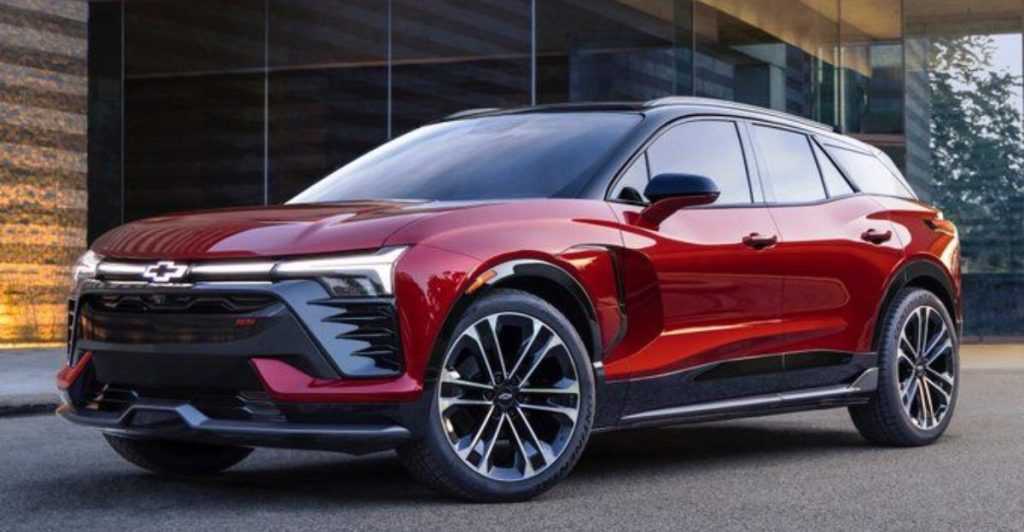
Ford and GM are already converting EV production lines back to hybrids and traditional gas-powered vehicles. That retreat confirms exactly what the $114 billion proved: demand built entirely on government incentives was always fragile, and the moment the scaffolding disappeared, customers vanished with it. The last time Detroit abandoned a major growth strategy mid-execution was during the 1970s oil crisis.
Back then, Japanese automakers like Toyota and Honda swooped in and captured enormous market share by offering lower costs and better fuel economy. History is rhyming again, only now the threat comes from Chinese automakers armed with battery cost advantages that Western labor models simply cannot replicate. BMI expects 23.9 million EVs will be sold globally in 2026, a 15.7 percent increase, with China’s growth sharply accelerating to 21 percent. The question now isn’t whether recovery is possible, it’s whether it’ll matter if Chinese competitors have already locked up the future.
Sources:
Cox Automotive, “EV Market Monitor – January 2026,” February 15, 2026
New York Post, “US, European Car Brands Have Lost $114B on EVs as Idiocy Abounds in Electric Market,” February 1, 2026
Plante Moran, “The OBBB and the End of EV Tax Credits: Opportunities Still Remain,” September 10, 2025
S&P Global Mobility, “2026 Light Vehicle Powertrain Outlook: A Multi-Track Transition,” February 2, 2026
Los Angeles Times, “Tesla Is No Longer No. 1: This Is How a Chinese Competitor Surged Past the EV Pioneer,” February 5, 2026