70-Year-Old ‘Barn Find’ Chevy Rescued After 30-Year Slumber With Only 23,000 Original Miles
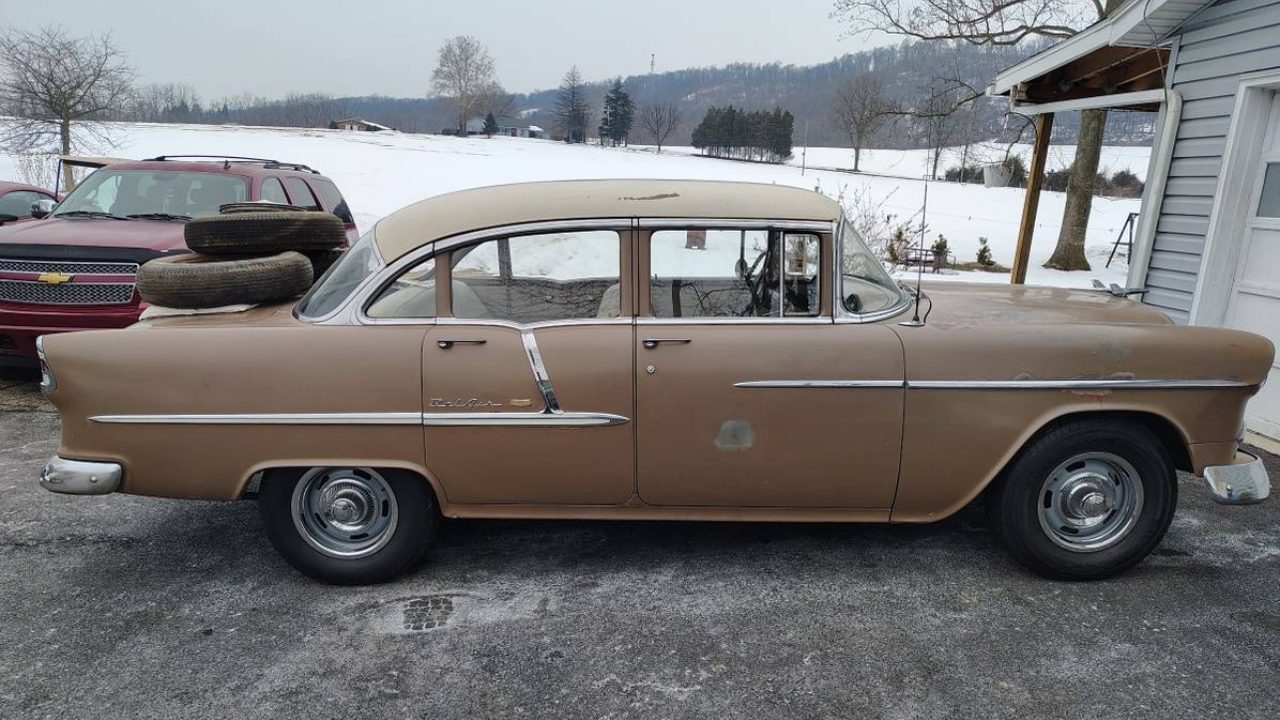
When the barn doors swung open after three decades, dust particles danced in shafts of light illuminating something extraordinary: a 1955 Chevrolet Bel Air frozen at 23,000 miles. Not a resto-mod. Not a tribute car. The real thing … original paint, factory badges, untouched chrome, and a small-block V8 that changed American automotive history sitting exactly where General Motors installed it seventy years ago. Most barn finds are wrecks wearing nostalgia like camouflage. This one’s different. Beneath the dust lives a survivor with factory DNA intact.
The odometer tells a story most collectors will never touch: barely broken in, original as the day it rolled off the Flint assembly line. What’s inside that barn isn’t just a restoration project. It’s the car that made V8 power a blue-collar birthright.
The Year Chevrolet Came Roaring Back
1955 wasn’t just another model year; it was Chevrolet’s statement after Ford beat them in 1954. While Ford offered the Y-block overhead-valve V8 introduced in 1954, Chevrolet answered with something better: the revolutionary 265 cubic-inch small-block that would prove more scalable, more reliable, and more durable than anything Detroit had built. Compact, lightweight, and engineered for decades of evolution. Base configuration delivered 162 horsepower through a two-barrel carburetor.
Check the Power Pack four-barrel option, and you’ll get 180 horsepower that embarrassed bigger, heavier iron from competitors. Road tests clocked the 195-horsepower version at 11.0 seconds to 60 mph, when most family sedans struggled to break 14.0. Chevrolet manufactured 1,775,952 vehicles that year and reclaimed the sales crown from Ford. The Bel Air sat at the top, a premium expression of Detroit, deciding working Americans deserved performance, not just transportation.
The Engine That Conquered Seven Decades
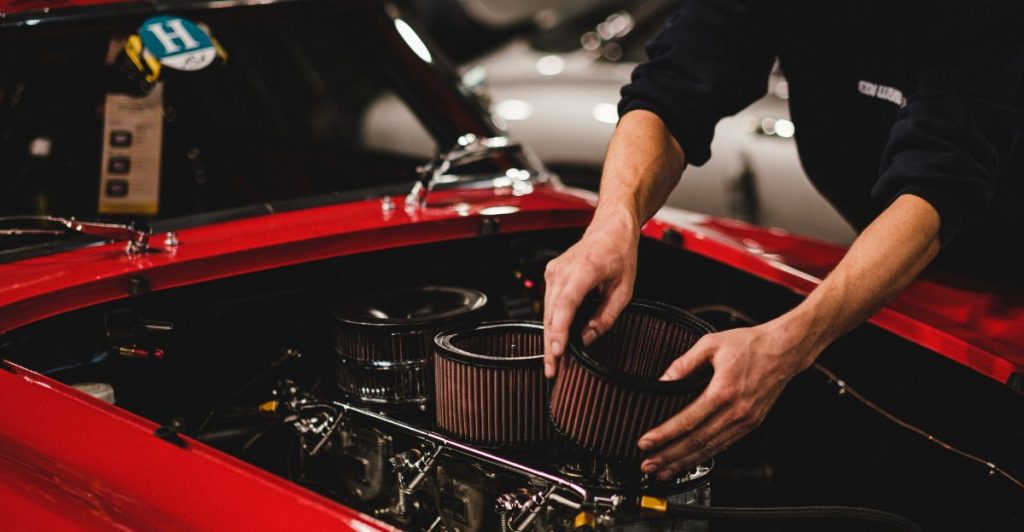
That small-block sitting dormant in the barn didn’t just power this Bel Air—it established architecture so fundamentally sound that variations kept evolving for seventy years. By 1957, displacement grew to 283 cubic inches with fuel injection hitting one-horsepower-per-cubic-inch, a benchmark that defined serious performance for generations. The design proved infinitely scalable: 302, 327, 350, 400 cubic inches followed. Over 113 million small-block V8s have rolled off production lines since introduction, making it the longest-running engine family in automotive history and the most-swapped motor on the planet.
Modern LS variants trace lineage directly back to that 1955 original. What sits in that barn represents the foundation that powered Corvettes, Camaros, trucks, and muscle cars through multiple generations. Bolt-in swaps to 350 cubic inches deliver reliable 300 horsepower, while LS conversions push 500 horsepower through modern fuel injection.
Harley Earl’s Design That Defied Obsolescence
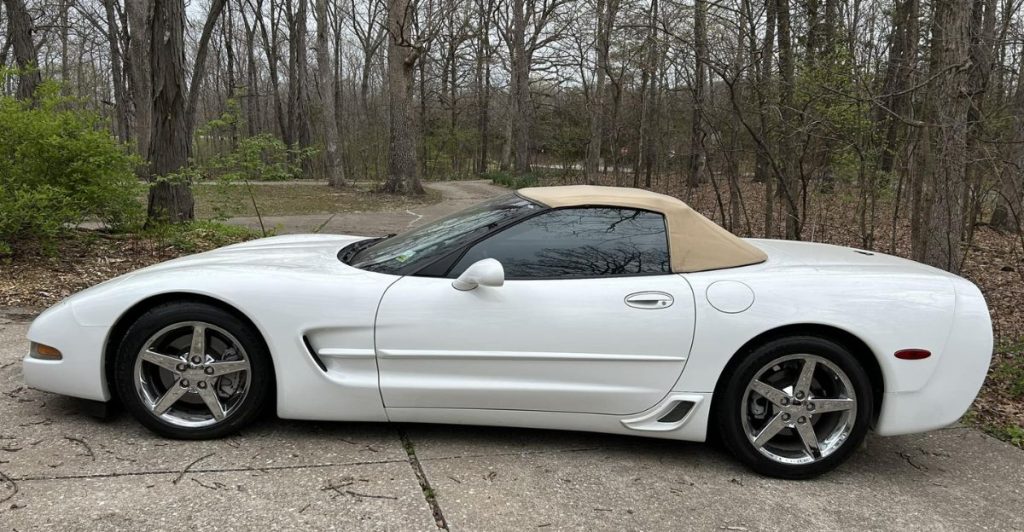
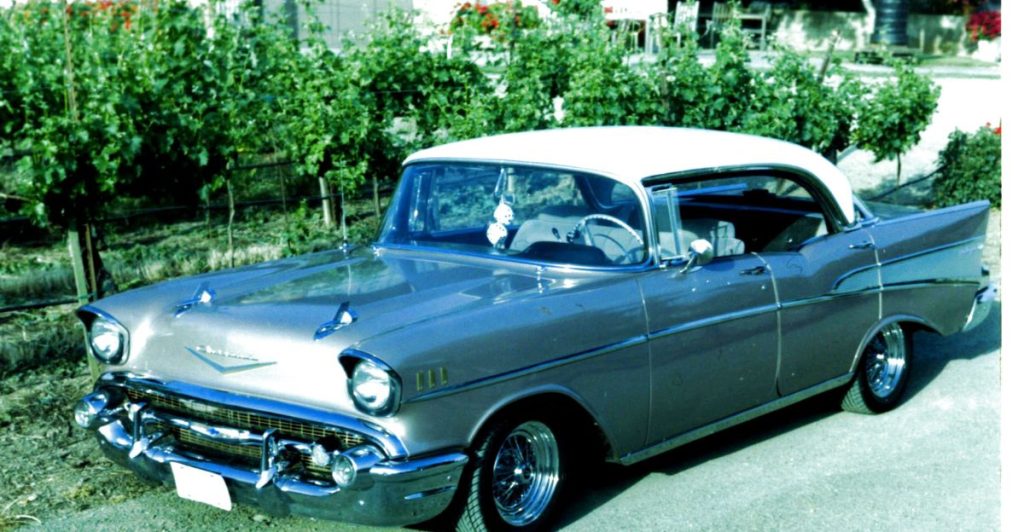
GM styling chief Harley Earl crafted the 1955 Bel Air with design language that achieved what competitors never managed: permanence. During his annual European auto show trip in fall 1953, Earl saw a Ferrari egg-crate grille that inspired the Bel Air’s front end, a controversial choice dealers initially hated, but customers embraced. Twin-dome “Dagmar” bumpers designed to mimic artillery shells jutted from that grille with chrome confidence. The wrapped windshield enhanced visibility while emphasizing the width across bodies measuring 195 inches. Factory two-tone paint schemes—India Ivory over Onyx Black, Tropical Rose with Colonial Cream—defined the era’s aesthetic.
At $2,400 to $2,900 when the median household income ran $4,400 annually, the Bel Air cost real money. But families stretched budgets because Earl understood what many designers missed: Americans wanted presence and drama. That barn-stored example preserves Earl’s vision in original sheet metal … the design that remained recognizable for seventy years while competitors’ 1955 offerings aged into irrelevance.
What 23,000 Original Miles Actually Proves
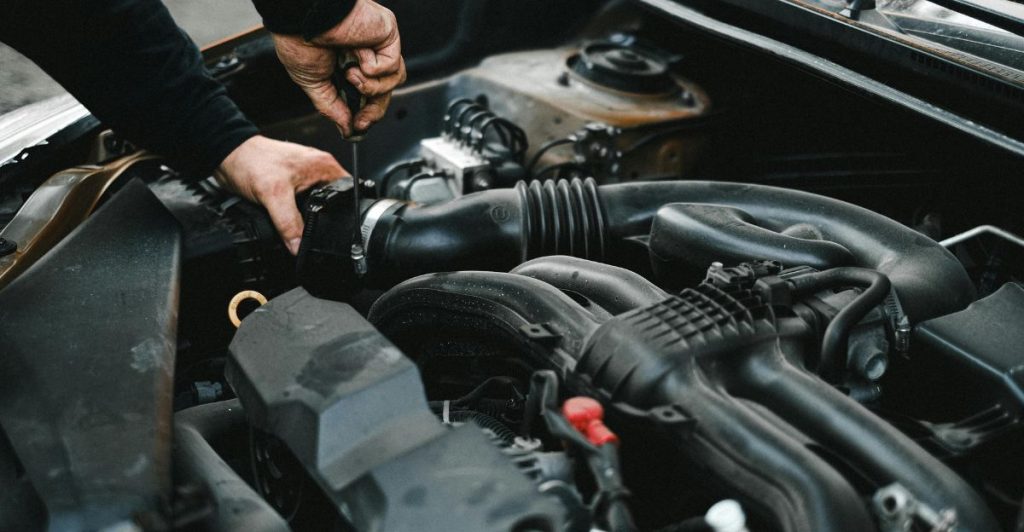
Low mileage creates a paradox in collector markets, but 23,000 original miles backed by unmolested mechanicals tells one clear story: factory specifications intact. The engine internals show minimal wear—cylinder walls retain factory crosshatch patterns, bearings exhibit minimal clearance increase, and piston rings haven’t experienced high-mileage fatigue. The transmission hasn’t cycled through hundreds of thousands of shifts. Suspension bushings haven’t endured decades of pothole impacts. The frame hasn’t flexed through millions of road irregularities, causing stress cracks.
Yes, thirty years of storage created challenges—seals dried, fluids contaminated, surface rust developed. But those are addressable surface conditions, not structural carnage from 200,000 hard miles. The mechanical foundation remains sound, requiring recommissioning rather than complete rebuilding. This represents authentic preservation—parked and forgotten rather than beaten to death first.
The Restoration Economics That Work
Basic mechanical recommissioning starts at $1,000 to $3,000 for fluid replacement, seal renewal, and fuel system cleaning. Rust repair and repaint push costs toward $15,000 to $25,000. A frame-off restoration targeting driver-quality results costs $40,000 to $75,000. Show-quality builds exceed $100,000. After restoration, driver-quality examples trade between $30,000 and $60,000. Show-quality concours restorations command $90,000 and beyond, with convertibles adding 30 to 50 percent premiums. Starting with a 23,000-mile original example means restoring a fundamentally sound foundation rather than rebuilding wreckage.
The aftermarket supporting Tri-Five restorations rivals any platform worldwide. Reproduction body panels, trim components, mechanical systems, and chassis upgrades flood the market from multiple vendors. Unlike European classics that require specialist labor and transatlantic parts sourcing, the Bel Air can be restored in any competent shop, with components ordered online and delivered within days.
Why Collectors Fight Over These Despite Tight Math
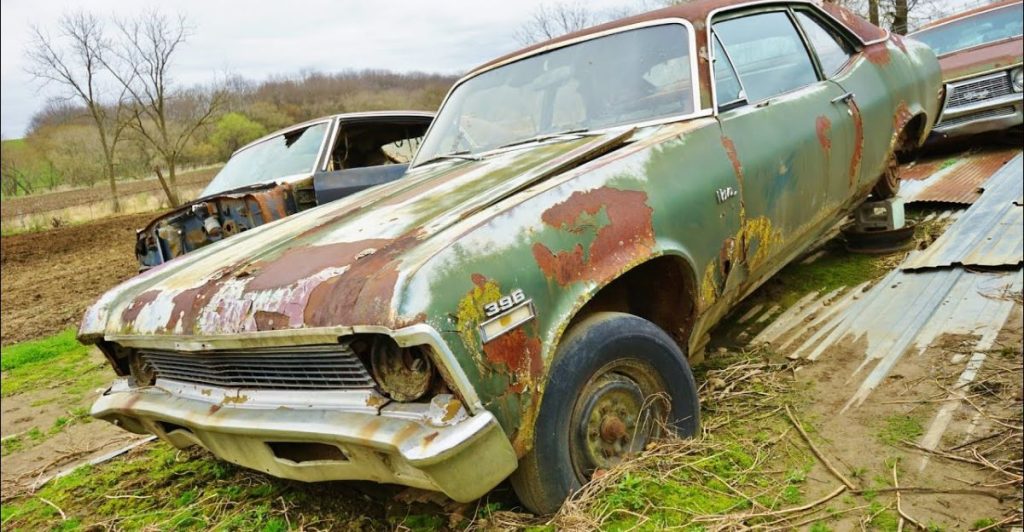
The Tri-Five generation achieved cultural permanence, transcending rational investment calculations. These cars populate cruise nights nationwide, bracket races at dragstrips, and anchor private collections from single-car garages to museum accumulations. They’re drivable shorthand for American postwar confidence, the era when Detroit built what customers wanted. Restoring a 23,000-mile survivor connects owners to the moment V8 power became a blue-collar birthright instead of a wealthy man’s luxury.
Restoration budgets can exceed initial estimates, but economics miss the point. This isn’t portfolio diversification; it’s preserving automotive history against the attrition of time. The satisfaction of hearing a long-dormant small-block V8 fire after decades of silence is a reward no spreadsheet can capture. That separates collectors from accountants.
The Transformation From Storage to Pavement
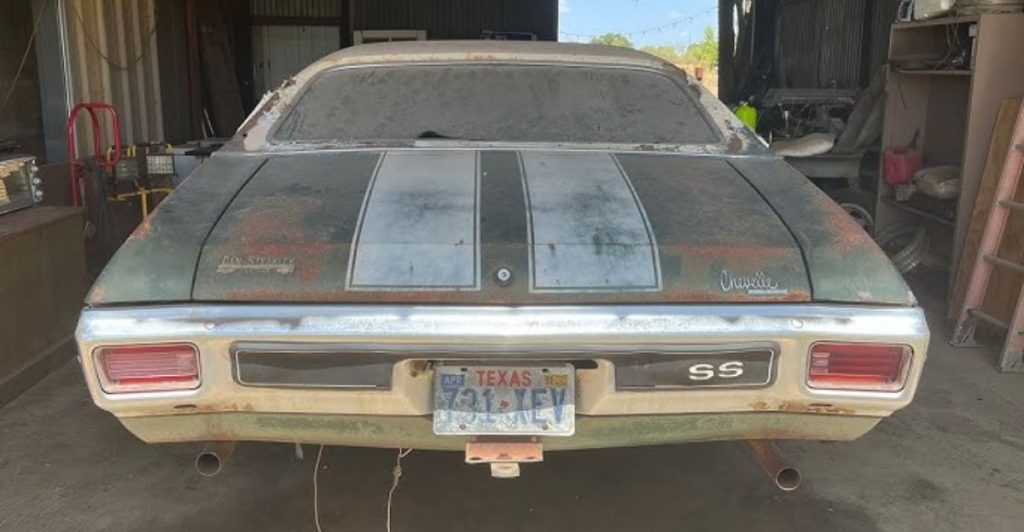
Barn find restoration follows a systematic protocol: complete fluid replacement, seal inspection and renewal, fuel system cleaning, carburetor rebuild, ignition system verification, brake overhaul, cooling system flush, and electrical testing. Pre-lubrication protects bearings during initial startup. A methodical approach prevents damage while preserving originality. Skilled restorers describe the satisfaction of hearing a long-dormant engine fire for the first time—decades of silence broken by V8 rumble that sounds exactly like it did in 1955.
A conservative approach preserves the original patina, replacing only failed components. Comprehensive restoration returns everything to factory specifications. Restomod path blends vintage aesthetics with modern performance through upgraded suspension, four-wheel disc brakes, and electronic fuel injection while preserving iconic silhouette.
The Cultural Weight This Particular Car Carries
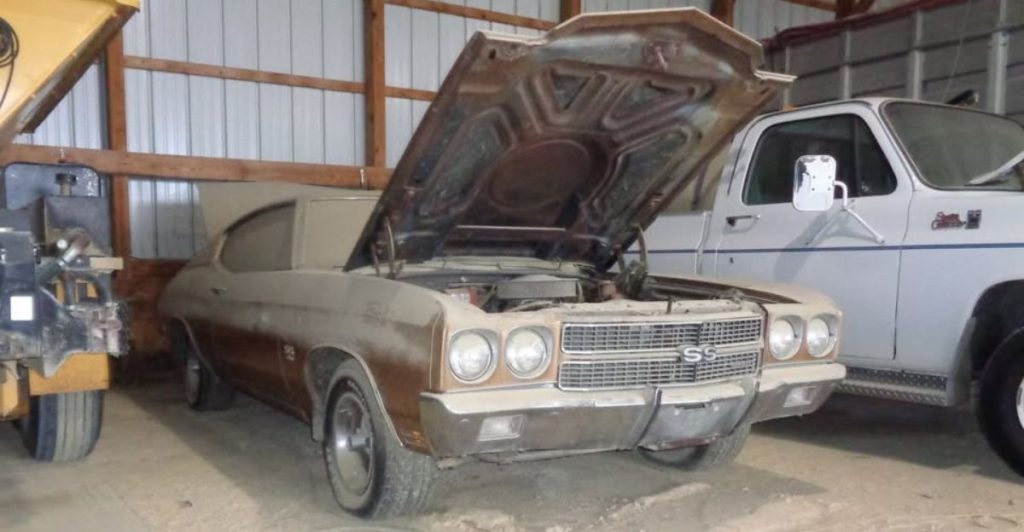
The 1955 Bel Air represents an inflection point in American automotive history, the year Chevrolet stopped building adequate transportation and started building aspirational performance. That small-block V8 established architecture that conquered drag strips and became the most-swapped engine on the planet because it delivered reliability and power in combinations competitors couldn’t match. Harley Earl’s styling created a design language that remained relevant for seventy years. This isn’t just another pretty classic. It’s the foundation everything else built upon—the Tri-Five generation that defined what American muscle would become.
Owning an original survivor with documented low mileage and authentic components means possessing reference material most collectors never touch. It’s a rolling archive of the moment Detroit decided working Americans deserved V8 rumble and chrome excess.
The Discovery That Matters More Than Spreadsheets
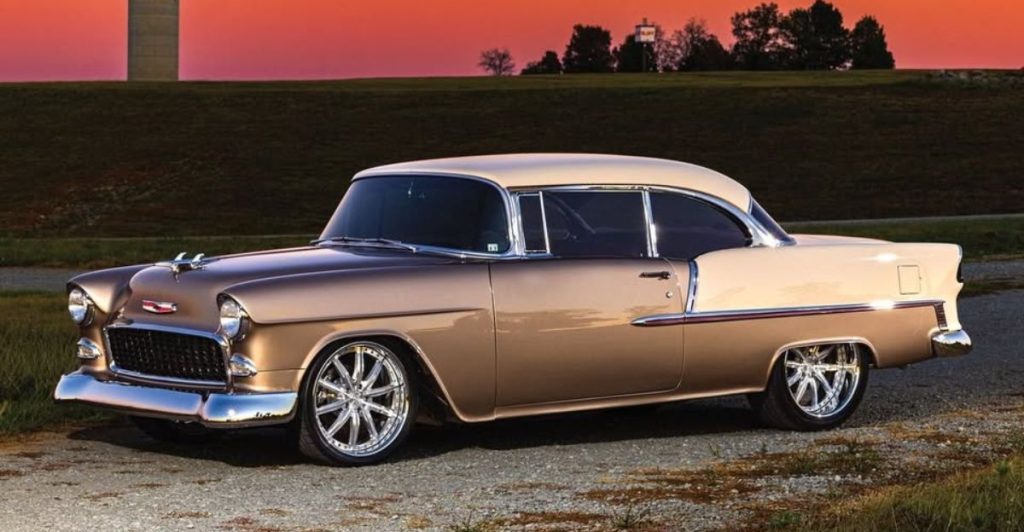
Barn doors opened on more than a dusty automobile after thirty years. They revealed a survivor waiting to roar again, carrying seven decades of history in every original component and 23,000 miles of barely-used potential. What emerges from restoration won’t be just another beautiful classic cruising Main Street on Saturday nights. It’ll be an authenticated time machine connecting 2026 drivers directly to 1955 assembly lines, to Harley Earl’s styling revolution, to the small-block V8 that changed American automotive history.
Some will question the economics. This isn’t about spreadsheets and resale projections; it’s about preserving the car that made performance a birthright rather than a privilege. The odometer froze at 23,000 miles. The legend never stopped growing.
Sources:
1955-57 Chevy Bel Air, 210, and 150 Production Numbers – Classic Industries
Chevy Is Celebrating 70 Years And 113 Million Small Block V8 Engines Made – TFLtruck
The 1955 Chevrolet (Bel Air/210/150/Nomad) Is A Ferrari-Inspired American Icon – YouTube
How the 1955–57 “Tri-Five” Chevy became a midcentury masterpiece – Hagerty
Dagmar bumper – Wikipedia
Family Income in the United States: 1955 – U.S. Census Bureau