7-Year Car Loans Hit All-Time High As Millennials’ Payments Surge 60%
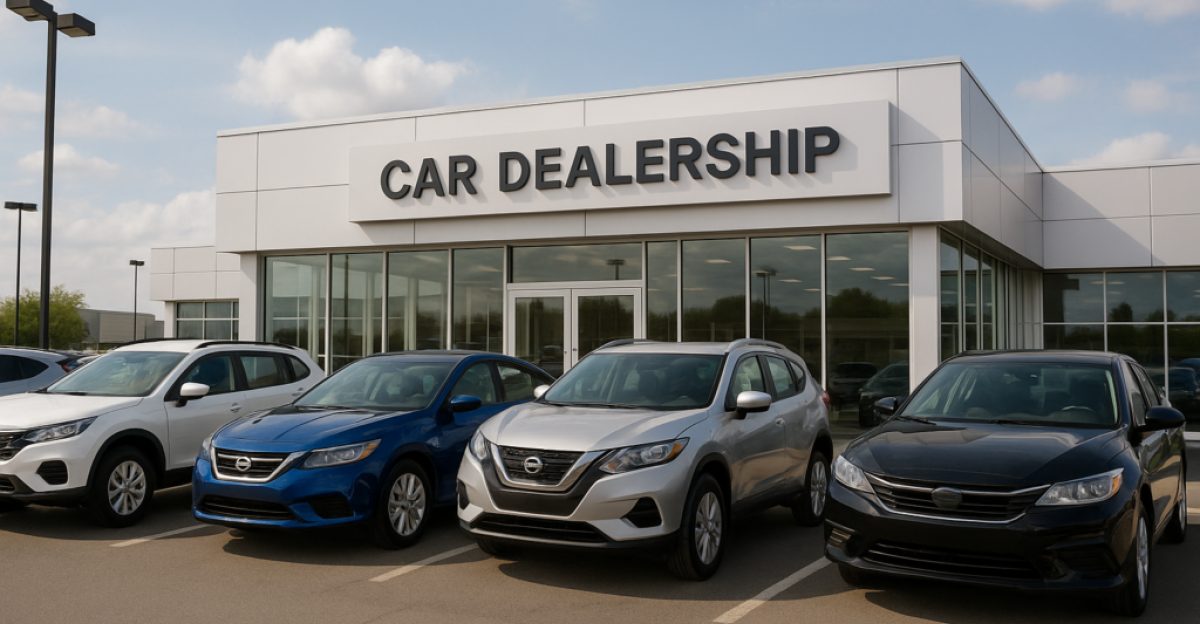
Walk into any dealership in America right now and watch the finance manager’s screen. The numbers don’t work. Average transaction price: $49,191. Average monthly payment: $773, the highest ever recorded. Average loan term creeping past six years.
Buyers sit across that desk knowing they can’t afford the vehicle, knowing the math requires stretching payments into a seventh year. One in five walks out committed to $1,000 or more every single month. And the down payments shrinking to $6,206 tell you everything about what’s left in the savings account.
The Seven-Year Sentence
American automotive information and research company, Edmunds, confirmed it in Q1 2026: 22.9% of financed new-car purchases now carry 84-month terms or longer. That’s an all-time high, up from 20.8% just one quarter earlier. The average amount financed hit a record $43,899. These aren’t luxury buyers stretching for a loaded truck. These are families doing the only math that produces a survivable monthly number.
Meanwhile, average APR climbed to 6.9%, and zero-percent offers dropped to just 2.6% of loans. The squeeze has no relief valve left except time.
The $20,000 Car Is Dead

Every major automaker killed the sub-$20,000 vehicle. Gone. The entry-level buyer who once financed a $20,000 sedan now faces a $49,191 average sticker. That’s a 45% price increase since 2019. Wages didn’t move anywhere close to that. The conventional wisdom said competition and lower rates would protect consumers.
Rates did come down in 2025. Prices didn’t follow. Instead, buyers absorbed the gap by stretching terms and shrinking down payments. The supposed affordability improvement was an illusion built on longer debt.
“Getting Creative” Means Getting Trapped

“Car buyers are getting creative just to keep their purchases within reach,” Edmunds analyst Jessica Caldwell said on April 1, 2026. Creative. That word does heavy lifting. Younger Millennials, ages 30 to 36, watched their monthly car payments climb 60% since 2019, according to Bank of America data.
Wages grew roughly a tenth of that. Sixty percent payment increase. Twelve percent wage growth. Five-to-one ratio. That’s not creativity. That’s compression. Buyers didn’t find a better strategy. They ran out of alternatives and borrowed deeper into the only one remaining.
The Negative Equity Machine

Here’s the mechanism nobody explains at the dealership. An 84-month loan means the car depreciates faster than the borrower pays it down. By year four, the vehicle is worth $28,000 but the loan balance sits at $35,000. That gap has a name: negative equity.
In Q4 2025, 29.3% of trade-ins carried it. Average underwater amount: $7,214, an all-time record. And 27% of those underwater buyers owed $10,000 or more. The 84-month term doesn’t solve the affordability crisis. It engineers the next one.
The Numbers Behind the Trap
Buyers rolling negative equity into new loans financed $11,453 more than the typical purchaser. Their average monthly payment: $916, a record, and $144 above the industry average. Meanwhile, 40.7% of those debt-rolling buyers locked into 84-month terms.
A subprime borrower with a credit score between 501 and 600 paid 13.17% APR. Deep subprime, below 500, paid 16.01%. On a $43,899 loan, that’s roughly $5,700 to $6,800 in annual interest alone. The person who can least afford the car pays the most for it.
$1.67 Trillion and Counting

Total U.S. auto loan debt reached $1.67 trillion by Q4 2025, according to the Federal Reserve Bank of New York. That’s 57% higher than a decade ago. Repossessions jumped an estimated 43% from 2022 to 2024. Subprime delinquencies hit the mid-6% range, levels not seen since the mid-1990s. And 5.2% of all auto debt sat 90 or more days past due.
More than 75% of American car owners now drive used vehicles. The escape route to the used market runs through even higher APRs: 10.8% versus 6.9% for new.
The New Rule, Not the Exception

Purchasing the average new vehicle now requires 37.3 weeks of median household income, among the worst affordability readings in automotive history. Used car loan-to-value ratios above 120% jumped from 38% to 53% in three years. Ratios above 140% nearly doubled to 31%.
Once you see those numbers together, the picture snaps into focus: this system doesn’t accidentally trap people. It structurally guarantees that borrowers who enter negative equity cannot refinance their way out. High LTV locks them at the original rate for the full term.
Who Gets Hit Next
Gen Z enters the car market facing worse affordability than Millennials did. Rural workers who lose a vehicle to repossession lose the job that paid for it. Federal Reserve researchers flagged lower-income auto delinquencies “picking up” as early as Q3 2025.
TransUnion projects delinquencies will stay flat through 2026, which means the crisis doesn’t improve. It grinds. If unemployment ticks above 5%, the cascade hits $120 billion or more in underwater balances. The 84-month loan has become the market norm, and buyers won’t accept shorter terms after 2026.
The Real Status Symbol
The person driving a paid-off five-year-old truck is now the wealthiest person in the parking lot, whether anyone realizes it or not. The $49,000 SUV in the next space carries seven years of debt, $7,214 in negative equity, and a payment that eats 15% of gross household income before insurance, fuel, or maintenance. AAA puts total annual ownership cost at $11,577. That’s $965 a month to operate what the industry still calls an affordable vehicle.
Automakers can cut production. Lenders can tighten credit. Neither fixes a system built to extract, not transport.
Sources:
“Average Amount Financed for New-Vehicle Purchases Hits Record $43,899 in Q1 2026, According to Edmunds.” Edmunds, 1 Apr. 2026.
“Falling Underwater on a Car Loan Is Becoming More Common and Expensive Than Ever.” Edmunds, 15 Jan. 2026.
“Quarterly Report on Household Debt and Credit: Q4 2025.” Federal Reserve Bank of New York, 9 Feb. 2026.
“State of the Automotive Finance Market Report: Q4 2025.” Experian Automotive, 5 Mar. 2026.
“Auto Lenders Drive Used Car Loan-to-Value Ratios to New Peaks.” TransUnion Q2 2025 Credit Industry Insights Report, Aug. 2025.
“Your Driving Costs 2025.” AAA, Sept. 2025.