
$5.49 Diesel Squeezes 86,000 Trucking Firms—Groceries Could Hit Your Cart 10% Higher In Weeks
The pump screen rolled past $900 and kept climbing. Somewhere in West Virginia, a truck operator watched his weekly fill-up cross $1,000 for the first time. In Maine, a commercial fisherman stared at the same numbers and made a different calculation entirely. He parked his rig. Didn’t haul. Not that week, not the next, not the one after that. Across the for-hire trucking sector that moves approximately 72% of American freight, the math stopped working at the same moment — and the most exposed layer is the roughly 86,000 carriers that, according to industry estimates, entered the market during the pandemic freight boom and never left. A waterway barely 21 nautical miles wide at its narrowest point, 6,000 miles away, had just rewritten every fuel receipt in the country.
The Overnight Price Shock

Diesel started March 2026 under $4 a gallon. Then the Iran war closed the Strait of Hormuz, choking off roughly 13.7 million barrels of seaborne crude per day — about 32% of global seaborne oil trade. On March 6, diesel posted the largest single-day price jump in GasBuddy history: 22.4 cents. In one week, retail prices surged more than 20%. By March 24, the national average hit $5.375. By early April, approximately $5.45. California truckers faced $6.87 a gallon. The World Economic Forum called it the largest supply disruption in the history of the global oil market.
The Safety Net With a Hole In It

Most people assume fuel surcharges protect trucking companies when diesel spikes. That assumption is wrong. According to Truckstop.com, surcharge formulas recover only 60 to 70% of actual cost increases. Carriers absorb the remaining 30 to 40% out of margins that already run 1 to 3% net profit. The formulas use fixed MPG assumptions and frozen base prices, so they lag reality during rapid spikes. Think of it as insurance that covers two-thirds of the claim and hands you the rest. Spot rates held near $2.34 per mile, according to freight market data, while fuel costs jumped 24 cents per mile in three weeks.
Spending Money to Go to Work
Matt Gilley, a commercial fisherman in Maine, put it plainly: “I usually try to haul once a week. I haven’t hauled in three weeks because of the price of fuel. I’m not keen on spending money to go to work.” That sentence inverts everything economics teaches about labor. Higher prices should incentivize more work. Instead, fuel costs erased the profit margin on actual income. Gilley chose unemployment over employment because employment cost more. At 6 miles per gallon and $5.45 diesel, fuel alone runs roughly $1 per mile before a carrier earns a dime.
The Hidden Machine Behind the Price Tag
The surcharge formula, in use since the early 2000s and last widely recalibrated when diesel climbed past $4, was engineered to stabilize shipper and customer logistics costs. It accomplished that by destabilizing carrier economics. Shippers sit behind contractual surcharge clauses. Carriers sit in front of the volatility. When a geopolitical shock hits oil supply, the gap widens instantly. David Claypool, a West Virginia operator, watched fill-ups jump from $700 to $1,000. “That’s a $300 difference,” he said. “You add that every week and that’s quite a bit of loss.” The system protects customers. It bankrupts carriers.
The Numbers That Break the Model

Bloomberg Intelligence calculated that at $5 diesel, the U.S. economy spends $6.1 billion per week on fuel, up from $4.5 billion before the war. That is a 35% weekly increase. Commercial trucks consume roughly 46.5 billion gallons of fuel annually, about 80% of it diesel. UPS raised ground fuel surcharges from 21.5% to 25.5% in two weeks. FedEx followed, reaching 25% on the same timeline. Amazon applied a 3.5% fuel and logistics surcharge on approximately 2 million third-party sellers. The big players pass costs forward. Smaller independent carriers absorb them, and that disproportion is the entire crisis.
The Grocery Bill Nobody Sees Coming

Logistics analysts forecast grocery prices rising as much as 10% within three to four weeks of sustained $5-plus diesel. Separately, one regional consumer estimate put the impact at roughly $600 per year on a family of four’s food bills. Livestock transport costs are already compressing prices offered to farmers. Row crop producers face a two-front squeeze: higher input costs and higher transport costs simultaneously. Brian Parke of the Maine Motor Transport Association said trucking companies are “just trying to figure the best way to manage all of this so they can stay in business.” The inflation hits your cart before you know where it came from.
One Waterway Rules the Whole Chain
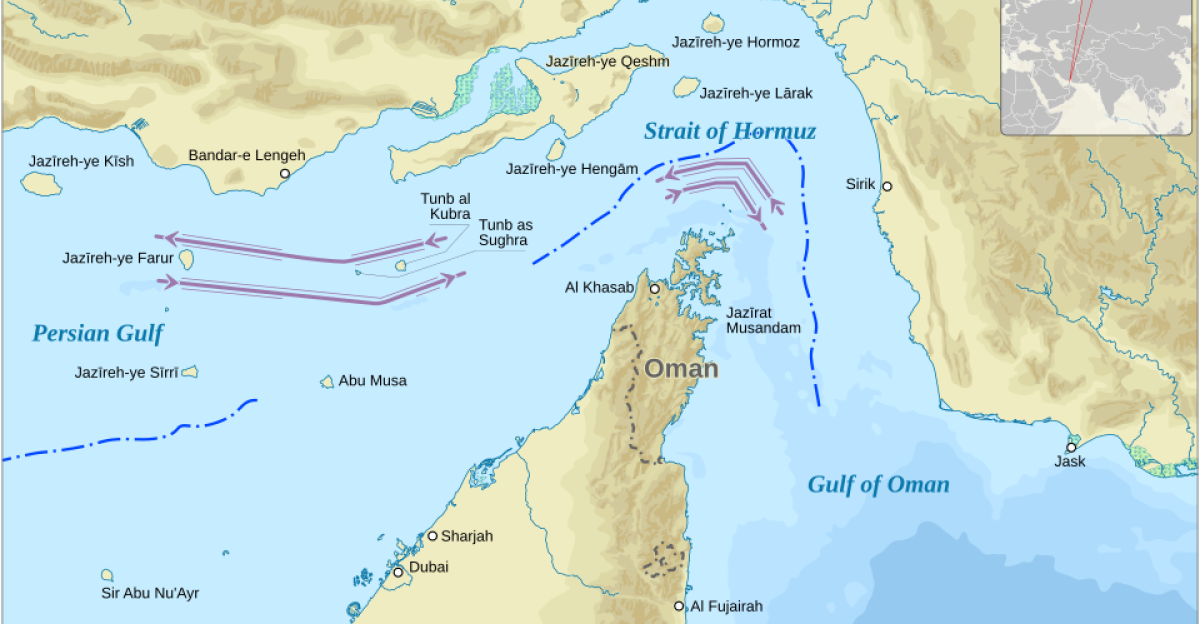
The Strait of Hormuz spans roughly 21 nautical miles at its narrowest navigable point and controls roughly 32% of global seaborne crude trade. One chokepoint. Current diesel prices sit approximately $0.37 below the all-time record of $5.82 set four years ago. That record took months to build. This spike replicated most of it in weeks. Once you see the pattern, you cannot unsee it: every fuel price spike is a latent carrier bankruptcy trigger. The industry can look healthy right up until the moment trucks start parking. Demand surging and carriers failing simultaneously is a new precedent, not an exception.
Who Falls Next

If the Strait stays closed past the second quarter of 2026, diesel climbs higher. Oil already touched approximately $107 a barrel in early April. Even if it reopens, industry experts warn diesel baselines rarely return to previous lows. The old normal does not come back. Small independent carriers and owner-operators fail first. Then drayage operators at the ports. Then regional networks. Then communities built around trucking jobs. Freight demand is surging at the same moment profitability is collapsing. That paradox of abundance in a margin crisis has no clean resolution.
The Consolidation Trap
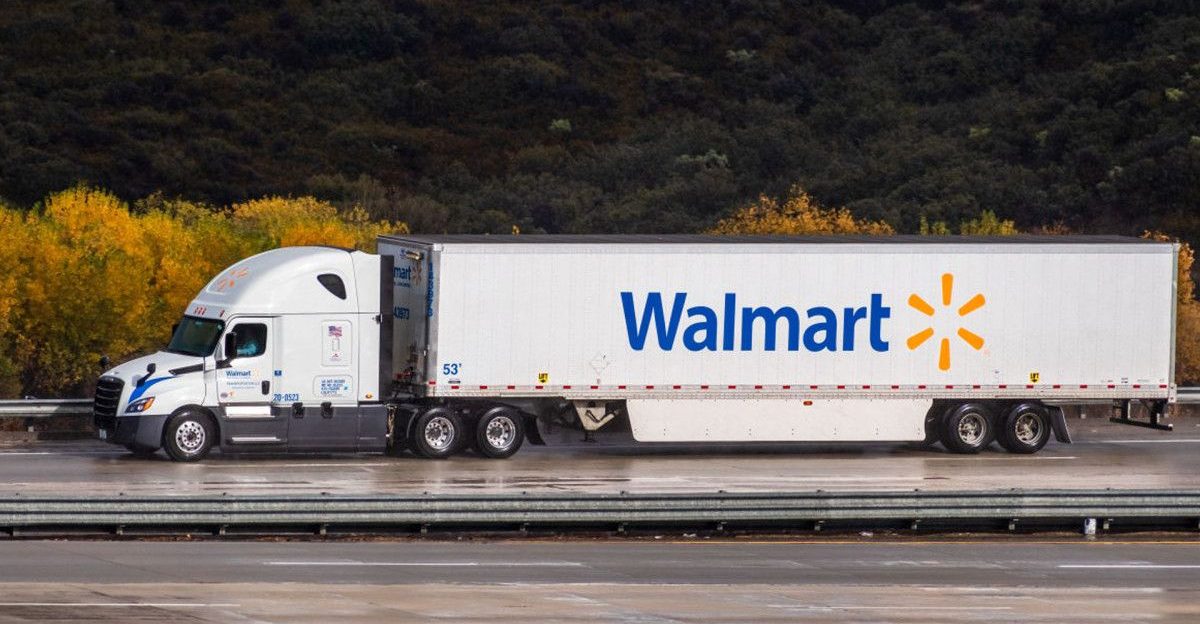
Here is what most people will miss: the counter move is consolidation. Weak carriers exit. Strong carriers absorb capacity. Amazon, Walmart, and UPS have pricing power and hedging tools that small firms never will. Every diesel shock widens the competitive moat around the biggest players. The trucking industry is not just absorbing a price spike. It is absorbing a structural reshaping that concentrates power upward. The person at the grocery checkout paying $50 more per month will never learn the name “Strait of Hormuz,” but they are funding its consequences with every receipt.
Sources:
“Diesel Prices Surge Even Higher Due to Iran War, Surpassing $5.38.” Trucking Dive, 23 Mar. 2026.
“Diesel Surges to $5 Per Gallon as Iran War Disrupts Oil Supplies.” CNBC, 17 Mar. 2026.
“FedEx, UPS Up Fuel Fees, Levy Middle East Surcharges Amid Iran War.” Supply Chain Dive, 12 Mar. 2026.
“Rising Diesel Prices Could Soon Drive Up Grocery Bills as Shipping Costs Climb.” KFOX14 / CBS4 El Paso, 25 Mar. 2026.