$4 Gas Is Costing Americans $300 Million Extra Every Day and Grocery Bills Are Next to Rise
When oil prices peaked at more than $40 per barrel above pre-war levels following the outbreak of the Middle East conflict, economists applying RSM US’s own modeling, 24 cents per $10 barrel increase, projected roughly a 72-cent increase at the pump. Instead, gas prices surged more than $1.00 per gallon from the pre-war baseline, well beyond what the underlying data should have produced.
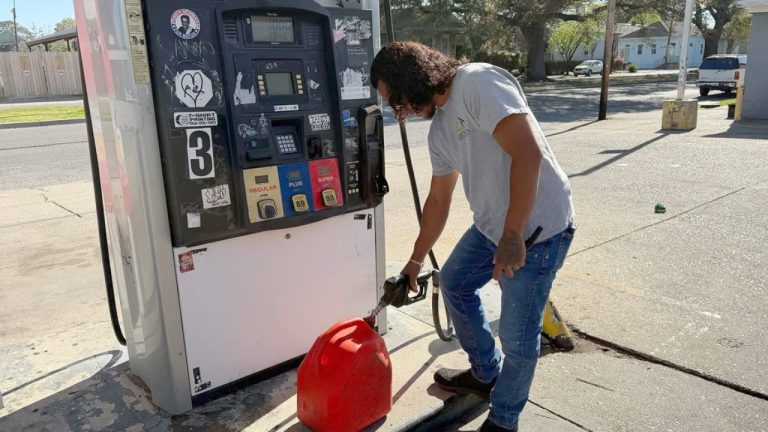
With Americans consuming approximately 370 million gallons of gasoline daily per EIA data, that excess translates to more than $300 million in additional fuel spending every day. “The risks on inflation are a little bit higher,” warned Joe Brusuelas, chief economist at RSM US.
The $4 Threshold Has Arrived
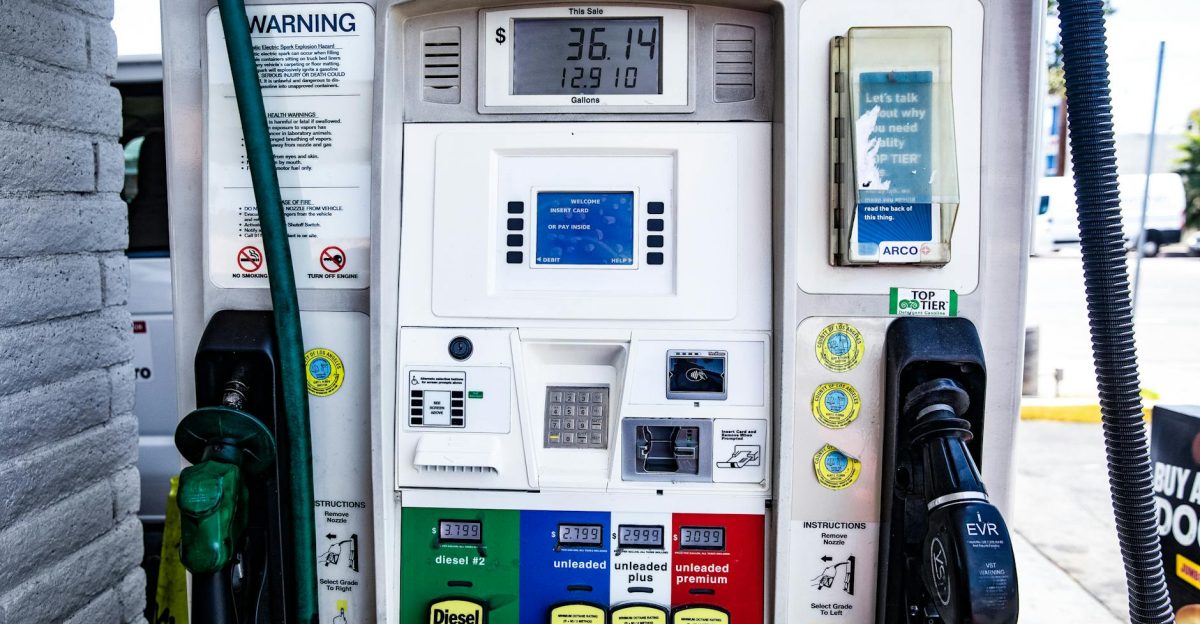
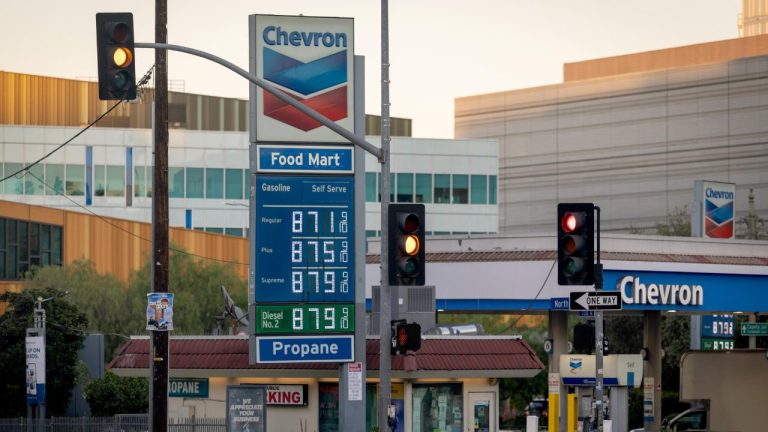
For the first time since 2022, the national average price for a gallon of regular unleaded gasoline has crossed $4, reaching $4.096 per EIA weekly data as of March 23, with the AAA daily average tracking just below at $3.983 on March 25, confirming the $4 threshold is effectively breached.
The pre-war national average sat at approximately $2.98, meaning Americans have absorbed more than a dollar per gallon increase in a matter of weeks. While $4 gas is already a bargain in California, Hawaii, and Washington state, where averages exceed $5, it represents a significant psychological and economic threshold for the rest of the country.
Breaking Down Every $10 Oil Increase
Joe Brusuelas of RSM US quantified the economic damage each $10 barrel increase inflicts: a 0.1 percentage point drag on real GDP growth, a 0.2 percentage point rise in inflation, a 24-cent pump price hike, and per RSM US estimates, a $450 annual hit to household income, consistent with Oxford Economics’ finding that lower-income households absorb disproportionate fuel cost burdens.
Oil peaked at more than $40 above pre-war levels before partially retracing; as of late March 2026, it remains between $25 and $35 above the pre-war baseline, a range confirmed by energy desk analysts at major banks, with war-related supply disruptions continuing to weigh on markets. “However, even a $31 trillion beast has its pain points,” Brusuelas noted.
GDP Growth Is Already Fragile
The U.S. economy, with a nominal GDP of $31.49 trillion per the Bureau of Economic Analysis, posted real GDP growth of just 0.7% in the final quarter of last year, per the BEA’s March 13 revised estimate.
With oil remaining between $25 and $35 above pre-war levels, the RSM US formula implies a cumulative GDP drag of between 0.25 and 0.35 percentage points, modest in isolation but compounding over time. Brusuelas described the U.S. economy as a “dynamic and resilient beast,” but stressed that sustained oil shocks erode even the most durable foundations when growth margins are razor-thin.
Inflation Could Break 4% by April

U.S. inflation stood at an annual rate of 2.4% in February, according to the Bureau of Labor Statistics’ Consumer Price Index release on March 11, measured before the war’s price shocks fully filtered through. Brusuelas projects the March CPI reading could reach 3.5%, with April potentially exceeding 4%, a trajectory consistent with Goldman Sachs and Oxford Economics projections of a sharp Q1 2026 CPI spike as energy costs pass through, and Pantheon Macroeconomics’ own upward inflation projections.
The broader surge reflects not just fuel costs but second and third-order effects, with diesel, jet fuel, and fertilizer prices all flowing from war-related energy disruption and passing directly onto American households.
The “Demand Destruction” Danger Zone

JPMorgan warned in a March 22 Flash Note that demand destruction has already begun, estimating that a roughly 40% increase above 12-month highs can reduce global consumption by approximately 1 million barrels per day. Bernstein analyst Irene Himona separately placed the full demand destruction threshold at $155 per barrel in current terms.
Some Americans are already taking fewer trips and cutting discretionary spending, according to Diane Swonk, chief economist at KPMG. A drop in demand can eventually lower prices, but constrained supply limits how quickly relief arrives.
Why 2026 Is Far Worse Than 2022

The last time gas prices crossed $4 nationally was 2022, but the economic foundation was far stronger. “Back in 2022, the unemployment rate was plummeting, we were generating hundreds of thousands of jobs a month,” said Swonk. “Now, we’re on the other side of that.
We’re generating hardly any jobs in a month, and it’s a higher unemployment rate than it was back then.” Wage growth has simultaneously slowed, leaving workers with far less financial cushion to absorb rising fuel costs.
Years of Inflation Have Drained Households
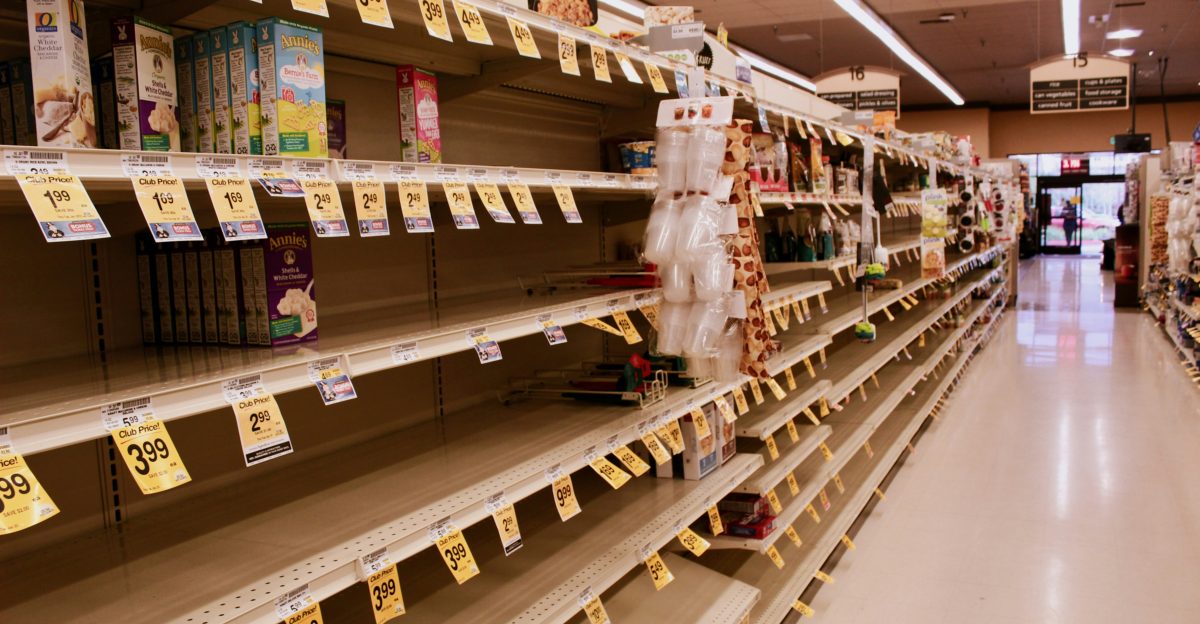
U.S. inflation has remained above the Federal Reserve’s 2% target every year since 2021, five consecutive years, steadily eroding household financial resilience well beyond what a single gas price spike would ordinarily trigger. Rising debt levels are becoming unmanageable for many Americans, particularly lower-income households.
“The level of prices is already too high for too many,” Swonk said. “This is worrisome, especially for those who have the least ability to weather the storm.”
The Federal Reserve Faces a Bind

Economists are increasingly concerned the Federal Reserve could face a stagflationary environment, a simultaneous economic downturn and elevated inflation, where traditional monetary tools provide limited relief.
Interest rate adjustments cannot resolve supply-side shocks driven by geopolitical conflict. “Uncertainty has just been unprecedentedly high for a very long time, and that is its own tax on the economy,” Swonk said. “I don’t know how you eliminate uncertainty, unless there’s an abrupt end to the war in the Middle East. Interest rates alone can’t stimulate demand for workers.”
Grocery Bills Are Already Climbing

Energy costs are now filtering directly into the American food supply. According to ConsumerAffairs, rising fuel prices are pushing up costs across the food chain, from meat processing to retail distribution.
The USDA’s February 2026 Food Price Outlook had already projected 2.5% growth for grocery store prices and 3.1% for all food categories before the conflict began; those baselines are now expected to be revised upward as diesel and fertilizer costs flow through to supermarket shelves.
The Pain Will Last Through December

Even if the Middle East conflict ended tomorrow, the inflationary effects already in motion would persist for months, as energy price increases move through the economy in waves, first at the pump, then through shipping, food production, and consumer goods.
“Something that’s going on now will still be impacting them come December,” Brusuelas said. The American public, he added, “is going to bear the burden of adjustment” regardless of how swiftly geopolitical events on the ground are resolved.
Editor’s Note: On March 25, 2026, the United States submitted a 15-point peace proposal to Iran, which Iran formally rejected. President Trump subsequently issued a 4-day ultimatum. As of March 26, the White House insists talks “have not hit a dead end,” a characterization Iran’s foreign minister disputes, stating the U.S. is “talking to itself.” Brent crude has partially retraced from its peak of approximately $114.90 on March 23 and remains between $25 and $35 above pre-war levels as of March 26, 2026. All figures in this article reflect conditions as of March 26, 2026.
Sources:
“Consumer Price Index Summary, February 2026.” Bureau of Labor Statistics, March 11, 2026.
“Gross Domestic Product, Fourth Quarter and Year 2025 (Advance Estimate).” Bureau of Economic Analysis, March 13, 2026.
“Weekly U.S. Regular All Formulations Retail Gasoline Prices.” U.S. Energy Information Administration, March 23, 2026.
“USDA Food Price Outlook, 2026.” USDA Economic Research Service, February 2026.
“JPMorgan Warns Demand Destruction Has Already Begun and Models Aren’t Measuring It.” Shale24, March 22, 2026.