$1.7 Trillion Auto Debt Trap Ensnares 30% Of American Car Buyers—Delinquencies Hit 32-Year High
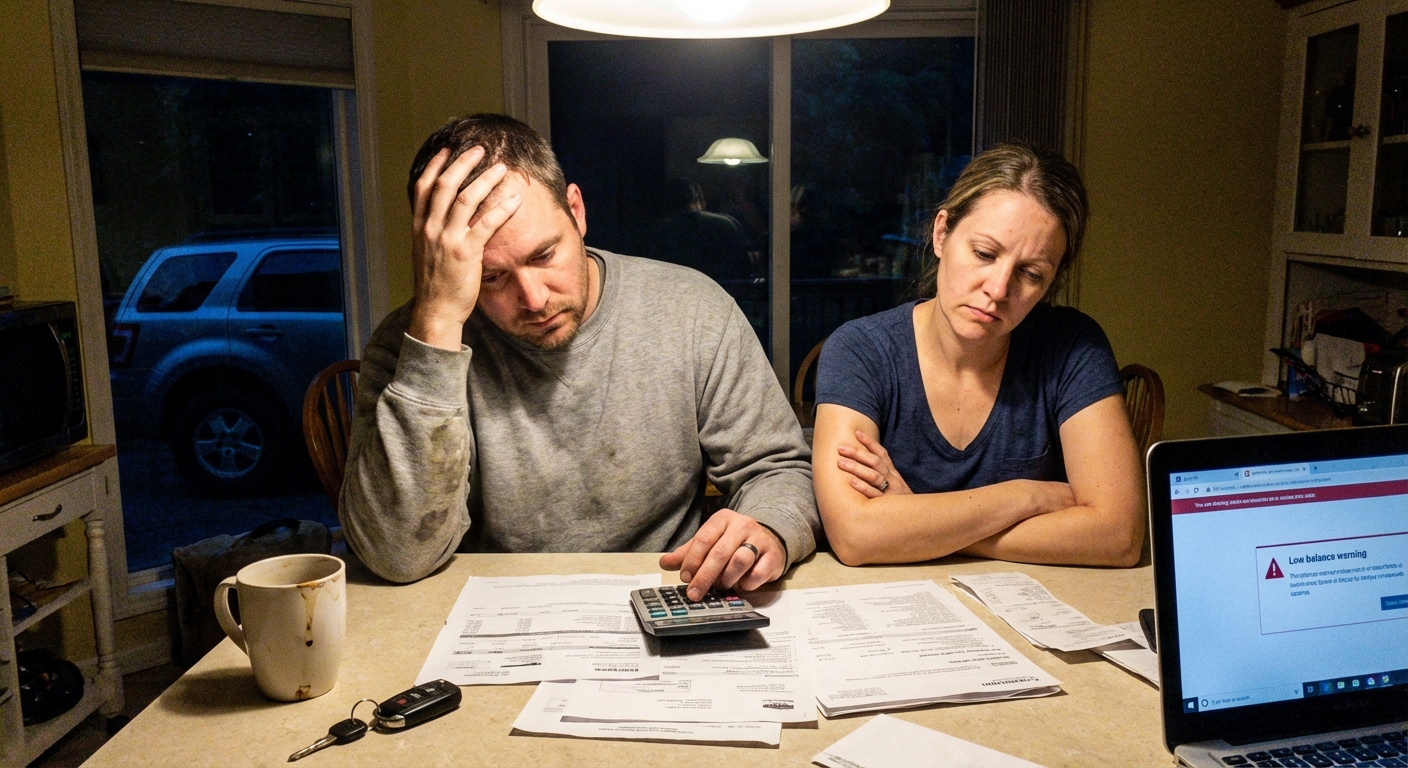
It’s a moment many drivers know all too well. You head to the dealer, keys in hand, ready to trade your three-year-old truck for something newer. Maybe you’re even a little excited. But when the finance manager types in your loan details, your stomach drops.
The payoff balance is $7,214 more than what your truck is worth. That gap—the sinking feeling that years of payments have left you in a deeper hole—was a reality for nearly one in three car buyers in America at the end of 2025. And for many, that was just the beginning.
The Pandemic Price Tag Comes Due

Buyers faced difficult circumstances during the chip shortage. Finding a car at sticker price was rare, and most sold for higher. Financing at inflated prices became the norm. Years later, those loans entered a market where vehicle values stabilized.
The average negative equity per trade-in reached a record $7,214 in late 2025. More than a quarter of underwater trade-ins owed at least $10,000 above the car’s value. The financial consequences are lasting.
The Monthly Payment Illusion

Car buyers often focus on manageable monthly payments. This assumption has become risky. Edmunds data shows that nearly 30% of late-2025 trade-ins toward new purchases carried negative equity, the highest rate in years.
These buyers financed $11,453 more than typical new-vehicle shoppers. Dealers emphasize the monthly payment, rarely discussing the total cost over seven years. Nearly 70% of new-car buyers signed for loans longer than five years to keep payments low.
The 84-Month Trap Snaps Shut

Edmunds’ director of insights, Ivan Drury, warned that “the stakes are higher than ever in today’s financial landscape” for buyers rolling debt forward. Nearly 41% of buyers in late 2025 chose 84-month financing. That is seven years of payments on a depreciating asset.
The average monthly payment reached $916, which is $144 more than the industry average. Over the loan, this premium totals about $12,000. Four in ten buyers signed despite the warnings, influenced by how dealers presented the payment.
How the System Rewards the Wrong Choice

Rolling debt forward benefits dealers and lenders, but not buyers. Dealers earn higher commissions as financed amounts increase. Lenders originate more volume and shift default risk downstream. Buyers see a monthly payment that fits the budget but face long-term financial risk. Many lenders will finance 120% to 130% of a vehicle’s value, including negative equity.
Wells Fargo piloted programs with loan-to-value ratios up to 150% for borrowers with FICO scores of at least 540, and up to 110% for scores between 500 and 539. The incentives encourage deeper debt.
The Numbers That Break the Myth

Extending a car loan from four years to seven adds about $5,500 in extra interest on a typical vehicle. Underwater buyers carrying rolled-over debt face even higher costs.
Since 2021, subprime loan delinquencies have more than doubled, reaching 6.65% in late 2025 according to Fitch. Prime borrowers have a delinquency rate of 0.37%. Subprime borrowers default at 18 times that rate. The financial outcomes differ greatly within the same market.
The Dominoes Already Falling
Repossessions have reached their highest levels since 2009. Each repo adds inventory to the used-car market, lowering prices and increasing negative equity for current owners. This cycle repeats. Total outstanding auto debt in the United States reached $1.7 trillion by January 2026.
Banks expanded auto portfolios by nearly 10% year-over-year, with subprime representing a larger share. Captive lenders reduced exposure while banks increased it. The institutions most exposed to default risk are accelerating their lending.
A Pattern America Has Seen Before

Loan terms have grown longer, borrowing has increased, and approvals have become easier. Origination volume is rising despite more defaults. This approach mirrors the pre-2008 housing market, but on a shorter timeline. Today, 84-month auto loans account for about 22% of all new originations, a record.
Nearly a third of trade-ins carry negative equity, and the industry response is to extend terms and raise leverage. The system compounds risk until a major credit event forces change.
One Paycheck Away

A $916 monthly car payment leaves little room for unexpected expenses such as a job loss, medical bills, or divorce. The car often becomes the first casualty. Downsizing is not possible when lenders refuse to finance a cheaper car for borrowers with significant negative equity. Refinancing remains out of reach for those too underwater.
At PenFed Credit Union, refinancing applications grew from 15% to as much as 25% of business as pandemic-era buyers searched for relief. The 60-plus-day delinquency rate across all auto loans increased from 1.6% to 2% year-over-year as of March 2026.
The Debt Machine Runs Until It Doesn’t

By early 2026, more than a quarter of car trade-ins carried negative equity, an increase from the previous year. Every roll-over ensures the next trade-in starts underwater.
Regulators could require dealers to absorb negative equity or mandate total-cost disclosure. Lenders could cap loan-to-value ratios at 100%. These changes have not occurred. The current structure benefits every party except the buyer. Understanding these patterns allows consumers to avoid costly mistakes.
Sources:
Edmunds, Falling Underwater on a Car Loan Is Becoming More Common, 2026-01-14
Equifax, Automotive Insights Report – March 2026, 2026-03-15 (approx., March 2026 PDF release)
Equifax, Auto Insights for 2026, 2026-01-27
Fitch Ratings via Reuters (summarized in LinkedIn post “US Auto Loan Delinquencies Rise to 6.65% for Subprime Borrowers”), 2025-12-02
CarEdge, The Auto Loan Crisis Just Hit a 32-Year Record, 2026-02-17
DealershipGuy / industry newsletter, Wells Fargo Dealer Pilot Tests 150% Loan-to-Value Ratios for Certain Subprime Borrowers, 2025-09-29